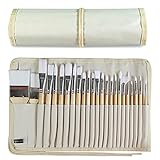
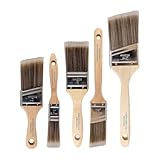
I remember staring at a wall of paint brushes, feeling utterly lost. The packaging all looked so similar, promising smooth strokes and perfect coverage. Then I saw it: a whole section dedicated to synthetic bristles, specifically taklon. My wallet, already feeling lighter from buying too much paint, screamed in protest. But the nagging question persisted: are taklon paint brushes better? I’d heard whispers, seen them recommended for acrylics and watercolors, but the price difference always made me hesitate.
Years and countless brush purchases later, I’ve got a pretty solid handle on what works and what’s just marketing fluff. Let me tell you, the world of synthetic brushes, and taklon in particular, is not as straightforward as it seems. Forget the generic advice you’ll find everywhere else.
The Skinny on Synthetic Bristles: How Taklon Actually Works
Alright, let’s cut to the chase. When people ask ‘are taklon paint brushes better,’ they’re really asking if they perform well and if they’re worth the money compared to, say, hog hair or sable. The short answer? It depends entirely on what you’re painting with and what you want to achieve. Taklon is a type of synthetic fiber, usually polyester, that’s engineered to mimic the properties of natural animal hair. Manufacturers can tweak the diameter, length, and texture of these fibers to create brushes with different characteristics. For taklon, the magic lies in its smooth, non-porous surface and its inherent flexibility.
Think about it this way: natural bristles have microscopic scales and imperfections. This is great for holding a lot of paint and creating texture, especially in oils. However, these same scales can sometimes lead to a “draggy” feel with thinner media like acrylics or watercolors, where you want a slick glide. Taklon, being smooth and uniform, excels at this. It doesn’t absorb water like natural hair, which is a huge plus for watercolorists who need precise control and don’t want their brushes to get waterlogged and floppy. For acrylics, taklon’s resilience means it can handle the thicker, faster-drying nature of the medium without getting permanently splayed out like some cheaper synthetics might.
I remember my first foray into buying dedicated watercolor brushes. I’d been using old, beat-up utility brushes for everything, and let me tell you, the frustration was real. Water would just pool in the bristles, making it impossible to get a fine line or a smooth wash. Then I picked up a set of taklon rounds, and it was like a lightbulb went off. The water flowed smoothly, the tip held its shape, and I could actually control where the paint went. It wasn’t sable, but for the price and the medium, it was a revelation. This is where the ‘better’ question gets complicated – better for what?
The key engineering aspect of taklon is its ability to be manufactured with varying degrees of stiffness and taper. So, while one taklon brush might be soft and springy for delicate washes, another might be firmer and more durable for scrubbing with heavy body acrylics. It’s not a one-size-fits-all material.
This versatility is a big part of why it’s so widely used across different paint types. Manufacturers can literally design the fiber to behave in a specific way. For example, some taklon fibers are hollow, which helps them hold more paint, much like natural hair. Others are solid and incredibly fine for detail work.
It’s a testament to materials science that we can get such varied performance out of a synthetic material.
What to Look for: The Devil’s in the Details (and the Bristles)
So, you’re convinced you need to explore taklon, but now you’re staring at another wall of brushes, maybe even more confusing than before. What sets a good taklon brush apart from a mediocre one? It boils down to a few key things: the quality of the fiber, the construction of the ferrule and handle, and, of course, the price point. Don’t just grab the cheapest pack, or you’ll be back here asking if taklon paint brushes are better again, this time with a sigh of disappointment.
First, the bristles themselves. Look for taklon that feels smooth to the touch, not scratchy or plastic-like. The tips should be fine and come to a nice point on round brushes, or have a clean, sharp edge on flats. Some higher-quality taklon will have a slight taper, meaning the bristles get finer towards the tip, which mimics natural hair and allows for more precise control.
If the bristles look like they were all cut off at the same length with scissors, you’re probably looking at a lower-grade brush. Another thing to check is the springiness. When you bend the bristles, they should snap back to their original shape quickly. If they stay bent or feel limp, they won’t hold their form under pressure, and your brushstrokes will suffer. (See Also: Can Acrylic Paint Go In An Air Brush )
The ferrule – that metal band holding the bristles to the handle – is also important. It should be securely crimped onto the handle with no wobble. A loose ferrule means bristles can fall out, which is incredibly annoying and can ruin your painting. Brass ferrules are generally better than aluminum, as they’re more durable. The handle itself should feel comfortable in your hand. Some brushes have short handles, perfect for detail work or watercolor where you hold the brush closer to the tip. Others have longer handles, offering better use for larger strokes, often preferred for oils or acrylics.
I once bought a set of taklon brushes online that looked great in the pictures. When they arrived, the ferrules were so flimsy they bent when I applied even moderate pressure. Within two uses, half the bristles had fallen out. Total waste of about $25. It taught me to always check reviews that specifically mention bristle retention and ferrule quality. It’s worth paying a little extra for a brand that has a good reputation for construction, even if they use taklon. A well-made taklon brush can last years if cared for properly, whereas a poorly made one can be useless in a week.
Here’s a quick breakdown of what to prioritize:
| Feature | What to Look For | Why It Matters | My Verdict |
|---|---|---|---|
| Bristle Quality | Fine tips, good taper, smooth feel, quick spring-back | Precision, paint-holding, durability | High: Key for good performance. |
| Ferrule | Securely crimped, sturdy metal (brass preferred) | Bristle retention, longevity | High: A loose ferrule is a deal-breaker. |
| Handle | Comfortable grip, appropriate length for your style | Ergonomics, control | Medium: Personal preference, but comfort is key. |
| Price | Mid-range – not cheapest, not most expensive | Quality vs. cost effectiveness | Medium: Avoid the bargain bin. |
Common Mistakes That Make You Think Taklon Isn’t Worth It
It’s easy to blame the tool when things go wrong, but often, the mistake is in how we use or care for it. I’ve made my fair share, and I’ve seen others make them too, leading them to conclude that taklon paint brushes are simply not up to par. Let’s talk about some of the biggest blunders that might be sabotaging your efforts.
The most common sin? Using the wrong brush for the wrong medium or technique. While taklon is versatile, it’s not a miracle worker for every single scenario. Using a very soft, fine-tipped taklon brush for heavy body acrylics or thick oil paints is asking for trouble. The bristles might splay out and never recover their shape, or the paint might just cake up and become impossible to clean. Conversely, using a stiff, coarse brush for delicate watercolor washes will give you a textured, uncontrolled look when you’re aiming for smooth gradients. It’s like trying to write a delicate love letter with a broom. You need to match the brush’s properties to the paint’s consistency and the desired effect.
Another massive mistake is improper cleaning and storage. This is where I really learned my lesson. I used to just rinse my acrylic brushes under the tap and leave them lying around, bristles up, to dry. Big mistake.
The paint dries hard in the ferrule, splaying the bristles permanently and ruining the brush’s ability to hold a sharp edge or a fine point. For acrylics, you need to wash them thoroughly with soap and water (I use a gentle dish soap or a dedicated brush cleaner) immediately after use, making sure you get all the paint out from between the bristles.
Then, reshape the bristles and lay the brush flat or hang it bristles-down to dry. For watercolors, the same applies, though they’re generally easier to clean. Letting them dry upright, bristles up, can lead to water seeping into the ferrule and loosening the glue over time, which is how you get that dreaded ferrule wobble.
People also tend to overwork the brush. With acrylics, because they dry so fast, you might find yourself going back over an area repeatedly. If your brush isn’t holding its shape or is too soft, this can lead to muddy colors and overworked textures. Similarly, for watercolor, constant scrubbing can damage the paper and the bristles. Understanding the limitations of your tools and the drying properties of your medium is key. I’ve had to learn patience, letting layers of acrylic dry before going back in, and using the right amount of water for my watercolor washes, rather than relying on the brush alone to fix my mistakes.
Finally, and this is a big one for anyone asking ‘are taklon paint brushes better’ without understanding the context: expecting them to perform like sable brushes for fine art oil painting without the right handling. While some high-end synthetics can come close, true sable offers a unique softness, absorbency, and snap that’s hard to replicate for certain oil techniques. If you’re trying to do hyper-realistic oils with a cheap taklon brush, you might be disappointed. It’s not that the taklon is bad; it’s just being asked to do a job it wasn’t ideally designed for, or you’re comparing it to a completely different category of brush. (See Also: Can Acrylic Paints Be Used In An Aqua Brush )
Real-World Use: My Taklon Brush Toolkit
Over the years, my brush collection has grown, and taklon brushes have earned their permanent spot. I don’t use them for everything, but for certain tasks, they are indispensable. My toolkit for acrylics usually involves a few different types of taklon.
I have some stiffer, flat-bristled taklon brushes, about 1/2 inch and 1 inch wide, that are fantastic for laying down base coats and creating smooth, even coverage on larger areas. They have good snap and don’t leave too many brush marks if I use them correctly. I also have a couple of medium-sized taklon filberts, which are my go-to for blending edges and creating softer transitions in my acrylic paintings.
The rounded tip of the filbert is great for this.
For detail work in acrylics, I rely on fine-tipped taklon rounds. These are the ones that really shine when you need to paint small highlights, delicate lines, or tiny features. The key here is finding ones with a really sharp point that can be maintained with careful cleaning. I’ve found that brands that offer a good range of synthetic brushes often have a specific line designed for detail work, and those are the ones I gravitate towards. I’ll admit, I’ve splurged a bit on a few higher-end taklon detail brushes, and the difference in precision was noticeable – worth it for those important fine points.
When it comes to watercolor, taklon is where I often feel it truly excels, especially for beginners. My watercolor travel set is packed with taklon rounds in various sizes, from a tiny size 0 for minuscule details to a size 8 for washes and broader strokes. They hold water well without becoming completely saturated, and they rinse out cleanly. I also have a couple of taklon wash brushes, which are wider and flatter, good for laying down large areas of color or for wet-into-wet techniques where you need to control the flow of water. The non-absorbent nature of taklon means they don’t get waterlogged and heavy like some natural hair brushes can, which is a lifesaver when you’re trying to achieve subtle tonal shifts.
I remember painting a landscape with a lot of soft clouds and misty mountains using watercolors. I had some older natural hair brushes that were just making everything muddy and indistinct. I switched to my favorite taklon rounds, and suddenly, I could control the edges of the clouds, create soft transitions with just the right amount of water, and get those delicate highlights. It made the difference between a frustrated mess and a painting I was actually proud of. For that kind of work, the answer to ‘are taklon paint brushes better’ becomes a resounding ‘yes,’ at least for my style and skill level at the time.
It’s also worth mentioning gouache. Gouache is a bit of a hybrid, behaving like watercolor when diluted but like acrylic when used opaquely. For gouache, taklon brushes are often ideal. They have the precision for detail work but can also handle the slightly thicker consistency of opaque gouache better than a very soft watercolor brush might. The key is still matching the brush shape and stiffness to the specific application. I tend to use synthetic rounds and flats for gouache, similar to how I’d use them for acrylics, but with a bit more care during cleaning.
Contrarian Opinion: Why You Might Not Need Fancy Taklon
Now, here’s where I go against the grain a bit. Everyone raves about how amazing high-end synthetic brushes are, and yes, some of them are fantastic. But I disagree that you always need to drop a wad of cash on the fanciest taklon. Why? Because for a huge chunk of everyday painting, including many beginner and intermediate projects, perfectly decent results can be achieved with surprisingly affordable taklon brushes, or even a good quality general synthetic blend. The hype around specific brands or ultra-premium synthetics can be a bit much.
I’ve seen people struggle because they’re convinced they need a $30 taklon liner brush to paint a single strand of hair, when in reality, a $5 synthetic liner brush that’s been well-maintained will do a perfectly adequate job for most applications. The real skill, the real “better” factor, often comes from the artist’s hand, their understanding of color mixing, composition, and their ability to control the paint flow – not solely from the brush’s pedigree. The expensive brushes are nice, don’t get me wrong, but they’re an enhancement, not a replacement for skill.
My contrarian take is this: focus on getting a few good quality, general-purpose synthetic brushes in a variety of shapes (rounds, flats, filberts) and sizes that feel good in your hand. Learn how to clean and care for them religiously. Master the basics of paint application with those. (See Also: A Brushes Digital Painting )
Once you hit a wall, where you genuinely feel a specific brush property is holding you back, then invest in a specialized, high-end brush, be it taklon or something else. For many hobbyists, and even some semi-professionals, the perceived difference between a $5 synthetic and a $25 synthetic might be negligible in the final artwork, especially when viewed from a typical distance. It’s easy to fall into the trap of thinking the gear is the problem when it’s really about practice and technique. The common advice is to buy the best you can afford, but I say buy what’s affordable and functional, and spend the saved money on more paint or classes.
Think about it: if you’re just starting out with acrylics and want to paint a colorful abstract, or if you’re practicing watercolor landscapes, are you really going to notice if your flat brush has microscopic filaments that mimic sable down to the molecular level? Probably not. You’re going to notice if you can get nice broad strokes, if the paint loads well, and if it cleans up easily.
Many mid-range taklon brushes offer all of that without the premium price tag. The industry loves to push new, expensive products, and sometimes, the “better” is just a marketing story. My experience suggests that good technique and basic, well-maintained tools trump fancy materials every time, especially when you’re still developing your artistic voice.
Faqs: Your Burning Questions About Taklon Brushes Answered
Are Taklon Brushes Good for Acrylic Painting?
Yes, taklon brushes are generally excellent for acrylic painting. Their synthetic fibers are durable enough to withstand the thicker consistency and faster drying time of acrylics. They hold their shape well, allowing for both broad strokes and fine details, and they clean up relatively easily. Look for taklon brushes with good spring and a firm ferrule for the best results.
Can I Use Taklon Brushes for Oil Painting?
While you can use taklon brushes for oil painting, they are not typically the first choice for traditional oil techniques. Natural hog bristle brushes are preferred for their stiffness and ability to create texture with heavier oil paints. However, softer taklon brushes can be used for blending, glazing, or for artists who prefer a smoother application and are using thinner oil mediums.
Do Taklon Brushes Absorb Water Like Natural Hair?
No, taklon brushes do not absorb water like natural hair brushes. This is actually one of their key advantages, particularly for watercolor and gouache. Because they don’t become waterlogged, they maintain their shape and control better, allowing for more precise washes and finer lines without the bristles becoming overly soft and splayed.
How Do I Clean My Taklon Paint Brushes?
Cleaning taklon brushes is similar to cleaning other synthetic brushes. For acrylics, wash them immediately after use with soap and water until all paint is removed, reshaping the bristles and letting them dry flat or bristle-down. For watercolors, rinse thoroughly with water until the water runs clear, reshape the bristles, and let them dry flat. Avoid letting paint dry in the ferrule, as this can damage the brush permanently.
Are Taklon Brushes More Expensive Than Natural Brushes?
Generally, taklon brushes fall into a mid-range price category. They are typically less expensive than high-quality natural hair brushes like sable, but more expensive than very basic, cheap synthetic brushes. The price can vary greatly depending on the brand, the quality of the fiber, and the construction of the brush. Good taklon brushes offer a great balance of performance and cost-effectiveness.
Conclusion
So, to circle back to the million-dollar question: are taklon paint brushes better? My honest answer, after years of putting them through their paces, is that they are better for specific purposes, mediums, and artists, especially those starting out or looking for a durable, consistent performance without breaking the bank. They offer a fantastic blend of control, resilience, and affordability for acrylics and watercolors that’s hard to beat.
Don’t dismiss them because they aren’t ‘natural.’ The engineering behind modern synthetics, particularly taklon, is impressive. They won’t replace every natural brush in every situation, especially for the nuances of fine art oil painting or the unique feel of premium sable. But for everyday painting, vibrant acrylics, or controlled watercolor washes, they are a reliable workhorse.
My advice? Get a few decent taklon brushes in your preferred shapes and sizes. Treat them well, clean them properly, and see how they perform with your chosen paints. You might just find, as I did, that they become some of your most trusted tools on your artistic journey. The real art is what you create with them, not just the bristles themselves.