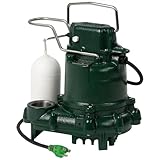
I remember the first time I saw a sump pump in action. It was in my buddy Dave’s basement, a brand-new build, and the skies opened up like a biblical flood. Suddenly, this little contraption in the corner of his crawlspace kicked on, groaning and spitting water out through a pipe, saving his finished basement from becoming a swimming pool.
It made me wonder, are all new houses required to have sump pumps? It seemed like such a no-brainer, especially in areas prone to heavy rain or with high water tables. But the reality, as I’ve learned over the years of dealing with my own leaky situations and talking to builders and plumbers, is a lot less clear-cut than you might think.
It’s not as simple as a universal law dictating every new home needs one. There are layers of local regulations, soil conditions, and even builder decisions that play a role in whether that little water-moving hero is installed as standard.
Why Your Builder Might Skip the Sump Pump (and Why It’s Often a Mistake)
Look, nobody builds a house wanting it to flood. But sometimes, the decision to install a sump pump in a new build comes down to cost-cutting or a gamble on local conditions.
Builders are running a business, and every little bit they can shave off the price tag for materials and labor can add up. A sump pump system, even a basic one, involves the pump itself, a pit (the sump pit), discharge piping, and the electrical hookup.
That’s not a trivial expense when you’re building dozens or hundreds of homes. So, if the soil report shows excellent drainage and the area has historically been bone dry, a builder might roll the dice and skip it to keep the initial purchase price lower for buyers.
My first house was a classic example. Built in the late 90s, it was in a neighborhood that had never seen standing water.
The builder, bless his heart, figured it was a waste of money. Fast forward ten years, and we had a freak, historic deluge.
The creek a few blocks over overflowed, the groundwater table shot up like a geyser, and suddenly my nice, dry basement started weeping. The water didn’t come from rain hitting the roof; it seeped up through the concrete floor.
If I’d had a sump pump, it would have been a cheap insurance policy. Without one, I spent a miserable weekend hauling wet boxes out and trying to dry out carpet that was already starting to mildew. It was a harsh lesson in the fact that just because it hasn’t happened doesn’t mean it won’t.
Local building codes are supposed to prevent this kind of oversight, but they aren’t always forward-thinking enough to account for extreme weather events or changing environmental conditions.
The Role of Building Codes and Local Ordinances
This is where the core of the question lies. Are all new houses required to have sump pumps? The short answer is usually no, not universally.
The requirements for sump pumps are predominantly dictated by local building codes and ordinances, not a federal mandate. These codes are established by municipalities, counties, or states, and they are often influenced by factors like historical flood data, soil type, proximity to bodies of water, and the overall topography of the region. In areas known for high water tables or frequent flooding, it’s far more likely that local codes will mandate the installation of a sump pump in new residential construction. Conversely, in arid regions or areas with excellent natural drainage, a sump pump might not be a code requirement.
This variance is important. What’s standard practice and legally required in, say, Florida or Louisiana, might be unheard of and unnecessary in Arizona or Colorado. Builders have to adhere to the specific building codes of the jurisdiction in which they are constructing. If the code doesn’t explicitly require it, and the builder believes the risk is low, they may opt out to save costs. It’s always wise for a potential homebuyer to research the local building codes for their specific area or to ask the builder directly about the requirements and their rationale for including or omitting a sump pump.
When Builders Play the Odds
Sometimes, the omission of a sump pump in a new home isn’t about outright cost-cutting, but rather a calculated risk based on perceived local conditions. Builders often have a good sense of the history of an area. If a particular plot of land has never experienced water issues, and the surrounding houses (even older ones) are dry as a bone, they might feel confident that a new build won’t be an exception. They might rationalize it by saying, ‘We’ve built dozens of homes here, and none of them have ever had a problem.’ This is a dangerous line of thinking.
I’ve seen this happen in a suburban development where the soil was clay-heavy, which doesn’t drain well. The builder, eager to get homes built and sold quickly, didn’t see the need for a sump pump. Then came a particularly wet spring. Every single house on that street that didn’t have a sump pump ended up with a damp, musty basement. The ones that did (and a few homeowners who retrofitted them quickly) stayed dry. The builder might have saved a few thousand dollars per house initially, but the long-term cost in repairs, remediation, and unhappy homeowners was far greater. It’s a short-sighted approach that prioritizes immediate financial gain over long-term property integrity and homeowner peace of mind. (See Also: Are Pumpkin Seed Husks Edible )
The issue of groundwater is complex. It fluctuates. Climate change is making weather patterns more unpredictable. What was ‘safe’ twenty years ago might not be today. Relying on past trends without accounting for future possibilities is a gamble with your property.
| Feature | New Build Standard (No Requirement) | New Build Standard (Code Required) | My Verdict |
|---|---|---|---|
| Sump Pump | Sometimes skipped to reduce costs. | Mandatory installation. | Key in flood-prone or high water table areas. A gamble without it. |
| Backwater Valve | Often optional, can be costly. | May be required for sewer backups. | Highly recommended, especially in older sewer systems or low-lying areas. |
| Radon Mitigation System | Increasingly standard in some areas. | Mandated in specific high-radon zones. | Check local radon levels. It’s cheap insurance for your health. |
What to Look for: Identifying Potential Water Issues Before You Buy
So, you’re eyeing a new house, and the builder is humming and hawing about sump pumps. How do you do your homework? First off, talk to people who already live in the neighborhood, especially those with basements. What’s their experience with water? Have they ever had basement flooding? If so, how did they deal with it? Are their homes equipped with sump pumps?
Next, get your hands on any local soil reports or geological surveys you can find. These can give you a good indication of the groundwater table and how well the soil drains. If you can find them, they’re usually available through the local planning or building department. Don’t be shy about asking your inspector about the lot’s drainage.
A good inspector will tell you if the ground slopes away from the foundation, if there are any signs of past water intrusion (even if it’s an older home nearby), or if the soil seems unusually saturated. They can also tell you if the grading around the house is adequate.
Poor grading is a major contributor to water problems, even if you have a sump pump.
I remember looking at a house once where the builder had installed a sump pump, which seemed like a good sign. But as I walked around the exterior, I noticed the entire backyard sloped towards the foundation. The sump pump was basically fighting a losing battle. Even with the pump, the ground was saturated right up against the walls. The grading was awful. It was a clear sign that even with the ‘required’ equipment, there were underlying issues that weren’t being addressed. It’s not just about having the pump; it’s about the overall water management strategy for the property. A sump pump is a reactive measure; good grading and a solid foundation are proactive defenses.
The Importance of Grading and Exterior Drainage
This is so often overlooked by homeowners and even some builders. The exterior grading of your property is your first line of defense against water. The ground around your foundation should slope away from the house, typically at a rate of about one inch per foot for the first six feet. This makes sure that rainwater and snowmelt are directed away from the foundation walls and into the yard or a drainage system, rather than pooling against the foundation and potentially finding its way into your basement. If the grading is flat or slopes towards the house, water will inevitably collect and can lead to hydrostatic pressure against the foundation walls, increasing the risk of leaks and structural damage.
I learned this the hard way. My first house had a perfectly functional sump pump, but the builder had skimped on the grading. The backyard was practically a shallow bowl that directed every drop of rain right towards the foundation.
The sump pump worked overtime, but the constant saturation around the foundation walls caused efflorescence (those white chalky deposits) on the interior basement walls and, over time, led to minor cracks. It was a constant battle until I spent a few weekends and a few hundred dollars on soil and landscaping to correct the grading. It made a huge difference, even before the next big storm hit. It’s a reminder that a sump pump is part of a system, and if other parts of that system are failing, the pump can only do so much.
Proper exterior drainage is most important, and if a builder hasn’t gotten it right, it’s a red flag.
Understanding Hydrostatic Pressure
When we talk about water getting into basements, a lot of it comes down to something called hydrostatic pressure. Think of water like a liquid that’s trying to find the path of least resistance. When the soil around your foundation becomes saturated with water, it basically turns into a heavy, wet sponge. This saturated soil exerts outward pressure on your foundation walls. This is hydrostatic pressure. If your foundation walls aren’t strong enough, or if there are any small cracks or imperfections, this pressure can force water through the concrete and into your basement. This is particularly true for poured concrete foundations, which can be prone to hairline cracks over time.
A sump pump helps alleviate this pressure indirectly. By pumping water out of the sump pit, it lowers the overall water table around your foundation. This reduces the saturation of the soil and, consequently, the hydrostatic pressure. However, the best defense is always to prevent water from accumulating around the foundation in the first place through proper grading, foundation waterproofing, and effective drainage systems like French drains.
Relying solely on a sump pump to deal with significant hydrostatic pressure is like trying to bail out a sinking boat with a teacup; it might help a little, but it’s not addressing the root cause. Many builders might not install extensive exterior drainage systems if they aren’t mandated, believing the sump pump will be sufficient. This is where their gamble might cost you later.
The Sump Pump System: How It Actually Works
Let’s get down to brass tacks. What exactly is a sump pump, and how does it do its magic?
At its core, it’s a relatively simple device designed to prevent basement flooding. The system typically consists of a sump pit – basically a hole dug in the lowest part of your basement or crawlspace – and a pump situated inside that pit. Water from the surrounding soil, or any water that finds its way into the pit (from leaks, condensation, or groundwater seepage), collects in the pit. When the water level in the pit reaches a certain point, it triggers a float switch on the pump. (See Also: Are Pumpkin Seed Acid Or Alkaline )
This float switch activates the pump, which then draws the water out and discharges it through a pipe, usually routed away from the house and foundation, ideally to a storm drain or a place where it won’t just flow back towards the foundation.
There are two main types of sump pumps: submersible and pedestal. Submersible pumps are housed entirely within the sump pit, making them quieter and generally more solid. You can’t see them, which is nice. Pedestal pumps have the motor mounted above the pit on a long shaft that extends down to the impeller. They are usually less expensive but can be noisier and more prone to clogging because debris can fall into the pit more easily. For a new build, I’d always push for a submersible if given a choice, though often it’s just whatever the builder has on hand.
Float Switches and Backup Power: The Devil’s in the Details
The float switch is the brain of the operation. Think of it like the float in your toilet tank, but instead of controlling water flow into the tank, it controls water flow out of your basement. When the water rises, the float lifts, flipping the switch and telling the pump to go to work. When the water level drops, the float goes down, turning the pump off. Simple, effective. However, these switches can fail, and power outages are the bane of any sump pump’s existence. A sump pump is useless if the power is out, which, ironically, is often when you need it most during a severe storm.
This is why a battery backup system is, in my opinion, a must for any home that relies on a sump pump. A battery backup system is a separate pump or a secondary battery-powered pump that kicks in if the main power fails.
It’s not just a good idea; it’s vital. I once experienced a power outage during a torrential downpour.
My main sump pump was running like a champ, but then the lights went out. Panic set in. Luckily, I had a battery backup installed a few years prior, and it kicked in smoothly.
It kept the basement dry until the power came back on hours later. Without it, I would have been in deep trouble.
Some systems even have a cell phone dialer that alerts you if the power goes out or if the water level gets too high even with the pump running. That peace of mind is worth every penny.
Retrofitting and When a Sump Pump Isn’t Enough
So, you’ve bought a new house, and it doesn’t have a sump pump, or the builder installed a cheap, flimsy one. What now? You can, of course, retrofit one yourself or have a plumber do it. The cost can vary, but you’re probably looking at anywhere from $500 to $1,500 for a good quality submersible pump, pit, and basic installation, plus the cost of a battery backup system if you opt for that. It’s a worthwhile investment if you live in an area with any sort of water table issues or potential for heavy rain.
But here’s the contrarian take: sometimes, even if you install a sump pump, it might not be the silver bullet you’re hoping for. If the fundamental problem is a consistently high water table that the pump can’t keep up with, or if the water is coming in through foundation cracks that are too numerous or too large, a sump pump is just treating a symptom. I had a friend who bought a house in a coastal area. The builder had installed a decent sump pump, but the groundwater was perpetually high due to the proximity to the sea.
The pump ran almost constantly. Then, during a king tide combined with a storm surge, it was overwhelmed. The water level rose faster than the pump could expel it.
They ended up with a flooded basement anyway. In situations like that, you might need more extensive solutions like exterior drainage membranes, regrading the entire property, or even installing a network of French drains around the exterior of the foundation.
When to Call in the Pros (and What to Ask Them)
If you’re experiencing persistent dampness, musty odors, visible signs of water damage, or if you’re just plain worried about water in your new home, it’s time to call in a professional. Don’t just call any plumber; look for companies that specialize in basement waterproofing and foundation repair. These guys know water. They can assess the situation comprehensively. They’ll look at your exterior grading, the type of soil, your foundation’s condition, and the existing drainage systems (or lack thereof).
When you call them, be prepared with information. Tell them about the problem, when it occurs, and what you’ve observed. Ask them about their assessment process.
Do they offer a free inspection? What solutions do they typically recommend for your specific situation? (See Also: Are Organic Pumpkin Seeds From China Bad )
Don’t be afraid to get multiple quotes. Ask about warranties on their work and the materials they use. A good professional will explain why they are recommending a particular solution, not just what it will cost.
For instance, they should be able to explain how a French drain system will intercept groundwater before it reaches your foundation, or how a proper waterproofing membrane will seal your walls. They should also be able to advise on whether a sump pump is the right primary solution or just one piece of a larger puzzle. I once had a company try to sell me a $10,000 interior drainage system when all I really needed was to fix my exterior grading and add a more solid sump pump with a backup. Be wary of high-pressure sales tactics; look for honest advice.
Understanding Different Types of Basement Water Intrusion
It’s important to understand that not all basement water problems are the same, and a sump pump is only one part of the defense. Water can enter a basement in several ways.
Surface water runoff is the most common, especially if grading is poor or gutters are clogged. This water flows towards the foundation and can seep in through cracks or porous concrete. Then there’s groundwater seepage, which is where hydrostatic pressure comes into play.
The water table rises, and water is pushed through the foundation walls or floor. Condensation is another culprit; in humid environments, warm, moist air can condense on cooler basement surfaces, leading to dampness and mildew. Finally, plumbing leaks or sewer backups can cause significant water damage.
A sump pump is primarily designed to combat groundwater seepage and manage rising water levels in the sump pit. It doesn’t do much for surface water runoff if the grading is terrible (though it helps if that runoff eventually finds its way to the pit), and it certainly doesn’t fix plumbing leaks or sewer backups. For those, you need different solutions: addressing grading and gutters for surface water, fixing leaks and installing backwater valves for plumbing/sewer issues, and dehumidifiers for condensation. Understanding the source of the water is key to choosing the right defense. A sump pump is a tool, but it’s not a universal fix for every water-related basement woe.
The Sump Pump Checklist: What to Insist on (or Add)
If you’re buying a new house, or even if you’ve got an existing one that worries you, here’s a mental checklist for sump pump systems. First, the pump itself. For a new build, push for a submersible pump. They’re quieter, more durable, and generally better protected. Look for a horsepower of at least 1/3 HP for average homes, though larger homes or areas with significant water might need 1/2 HP or more. Don’t let a builder give you a tiny 1/4 HP pump unless your house is microscopic and sits on a desert plain.
Next, the pit. It should be deep enough, typically 18-24 inches, and wide enough to accommodate the pump and allow for proper water flow. Check the discharge pipe. Is it properly routed away from the house? Is it a sufficient diameter (usually 1.5 inches or larger)? Does it have a check valve? A check valve is important because it prevents water from flowing back into the pit after the pump shuts off, which would make the pump cycle more frequently and wear out faster. It’s a small but vital component.
And finally, the big one: battery backup. I cannot stress this enough. Even if the builder installs a great pump, power outages happen.
A battery backup system, either a dedicated backup pump or a system that charges a deep-cycle marine battery to power the main pump, is a must-have. Consider a water-powered backup pump if you have reliable municipal water pressure; they use the flow of water to operate, so they don’t rely on electricity at all. It sounds old-fashioned, but they can be very effective. A properly installed system will also have an alarm that sounds if the water level gets too high or if the power fails.
It’s an extra layer of security that can save you thousands in flood damage.
Battery Backup Systems: More Than Just a Nice-to-Have
I’ve heard people say, “Oh, a battery backup is overkill, we rarely lose power here.” That’s the kind of thinking that leads to flooded basements. Power outages often coincide with severe weather – the very conditions that are most likely to cause flooding. So, the time you need your sump pump the most is often the time it’s rendered useless by a lack of electricity. A battery backup isn’t just an accessory; it’s a vital component of a reliable sump pump system, especially in areas prone to storms.
The cost of a good battery backup system can add a few hundred dollars to the overall price, but compare that to the potential cost of repairing flood damage, replacing ruined belongings, and dealing with mold and mildew remediation, which can easily run into the tens of thousands. It’s a simple cost-benefit analysis. When I was looking at houses, if a new build didn’t have a battery backup as standard, it was an immediate red flag for me. It showed a lack of foresight or a willingness to cut corners on something that directly impacts the integrity of the home and the homeowner’s peace of mind. If your new house doesn’t have one, budget for it. It’s money well spent.
Maintenance Is Key for Any Sump Pump
Even the best sump pump system, whether installed by a builder or retrofitted by you, needs regular maintenance. This isn’t something you install and forget about. At least once or twice a year, you should test your sump pump. Pour a bucket of water into the sump pit and watch to make sure the float rises, the pump activates, and it successfully expels the water. Then, check that it shuts off properly as the water level drops. Listen for any unusual noises – grinding, rattling, or humming that sounds strained. These can be signs of impending failure.
Inspect the discharge pipe for any blockages or damage. Make sure the outlet is clear and water is flowing freely away from the house. If you have a battery backup, test that too. Check the battery terminals for corrosion and make sure the battery is holding a charge. If your pump has a filter, clean it. Debris can accumulate in the pit and clog the pump or the float switch, rendering it useless. Most manufacturers recommend replacing sump pump batteries every 3-5 years, depending on usage and type. Neglecting this simple maintenance can turn a perfectly good system into a ticking time bomb, waiting for the next heavy rain.
Conclusion
So, to circle back to the original question: are all new houses required to have sump pumps? The definitive answer is still no, not everywhere. It hinges on local building codes, which vary wildly. But just because it’s not required doesn’t mean it’s not a good idea. I’ve seen too many basements turn into lakes because a builder decided to save a buck or because nobody thought ‘it won’t happen here.’
My advice? If you’re buying a new house and a sump pump isn’t standard, push for one, or budget for it immediately after closing. Pay special attention to battery backup and proper exterior grading. Don’t let a builder’s gamble become your flood damage. It’s about protecting your investment and your sanity.