
You know the drill. You drop your favorite pair of specs, and one of those ridiculously tiny screws pops out. Suddenly, the world is a blurry mess, and you’re in a panic. Trying to get that minuscule screw back into the hinge is a special kind of hell. It’s a problem that makes you question your fine motor skills and possibly your life choices.
I’ve been there more times than I care to admit, fumbling with tweezers and muttered curses. It’s maddening when you realize you can’t get a screw back into glasses, and you’re stuck squinting at the world like a mole.
The good news is, it’s usually not a lost cause. With the right approach and a bit of patience, you can often get your eyewear back in working order without a trip to the optician.
The Tiny Screw Tango: Why It’s So Damn Hard
Look, I’m not going to sugarcoat it. These screws are designed to be small for a reason – to be unobtrusive and keep your glasses lightweight. But that miniaturization is precisely what makes them a nightmare to reinsert. They’re practically invisible, they have a thread so fine it seems to exist only in theory, and the hinge itself is often just a millimeter-wide gap. Add to that the frustration and the fact that you’re probably doing this under less-than-ideal lighting, and it’s a recipe for a meltdown.
I remember one time, I was trying to fix my reading glasses before a important meeting. I had the screw, I had a tiny screwdriver I’d scavenged from an old electronics kit.
What I didn’t have was steady hands or a clear workspace. The screw went flying, bounced off my desk, and disappeared into the abyss that is my office carpet.
I spent twenty minutes on my hands and knees, feeling like a detective in a low-budget noir film, before finding it under the leg of my chair. It cost me about five minutes of actual repair time and nearly an hour of pure, unadulterated panic. That’s the reality for most folks when they can’t get a screw back into glasses.
The common advice is always ‘get a tiny screwdriver.’ Sure, that’s step one. But it’s like telling someone to ‘just hit the ball’ when they’re learning to golf. It’s true, but not particularly helpful. What you really need is the right tool for the job, a clean workspace, and a strategy. Trying to force it, or using the wrong tool, will strip the threads or damage the hinge, turning a simple fix into a bigger problem.
Picking the Right Tools (and What to Avoid)
You’ve probably seen those cheap little eyeglass repair kits at the checkout counter of drugstores or big-box stores. They often cost around $5. Let me tell you, most of them are garbage. The screwdrivers are made of such soft metal that they deform after one use, and the ‘screws’ are often poorly manufactured. I’ve wasted money on a few of these, only to find the screwdriver tip rounded off before I even got the first screw started. You end up with a bunch of tiny, useless parts and a whole lot of frustration. (See Also: How To Fix Eyeglasses Arm Without Screw )
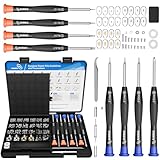
What you actually need is a precision screwdriver set. Not the kind for household repairs, but the ones designed for electronics or watches. These have hardened steel tips that are accurately machined and come in a variety of sizes. I paid about $25 for a decent set a few years back, and it’s been worth every penny. It includes Phillips head (the little cross shape), flathead, and sometimes even Torx (star-shaped) bits, which are invaluable for more than just glasses. Look for sets that have multiple sizes of Phillips head, as eyeglass screws are almost always Phillips.
Here’s a quick rundown of what to look for in a good repair kit, beyond just the screwdrivers:
| Item | Why It’s Important | My Verdict |
|---|---|---|
| Precision Screwdrivers (Phillips & Flathead) | Hardened steel, multiple sizes. Avoid soft metal. | Must-have. Get a decent set. |
| Assorted Replacement Screws | Various lengths and thread types. | Good to have, but check your original screw size first. |
| Nose Pads | Can make a big difference to fit and comfort. | Nice to have, but secondary for the screw issue. |
| Tweezers | For gripping the tiny screw. | Very useful for alignment. Angled tips are best. |
| Magnifying Glass/Loupe | To see what you’re doing. | Highly recommended. Makes life easier. |
| Small Pliers (needle-nose) | For holding the hinge steady. | Optional, but can be a lifesaver. |
When I’m shopping for tools, I’m always looking for something that feels substantial, not flimsy. If a screwdriver feels like it’s going to bend when you put even a little pressure on it, put it back on the shelf. It’s an investment in not tearing your hair out later.
The Eyeglass Screw Threading Method: A Step-by-Step
Alright, let’s get down to brass tacks. You’ve got your tools, you’ve found your screw (or a replacement), and you’re ready to tackle this. First things first, clean your workspace. A bright, well-lit area is a must. I usually spread out a white cloth or a piece of paper so I can easily spot if any tiny parts decide to go on an adventure.
Here’s the process I follow when I can’t get a screw back into glasses:
- Gather Your Gear: Have your precision screwdriver set, the offending screw, and ideally, some tweezers and a magnifying glass ready.
- Align the Hinge: Carefully hold the frame of your glasses with one hand. With the other, gently open the hinge mechanism as wide as it needs to be to accept the screw. You want the two parts of the hinge to be perfectly lined up.
- The Screw’s Entry Point: This is the fiddliest bit. Use your tweezers to pick up the screw. Hold it vertically, with the head facing away from you. Try to position the tip of the screw right into the hole in the hinge. This requires a steady hand and good eyesight. If you’re struggling, use that magnifying glass.
- Start the Thread: Once the screw tip is in the hole, gently try to turn the screwdriver clockwise. I mean, barely touch it. The goal here is to feel the screw catch the threads. Don’t force it. If you feel resistance immediately, you might be cross-threading it, or the screw isn’t aligned properly. Pull it out and try again.
- The Gentle Turn: Once you feel the screw start to catch and turn smoothly, keep going. Continue turning slowly and steadily. You’ll feel it go in deeper. The trick is to apply just enough pressure to keep it engaged with the threads but not so much that you strip them.
- Tighten (But Don’t Overtighten): When the screw is almost all the way in, you’ll feel it get snug. Tighten it until it’s secure but not so tight that it feels like you’re going to crack the plastic or metal of the frame. You want it to hold the hinge firmly, but not bind it. Over-tightening is a common mistake that ruins the threads.
- Check for Movement: Gently wiggle the arm of the glasses. It should feel secure and not floppy. Test the hinge movement – it should open and close smoothly without being too stiff or too loose.
If the screw feels like it’s going in at an angle, stop. You’re probably cross-threading it, and that will ruin both the screw and the threads in the hinge. It’s better to back it out and try again, or even consider a replacement screw of the exact same size. Sometimes, a slightly different thread pitch can make all the difference.
Common Mistakes That Make You Cuss
We’ve all been there. You’re frustrated, your hands are shaking, and you just want to get this done. That’s usually when the mistakes happen. The biggest one, hands down, is trying to force it. If the screw isn’t going in easily, it’s not going to magically start working with more brute force. You’re more likely to strip the threads on the screw itself or, worse, in the delicate hinge mechanism of your glasses. I once tried to jam a slightly too-large screw into a hinge, and I ended up widening the hole so much that the correct screw wouldn’t even hold anymore. That pair of glasses ended up in the junk drawer.
Another common blunder is using the wrong size screwdriver. Even if it looks like it fits, if the tip isn’t precisely the right size for the screw head, you’ll end up camming out. That means the screwdriver slips, chewing up the screw head and making it impossible to get any purchase with the screwdriver later. This is why a good precision set with multiple Phillips head sizes is so important. You need that perfect fit. (See Also: How Measure Metric Computer Screws )
People also often lose the original screw and then grab the first replacement they find. Eyeglass screws aren’t one-size-fits-all. They have different lengths, diameters, and thread pitches. Using a screw that’s too long can poke through the other side of the hinge, creating a sharp point that irritates your face. Too short, and it won’t hold properly. The wrong thread pitch can strip the hinge or simply refuse to thread at all. If you’ve lost the original screw, try to find a replacement that’s identical in size and length. Many repair kits come with a variety of sizes, but don’t just guess.
Here are some other pitfalls to watch out for:
- Ignoring the hinge alignment: If the hinge isn’t perfectly straight and lined up, the screw will go in crooked.
- Not having enough light: Trying to thread a tiny screw in dim lighting is a recipe for disaster.
- Rushing the process: Patience is key. This isn’t a race.
- Overtightening: This is a big one. Tight is good, cranking until you hear a snap is bad.
- Using the wrong replacement screw: As mentioned, size and thread pitch matter.
My own personal screw-up involved trying to tighten the screw too much while the glasses were still on my face. I was trying to adjust the tension on the hinge on the fly. Big mistake. I felt a tiny crunch, and suddenly the arm was wobbly again. Turns out, I’d stripped the threads because I was trying to do it while the frame was under stress from being on my head.
When to Call in the Pros (or Just Buy New Ones)
Look, as much as I love a DIY fix, there comes a point where you have to admit defeat. If you’ve tried everything and you still can’t get the screw back in, or if you’ve damaged the hinge or the frame itself, it might be time to seek professional help. Opticians have specialized tools and the experience to handle delicate repairs. They can often replace a stripped screw or even repair a damaged hinge for a fee, which might be less than you think. I’ve paid around $20-$30 for a quick fix at my local optometrist’s shop, and it saved me from buying a whole new pair of glasses that would have cost me $150 or more.
However, sometimes the damage is too extensive, or the cost of repair approaches the cost of new glasses. If the frame is bent, cracked, or the hinge is severely damaged, it might be more economical to just get a new pair. This is especially true if you’re dealing with inexpensive frames. For high-end designer glasses, repair is almost always worth considering. You need to weigh the cost of repair against the cost of replacement and the sentimental value (if any) of your current pair.
One situation where you should definitely NOT try to fix it yourself is if the screw is part of a complex mechanism, like on some high-tech or very expensive titanium frames. These often require specialized knowledge and tools. Trying to force it could cause irreparable damage. In those cases, it’s always best to go straight to the manufacturer or an authorized repair center.
Here’s a simple decision tree:
- Is the hinge loose but otherwise intact? Try the DIY fix first.
- Did you strip the screw head or damage the threads? A professional might be able to fix it, or you might need a replacement part.
- Is the frame cracked or bent? This is often more serious and might require replacement.
- Are the glasses very old or very cheap? Consider if repair costs outweigh replacement.
- Are the glasses expensive or have sentimental value? Investigate professional repair options.
Ultimately, the decision to repair or replace often comes down to cost, effort, and the condition of the glasses. If you’ve spent a good chunk of change on a pair, fighting with a tiny screw is usually a worthwhile endeavor before throwing in the towel. (See Also: How To Adjust Eyeglass Screw )
When the Common Advice Is Just Wrong
Everyone says, ‘just use a bit of superglue if you lose the screw.’ I disagree, and here is why: Superglue is a chemical adhesive. It’s designed to bond two surfaces together permanently. While it might hold a tiny screw in place temporarily, you’re risking more than you’re gaining. First, it’s incredibly difficult to apply superglue precisely to just the screw threads without getting it all over the hinge mechanism. If you get glue in the hinge, you’ll seize it up solid, and the arm of your glasses will no longer move. That’s game over for that pair.
Second, if you ever need to tighten or remove that screw again, good luck. The superglue will have bonded it so firmly that you’ll likely strip the screw head or even damage the frame trying to loosen it. It’s a desperate measure that usually creates a much bigger problem than it solves. For something as delicate and mechanical as eyeglass hinges, a mechanical solution (a screw) is always better than a chemical one (glue).
I’ve seen people try this, and the result is always the same: either the hinge is glued shut, or the screw is permanently stuck, making future maintenance impossible. It’s a short-sighted fix that guarantees long-term headaches. Stick to the proper repair kit and tools; it’s the only way to go if you want your glasses to function correctly and be serviceable in the future.
What Are the Common Problems When Trying to Fix Glasses?
The most common issues include losing the tiny screws, stripping the screw heads by using the wrong screwdriver, cross-threading the screws which damages the hinge, and accidentally gluing the hinge mechanism shut when attempting a quick fix. Over-tightening can also strip threads or crack plastic frames.
How Do I Keep My Glasses Screws From Falling Out?
Make sure screws are tightened properly with the correct precision screwdriver. For a more permanent fix, you can apply a tiny drop of eyeglass screw thread-locker fluid (available online or at optical shops) to the threads before reinserting the screw. Avoid over-tightening, as this can also loosen the screw over time.
Can I Use Super Glue to Fix My Glasses?
It’s generally not recommended. While super glue might temporarily hold a loose screw, it’s very difficult to apply precisely and can easily get into the hinge, seizing it up. It also makes future maintenance impossible, as the screw will be permanently bonded. A proper repair kit is a much safer and more effective solution.
How Much Does It Cost to Fix Glasses?
Minor repairs, like re-tightening a loose screw or replacing a lost one, can often be done for free at an optical shop or for a nominal fee of $5-$10. More complex repairs, such as replacing a hinge or fixing a bent frame, can range from $20 to $50 or more, depending on the complexity and the cost of parts. If the frame is severely damaged, replacement might be more cost-effective.
Verdict
So, you’re staring at a tiny screw, a half-assembled hinge, and wondering if it’s even worth the hassle. More often than not, it is. Don’t let the frustration of trying to get a screw back into glasses defeat you. Grab a decent precision screwdriver set, a good light source, and some patience. You’d be surprised what you can fix yourself.
Remember, the key is precision, not force. Gentle turns, proper alignment, and the right tools will save you a headache – and a trip to the optometrist’s office. If you’ve tried and failed, a professional can often sort it out for a small fee, saving you from buying a whole new pair.
Next time this happens, take a deep breath, find your good screwdriver, and tackle it methodically. Your wallet will thank you.
![AXTH 25-in-1 Small Precision Screwdriver Set, Professional Magnetic Mini Repair Tool Kit for Phone, Computer, Watch, Laptop, Macbook, Ring Doorbell, Eyeglass, Electronic, [Bearing Steel] Screw Driver](https://m.media-amazon.com/images/I/518YlLmPTcL._SL160_.jpg)
