
I swear, building a PC should be like LEGOs for adults, but then you hit the screw situation. You’ve got your motherboard standoffs, your SSD mounts, your PSU bolts, and then there are those tiny, fiddly little guys that hold the actual case panels together. It’s the kind of thing you don’t think about until you’re halfway through a build and realize you’re missing three of them, or worse, you’ve stripped one. So, the big question I’ve wrestled with, especially when I’m already out on an errand: does Lowe’s sell computer case screws?
I’ve wasted enough time and money on the wrong hardware to write a book. You’d think a place with aisles upon aisles of fasteners would have the answer, but it’s not always that straightforward. Let’s break down what you’re likely to find, or not find, when you go hunting for these specific bits of metal.
The Hardware Aisle Gamble: What to Expect at Lowe’s
Walking into Lowe’s, you’re greeted by the glorious, overwhelming sight of more screws, bolts, nuts, and washers than you could probably count in a week. It’s a DIYer’s paradise, or at least, it feels like it should be. My first few attempts to find specific PC components here were met with that familiar sense of optimistic dread. You know, where you hope you’ll find it, but you’ve got a nagging feeling you’re going to end up with a handful of things that are almost right. When it comes to that specific question, ‘does Lowe’s sell computer case screws?’, the honest answer is usually a ‘maybe, but probably not the exact ones you need.’
The problem is, computer case screws aren’t your standard woodworking or drywall screws. They’re specialized. They’re often metric, with very specific thread pitches and head types designed for thin sheet metal.
Most of the screws you’ll find in the general hardware section are SAE (Society of Automotive Engineers) or standard metric sizes meant for thicker materials, larger holes, or applications where precise tolerances aren’t as important. I once spent an hour rummaging through bins, convinced I’d find something that would work, only to walk out with a bag of wood screws that were too coarse and too long, rendering them useless for holding my side panel on. The heads were also too large, looking ridiculous.
It’s frustrating because the bins are right there, and it feels like they should have what you need.
You’ll see bins labeled with everything from ‘Machine Screws’ to ‘Sheet Metal Screws.’ The machine screws are closer, but often the thread pitch is off for the delicate threads in a modern PC case. Sheet metal screws, particularly the self-tapping kind, are a big no-no for most case components. They’re designed to cut their own threads into metal, which can strip out the pre-tapped holes in your case or components, leading to a loose connection or damage.
If you absolutely have to use something from the aisle, you might find some smaller Phillips-head machine screws in M3 or M4 sizes, but you’ll have to meticulously check the thread count and length. This is where the gamble comes in.
It’s a painstaking process of elimination, and frankly, most of the time it’s a waste of your precious build time.
What you will find in abundance are screws for electronics, but these are typically smaller, often black, and designed for things like attaching hard drives or CD-ROM drives inside older cases, not for the external panels. Some of these might be usable for certain internal components, but they’re rarely the ones you’re missing for your case itself. It’s like looking for a specific bolt for your bike and finding a thousand bolts for a car engine – they’re both bolts, but they’re worlds apart in application.
The Real Deal: Where to Actually Get Pc Case Screws
So, if Lowe’s is largely a bust for the specific screws you need to, say, reattach your PC’s side panel or secure an expansion card, where do you turn? The answer, unfortunately, is usually online. This is where the hobbyist nature of PC building really shines through.
Specialized online retailers are where the real parts live. Think of companies that deal specifically in PC components, modding supplies, or even general electronics repair. These places understand the need for specific screw sizes like M3x6mm, M4x8mm, or the slightly heftier UNC #6-32 screws commonly used for drive bays and expansion slots. (See Also: How To Fix Eyeglasses Arm Without Screw )
They sell them in convenient kits, often sorted by size, or in bulk packs if you’re building multiple machines or doing a significant overhaul.
I remember the first time I encountered a stripped screw on a brand-new case. Panic set in. I’d already spent hours on the build, and this tiny metal snag was holding everything up. I drove to Lowe’s, spent forty minutes looking at a wall of screws, and came away empty-handed and dejected.
The next day, I ordered a general PC screw kit online for about $15. It arrived two days later and contained about 200 screws of various types and sizes, including exactly what I needed. The sheer variety in that little plastic box made the hardware aisle at Lowe’s feel like a joke.
It’s not just about the thread; it’s about the head type (knurled, slotted, Phillips, thumb screws), the length, and sometimes even the material and coating. Online stores cater to these nuances.
A common mistake people make is assuming that since a PC is made of electronics, any hardware store will have its parts. It’s a logical assumption, but flawed. PC cases are often made of thin stamped metal, and the screw threads are cut with precision to avoid damaging the metal or the component they’re fastening. Standard hardware store screws are often too solid, too long, or have threads that are too aggressive.
Buying the wrong type of screw can lead to stripped threads in your case, loose components, or even short circuits if a screw is too long and touches a sensitive part of the motherboard. It’s a small detail, but one that can cause big headaches. For reliable sourcing, stick to vendors who specialize in computer hardware. They understand the specific needs of PC builders and enthusiasts.
The Fine Print: Understanding Screw Types and Sizes
To really nail down what you’re looking for, it helps to understand the lingo and the common sizes. Computer case screws aren’t just generic metal bits; they have specific designations. The most common sizes you’ll encounter are metric M3 and M4 screws, and the imperial UNC #6-32 screws. Let’s break down what that means. M3 and M4 refer to the diameter of the screw in millimeters (3mm and 4mm respectively). The number following the ‘x’ (e.g., M3x6mm) indicates the length of the screw in millimeters, excluding the head. So, an M3x6mm screw is 3mm in diameter and 6mm long.
UNC #6-32 is a bit different. UNC stands for Unified National Coarse thread.
The ‘#6′ refers to the screw diameter using the American Wire Gauge system, which is roughly equivalent to 3.5mm. The ’32’ refers to the number of threads per inch. These #6-32 screws are incredibly common in PC building, particularly for mounting 3.5-inch and 2.5-inch drives, securing expansion cards, and sometimes for the motherboard standoffs.
You’ll often see them with knurled or slotted heads, and sometimes as thumbscrews for tool-less installation. If you’re trying to find replacements at a general hardware store, looking for a #6 screw with 32 threads per inch is your best bet, but the length will still be a variable you need to match precisely. I once bought a bag of #6-32 screws that were too long for my SSD mount, and the ends scraped against the motherboard. That was a fun troubleshooting session.
The head type is also important. Most computer screws have a pan head or a flat head, often with a Phillips (+) drive. Some specialized screws, like those for securing power supplies, might have hex heads or even Torx heads. Case panels are often held on by thumbscrews, which are designed to be turned by hand, eliminating the need for tools. These are usually larger and have a knurled edge for grip. If you’re missing one of these, you can sometimes find replacements online, but they’re less common in general hardware stores than standard Phillips screws. (See Also: How Measure Metric Computer Screws )
It’s also worth noting the different types of threads. Some screws are machine threads, designed to be used with pre-tapped holes. Others are self-tapping, meaning they cut their own threads into softer materials. You never want to use self-tapping screws in the tapped holes of a computer case or its components. They’ll destroy the existing threads. Always aim for machine screws or specialized computer screws that match the existing thread type.
| Screw Type | Common Sizes | Typical Use | Lowe’s Availability | Verdict |
|---|---|---|---|---|
| Machine Screws (Metric) | M3, M4 | Motherboard standoffs, smaller internal components, some case panels | Sometimes (limited sizes/pitches) | Hit or miss; difficult to match thread pitch precisely. |
| Machine Screws (Imperial) | #6-32 | Drive bays, expansion cards, PSU mounting | Rarely in the correct length/thread count | Very unlikely to find the exact size. |
| Thumbscrews | Varies (often #6-32 base) | Case panels, tool-less drive mounting | Extremely rare | Forget it, unless you’re lucky. |
| Self-Tapping Screws | Various | (NOT for PC components) | Abundant | AVOID AT ALL COSTS for PC cases. |
| Specialized PC Screw Kits | Mixed M3, M4, #6-32 etc. | All of the above | Zero | The only reliable option. |
DIY Hacks and When to Just Buy the Kit
Alright, let’s talk about the times you might get away with something from Lowe’s, or when you absolutely should just bite the bullet and buy a dedicated PC screw kit. I’ve definitely been in a bind where I needed a screw, right now, and a wood screw with a slightly larger head was the only thing stopping my PC from looking like it was held together with duct tape. This is where the ‘DIY hack’ mentality kicks in, but it’s a slippery slope.
For example, if you’ve lost one of those small, black, Phillips-head screws that hold a 2.5-inch SSD in place, and you’re trying to avoid a 3-day wait for a shipment, you might find an M3x5mm or M3x6mm machine screw at Lowe’s that’ll work. The key is to take the other screw you have with you and compare thread pitch and length visually. Even then, the material quality might be lower, or the threads slightly off, leading to a less secure fit. I once used a slightly too-long screw for an NVMe drive, and it caused thermal throttling because it was pressing down unevenly. Not ideal.
However, when it comes to securing your motherboard, your graphics card, or your case panels, you really don’t want to be improvising. Motherboard standoffs need to be the right height and thread pitch to prevent the board from shorting against the case. Graphics cards need secure mounting to avoid sagging. Case panels need to fit snugly and be easy to remove for maintenance. These are not areas where you want to experiment with hardware store odds and ends. The risk of damaging expensive components or compromising the structural integrity of your build is too high.
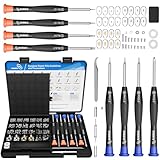
My personal rule of thumb now: if I’m building a new PC or doing a significant upgrade, I always buy a complete PC screw kit. They’re surprisingly affordable, usually running between $10 and $25 for a kit that will last you for years and multiple builds. These kits typically include an assortment of M3, M4, and #6-32 screws in various lengths, often with thumbscrews and specialized washers.
The peace of mind knowing you have the exact right screw for any situation is worth far more than the time and frustration you’ll save by not hunting through Lowe’s bins. I learned this lesson the hard way, spending more on individual trips and wrong purchases than a kit would have cost initially. It’s one of those cases where buying the specialized tool (or in this case, fastener assortment) is the most economical and sensible approach in the long run.
The Case of the Missing Screws: Common Pains and Prevention
The dreaded ‘missing screw’ scenario is a rite of passage for PC builders. It happens. You’re halfway through a build, feeling pretty good about your cable management, and you realize the baggie of screws that came with your case is missing that one important type needed for the side panel. Or maybe you’re disassembling an older machine and a few screws just vanish into the ether – a black hole that seems to exist solely for small metal objects. This is precisely when the question of ‘does Lowe’s sell computer case screws?’ pops into your head, usually when you’re already out and about doing other errands.
The most common culprit? Overzealous cleaning or a hurried packing job. When you’re taking a computer apart, especially if it’s for the first time in years, those little screws can easily fall out and roll under furniture, into vents, or simply get lost in the shuffle. Sometimes, manufacturers don’t provide enough of a specific screw type, or they provide a very limited selection. This is particularly true for cases that are marketed as ‘tool-less’ but still require screws for certain components or for added security.
My own embarrassing moment involved a brand-new case. I was so excited to get the motherboard in that I completely forgot to check the included hardware bag. After everything was installed, I went to put the side panel back on, and poof, no screws for it. I’d already thrown away the small plastic baggie because I thought I had everything.
Turns out, the case came with four specific thumbscrews for the side panels, and I had zero. I spent the next hour rummaging through my miscellaneous screw collection, trying to find something that would fit, before admitting defeat and ordering a specific replacement part online. It’s a small detail, but it’s the kind of thing that stops a build dead in its tracks and makes you question all your life choices.
Prevention is key. My advice? (See Also: How To Adjust Eyeglass Screw )
As soon as you open that case hardware bag, dump the contents into a clear, sealable plastic bag or a small compartmentalized case. Label it clearly with the case model. If you’re building a PC, take a photo of the included screws or make a quick note of what you have and what you think you’ll need.
For existing machines, when you disassemble them, use a small magnetic tray or even a piece of paper with drawn grids to keep screws organized by type and location. For those who build frequently, a good quality PC screw kit is your best friend. It’s an investment that pays off every single time you need a specific screw and have it at your fingertips, rather than embarking on a wild goose chase at the local hardware superstore.
When All Else Fails: Online Retailers and DIY Modding Shops
So, we’ve established that while Lowe’s might have a vast ocean of fasteners, finding the specific, often metric-threaded screws needed for computer cases is like finding a needle in a haystack – a very large, dimly lit haystack. The reality for PC builders is that the most reliable source for these specialized components is, almost invariably, online. This is where the dedicated computer hardware retailers and even some niche DIY modding shops come into their own. They understand the exact specifications required and stock items that general hardware stores simply don’t carry.
Companies that specialize in PC components, whether they’re massive online retailers or smaller, enthusiast-focused stores, have entire sections dedicated to screws, standoffs, cable management accessories, and other small but vital hardware. You can often find general PC screw kits that contain a wide assortment of common sizes (M3, M4, #6-32) in various lengths and head types. These kits are usually packaged in clear plastic organizers, making it easy to identify and select the right screw for the job. I’ve found that a good general kit covers about 90% of my needs for standard builds. The remaining 10% might involve very specific custom modding or very old hardware where unique screws were used.
Beyond general kits, you can also often buy specific types of screws in bulk. If you know you’re going to be building a lot of systems that use M3x6mm screws for mounting fans, for example, you can buy a pack of 100 or 200 of those specific screws. This is far more efficient than buying small assortments if you have a particular need. These specialized retailers also often carry other useful items for PC building and modding, like different colored screws for aesthetic purposes, specialized washers, or even custom-length screws for unique projects. It’s a treasure trove for anyone serious about their build.
The convenience factor is huge. Instead of driving to a store, wandering through aisles, and hoping for the best, you can sit at your computer, browse through detailed product descriptions, compare prices, and have exactly what you need delivered to your door. This is especially important for those who live far from major cities or don’t have easy access to a wide variety of physical stores. While the wait for shipping might be a downside for some, the certainty of getting the correct part outweighs the uncertainty of a hardware store run. For anyone asking ‘does Lowe’s sell computer case screws?’ and expecting a definitive ‘yes’ for all types, the answer is a resounding no. Stick to the specialists.
Can I Use Regular Screws From a Hardware Store for My Pc Case?
Generally, no. While some very common metric sizes might be found, the thread pitches, lengths, and head types are often not a perfect match for the specific requirements of PC cases and components. Using incorrect screws can strip threads, damage components, or lead to insecure mounting. It’s best to use screws specifically designed for PC building.
What Are the Most Common Screw Sizes for Pc Cases?
The most common sizes are M3 and M4 metric screws, and the imperial #6-32 screw. These are used for everything from mounting motherboard standoffs and drives to securing expansion cards and case panels. The length of these screws also varies significantly.
Where Can I Buy Replacement Computer Case Screws?
The best place to buy replacement computer case screws is from online retailers that specialize in computer hardware, PC components, or modding supplies. You can often find general PC screw kits or purchase specific screw types in bulk.
Are Computer Case Screws Different From Motherboard Screws?
While they can overlap, motherboard screws (often referred to as standoffs or risers) are typically specialized to make sure the correct height and prevent electrical contact. Case screws are more varied and often refer to the fasteners used for panels, drives, and expansion slots. Some screws might be used for both, but it’s important to verify the exact specifications.
Final Verdict
So, to circle back to the main question: does Lowe’s sell computer case screws? The short, blunt answer is: not reliably, and certainly not the specific ones you’ll likely need for most modern PC builds. You might get lucky and find a generic M3 or M4 screw that looks like it might work, but the chances of it being the exact thread pitch and length required are slim to none.
My advice? Save yourself the frustration and the wasted trip. Invest in a proper PC screw kit online. They’re inexpensive, complete, and will save you hours of head-scratching. You’ll have the right fastener for every situation, from mounting your motherboard to finally getting that side panel back on securely. It’s one of those small, specialized purchases that makes a world of difference in the DIY PC building experience.
If you’re building or repairing a PC and need screws, trust me, go straight to an online retailer that caters to computer enthusiasts. You’ll thank yourself later.
![AXTH 25-in-1 Small Precision Screwdriver Set, Professional Magnetic Mini Repair Tool Kit for Phone, Computer, Watch, Laptop, Macbook, Ring Doorbell, Eyeglass, Electronic, [Bearing Steel] Screw Driver](https://m.media-amazon.com/images/I/518YlLmPTcL._SL160_.jpg)
