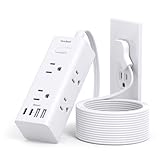
I bought my first ‘smart’ power strip years ago, thinking it would magically cut my electricity bill. It was a long, black beast, longer than any extension cord I’d ever seen, and cost a pretty penny. Did it save me money? Not really. Did it just become another dust collector that mostly served to trip me in the dark? Absolutely. This whole surge protector versus extension cord debate, especially when you start talking about length, trips up a lot of people.
So, are longer surge protectors extension cords bad? The short answer is: it depends, but usually, people worry about the wrong things and overlook the real dangers. Let’s get into it.
When Does a Long Cord Become a Problem?
Look, the fundamental difference between a surge protector and a regular extension cord is simple: a surge protector has built-in circuitry to absorb voltage spikes, like those from lightning strikes or faulty appliances. An extension cord just carries electricity from point A to point B. The ‘surge protection’ part is all about those tiny electronic components inside. The ‘extension cord’ part is about the wire, its gauge, and its length.
The fear that a longer surge protector is inherently worse often stems from a misunderstanding of electrical resistance. Yes, any wire has resistance, and that resistance increases with length. This means a longer cord will have a tiny bit more voltage drop across it, and it can heat up more if it’s carrying a heavy load. But here’s the kicker: for typical household use, the difference is negligible for the surge protection components themselves. The surge protection components don’t ‘wear out’ faster just because the cord is longer; they wear out based on how many surges they actually absorb.
Where length does matter is in the wire gauge. If you buy a super long surge protector with a thin wire (low gauge number means thicker wire), it’s basically just a glorified extension cord that might not handle the total amperage you’re plugging into it. This is where you can run into trouble. A thin wire can overheat, melt, and become a fire hazard. This isn’t specific to surge protectors; it’s true for any extension cord. The surge protection circuitry is usually pretty solid and isn’t directly affected by the length of the cord it’s attached to, as long as the cord itself is rated for the power draw.
My first big surprise came when I tried to power a small workshop setup with a long, cheap surge protector. Everything seemed fine for a few weeks, then I noticed the outlet plate where the surge protector plugged in felt warm. The surge protector’s cord itself felt warm too, especially near the plug. Turns out, I was drawing more amps than that thin cord was designed for. It wasn’t the surge protection that was the issue; it was the extension cord part of the unit failing under load. That was a stark reminder that the wire quality and gauge are just as, if not more, important than the surge protection claims, especially for longer units.
What to Actually Look for (and Ignore)
When you’re staring down the aisle at a wall of power strips, it’s easy to get overwhelmed. Most people just grab the longest one that looks like it has enough outlets. Bad move. Here’s what you should be looking at:
First, the joule rating. This tells you how much energy the surge protector can absorb before it fails. Higher is better. Think of it like a sponge for electrical spikes. For decent protection for your electronics (TVs, computers, consoles), aim for at least 1000-2000 joules. For really sensitive or expensive gear, you might want 2000-4000+ joules.
Second, the clamping voltage. This is the voltage level at which the surge protector starts doing its job. Lower is better. Ideally, you want this to be below 400-500 volts. This prevents damaging voltage from reaching your devices.
Third, and this is where length becomes a factor, check the wire gauge and the maximum amperage rating. This information might be printed on the cord or the back of the unit. A thicker wire (lower gauge number, like 14 AWG or 12 AWG for longer cords) can handle more current without overheating. The unit will also have a maximum amperage rating, usually 15 amps for standard household use. Make sure the devices you plug in don’t collectively exceed this. Using a long surge protector to power a space heater, a powerful drill, and a vacuum cleaner simultaneously is a recipe for disaster, regardless of the surge protection quality. (See Also: Can Extension Cords Short Out )
What should you ignore? Fancy marketing terms like ‘pure sine wave’ for surge protection (that’s more for inverters) or ‘advanced circuitry’ unless they explain what that circuitry is and why it’s better. Also, don’t fall for the idea that more outlets automatically means better protection. It just means more places to plug things in, potentially overloading the circuit or the surge protector itself.
Common Mistakes That Fry Your Gear
People make the same mistakes over and over, and it’s usually not because the surge protector failed, but because they used it wrong or bought the wrong one. The most common pitfall is using a surge protector for high-draw appliances that should be plugged directly into a wall outlet. We’re talking about things like refrigerators, washing machines, space heaters, hair dryers, and power tools. These draw a lot of continuous power and can overload a surge protector, causing it to overheat and potentially fail catastrophically. That fancy surge protection circuitry is designed for sudden spikes, not sustained heavy loads.
Another mistake is thinking that a surge protector is a ‘set it and forget it’ device. Many surge protectors have an indicator light that shows they are active and protecting your equipment. When this light goes out, it means the surge protection components have done their job one too many times and are no longer effective. They need to be replaced. I’ve seen people leave surge protectors with dead indicator lights plugged in for years, thinking they’re still protected. They’re basically just using a fancy power strip at that point, and their sensitive electronics are vulnerable to even minor power fluctuations.
People also underestimate the cumulative power draw. You might have a surge protector with 12 outlets, and think you can plug in a lamp, a laptop charger, a TV, a game console, and a small fan. That sounds fine, right? But if you then add a space heater or a vacuum cleaner to that same surge protector, you’re asking for trouble. Always check the total amperage rating of the surge protector and the amperage draw of your devices. It’s like trying to fill a small bucket with water from a fire hose – something’s going to overflow.
Finally, there’s the issue of physical damage. Cheaper surge protectors, especially longer ones, can have flimsy plastic casings that crack easily. If the casing is compromised, the internal wiring is exposed, creating a shock or fire hazard. Don’t cheap out on the build quality, especially if the surge protector is going to be in a high-traffic area or subjected to any kind of physical stress. One time, my cat decided to chew on the cord of a surge protector that was behind the TV. Thankfully, it was a relatively short one and the damage was obvious before anything bad happened, but it made me realize how easily these things can be damaged if not placed carefully.
Real-World Use: How I Use Mine
In my own house, I’m pretty particular about where surge protectors go and what they power. For my home office setup, which includes a couple of computers, monitors, printers, and various chargers, I use a good quality, medium-length surge protector with a high joule rating (around 2500).
I specifically chose one with a decent wire gauge so it doesn’t feel warm even when everything is on. I also made sure it had a clear ‘protected’ indicator light and I check it every few months. I know that if that light goes out, the whole unit is getting tossed, no questions asked. I’ve replaced one after a particularly nasty thunderstorm that I suspected knocked out a small appliance, even though nothing seemed broken.
Better safe than sorry.
For my entertainment center, which has a large TV, soundbar, game console, and streaming device, I use a similar surge protector. Again, high joule rating is key. I avoid plugging in anything with a motor or heating element into these. So, no vacuum cleaners or hair dryers near the TV. Those things get plugged directly into the wall or a heavy-duty extension cord if I absolutely need the reach. The entertainment center surge protector has also had its indicator light go out once; I replaced it immediately. It was about three years old and had been through a few power surges. (See Also: Can Extension Cords Be Use With Electric Heaters )
When I need to power something further away, like a tool in the garage or a fan in a distant corner of a room, I use a heavy-duty extension cord, NOT a surge protector. The key here is the gauge of the wire. For anything drawing significant power or running for extended periods, you want a thick cord, like 12-gauge or 14-gauge. These are built to handle the load and minimize voltage drop and overheating. A thin, cheap extension cord, whether it has surge protection or not, is a fire hazard waiting to happen.
I once tried to use a long, inexpensive surge protector to power a leaf blower from an outdoor outlet. It worked for about ten minutes before it started to smell like burning plastic. Thankfully, I was right there. I unplugged it immediately, and the surge protector was toast. That was a hard lesson: don’t use inadequate equipment for tasks that demand a lot of power, and always prioritize the wire’s ability to handle the load.
Surge Protector vs. Power Strip: What’s the Difference?
It’s a common point of confusion, but a surge protector and a basic power strip are not the same. A power strip is simply a device that provides multiple outlets from a single wall socket. It doesn’t offer any protection against voltage spikes. A surge protector, on the other hand, includes components (like Metal Oxide Varistors or MOVs) designed to absorb excess voltage and divert it away from connected devices.
Think of a power strip as just an extension of your wall outlet, while a surge protector is a more advanced guardian for your electronics. It’s important to understand this distinction, especially when considering if are longer surge protectors extension cords bad; the surge protection itself is separate from the cord’s capabilities.
Can I Plug a Power Strip Into a Surge Protector?
You absolutely can plug a power strip into a surge protector, but it’s generally not recommended if you can avoid it. When you daisy-chain these devices, you’re basically increasing the potential points of failure and making it harder to track down the source of any problems. More importantly, if the surge protector is already near its capacity, adding more devices via a power strip can easily overload it. If you must do it, make sure that the combined load of all devices plugged into the power strip and the surge protector does not exceed the amperage rating of the surge protector or the wall outlet. It’s always better to plug the power strip directly into a wall outlet if possible, or use a surge protector with enough outlets for your needs.
Understanding the Standards and Ratings
When you’re looking at surge protectors, you’ll often see ratings and certifications. The most important ones to pay attention to are UL (Underwriters Laboratories) listings, specifically UL 1449, which is the standard for surge protective devices. This certification means the product has been tested and meets safety requirements. Another relevant standard is UL 498 for receptacle-outlet devices. While you might not see it on every surge protector, it relates to the safety of the outlets themselves.
The joule rating, as mentioned, indicates how much energy the surge protector can absorb. A higher joule rating suggests better protection. However, it’s not the only factor. The clamping voltage is also important; it’s the voltage at which the surge protector activates. A lower clamping voltage means the protector starts working sooner to shield your devices. For example, a surge protector with a clamping voltage of 330V will react faster than one with a 500V rating.
Cord length is inherently tied to the wire gauge and maximum current it can safely handle. Standards bodies and manufacturers recommend specific wire gauges for different lengths and expected loads. For instance, a 15-foot cord might be rated for 13 amps with a 16-gauge wire, but a 25-foot cord might require a 14-gauge wire to handle the same 15 amps safely without significant voltage drop or overheating. Always check the manufacturer’s specifications for the cord’s maximum load capacity, especially for longer units. They are there for a reason, and ignoring them is where many people get into trouble with their equipment, not because the surge protection is inherently bad, but because the cord fails.
This isn’t a place to be vague. When I bought my current home office surge protector, I looked for the UL 1449 certification, a joule rating of at least 2000, a clamping voltage under 400V, and a cord that felt substantial, with the gauge clearly marked as 14 AWG for its 10-foot length. I paid about $45 for it, which felt steep at the time, but I’ve already seen it absorb a surge that likely would have fried my router, so I consider it money well spent. (See Also: Are Outdoor Extension Cords 10 Or 12 Gauge )
How Many Times Can a Surge Protector Be Used?
A surge protector doesn’t have an infinite lifespan. The surge protection components, typically Metal Oxide Varistors (MOVs), degrade slightly with each surge they absorb. Think of it like a sponge absorbing water – eventually, it gets saturated. Most surge protectors have an indicator light that signals when the protection circuitry is still active.
When this light goes out, the surge protector is no longer providing surge protection, even though it will likely still function as a basic power strip. It’s recommended to replace a surge protector every 3-5 years regardless of the indicator light, as the components can degrade over time, and external factors like power grid fluctuations can also take a toll. Don’t rely on a dead indicator light to tell you it’s time; proactive replacement is a safer bet.
How Long Can a Surge Protector Cord Be?
There isn’t a strict legal or universally mandated maximum length for a surge protector cord. However, the practical limit is determined by wire gauge and the intended load. Longer cords require thicker wires (lower gauge number) to safely carry the electrical current without overheating or significant voltage drop. For standard household use, you’ll find surge protectors with cords ranging from 3 feet to 25 feet or even longer. Always make sure the cord gauge is appropriate for the power draw of your devices, especially for longer cords.
What Is the Difference Between a Surge Protector and an Extension Cord?
A basic extension cord simply extends an electrical outlet’s reach; it doesn’t offer any protection against power surges. A surge protector, on the other hand, contains internal components designed to detect and absorb voltage spikes, protecting connected electronics from damage. While a surge protector has an extension cord attached, the key difference is the presence of surge-suppressing circuitry. So, while are longer surge protectors extension cords bad is a valid question, understanding that the surge protection itself is distinct from the cord’s capabilities is vital.
Can You Plug Multiple Surge Protectors Together?
Plugging multiple surge protectors together, a practice sometimes called ‘daisy-chaining’, is generally not recommended. Each connection point adds resistance and potential failure points, and it can make it harder to diagnose electrical issues. Furthermore, if the first surge protector in the chain is already handling a significant load, adding another one can easily overload it, negating any protection and creating a fire hazard. It’s always best to plug devices directly into a surge protector with enough outlets or use a basic power strip plugged into a wall outlet, rather than chaining surge protectors.
What Is the Maximum Length of a Surge Protector?
The maximum length of a surge protector is not defined by a single number but by electrical engineering principles. Longer cords need thicker wire gauges (lower AWG numbers like 14 or 12) to handle current safely. Standard residential surge protectors typically come with cords up to 25 feet long. Beyond that, you might be looking at specialized industrial cords, or you’d be better off using a heavy-duty extension cord for reach and plugging your surge protector into that if necessary, making sure the extension cord itself is appropriately rated.
The Bottom Line on Long Cords and Protection
So, let’s circle back to the main question: are longer surge protectors extension cords bad? The answer is no, not inherently. The problem isn’t the length; it’s the quality of the entire unit. A long surge protector can be perfectly safe and effective if it’s made with a thick enough wire gauge to handle the load, has a good joule rating, a low clamping voltage, and a sturdy build. The danger arises when a long cord is paired with thin wire, leading to overheating, or when a surge protector is used for high-amperage devices that should be plugged directly into the wall.
My personal rule is this: for electronics that matter (computers, entertainment systems, anything with a microchip), always use a surge protector with a decent joule rating and check that ‘protected’ light regularly. For high-draw appliances, use a heavy-duty extension cord with the correct wire gauge, or plug directly into the wall. Don’t let the length of the cord be the sole factor in your decision; look at the whole package. If you’re buying a long surge protector, pay extra attention to the wire gauge and the total amperage rating. It’s much better to spend a little more on a quality, appropriately rated unit than to risk damaging your expensive electronics or, worse, starting a fire.
Final Verdict
The truth is, a surge protector’s length isn’t the villain. It’s usually the combination of a thin wire, an overloaded circuit, or using the wrong tool for the job that causes problems. If you need reach, get a surge protector with a sturdy, thick cord that’s rated for the power you’ll be drawing. For those power-hungry appliances, forget the surge protection and focus on a heavy-duty extension cord with the right gauge. It’s about understanding the load, not just the length.
Don’t just grab the longest one to reach that outlet across the room without checking the specs. Look for that UL certification, a good joule rating, and importantly, a wire gauge that doesn’t make you sweat. Remember, the ‘protected’ light on your surge protector is your friend; if it goes out, the protection is gone, and it’s time to buy a new one. So, are longer surge protectors extension cords bad? Only if you use them carelessly.