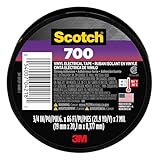
My buddy Kevin called me up, stressed. Said his old lamp was sparking. “Can I use electrical tape on frayed wire?” he yelped. I pictured him wrestling with a roll of that cheap, sticky stuff, half-assing a fix that would probably melt off in a week. Look, I’ve been there. I’ve stood in my garage, surrounded by a graveyard of cheap tools and quick fixes that just didn’t hold up, and wondered the same thing.
The honest truth is, it’s not a simple yes or no. It depends on what you mean by ‘frayed’ and what kind of electrical tape you’re talking about. Let’s cut through the noise and get down to what actually works, and what’s just a recipe for a bigger headache.
The Real Deal: What Electrical Tape Is (and Isn’t) For
Alright, let’s get one thing straight from the jump: not all tape is created equal, and electrical tape is no exception. When we talk about electrical tape, we’re usually talking about vinyl tape. The good stuff, like 3M Super 33+ or Scotch 88, is designed to be stretchy, conformable, and importantly, an insulator. It’s got a decent temperature range, it resists abrasion, and it holds up pretty well against UV and moisture. That’s its job: to provide a protective, insulating barrier over wire splices, connections, or minor nicks in insulation. Think of it as a temporary bandage, not a permanent stitch.
My first real ‘aha!’ moment with electrical tape came years ago when I was rewiring a vintage stereo. I’d nicked a wire barely a millimeter deep. My initial thought was, ‘Tape it up and call it a day!’
I grabbed some generic tape I had lying around. Within a month, that tape was brittle, cracked, and peeling off, exposing the damn wire again. That’s when I learned that cheap electrical tape is a false economy.
It’s like buying the cheapest engine oil you can find – it might seem like you’re saving money, but you’re just asking for trouble down the road. The good stuff, the 3M tapes, they stay pliable. They stretch and mold to the wire, creating a really solid, snug wrap that actually works as an insulator and a protector for a good while.
The common advice you’ll hear is that electrical tape is only for low-voltage applications. And for the most part, they’re not wrong. If you’re dealing with a lamp cord or a speaker wire, and the fraying is superficial, good quality electrical tape can absolutely do the job, at least for a while. It’s designed to handle up to 600 volts, which is plenty for most household stuff. The problem arises when the fraying is severe, or if it’s on a high-amperage circuit, or somewhere that gets hot. That’s where you’re pushing its limits, and frankly, you’re playing with fire – literally.
I remember one time I was fixing an extension cord that had been run over by a lawnmower. It wasn’t a clean cut; it was a mess of split wires and frayed insulation. I, in my infinite wisdom, thought I could just wrap the hell out of it with the best electrical tape I had. Big mistake. A few weeks later, during a rainstorm, that whole section got damp, and the tape, while still mostly intact, had wicked moisture inside. The connection shorted out, tripped the breaker, and I was left with a useless cord and a lesson learned the hard way. It wasn’t just about the fraying; it was about the severity and the environment.
When Electrical Tape Is a ‘meh,’ Not a ‘hell Yes’
So, when does electrical tape become a bad idea? It’s when the damage is more than skin deep. If you can see multiple strands of copper showing, if the insulation is ripped away in large chunks, or if the wire itself is physically broken, electrical tape is not your friend. It’s a cosmetic fix, a way to hide a problem rather than solve it. Think of it like putting a band-aid on a broken leg. It might cover the wound, but it’s not doing anything to fix the underlying issue. (See Also: Can Duct Tape Be Used As Electric Tape )
I’ve seen people try to use electrical tape to hold together wires that have completely separated. This is incredibly dangerous. Electrical tape is an insulator, yes, but it’s not a structural adhesive. It’s not meant to bear weight or hold components together. If a wire is broken, you need to splice it properly. That means using crimp connectors, solder, or Wago connectors, and then insulating those connections with tape. You don’t just wrap a broken wire and expect it to magically fuse back together and be safe.
Another scenario where electrical tape falls short is in high-heat environments. While good quality electrical tape has a decent temperature rating, it’s not designed for constant, high heat like what you might find near an engine block, a heating element, or in a really poorly ventilated appliance. In those situations, the tape can soften, melt, and degrade, losing its insulating properties and becoming a sticky, gooey mess. I once tried to tape up a frayed wire on an old toaster oven. That lasted about three toasting cycles before it started to smell like burning plastic and I had to yank the plug in a panic. The insulation was completely melted.
Here’s a contrarian opinion for you: Most people over-rely on electrical tape. They think it’s the go-to fix for any wire problem. I disagree. It’s a specific tool for specific, minor issues. For anything more significant, you need to use proper wire connectors, heat shrink tubing, or even replace the entire section of wire or cable. Using electrical tape as a crutch for shoddy workmanship or significant damage is just asking for trouble, and frankly, it’s a fire hazard waiting to happen.
The Right Way to Use Electrical Tape (when You Actually Should)
Okay, so when is it appropriate to use electrical tape on a frayed wire? For minor abrasions or nicks where the copper conductor isn’t exposed or is only barely visible. The insulation needs to be intact enough that the tape can form a solid, continuous barrier. The key is to overlap your tape generously, stretching it slightly as you wrap to make sure it conforms tightly to the wire. You want to start your wrap a good inch or so before the damaged area and extend it an inch or so past it. Aim for at least two or three full layers.
My process, if I’ve determined it’s a suitable job for tape, goes something like this:
- Inspect Thoroughly: Make sure the wire isn’t broken, and the damage is only to the outer jacket or superficial insulation. Check for any signs of heat damage or charring.
- Clean the Area: Wipe down the wire and surrounding area to remove any dirt or grease. This helps the tape adhere better.
- Choose Quality Tape: This is a must. I’ll grab a roll of 3M Super 33+ or Scotch 88. They cost a bit more, but they’re worth every penny.
- Start the Wrap: Begin wrapping about an inch before the frayed section, with the sticky side of the tape facing the wire.
- Stretch and Overlap: As you wrap, stretch the tape slightly. This activates the adhesive and makes it conform to the wire’s shape. Overlap each turn by at least half the width of the tape.
- Build Layers: Continue wrapping, making sure each new layer overlaps the previous one. Build up at least 2-3 solid layers over the damaged area, extending well beyond it on either side.
- Finish and Secure: Once you’ve covered the area generously, give the end of the tape a firm press to make sure it’s adhered. Sometimes, I’ll even give it a final wrap with a different, more solid tape like a good quality friction tape or even a self-fusing silicone tape over the electrical tape for extra mechanical protection, but only if it’s not a high-heat or constantly flexed area.
This method provides a decent protective layer and insulation for minor damage. It’s not a permanent fix, but it can buy you time until you can do a proper repair or replace the component. The key is that the tape is the final layer of insulation, not the only layer holding a broken wire together.
I’ve also found that for certain applications, like securing a loose wire harness in a car that’s just rubbing against something, electrical tape is perfect. It’s flexible, it sticks well, and it protects the wire from further abrasion. But again, the wire itself is still intact. It’s about preventing future damage, not fixing existing breaks.
When to Call in the Big Guns (or Just Get a New Cord)
Let’s be blunt: sometimes, electrical tape just isn’t enough, and trying to make it work is a gamble. If the wire is significantly damaged, meaning you have multiple broken strands of copper, or the insulation is completely gone for more than a tiny spot, you’re in DIY-fix territory that electrical tape can’t handle. This is where you need to consider proper wire repair methods. (See Also: Can Electrical Tape Go In The Oven )
We’re talking about splicing the wire using appropriate connectors – like butt connectors, spade terminals, or Wago connectors – depending on the application. After splicing, you’d typically use heat shrink tubing over the splice, and then you could optionally use electrical tape to further secure or protect the heat shrink. But the tape isn’t the primary connection.
I learned this lesson when I was trying to repair a power cord for a vacuum cleaner. The cord had been run over, and several inner wires were visibly severed. My initial thought was to try and piece them back together and tape it. It was a disaster waiting to happen. I ended up buying a replacement cord, which cost maybe $20, and the peace of mind was priceless. The cost of a new cord, or a replacement part, is almost always cheaper than dealing with the aftermath of a faulty electrical repair – think fires, electrical shock, or damaged appliances.
Here’s a little table I put together to help you decide:
| Type of Damage | Electrical Tape Verdict | Better Option |
|---|---|---|
| Superficial nick or abrasion in insulation (no copper showing) | ✅ Okay for temporary fix or minor protection | Heat shrink tubing, or proper splicing if it’s a high-stress area. |
| Small area where a few strands of copper are exposed | ⚠️ Risky; only if extremely minor and you can get a perfect, gapless wrap. Consider this a temporary patch ONLY. | Proper splicing with appropriate connector and heat shrink. |
| Multiple broken strands of copper, insulation mostly gone | ❌ Absolutely NOT. Dangerous. | Replace the entire cord/cable or section of wire. Proper splicing is mandatory. |
| Wire is completely severed or broken into pieces | ❌ Absolutely NOT. Dangerous. | Replace the entire cord/cable or section of wire. Proper splicing is mandatory. |
| High heat or high-moisture environment | ❌ Generally not recommended for long-term use. Can degrade. | Specialty high-temperature tapes, self-fusing silicone tape, or wire replacement. |
| Mechanical stress (constant flexing, pulling) | ❌ Tape can loosen and wear out quickly. | Reinforce with a more durable method like heat shrink, or replace the cable. |
The bottom line is that if you’re questioning whether electrical tape is sufficient, it’s probably not. It’s better to err on the side of caution and invest in a proper repair or replacement. Your safety and the safety of your home are worth more than a few dollars saved on tape.
The Science (sort Of) Behind the Stickiness and Insulation
Let’s peek under the hood a bit, not in a super technical way, but enough to understand why good electrical tape works and cheap stuff doesn’t. The vinyl material itself is a polyvinyl chloride (PVC) formulation. The ‘good’ electrical tapes use a higher quality PVC that remains flexible across a wider temperature range. They also use specific plasticizers and stabilizers in the PVC to prevent it from becoming brittle over time, especially when exposed to UV light or ozone, which are common in electrical environments.
The adhesive is another key player. High-quality electrical tapes use specialized rubber-based or acrylic adhesives that offer good tack (initial stickiness) and shear strength (resistance to sliding). They’re designed to bond well to the vinyl backing and to the wire insulation without degrading. This is why that cheap tape gets gooey or brittle – the adhesive is probably a lower-grade compound that can’t handle temperature fluctuations or exposure.
When you stretch good electrical tape, you’re not just making it smaller; you’re actually orienting the polymer chains in the vinyl. This makes it stronger and more conformable, allowing it to wrap tightly around irregular shapes like wire splices without leaving air gaps. These gaps are where moisture and contaminants can sneak in, leading to corrosion or short circuits. The stretchiness is also important for creating a self-sealing effect, where each layer slightly adheres to the one below it, creating a cohesive, smooth barrier.
The insulation rating (like 600V) tells you the maximum voltage the tape can withstand before breaking down. This is determined by the thickness of the vinyl and the quality of the PVC formulation. It’s important to remember this rating is for a new, undamaged piece of tape applied correctly. A damaged or poorly applied wrap won’t hold up to that voltage. (See Also: Can Electrical Tape Cause Esd )
This is why if you have a nick where the copper is showing, even if you tape it, the tape isn’t directly insulating the conductor; it’s insulating the air around the exposed part, which is far less effective and much more prone to failure, especially with any kind of moisture present. According to 3M, their Super 33+ tape is designed to maintain its elasticity and conformability in temperatures as low as -10°F (-23°C) and up to 220°F (105°C), which is a huge difference from generic tapes that might harden at freezing temperatures or soften at room temperature.
People Also Ask
Can You Use Regular Tape on Electrical Wires?
No, absolutely not. Regular tapes like packing tape, duct tape, or masking tape are not designed for electrical insulation. They lack the necessary dielectric strength (the ability to resist electrical current) and can degrade quickly when exposed to heat, electricity, or even just time. Using regular tape on electrical wires is a serious safety hazard and can lead to shocks or fires.
Is Electrical Tape a Permanent Repair?
Generally, no. Electrical tape is considered a temporary or semi-permanent solution for minor insulation damage or to secure connections. While high-quality electrical tape can last for a considerable time under ideal conditions, it’s not designed to be a permanent structural or insulating fix. For long-term reliability, especially in important applications, proper splicing with connectors and heat shrink tubing or replacing the damaged component is recommended.
What Is the Difference Between Electrical Tape and Other Tapes?
The primary difference lies in their material composition and intended use. Electrical tape is typically made of vinyl (PVC) and is specifically formulated to be an electrical insulator with good flexibility, adhesion, and resistance to environmental factors like moisture and UV light. Other tapes, like duct tape or masking tape, are made from different materials (cloth, paper) with adhesives designed for adhesion to various surfaces, not for electrical insulation. Specialty tapes like friction tape or rubber splicing tape have different properties for more specialized electrical applications.
How Long Does Electrical Tape Last on a Wire?
The lifespan of electrical tape on a wire can vary greatly depending on the quality of the tape, the environmental conditions, and the severity of the damage. High-quality electrical tape (like 3M Super 33+ or Scotch 88) used for minor nicks in a protected indoor environment might last for many years. However, in harsh conditions, exposed to heat, sunlight, moisture, or constant flexing, it could degrade within months or even weeks. It’s always best to periodically inspect any taped wire for signs of wear or degradation.
Final Thoughts
So, can I use electrical tape on frayed wire? My honest answer is: sometimes, for very minor stuff. If it’s just a small nick and the copper isn’t showing, and you’ve got good quality tape and wrap it properly, it can get you by. But if there’s any doubt, or if the damage is more than superficial, don’t risk it. Electrical tape is a bandage, not a cure.
Trying to patch up serious wire damage with tape is like trying to bail out a sinking ship with a teacup. You’re delaying the inevitable and increasing the danger. For anything more than a scratch, you need to bite the bullet and do it right – splice, use heat shrink, or replace the damaged section. It’s cheaper than a fire or a shock.
Next time you’re faced with a frayed wire, take a good, hard look. Be brutally honest with yourself about the damage. If you’re tempted to just slap some tape on it because it’s easier, stop for a second and consider the real cost of a shortcut. Your home and your safety are worth the proper fix.