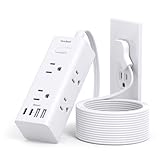
I’ve been there. You’re freezing, the thermostat is useless, and you just need a little warmth NOW. Your trusty space heater is right there, but the plug is just… too far away. This is where the extension cord question pops up: are space heaters safe on extension cords? Honestly, the official advice is usually a firm ‘no,’ and for good reason. But life isn’t always by the book, and sometimes you need a practical answer. I’ve learned a lot the hard way, and I’m here to give you the real deal, not just what the manufacturer wants you to hear.
This isn’t about cutting corners; it’s about understanding risk and making smart choices. We’re going to cut through the jargon and get to what actually matters when it comes to keeping your toes warm without burning down the house.
Why That Cord Feels Like a Fire Risk (and Sometimes It Is)
Let’s get this straight from the jump: plugging a high-wattage appliance like a space heater into a flimsy, undersized extension cord is a recipe for disaster. I learned this the hard way one particularly brutal January.
My ancient apartment had the worst outlet placement, forcing me to use a long, thin extension cord for my oil-filled radiator heater. I remember it felt warm to the touch, which I initially dismissed as ‘just the heater working hard.’
Then, a faint, acrid smell started to creep in. Thankfully, I caught it before it got serious – the plastic insulation on the cord was starting to melt. It was a stark reminder that not all cords are created equal, and space heaters are power-hungry beasts.
Space heaters, especially the ceramic or radiant types, can draw a significant amount of electricity, often between 1000 and 1500 watts. This means they need a cord that can handle that electrical load without overheating. Standard indoor extension cords, the ones you might use for a lamp or a laptop charger, are typically rated for much lower amperages. When you push too much current through a cord that’s not designed for it, the wires inside get hot. This heat can degrade the insulation, leading to shorts, sparks, and, in the worst-case scenario, a fire. It’s like trying to force a fire hose through a garden hose – something’s gotta give, and it’s usually the insulation.
Think about it this way: a space heater is basically a dedicated heating element. It’s not like your phone charger that sips power; it’s guzzling it. If the extension cord isn’t solid enough to handle that constant, high demand, it becomes a weak link. The cord itself can overheat, the plug can melt, and the connection points can become a hazard. This is why manufacturers and safety organizations scream about not using extension cords. They’re trying to cover their bases and prevent the most obvious, dangerous misuse. But the reality is, with the right kind of extension cord, the risk can be significantly managed.
The common advice to “never use an extension cord with a space heater” is a blanket statement that doesn’t account for the nuances. Yes, it’s the safest bet to plug directly into the wall. But when that’s physically impossible, or just plain inconvenient, understanding what makes an extension cord suitable for a space heater is most important. It boils down to gauge, length, and quality.
The gauge, or thickness, of the wire inside the cord is the most important factor. Thicker wires have less resistance, allowing electricity to flow more easily and generating less heat. A thinner wire means more resistance, more heat, and a higher risk of overheating. It’s a fundamental principle of electrical engineering, and ignoring it when it comes to high-draw appliances is just plain foolish.
I’ve seen extension cords that felt flimsy even when unplugged. They were cheap, probably made with the thinnest possible wire, and absolutely not meant for anything more than a low-power device. For a space heater, you need something that feels substantial, something built to handle a serious electrical load. The insulation should be thick and durable, not thin and easily nicked.
The length of the cord also plays a role, though less significantly than the gauge for typical home use. Longer cords, especially thinner ones, can have a bit more resistance due to the sheer amount of wire. However, the primary concern remains the wire’s gauge. If you need a long cord, you absolutely need a heavy-duty one with a low gauge number. The lower the gauge number, the thicker the wire, and the better it is for high-demand appliances.
What to Look for in a Space Heater-Approved Extension Cord
Alright, so you’ve decided you need an extension cord for your space heater. Don’t just grab the first one you see in the hardware store’s bargain bin. We’re talking about safety here. The absolute golden rule is to look for a cord specifically rated for heavy-duty use or, even better, one that explicitly states it’s suitable for appliances like portable heaters. This usually means it’s a 14-gauge or even a 12-gauge cord. Anything thicker than 16-gauge is generally a no-go for space heaters.
The gauge is the number that matters most. You’ll see it printed on the cord itself, usually near the plug or on the jacket. For a 1500-watt heater, a 14-gauge cord is the minimum you should consider, especially if it’s longer than 25 feet. If you can get a 12-gauge cord, go for it. It’s thicker, more solid, and will handle the electrical load with less strain and less heat buildup. Think of it as upgrading from economy class to first class for your electricity. (See Also: Can Extension Cords Short Out )
Another thing to check is the amperage rating. Most household circuits are 15-amp or 20-amp. Your extension cord needs to be rated at least as high as the circuit it’s plugged into, and ideally, higher than the heater’s draw. A common 1500-watt heater at 120 volts draws about 12.5 amps (1500W / 120V = 12.5A). So, a cord rated for 13 amps is already pushing it. You want some headroom. A 15-amp or 20-amp rated cord is much safer. Again, look for this information printed on the cord or its packaging.
The plug and socket construction are also important. They should feel solid, not flimsy. The prongs on the plug should fit snugly into the wall outlet and the socket on the cord. Loose connections are another source of resistance and heat. I once bought a cheap cord where the plug felt wobbly, and I immediately returned it. It’s a small detail, but it signifies the overall quality of the product. You want a cord that feels built to last and handle significant power transfer.
When it comes to length, try to use the shortest cord possible. Every foot adds a little resistance. If you need to cover, say, 50 feet, you absolutely must use a heavy-gauge cord. A 50-foot 16-gauge cord is a fire hazard with a space heater; a 50-foot 12-gauge cord might be acceptable, but even then, I’d be monitoring it closely. Ideally, if you need that much length, you should consider relocating the outlet or finding a different heating solution.
Also, pay attention to the type of insulation. Outdoor-rated cords are often more durable and weather-resistant, which can translate to better protection against damage, even when used indoors. They are often thicker and built to withstand more abuse. Just make sure it’s clearly marked as suitable for the appliance you’re using it for. Some cords are designed for general purpose use, others for specific high-draw appliances.
My personal rule of thumb: if the extension cord feels too light or cheap, it probably is. Spend a few extra bucks on a well-made, heavy-duty cord from a reputable brand. It’s a small investment compared to the potential cost of a fire or damaged appliance. I learned this lesson after a close call with a melted cord, and I never cheap out on extension cords for high-draw items anymore. It’s simply not worth the risk.
Here’s a quick rundown of what to look for:
| Feature | What to Look For | Verdict |
|---|---|---|
| Gauge | 14-gauge (minimum) or 12-gauge (ideal) | Key for heavy-duty use |
| Amperage Rating | 15-amp or 20-amp | Must match or exceed heater draw |
| Plug/Socket | Snug fit, solid construction | Avoid loose connections |
| Insulation | Thick, durable, ideally outdoor-rated | Protects against damage and heat |
| Length | As short as possible | Minimize resistance |
Common Mistakes People Make (and How to Avoid Them)
You’d think with all the warnings, people would get it right, but I see the same mistakes happening over and over. The biggest one, hands down, is using an undersized cord. People see a cord and think, ‘it’s a cord, it’ll work.’ They grab that thin, white cord they used for their Christmas lights last year and plug in their powerful space heater. It’s a gamble they’re likely to lose. The heat generated by the resistance in that thin wire can be immense, far more than the cord is designed to dissipate. It’s like wearing a wool sweater in the desert – you’re going to overheat, fast.
Another common error is chaining extension cords together. This is a big no-no. Each connection point is a potential weak spot, a place where resistance can increase and heat can build up. Plus, chaining cords often means using multiple, potentially undersized cords, compounding the danger. If you need a long run, invest in one long, heavy-duty cord. Don’t try to make a short cord reach by adding another. It’s the electrical equivalent of duct-taping a leaky pipe – a temporary fix that’s begging for trouble.
Overloading the circuit is another huge problem. Even with the right extension cord, if the outlet itself or the circuit breaker is overloaded, you’re asking for trouble. Space heaters are often the main culprit for tripping breakers because they draw so much power. If you plug a space heater into an extension cord that’s already powering other devices on the same circuit, you risk overloading the circuit. Always plug your space heater, and its extension cord, directly into a wall outlet that isn’t shared with other high-draw appliances if at all possible. Ideally, it should be on its own dedicated circuit, though that’s rarely an option in older homes.
People also often neglect to inspect their cords. Extension cords get used and abused. They get run over by chairs, pinched in doors, chewed by pets (if you have them, keep cords well out of reach!), and generally treated poorly. Before you plug in your space heater, give that cord a thorough once-over. Look for nicks, cuts, fraying, or melted spots. If you see any damage, discard the cord immediately. It’s not worth the risk of a fire or shock. I used to be guilty of just plugging things in without a second thought, but after that close call with the melting cord, I’m now obsessive about checking every cord before use, especially for high-power devices.
One thing I see a lot of advice about is where to plug it in. Some say only into a grounded three-prong outlet. This is generally good advice for safety, but it often creates a problem for people who need an extension cord because the wall outlet might be two-prong.
If your outlet is two-prong, you absolutely need a heavy-duty cord with a three-prong plug to make sure proper grounding. However, some older heaters might come with two-prong plugs. (See Also: Can Extension Cords Be Use With Electric Heaters )
In those cases, you’re limited by the appliance itself, but you still need the heavy-duty cord. The National Electrical Code (NEC) has specific requirements for cords used with heating appliances.
For general use, the NEC recommends cords be rated for the appliance’s amperage and voltage, and that they be heavy-duty. Specific appliance types might have even stricter requirements.
Another mistake is assuming all “heavy-duty” cords are equal. There’s a difference between a cord that looks heavy and one that’s actually built with thick copper wiring and solid insulation. Always check the gauge number. If it’s not clearly marked, or if it’s a 16-gauge cord, walk away. No exceptions. I’ve seen cords marketed as “heavy-duty” that were still too thin for a space heater. Trust the gauge number, not just the marketing hype.
Finally, people often leave extension cords plugged in and in use for extended periods without monitoring. If you’re using an extension cord with your space heater, especially for many hours a day, you need to check it periodically. Feel the cord and the plug periodically. If it feels more than just slightly warm, unplug it immediately. That slight warmth is normal due to electrical resistance, but anything hot to the touch is a warning sign.
My Real-World Experience: The Extension Cord I Now Trust
After my little melting incident, I became incredibly paranoid about extension cords and space heaters. For a while, I just moved furniture, rearranged my living room, did whatever it took to plug my heater directly into the wall. But then I needed to heat my garage workshop during a particularly cold spell, and the nearest outlet was… well, let’s just say it was across the entire building. I knew I needed a serious extension cord solution.
I spent hours researching, reading reviews, and looking at specs. I finally settled on a 50-foot, 12-gauge cord from a well-known electrical supply company. It wasn’t cheap – I think I paid around $75 for it, which felt insane at the time compared to the $10 cords I used to buy. But the moment I unboxed it, I could tell the difference. It was thick, heavy, and felt incredibly solid. The insulation was substantial, and the plug felt like it could withstand a minor earthquake.
I plugged my powerful 1500-watt convection heater into it. I ran it for hours, day after day, in the drafty garage. I’d periodically go and touch the cord, especially near the heater plug and the wall outlet plug. It got slightly warm, just like any electrical conductor would, but it never got hot. The plastic never softened, there was no smell, and my circuit breaker stayed put. It felt… safe. Actually safe.
This wasn’t just about warmth; it was about peace of mind. Knowing that I had a cord that was designed for the job, with plenty of headroom for the electrical load, made all the difference. I’ve since used it for other high-draw appliances too, like my portable air conditioner in the summer, and it’s performed flawlessly. It’s one of those purchases where I initially winced at the price but now consider it one of the best investments I’ve made for home safety and comfort.
The lesson for me was that you can’t cut corners on electrical safety. The cheap cords are cheap for a reason – they use less copper, thinner insulation, and are simply not designed for sustained, high-power draw. Investing in a quality, heavy-gauge extension cord is not an indulgence; it’s a necessity if you’re going to use one with a space heater. It’s the difference between a potential disaster and a reliable heating solution.
It’s about understanding that the electrical current is an invisible force that demands respect, and the tools we use to manage it need to be up to the task. This is why I now firmly believe that, yes, space heaters can be safe on extension cords, but only if you use the right kind of cord and follow best practices.
The core principle is simple: match the cord to the appliance. If the appliance is a power hog, the cord needs to be a heavyweight. Anything less is just asking for trouble. I’ve tried a few different heaters over the years, from basic ceramic models to fancier infrared ones, and they all pull a significant amount of juice. It’s not the type of heater that matters as much as its wattage. Higher wattage means higher amperage draw, and thus, a greater need for a solid cord.
I recall a time when I was trying to heat a small, uninsulated shed for some winter projects. The electricity was run from the main house, and the outlet was a good 75 feet away. I was tempted to just run a couple of lighter cords end-to-end, but the memory of that melting cord spurred me to buy a single, long, heavy-duty cord. It was a beast – thick as my thumb, and it cost me nearly $100. But it worked perfectly, and more importantly, it worked safely. That feeling of relief knowing I hadn’t created a fire hazard was worth every penny. (See Also: Are Outdoor Extension Cords 10 Or 12 Gauge )
The Nuance: When Direct Plug-in Isn’t Feasible
Look, I’m not going to pretend that plugging directly into the wall is always the ideal scenario. For some people, in some living situations, it’s just not practical. Maybe your home has very few outlets. Perhaps the only available outlet is inconveniently located, forcing you to run cords across high-traffic areas, creating a tripping hazard. Or, you might have an older home with outdated wiring that doesn’t have enough outlets to go around. In these cases, the question of whether space heaters are safe on extension cords becomes not just a matter of convenience, but a necessity.
If you find yourself in one of these situations, the key isn’t to abandon the idea of using a space heater, but to approach the use of an extension cord with extreme caution and the right equipment. This is where the detailed advice on gauge, amperage, and construction becomes absolutely vital. It’s not about finding a loophole; it’s about understanding the electrical principles involved and mitigating the risks associated with using an extension cord for a high-draw appliance.
Consider older homes. Many have two-prong outlets and wiring that wasn’t designed for the power demands of modern appliances. While you should always strive to have modern, grounded outlets installed by a qualified electrician, that’s not always an immediate option. If you have an older space heater with a two-prong plug, you’re inherently limited. However, you must still use a heavy-duty extension cord. A two-prong plug means the appliance isn’t grounded, which is a safety concern in itself, but an undersized extension cord adds another layer of immediate danger. The goal is to make the extension cord the strongest, safest link in the chain, even if the appliance itself has limitations.
I’ve had friends who, out of desperation, would run extension cords under rugs to hide them and prevent tripping. This is a TERRIBLE idea. Rugs can insulate the cord, trapping heat and making it difficult to detect overheating. Plus, the friction from foot traffic can damage the cord’s insulation over time. If you must run a cord in a walkway, use a cord protector designed for that purpose, or at the very least, run it along a wall where it’s less likely to be stepped on. But honestly, if your only option involves running a cord across a major walkway, you should re-evaluate your heating strategy.
The primary takeaway here is that if you must use an extension cord, it needs to be a top-tier, heavy-duty, appropriately gauged cord. It’s about making a conscious, informed decision to prioritize safety. This isn’t a DIY project where you can afford to guess. Every detail, from the gauge of the wire to the thickness of the insulation, matters. The alternative is risking property damage or, far worse, personal injury. When you’re looking at your heating options, and realize the outlet is just out of reach, take a deep breath, do your homework on extension cords, and make the safe, smart choice.
It’s about acknowledging that sometimes you can’t just plug directly in, and then taking the necessary steps to make the alternative as safe as humanly possible. This means not skimping on the extension cord. It means inspecting it before every use. It means understanding the wattage of your heater and making sure the cord can handle it with ease. It’s a responsibility that comes with using portable heating devices, and it’s one you shouldn’t take lightly.
Faq: Answering Your Burning Questions
Can I Use a Standard Indoor Extension Cord with a Space Heater?
Generally, no. Standard indoor extension cords are typically too thin (higher gauge number) and not rated for the high amperage draw of most space heaters. Using one can lead to the cord overheating, melting, and posing a significant fire risk. Always opt for heavy-duty cords specifically designed for high-wattage appliances.
What Gauge Extension Cord Is Safe for a Space Heater?
For most 1500-watt space heaters, a 14-gauge extension cord is the minimum recommended. A 12-gauge cord is even better, especially for longer runs or if you want extra safety margin. Avoid 16-gauge cords for space heaters at all costs.
How Long of an Extension Cord Can I Use with a Space Heater?
The shorter, the better. Longer cords increase electrical resistance. If you need a longer cord (e.g., 50 feet), you absolutely must use a heavy-duty, thick gauge cord (like 12-gauge) to compensate for the length and make sure safe operation. Always use the shortest cord that safely reaches your desired location.
Are Outdoor Extension Cords Safe for Space Heaters?
Outdoor-rated extension cords are often more durable and weather-resistant, which can make them a good choice for indoor use with space heaters, provided they meet the gauge and amperage requirements. They are typically built to a higher standard than basic indoor cords, but always check the specific rating (gauge and amperage) to make sure it’s suitable for your heater.
What If My Space Heater Has a Two-Prong Plug?
Even if your space heater has a two-prong plug (meaning it’s not grounded), you must still use a heavy-duty extension cord that is appropriately gauged and rated for its amperage. The lack of grounding on the appliance itself is a separate safety concern, but using an undersized extension cord adds an immediate and severe fire hazard.
Conclusion
So, to bring it all home: are space heaters safe on extension cords? My honest answer is, they can be, but only if you’re willing to invest in the right equipment and be vigilant. That cheap, flimsy cord you’ve had in a drawer for years? It’s not the one. You need a heavy-duty, thick-gauge cord (14-gauge minimum, 12-gauge preferred) that’s rated for at least 15 amps, preferably 20 amps. Check the printing on the cord itself for its gauge and amperage rating.
Don’t be afraid to spend a bit more on a quality cord from a reputable brand. It’s a small price to pay for peace of mind and to avoid the very real risk of fire or appliance damage. Always inspect your cords for any signs of wear or damage before each use, and try to use the shortest cord possible for your needs. This is the practical, lived-in advice from someone who’s been there and learned the hard way.
Ultimately, plugging directly into a wall outlet is always the safest bet. But if you absolutely must use an extension cord for your space heater, make sure you’re doing it the right way, with the right tools. What’s the most inconvenient outlet situation you’ve had to deal with to plug in a heater?