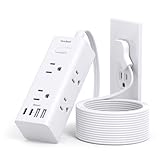
I remember a time, not too long ago, when my desk looked like a spaghetti monster had a baby with an octopus. Wires everywhere. I was constantly tripping, unplugging the wrong thing, and just generally living in a low-grade electrical anxiety. My solution? More extension cords, of course! It felt like a smart, cheap fix. Boy, was I wrong. That’s when I started to wonder: are surge protectors safer than extension cords, or am I just adding another layer of potential fire hazard to my life?
The truth is, most of us treat extension cords like disposable accessories, and surge protectors like magic boxes that can handle anything. The reality is a bit more nuanced, and frankly, a lot more important for keeping your house from becoming a Christmas tree display gone wrong.
Extension Cords vs. Surge Protectors: What’s the Real Difference?
Let’s cut to the chase. People often mix up extension cords and surge protectors, and honestly, it’s easy to see why. They both plug into the wall and give you more outlets. But their jobs? Totally different. An extension cord is basically a glorified wire. It’s designed to extend the reach of your outlet, period. It doesn’t do anything to protect your electronics from anything. Think of it as a simple rope carrying electricity from point A to point B.
A surge protector, on the other hand, is supposed to do more. It has components inside – usually Metal Oxide Varistors (MOVs) – that are designed to absorb or divert sudden spikes in voltage, called surges. These surges can come from lightning strikes (even distant ones), power grid fluctuations, or even when large appliances kick on and off in your house. Without a surge protector, these spikes can fry your sensitive electronics, like your TV, computer, or gaming console.
I learned this the hard way when a thunderstorm took out my old desktop computer. One minute I was working, the next, a loud crack, a puff of smoke, and my entire system was toast. All because a surge bypassed my basic power strip (which, spoiler alert, wasn’t a surge protector at all).
The common advice is to use a surge protector for valuable electronics, and that’s generally good advice. But here’s where people get confused: not all power strips are surge protectors. A basic power strip is just an extension cord with multiple outlets. It offers no protection whatsoever.
You can tell if a power strip is a surge protector by looking for two key things: a joule rating and often a light that indicates it’s active and protecting. The joule rating tells you how much energy it can absorb before it’s fried. Higher is better, but even the best ones have a lifespan.
Once they’ve absorbed enough surges, they stop protecting, even if they still supply power. That’s a sneaky trap a lot of people fall into.
So, to answer the core question: are surge protectors safer than extension cords? Yes, in the sense that they offer a layer of protection against electrical surges that can damage your equipment and, in extreme cases, start fires. But an extension cord, used properly and not overloaded, is generally safe for its intended purpose. The danger comes when you use them incorrectly, or when you mistake a simple power strip for a surge protector.
The Anatomy of a Surge: Why Protection Matters
When we talk about surges, we’re not just talking about dramatic lightning strikes that level houses. Those are the extreme cases. More common are the smaller, yet still damaging, voltage fluctuations that happen all the time. Think about the refrigerator in your kitchen kicking on. That’s a significant draw of power, and when it cycles off, it can cause a momentary dip or spike in the voltage supplied to other devices on the same circuit. Or maybe your neighbor decides to run their fancy, high-power welding machine. These events can send a jolt through your home’s wiring.
A surge protector works by having components that act like a pressure relief valve for electricity. The most common component is the Metal Oxide Varistor (MOV). When the voltage is normal, the MOV acts as an insulator, letting electricity flow directly to your devices. But when the voltage spikes above a certain level, the MOV instantly becomes a conductor, diverting the excess electricity away from your electronics and safely to the ground wire. It’s like a tiny bouncer at the club, only letting in the ‘approved’ voltage.
The problem with MOVs is that they degrade over time. Each time they absorb a surge, they wear out a little bit.
This is why surge protectors have a joule rating. A higher joule rating means the MOVs can handle more energy before they fail. For example, a basic surge protector might have a rating of 300-600 joules, while a higher-end one can be 2000+ joules. Once the MOVs are spent, the surge protector stops protecting.
It will still pass power, but any surge will now go straight to your equipment. This is where the misconception that surge protectors are extension cords comes in – they still give you more outlets, but the protective function is gone. It’s why manufacturers often recommend replacing surge protectors every few years, or when an indicator light goes out. I’ve heard horror stories of people having surge protectors for ten years, thinking they were protected, only to have their expensive new gaming PC get fried by a minor surge. (See Also: Are Extension Cords Safe On Top Of Carpet )
Another factor is the clamping voltage. This is the voltage level at which the surge protector starts to divert the surge. A lower clamping voltage is better, meaning it acts faster to protect your gear. Look for surge protectors with a clamping voltage of 400V or less.
So, while an extension cord is just a conduit, a surge protector is an active component designed to shield your electronics. Understanding this difference is key to making informed decisions about your home’s electrical safety and the longevity of your devices.
Common Mistakes That Turn Power Into Peril
This is where things get dicey, and where I’ve personally seen – and made – some truly boneheaded mistakes. The most common one?
Overloading. Both extension cords and surge protectors have limits on how much power they can safely handle. These limits are usually listed in amps or watts.
If you plug in too many devices, especially high-draw ones like space heaters, hair dryers, or power tools, you can overheat the cord or the surge protector. This can melt the plastic, damage the insulation, and, you guessed it, start a fire.
I once tried to power my entire small office setup – desktop computer, two monitors, printer, scanner, and a desk lamp – through a single, cheap power strip that was plugged into an extension cord running across the floor. It worked, for a while. Then, one hot afternoon, I noticed a distinct burning smell. Luckily, I was home and unplugged it immediately, but the plastic around the outlet on the power strip was blackened and melted.
That was a wake-up call. The temptation to just ‘plug it in’ is strong, but the consequences can be severe.
Another huge mistake is using extension cords for permanent wiring. Extension cords are designed for temporary use. They’re not built to be run under rugs, behind furniture where they can get pinched, or in any situation where they might be damaged. They lack the insulation and physical protection of permanent wiring installed within walls. Using an extension cord long-term is a fire hazard waiting to happen. I’ve seen people do this to power Christmas lights for months on end, or to connect an appliance that’s just out of reach of a wall outlet. Bad idea. Really bad idea.
Then there’s the ‘daisy-chaining’ or ‘octopusing’ of power strips and extension cords. This means plugging one power strip into another, or plugging multiple extension cords together to extend the reach further. This is incredibly dangerous. Each connection point adds resistance, which generates heat. It also makes it harder to track where the actual power is coming from, and if one cord or strip fails, it can put an immense strain on the others. The risk of overheating and fire increases exponentially with each added link in the chain. If you need more outlets, the proper solution is to have an electrician install more permanent ones. It’s more expensive, yes, but infinitely safer than risking your home and belongings.
Finally, people often ignore the condition of their cords. Frayed wires, cracked insulation, bent prongs – these are all warning signs that a cord is damaged and should be replaced immediately. Continuing to use damaged cords is like playing Russian roulette with your electricity. It’s not worth the risk.
| Product Type | Primary Function | Protection Level | Typical Use Case | My Verdict |
|---|---|---|---|---|
| Basic Extension Cord | Extends outlet reach | None | Temporary power for low-draw devices (lamps, fans) | Okay for temporary, simple needs. Overload it, and it’s trouble. |
| Basic Power Strip | Provides multiple outlets | None (unless it also has surge protection) | Centralizing outlets for multiple low-draw devices | Identical to an extension cord but with more sockets. Misleading! |
| Surge Protector (with MOVs) | Extends outlet reach + protects against voltage spikes | Moderate to High (depending on joule rating) | Valuable electronics (computers, TVs, gaming consoles, home theater) | Key for protecting sensitive gear. Replace it when it dies. |
| Uninterruptible Power Supply (UPS) | Provides battery backup + surge protection | High (includes power conditioning) | Important equipment needing continuous power (servers, medical devices, high-end workstations) | Overkill for most, but invaluable if downtime is unacceptable. |
When Does an Extension Cord Actually Make Sense?
Okay, so I’ve been pretty hard on extension cords, and for good reason. But are they always bad? No, not necessarily. There are absolutely times when a good-quality extension cord is perfectly fine and is, in fact, the correct tool for the job.
The key is understanding its limitations and using it appropriately. Think about simple, temporary power needs. Need to plug in a fan for the summer that’s just a bit too far from an outlet? A heavy-duty extension cord rated for the fan’s wattage is a perfectly reasonable solution.
Running power to a tool in your garage for a weekend project? Again, a suitable extension cord is appropriate, as long as you’re mindful of its capacity and don’t leave it plugged in permanently or run it in a hazardous way. (See Also: Are Extension Cords Color Coordinated )
The important difference lies in what you’re powering and how long you’re powering it. If you’re plugging in a simple lamp, a radio, or a seasonal decoration that doesn’t draw a lot of power and will only be used for a few months, a well-maintained extension cord is generally safe. The danger really escalates when you start plugging in devices with heating elements (like space heaters, toasters, or hair dryers), or complex electronics that are sensitive to power fluctuations. These devices either draw a lot of current, which can overheat a standard extension cord, or they contain delicate microchips that can be easily damaged by surges.
I also want to emphasize the ‘temporary’ aspect. Extension cords are not meant to be permanent wiring solutions.
If you find yourself constantly using an extension cord to power a specific appliance, it’s a sign that you need more permanent electrical outlets installed by a qualified electrician. Running cords under carpets is a massive fire hazard because they can be damaged without you knowing, and the carpet provides insulation that traps heat.
Similarly, running them through doorways or windows where they can be pinched or cut is asking for trouble. It’s about using the right tool for the right job and understanding the inherent risks. A good quality, properly rated extension cord used temporarily for a low-draw device is not inherently unsafe.
It’s the misuse and the expectation that it can handle more than it’s designed for that leads to problems.
So, when do they make sense? For that one-off task, for temporary setups, and for powering simple, low-demand items where the cord itself isn’t subjected to damage or long-term stress. And always, always check the cord for damage before plugging it in. A frayed wire is a no-go, period.
Surge Protector Shopping: What to Actually Look For
When you walk into an electronics store or browse online, the sheer number of surge protectors can be overwhelming. They range from cheap, flimsy-looking things to hefty units with dozens of outlets and USB ports. How do you know which one is actually worth your money and will do the job it’s supposed to do? It’s not just about the brand name or how many plugs it has. You need to be a bit discerning.
First off, as we’ve established, make sure it is a surge protector. Look for the joule rating. This tells you how much energy it can absorb. For basic protection of a computer or TV, I’d aim for at least 1000 joules. For more expensive or sensitive equipment, you might want 2000 joules or more. Don’t be fooled by surge protectors with ratings under 600 joules; they’re barely better than a basic power strip and will wear out very quickly. Keep in mind that the joule rating is a finite number. Once it’s used up, the protection is gone, even if the outlets still work.
Next, check the clamping voltage. This is the voltage at which the surge protector starts diverting excess power. Lower is better. Look for a clamping voltage of 400V or less. Some higher-end units advertise even lower clamping voltages, which is a good sign. This tells you how quickly it reacts to a surge. A faster reaction means less potential damage to your electronics.
Consider the number of outlets you need, but don’t let that be the deciding factor if it compromises protection. Many surge protectors also come with USB ports, which can be convenient. However, make sure the USB ports offer adequate charging speeds and that the surge protection still covers them. Some cheaper units might only protect the AC outlets.
Look for indicator lights. Most good surge protectors have lights that show: 1) the unit is receiving power, and 2) the surge protection is active. If the surge protection light goes out, the unit is no longer protecting your devices, even if it’s still providing power. This is a important point that many people miss. If the indicator light fails, it’s time for a new surge protector. Also, check if it has a built-in circuit breaker. This is a safety feature that will shut off power if the total current draw exceeds the unit’s capacity, preventing overheating.
Finally, don’t forget about build quality. Does it feel solid? Are the outlets spaced well enough to accommodate bulky power adapters without blocking adjacent plugs? A well-built surge protector will feel substantial and durable. Brands like APC, Belkin, and Tripp Lite are generally reputable, but always check the specs. For really important equipment, like a home server or a workstation where data loss is catastrophic, you might even consider an Uninterruptible Power Supply (UPS), which provides battery backup in addition to surge protection, but that’s a different ballgame.
What’s a Good Joule Rating for a Surge Protector?
For general home use, protecting a computer or TV, aim for a surge protector with a joule rating of at least 1000 joules. If you have more expensive or sensitive electronics, or live in an area prone to frequent electrical storms, a rating of 2000 joules or higher is recommended. Remember that the joule rating indicates how much energy the surge protector can absorb before it fails, so a higher number means longer-lasting protection. (See Also: Are There Outdoor Extension Cords )
Should I Replace My Surge Protector Even If It’s Working?
Yes, you absolutely should. Surge protectors wear out over time as their internal components (usually MOVs) absorb energy from voltage spikes. Many surge protectors have indicator lights that show the protection is active; when this light goes out, the surge protection is no longer functioning, even if power is still being supplied to your devices. It’s generally recommended to replace surge protectors every 3-5 years, or immediately if an indicator light shows the protection has failed.
The Faq: Answering Your Burning Questions
Are Surge Protectors Worth the Money Compared to Extension Cords?
Absolutely. While extension cords are cheaper, they offer zero protection against voltage spikes that can destroy your electronics. A surge protector, even a moderately priced one, adds a vital layer of defense for your valuable devices, potentially saving you hundreds or thousands of dollars in replacement costs. It’s an investment in protecting your gear from electrical anomalies.
Can I Plug a Surge Protector Into an Extension Cord?
This is a big NO-NO. Plugging a surge protector into an extension cord is called “daisy-chaining” and is incredibly dangerous. It creates multiple points of failure, increases resistance, generates excess heat, and significantly raises the risk of electrical fire. Always plug surge protectors directly into a wall outlet.
What Happens If I Overload a Surge Protector?
Overloading a surge protector can cause it to overheat, melt its plastic casing, and potentially start a fire. It can also damage the surge protector itself, rendering its protective functions useless even if it still passes power. Always check the maximum wattage or amperage rating of your surge protector and make sure the total draw of your plugged-in devices does not exceed it.
Are All Power Strips Surge Protectors?
Definitely not. Many power strips are simply basic extension cords with multiple outlets and offer no surge protection whatsoever. Look for a joule rating and indicator lights on the device to confirm it is a true surge protector. If it doesn’t have these features, it’s just a glorified power strip.
How Do I Know If My Surge Protector Has Failed?
Most surge protectors have indicator lights. One light usually signifies that it’s receiving power, and another signifies that the surge protection circuitry is active. If the surge protection indicator light goes out, the unit is no longer protecting your devices, even though it may still supply power. You should replace it immediately.
When All Else Fails: The Expert Opinion
I’ve wrestled with this topic for years, trying to balance cost, convenience, and actual safety. My default used to be ‘more is better,’ meaning more outlets. That led me down the path of cheap extension cords and power strips, and frankly, I was lucky not to have a fire. The advice from electrical safety organizations, like the National Fire Protection Association (NFPA), consistently points to the dangers of misused extension cords and the importance of using properly rated equipment.
They emphasize that extension cords are for temporary use only and should never be run under rugs, through doorways, or be a permanent fixture. They also stress the importance of using cords with the correct gauge for the intended load to prevent overheating. For protecting electronics, the consensus is clear: use a surge protector with a sufficient joule rating and replace it when its protection fails, indicated by a light or after its expected lifespan. The NFPA’s guidelines aren’t some corporate jargon; they’re based on real-world incidents and fire statistics. It’s about understanding the fundamental difference between simply extending power and actively protecting devices from electrical anomalies.
My own experience has taught me that while an extension cord can be safe when used precisely as intended, it’s often a tempting shortcut that leads to dangerous situations. A surge protector, on the other hand, is a proactive safety measure. It’s not a perfect shield, and it has a lifespan, but it’s designed specifically to mitigate risks that a plain extension cord ignores completely. So, when you’re weighing the options, remember that the few extra dollars for a good surge protector are a small price to pay for the safety of your electronics and your home. It’s about making informed choices rather than just grabbing the cheapest option.
Conclusion
So, let’s get this straight: are surge protectors safer than extension cords? When used correctly, a surge protector adds a layer of protection that an extension cord simply cannot provide. It’s not about which one looks safer; it’s about what they’re actually designed to do. An extension cord’s job is to extend power, and that’s it. A surge protector’s job is to also guard your electronics from nasty power spikes.
My advice? Ditch the idea that more outlets always equals more safety. If you’re powering anything valuable or sensitive – your computer, your TV, your gaming rig – get a decent surge protector and plug it directly into the wall. And for goodness sake, don’t leave old, worn-out extension cords lying around or running under furniture. They are a fire waiting to happen.
Next time you’re tempted to grab another cheap extension cord, ask yourself if what you’re plugging in is worth the risk. Sometimes, the answer is no, and a surge protector is the only sensible choice for keeping your gear (and your home) out of harm’s way.