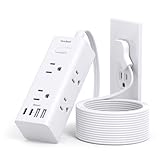
I remember staring at that one empty outlet behind the TV stand, a perfect rectangle of potential power, taunting me. All my fancy new gadgets were piled up, waiting, but the cord situation was a nightmare. Tangles, unsightly power strips creeping out, and still not enough plugs. It made me wonder, are wireless extension cords real? Like, properly real, not some snake oil salesman’s dream?
The idea is so damn appealing: no more tripping hazards, no more ugly plastic snaking across the floor. Just… power. Anywhere. But in my years of trying out all sorts of tech and gadgets, I’ve learned that ‘magic’ usually comes with a hefty dose of reality, and often, disappointment. So, let’s cut to the chase.
The Actual Science Behind ‘wireless’ Power
Let’s get this out of the way: when people talk about ‘wireless extension cords,’ they aren’t usually talking about actual, true wireless power transmission over long distances like Wi-Fi for electricity. That kind of tech is still largely in the world of sci-fi or very specific, short-range applications, like charging your phone on a pad or that experimental stuff using focused beams. What the market is selling as ‘wireless extension cords’ are typically a few different things, and it’s important to know which is which.
The most common interpretation, and the one that’s actually available to consumers right now, is a two-part system. You have a ‘transmitter’ base station that plugs into your wall outlet – this is your source of power. Then, you have one or more ‘receiver’ units that you can place where you need power, and they somehow draw power from the transmitter without a physical wire connecting them directly. Think of it like a less efficient, more bulky version of a wireless charger, but for larger appliances.
How does it work? Most of these systems rely on principles like resonant inductive coupling or a more advanced form of radio frequency (RF) power transfer. The transmitter generates an electromagnetic field, and the receiver is tuned to pick up that field and convert it back into usable electrical energy.
It’s not magic, it’s physics, but it’s also not as straightforward as flipping a light switch. There are significant losses in efficiency, meaning a good chunk of the power sent by the transmitter never actually makes it to the receiver. This limits the power output, the distance, and introduces heat.
So, while the wires are gone, the underlying principles are still very much about sending electricity, just through the air instead of copper.
Another, less common, interpretation you might stumble upon is simply a very long extension cord, perhaps one that’s designed to be more aesthetically pleasing or easier to manage – think retractable cords or those with built-in cable management. These aren’t truly wireless, obviously, but they aim to solve the problems associated with traditional extension cords. So, when you see ‘wireless extension cord’ advertised, pay close attention to the specs and the actual technology being used. Don’t expect to power your entire house wirelessly just yet. The tech is evolving, but for now, it’s a niche solution with significant limitations.
The Harsh Reality: What ‘wireless’ Actually Means for You
Okay, so we know the tech exists in a limited form. But what does that mean for actual use? This is where my personal experience kicks in, and let me tell you, I’ve burned my fingers enough times with overhyped gadgets to be skeptical.
The biggest hurdle for most ‘wireless extension cord’ systems is power delivery. You’re not going to plug in your space heater, your hair dryer, or your power-hungry gaming PC into these things and expect them to run at full blast. Most commercially available systems are designed for low-power devices – think charging phones, powering small LED lights, maybe a low-wattage fan.
The moment you try to draw more significant power, the system either struggles, overheats, or simply shuts down. I once tried a system that promised to power a small desk lamp and my laptop charger. It worked fine for the lamp. The moment I plugged in the laptop charger, the receiver got noticeably warm, and the laptop kept showing ‘charging slowly.’
After about twenty minutes, the whole unit just… stopped. The transmitter was hot to the touch. Big nope. (See Also: Can Extension Cords Short Out )
Distance is another major factor. The further the receiver is from the transmitter, the weaker the signal and the less power you get. Manufacturers often quote ideal distances, but in a real-world home environment with walls, furniture, and other electronics creating interference, those distances shrink dramatically. You might get a few feet of reliable power, not the ‘room-filling’ power some marketing might hint at. It’s more like a very short-range wireless charging pad for devices that aren’t even designed for it.
Efficiency is also a killer. Because so much energy is lost in transmission, these systems are far less energy-efficient than a good old-fashioned cord. You’re basically paying for power that never reaches your device. Over time, this can add up, not to mention the environmental impact of wasted energy. It feels… wrong, frankly, when a simple copper wire does the job so much better and with less waste.
Furthermore, the cost. You’re often paying a premium for the ‘wireless’ aspect, and for what you get – limited power, limited range, and questionable reliability – it’s hard to justify. I’ve spent upwards of $150 on a single transmitter-receiver pair that performed worse than a $15 heavy-duty extension cord. It’s a classic case of technology looking cool but not delivering practical value for the money. So, while technically ‘real,’ the ‘extension cord’ part of the name is a stretch for anything beyond the most basic needs.
What to Look for (and What to Run From)
If, despite all this, you’re still intrigued by the idea of reducing cord clutter, or if your needs are genuinely very basic, here’s what you must look for when considering a wireless power system. And more importantly, what to steer clear of.
Power Output (Wattage/Amperage): This is a must. Check the maximum wattage the receiver can handle. If it’s under 50 watts, it’s probably only good for charging phones or very small electronics. For anything slightly more demanding (like a small fan or a lamp), you’ll want to see at least 100-200 watts. Most systems won’t even get close to the 1000+ watts you get from a standard wall outlet. If the specs are vague or only list the transmitter’s output without specifying the receiver’s, that’s a red flag.
Range: Manufacturers will give you an advertised range. Take it with a grain of salt. Real-world range is almost always less. Look for reviews that mention performance at different distances. If the system requires the receiver to be within a foot or two of the transmitter to work reliably, it’s barely more convenient than a short cord.
Efficiency/Losses: This is harder to quantify as a consumer. Some higher-end systems might publish their efficiency ratings. If you see numbers below 70%, you’re losing a significant chunk of power. Generally, if it gets noticeably hot, that’s heat you’re losing, which is wasted energy.
Safety Certifications: Look for certifications like UL, CE, or FCC. This at least means the device has undergone some level of safety testing. Overheating is a real risk with any power transmission technology, so safety is most important.
Reviews, Reviews, Reviews: This is where you find the truth. Look for detailed, real-world reviews, not just the marketing fluff. Search for people using it for purposes similar to yours. Pay attention to complaints about overheating, power drops, or devices not working. Independent tech reviewers are your best bet here.
What to Run From:
- Anything promising to power high-draw appliances (heaters, microwaves, power tools).
- Systems with vague or missing specifications.
- ‘Too good to be true’ price points.
- Claims of powering devices across multiple rooms or entire floors.
- Brands you’ve never heard of with no clear safety certifications.
Honestly, for most people, the best ‘wireless extension cord’ is still a well-managed, high-quality physical cord. If you need to extend power, a good extension cord is efficient, reliable, safe, and affordable. (See Also: Can Extension Cords Be Use With Electric Heaters )
Real-World Use Cases: Where They might Actually Work
So, if they’re not great for powering your TV or your blender, where do these wireless power transfer systems actually find a home? After fiddling with a few over the years, I’ve identified a few niche scenarios where they might make sense, provided you temper your expectations and get the right product for the job. These are the moments where the cord clutter is the real problem, and the power needs are minimal.
Aesthetic-Focused Setup Behind Entertainment Centers: This is probably the most common and arguably the most practical use case. You have your TV, your streaming box, your soundbar, maybe a game console. These devices often have relatively low power draws, and the idea of not having a spaghetti monster of cords trailing down behind the furniture is incredibly appealing. A wireless system here could power a small power strip that then feeds these devices. It cleans up the look immensely. The key is that the devices are relatively stationary and the receiver can be placed discreetly, maybe in a cable management box, within a few feet of the transmitter.
Edge Lighting or Decorative Lighting: Think about LED strip lights that you want to place in hard-to-reach spots, like under cabinets, behind artwork, or along a ceiling edge. Running a physical wire can be a pain, requiring drilling or careful placement. If the power draw for these lights is low (which it usually is), a wireless system could provide a clean solution. You plug the transmitter into an accessible outlet, and place the receiver near the lighting fixture. No visible wires snaking along walls or floors.
Temporary Display or Staging: For home staging or temporary event displays, minimizing visible cords is important for aesthetics. If you need to power a small display item, a sign, or a low-power speaker without visible wiring, a wireless power system could fit the bill. The temporary nature means you’re less concerned about long-term efficiency or the high initial cost.
Accessibility Needs (Limited): In very specific, low-power scenarios, reducing tripping hazards can be a benefit. Imagine a small, lightweight medical device or an alert system that needs power in a specific spot where running a cord would be a fall risk. Again, the power draw would need to be very low, and the system would need to be incredibly reliable.
What these scenarios have in common is low power requirement, a desire for extreme cord concealment, and often, a relatively fixed or close proximity between the power source and the device. If you’re looking to liberate a power tool from its cord or run a microwave across the room, you’re dreaming. For those very specific, low-stakes applications, a well-chosen wireless power system can work, but it’s a solution for a very particular problem, not a general replacement for a cord.
The Common Mistakes People Make (and How to Avoid Them)
I’ve seen people buy into the ‘wireless’ dream with wide eyes and end up with buyer’s remorse faster than you can say ‘overpriced gadget.’ The marketing is good, I’ll give them that. It taps into that primal desire for a cleaner, simpler life. But when you’re actually trying to use these things, the reality can be a harsh slap. Knowing the common pitfalls can save you a lot of money and frustration.
Mistake 1: Expecting Full Household Power. This is the big one. People see ‘extension cord’ and think it means ‘any outlet, any device.’ As we’ve hammered home, these systems are for low-power devices only. Trying to power a high-draw appliance is the fastest way to a non-functional receiver, a hot transmitter, and a whole lot of disappointment. Avoidance: Read the specs religiously. If it doesn’t explicitly state it can handle the wattage your device needs, assume it can’t.
Mistake 2: Ignoring Real-World Range Limitations. The advertised range is almost always in a perfect, open-air laboratory. Walls, furniture, metal objects, even other electronics can drastically reduce the effective range. People think they can power a device in the next room, only to find it barely works across the same desk. Avoidance: Plan your setup with the transmitter and receiver close together. Think of it as a short-range power transfer, not a whole-house solution. Read reviews that mention performance at actual distances.
Mistake 3: Overlooking Inefficiency and Heat. The energy lost in transmission isn’t just wasted electricity; it’s often converted to heat. This can be a safety concern if the device gets too hot. Plus, you’re paying for power you don’t even get to use. Avoidance: If a system gets noticeably warm during normal operation, especially with low-power devices, it’s likely inefficient. Stick to reputable brands that might offer better thermal management.
Mistake 4: Underestimating the Cost vs. Benefit. These systems are not cheap. You’re paying a premium for the wireless tech. For the limited power and range they offer, a good quality physical extension cord or a surge protector is almost always a more cost-effective and reliable solution. Avoidance: Ask yourself: ‘Is the convenience of no visible wires worth X dollars, given the limitations?’ For most people, the answer is a hard no. (See Also: Are Outdoor Extension Cords 10 Or 12 Gauge )
Mistake 5: Falling for Vague Marketing. ‘Revolutionary,’ ‘major,’ ‘future of power’ – these buzzwords are designed to sell, not inform. If a product doesn’t clearly state its technical specifications (wattage, range, efficiency), run. Avoidance: Look for concrete numbers and clear explanations of the technology. If it sounds like marketing fluff, it probably is.
The biggest mistake is treating them as a true replacement for traditional wiring. They are a niche gadget, solving a very specific problem for very specific, low-power needs. If you go in with realistic expectations and understand their limitations, you might find a use for them. If not, you’ll likely end up with an expensive paperweight.
Faq: Your Burning Questions Answered
Can I Power My TV with a Wireless Extension Cord?
Generally, no. Most ‘wireless extension cords’ are designed for low-power devices like phones, small lamps, or LED lights. A TV, even a modern LED one, draws significantly more power. Attempting to power it could result in the device not working, overheating, or a complete system shutdown. Always check the maximum wattage the receiver unit can handle before even considering it for an appliance.
Are Wireless Extension Cords Safe?
Safety is a mixed bag. Reputable brands that have undergone safety certifications (like UL or CE) are generally safe for their intended low-power use. However, any system that relies on transmitting power wirelessly, especially if it’s poorly designed or uses low-quality components, can pose risks of overheating or electrical malfunction. It’s important to buy from trusted manufacturers and make sure the product has relevant safety marks.
How Far Can a Wireless Extension Cord Transmit Power?
The effective range is usually quite limited and highly dependent on the specific technology used and environmental factors. While manufacturers might advertise several feet or even meters, in real-world conditions with walls and interference, you’re often looking at a reliable range of just a few feet, typically within the same immediate area or even just a couple of feet between the transmitter and receiver. Think of it more like a short-range charging pad than a long-distance power solution.
What Is the Difference Between Wireless Power and a Regular Extension Cord?
The primary difference is the absence of a physical wire connecting the power source to the device. Regular extension cords use copper wires to efficiently and reliably transmit electricity with minimal loss. Wireless power systems, on the other hand, transmit power through electromagnetic fields, which is inherently less efficient, has limited range, and can only handle much lower power outputs. While regular extension cords are ubiquitous and powerful, wireless systems are a niche technology for specific, low-demand applications where cord clutter is the main issue.
Are There Any Standards for Wireless Power Transmission?
Yes, the most prominent standard for short-range wireless power is the Qi standard, primarily used for charging mobile devices and accessories. However, for higher power or longer-range applications, the landscape is less standardized. Organizations like the AirFuel Alliance are working on developing and promoting standards for more advanced wireless power solutions, including resonant and RF power transfer. For consumer products marketed as ‘wireless extension cords,’ you’ll often find proprietary technologies rather than universally adopted standards, which can make interoperability and direct comparisons difficult.
Conclusion
So, are wireless extension cords real? Yes, in a limited, often underwhelming, capacity. They exist as two-part systems that transmit low-power electricity wirelessly over short distances. They’re not going to replace your trusty, old-school extension cord for powering anything demanding. I’ve wasted a good chunk of change on these trying to find a true ‘set it and forget it’ wireless solution, only to be reminded that good old copper is often king.
My advice? Unless you have a very specific, low-power application where eliminating a visible cord is most important – like behind a TV or for subtle lighting – you’re probably better off sticking with conventional extension cords. They’re cheaper, more reliable, and far more efficient.
If you’re still curious, do your homework, manage your expectations, and be prepared for a compromise. The dream of truly wireless power for everything is still a ways off, and the current market for ‘wireless extension cords’ reflects that. Don’t let the marketing fool you into thinking it’s a magic bullet for all your power needs.