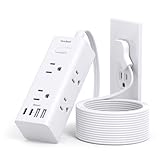
You’re wrestling with that power strip, trying to jam one more plug into an already overloaded socket. Sound familiar? We’ve all been there. The cheap, flimsy cord you snagged at the hardware store suddenly feels a lot more significant than just a way to reach the outlet. It makes you wonder, can extension cords cause voltage surges, frying your expensive electronics in a puff of smoke?
Honestly, most people don’t give their extension cords a second thought until something goes wrong. I used to be one of them. Then came the day my brand-new gaming PC decided to take a permanent dirt nap after a flickering power outage. The culprit? A suspiciously hot, slightly melted extension cord I’d been using for everything from my laptop to a space heater. It was a hard lesson learned.
The Anatomy of an Electrical Problem: When Cords Go Bad
Let’s cut to the chase. Can extension cords cause voltage surges? Not directly, in the way a lightning strike does.
An extension cord itself doesn’t generate a surge. Think of it more like a straw. It’s a conduit. What it can do is create conditions that make surges from other sources much, much worse, or even contribute to the potential for issues that mimic a surge by failing to deliver stable power.
The real problem isn’t the cord creating the surge, but its ability (or inability) to handle the load and maintain a consistent flow of electricity. When a cord is damaged, undersized for the appliance it’s powering, or just plain old and worn out, it becomes a weak link in your electrical system.
This weak link can lead to increased resistance. When electricity flows through a resistor, it generates heat.
Too much heat can melt the insulation, potentially causing short circuits. A short circuit is a rapid, uncontrolled flow of electricity, and that can absolutely cause a localized surge or a significant dip in voltage (a brownout) as the system tries to cope.
Imagine trying to drink a milkshake through a straw that’s half-collapsed. You’re either getting a tiny trickle or nothing, and you might even suck too hard and collapse it further. That’s what a bad extension cord can do to your power flow.
Over time, this inconsistent power delivery stresses sensitive electronics, making them more prone to failure, even if a massive, external surge never happens. The constant fluctuations are like a tiny, persistent hammer blow to delicate components.
I learned this the hard way with a cheap cord powering my modest workshop. I was running a decent-sized compressor and a soldering iron, thinking I was being economical. The compressor would sputter, the lights would dim noticeably, and I’d chalk it up to the grid. One sweltering afternoon, after a particularly long run, I smelled that distinct acrid, plasticky smell.
The cord was hot to the touch, and the insulation near the plug was starting to bubble. I unplugged everything immediately, my heart pounding. Thankfully, nothing fried, but it was a stark reminder that the price of a cord is directly tied to its ability to handle actual work without becoming a fire hazard.
The wire gauge inside was clearly too thin for the combined draw of those tools.
What to Look for: The Good, the Bad, and the Ugly Cords
So, how do you avoid becoming the next victim of a dodgy extension cord? It’s all about what’s under the hood and on the outside. (See Also: Can Extension Cords Short Out )
First off, the wire gauge. This is probably the most misunderstood spec.
People see ‘heavy duty’ and assume it’s good for anything. But gauge is about thickness. Thicker wires (lower gauge numbers, like 12-gauge or 10-gauge) can carry more current without overheating.
Thinner wires (higher gauge numbers, like 16-gauge or 18-gauge) are for lighter loads like lamps or phone chargers. Using a 16-gauge cord for a powerful tool is asking for trouble. It’s like trying to use a garden hose to put out a house fire – it’s just not designed for that volume of flow.
Look for cords rated for the amperage or wattage of the appliance you’re plugging in. This information is usually on the appliance itself. If your appliance draws 10 amps, you need an extension cord rated for at least 10 amps, preferably more for a safety margin. Always go with a cord that has a UL or ETL listing.
These are independent testing organizations that certify the product meets safety standards. It’s not a guarantee of perfection, but it’s a baseline. Avoid any cord that looks or feels flimsy, has cracked or brittle insulation, or smells like old plastic. If the plugs feel loose or wobbly, ditch it.
I once bought a pack of four cheap cords online, and within a year, two of them were visibly damaged, with frayed wires near the plug ends. They looked fine when I bought them, but the cheap plastic and thin wiring just couldn’t hold up to regular use.
A common mistake I see people make is using indoor-rated cords for outdoor use. The insulation on outdoor cords is designed to withstand UV rays and temperature fluctuations. An indoor cord left outside will degrade much faster, becoming brittle and a shock hazard. Another pitfall is simply using a cord that’s too long. The longer the cord, the more resistance there is in the wire, even if it’s the correct gauge. For very long runs, you might need a heavier gauge cord than you would for a short run. It’s a trade-off. The best practice is to use the shortest cord that safely reaches your outlet.
| Cord Type | Typical Gauge | Best For | Verdict |
|---|---|---|---|
| Light Duty | 16-18 AWG | Lamps, radios, phone chargers | Okay for tiny loads, but watch out for heat. |
| Medium Duty | 14-16 AWG | Small appliances, power tools (intermittent use) | Getting better, but still can be iffy for demanding tools. |
| Heavy Duty | 12-14 AWG | Power tools, appliances with motors, workshop use | Your go-to for anything that pulls serious juice. |
| Extra Heavy Duty | 10-12 AWG | High-demand equipment, very long runs | Serious business, avoid unless you absolutely need it. |
I’ve found that investing in a good quality, heavy-duty cord, even if it’s shorter than I could use, is always the smarter move. It’s saved me money in the long run by not needing to replace cheap ones and, more importantly, by not damaging my electronics. The peace of mind is worth the extra few bucks.
The Hidden Dangers: Overloading and Poor Connections
The most common way an extension cord becomes a menace is by being overloaded. It’s simple physics: more amps trying to flow through a wire than it’s designed for creates heat. This heat can melt the wire’s insulation, exposing the conductive material. If this exposed wire touches something it shouldn’t, like another wire or a metal object, you get a short circuit. A short circuit draws a massive amount of current very quickly. This sudden surge of power can trip your circuit breaker, which is its job, but before it does, it can send a powerful jolt back through the cord and into whatever it’s plugged into. This can certainly fry sensitive electronics, or at least stress their power supplies.
Another sneaky problem is poor connections. This can happen at either end of the extension cord – where the plug meets the cord, or where the receptacle meets the cord.
If these connections are loose or corroded, they create high resistance. Just like a thin wire, a high-resistance connection creates heat. Over time, this heat can degrade the plastic around the connection, leading to melting and potential shorts. I once had a desk lamp that flickered constantly.
I replaced the bulb, then the lamp, and still no fix. Turns out, the plug on the extension cord I was using had developed a slight looseness in one of the prongs. (See Also: Can Extension Cords Be Use With Electric Heaters )
When I jiggled it, the light would come on steady. Eventually, that connection got so bad it started to smell hot. It wasn’t a surge, but it was a direct result of a poor, high-resistance connection at the plug, generating heat and inconsistent power.
Many people think it’s okay to daisy-chain extension cords – meaning plugging one extension cord into another. This is a terrible idea. Every connection point adds resistance and a potential failure point. Plus, it makes it harder to track the total load. If you have two 50-foot cords, each rated for 10 amps, and you plug them together, and then plug a 15-amp appliance into the end, you’re already in trouble. The first cord might handle it for a bit, but the added resistance of the second cord and the connection between them can easily push the whole setup past its safe limit. Always aim for the shortest, most direct connection possible.
When DIY Goes Wrong: Common Extension Cord Blunders
I’ve seen people do some truly head-scratching things with extension cords. One of the most common blunders is using an extension cord as a permanent wiring solution. Extension cords are designed for temporary use. They have more flexible insulation and are not built to be run behind walls, under carpets, or anywhere they can be pinched or damaged without you noticing. If you need a permanent outlet, you need to have an electrician install one. Period. Trying to jury-rig a permanent solution with an extension cord is a massive fire hazard. The insulation isn’t rated for that kind of constant stress, and it can easily get damaged, leading to shorts.
Another mistake is using the wrong type of cord for the environment. As I mentioned, indoor cords outside are a no-go. But also, cords that aren’t rated for oil or chemical resistance can degrade quickly in a garage or workshop. Some cords are specifically designed for specific uses, like appliance cords with molded plugs that are safer for high-draw devices, or cords meant for industrial settings that are much more solid. Don’t just grab the cheapest thing that looks like it will reach. Think about the conditions it will be in.
The classic ‘jamming too many things into one cord’ situation is probably the most prevalent error. People will plug a power strip into an extension cord, and then plug multiple high-draw items into that power strip.
Suddenly, you have a single extension cord trying to handle the load of a computer, a monitor, a printer, a desk lamp, and maybe even a small fan. This is a recipe for overheating.
The cord itself might not be the primary cause of a surge, but it’s the weak point that will fail first under such a heavy load, potentially leading to a power fluctuation or even a localized electrical fault that acts like a surge for connected devices. My first apartment was a prime example – barely enough outlets, so I’d end up with extension cords powering power strips powering more power strips. It was a miracle I never had a fire, but I’m sure it contributed to the early demise of a few electronics.
The Real-World Impact: Protecting Your Gear
So, what’s the actual impact on your electronics when you misuse extension cords? It’s not always an instant, dramatic surge that blows fuses. Often, it’s a slower, more insidious form of damage. When an extension cord is overloaded or has a poor connection, it can cause brownouts or voltage sags. This is when the voltage drops below the normal level. Many electronics, especially sensitive ones like computers, gaming consoles, and high-fidelity audio equipment, are designed to operate within a specific voltage range. When the voltage dips too low, these components can become stressed. This stress can lead to data corruption, premature component failure, or intermittent glitches that are incredibly frustrating.
Imagine your computer’s hard drive trying to write data while the power supply is struggling because of a bad extension cord. You might not even notice until later when you find corrupted files. Or think about a gaming console’s power brick getting inconsistent power; it can overheat or fail prematurely. It’s like feeding a high-performance engine dirty, inconsistent fuel – it’s not going to run smoothly, and it’s going to wear out faster. While the extension cord itself might not be the direct generator of a surge, its failure to provide stable, adequate power creates an environment where your electronics are much more vulnerable to damage from minor fluctuations, or even internal issues that might have otherwise been manageable.
I’ve learned to be ruthless about my extension cords. If a cord looks questionable, feels too warm, or is damaged in any way, it’s gone.
I’d rather spend $20 on a new, quality cord than $500 on a new graphics card or $1,000 on a new TV. For really important gear, like my main workstation and my home server, I use surge protectors. But even a surge protector is only effective if it’s plugged into a solid, properly functioning circuit.
A surge protector can’t fix a fundamentally bad extension cord. It’s the first line of defense, but it needs a good foundation. A good quality, correctly rated extension cord is part of that foundation. Think of it like building a house – you don’t put a fancy roof on a crumbling foundation. (See Also: Are Outdoor Extension Cords 10 Or 12 Gauge )
Practical Tips and Best Practices
Alright, enough doom and gloom. Here are some concrete steps you can take to keep your gear safe and avoid extension cord-related headaches.
First, always match the cord’s gauge to the appliance’s needs. If it’s a high-power tool, get a heavy-duty cord (12-gauge is usually best).
For lighter items like lamps or chargers, a lighter-gauge cord is fine, but still, check for damage. Second, never exceed the cord’s maximum wattage or amperage rating. It’s printed on the cord itself.
If you’re unsure, err on the side of caution and get a higher-rated cord. Third, inspect your cords regularly. Look for cracks, nicks, kinks, or signs of melting or scorching.
If you see any damage, discard the cord immediately. Don’t try to patch it up.
Fourth, use cords designed for their environment. Indoor cords stay inside. Outdoor cords have the necessary weatherproofing. If you’re working in a garage or workshop, look for cords that are oil or abrasion-resistant. Fifth, avoid daisy-chaining cords. Use the shortest cord that will safely reach your outlet. If you need a long run, consider buying a single, longer, heavier-gauge cord rather than connecting multiple shorter ones. Sixth, and this is a big one, never run extension cords under rugs or carpets. They can be easily damaged without you knowing, and the trapped heat can be a fire hazard. Also, keep them away from doorways or areas where they can be pinched or tripped over.
Finally, consider using surge protectors, especially for sensitive electronics. However, remember that a surge protector is not a substitute for a good extension cord. It protects against surges, not against the overheating and damage caused by an overloaded or faulty cord. A surge protector plugged into a bad extension cord is like putting a seatbelt on in a car with no brakes. It’s a good layer of protection, but it relies on the rest of the system working correctly. The best approach is a combination of using the right cord for the job and incorporating surge protection for your valuable equipment. It’s an investment that pays off in the long run.
Can Using an Extension Cord for a Refrigerator Cause Problems?
Yes, it can. Refrigerators are designed to run 24/7 and draw a consistent amount of power, especially their compressors. Using a standard, light-duty extension cord can lead to overheating and potential failure, or inconsistent power delivery that stresses the compressor. It’s best to plug refrigerators directly into a wall outlet, or at least use a heavy-duty, appropriately rated cord as a temporary measure, making sure it’s not kinked or damaged.
Is It Safe to Use an Extension Cord for a Space Heater?
Generally, no, unless it is specifically rated as heavy-duty (12-gauge) and designed for high-wattage appliances. Space heaters draw a lot of power, and most common extension cords are not thick enough to handle the load. Using an inadequate cord can cause it to overheat, melt, and potentially start a fire. Always check the heater’s manual and the cord’s rating; direct-to-wall connection is always safest.
What Happens If You Plug Too Much Into an Extension Cord?
Plugging too many appliances into an extension cord, especially high-wattage ones, will overload it. This causes the cord’s internal wires to overheat. Overheating can melt the insulation, leading to a short circuit, which can cause a power surge, trip your circuit breaker, or, in the worst case, start a fire. The cord is the weakest link and will fail before the wall outlet usually does.
Can an Extension Cord Damage a Computer?
Yes, indirectly. A faulty or overloaded extension cord can cause voltage fluctuations (sags or spikes) in the power supplied to your computer. These inconsistencies can stress sensitive internal components, leading to data corruption, system instability, or premature failure of the power supply unit or other parts. While it might not be a direct surge from the cord itself, the instability it creates is damaging.
Final Thoughts
So, to be perfectly clear: can extension cords cause voltage surges? They don’t generate them out of thin air, but they can absolutely be the weak link that leads to electrical problems, including surges and damaging power fluctuations. It all comes down to using the right cord for the job, inspecting it for damage, and never overloading it.
Don’t be that person who finds out the hard way. Take a moment to check the gauge, the rating, and the condition of your cords. It’s a small effort that can save you a lot of headaches and money in the long run. For important gear, pair a good cord with a quality surge protector. It’s the smart way to power your life.
Next time you’re tempted to grab that bargain-bin cord, remember this. What’s your worst extension cord horror story?