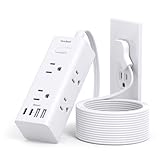
I’ve seen it a hundred times. Someone’s got a power tool, a string of lights, or some appliance that’s just a little too far from an outlet. Naturally, they grab the nearest extension cord. But then the humming starts, the cord gets warm, and a little voice in the back of your head whispers, “Is this gonna blow up?” That’s the moment you start wondering, can extension cords handle 10 amps?
It’s not as simple as plugging something in and hoping for the best. You need to know what you’re working with, or you’re just asking for trouble. I’ve wasted enough money on burnt-out cords and fried electronics to learn this lesson the hard way. So, let’s cut through the confusion about extension cords and amperage.
What’s Really Going on Inside That Cord?
Alright, let’s get down to brass tacks. When we talk about an extension cord handling 10 amps, we’re really talking about its gauge, or thickness. Think of it like a water hose. A thinner hose can only handle so much water pressure before it bulges or bursts. A thicker hose can handle a lot more. Electrical wire is the same way. The amperage (amps) is the amount of electrical current flowing, and the wire has to be thick enough to carry that current without overheating.
The gauge system is a bit backward: the smaller the gauge number, the thicker the wire. So, a 10-gauge wire is thicker and can handle more amps than a 14-gauge wire.
For a 10-amp load, you’re usually looking at cords rated for at least 1200 watts (10 amps x 120 volts). If a cord is only rated for, say, 5 amps, and you plug in something drawing 10 amps, you’re overloading it. That heat buildup is what causes damage, and in the worst-case scenario, fires.
I remember one time, I was running a small shop vac and a few lights for a weekend project. I grabbed a lighter-duty cord I had lying around, and within an hour, the cord was hot to the touch, and the vacuum was making this weird sputtering sound before it just died. Smelled like burning plastic. Lesson learned.
The common advice is to always use a cord rated for more than your appliance’s needs. This gives you a safety margin. If your tool or appliance has a label saying it draws 8 amps, you don’t want to use a cord rated for exactly 8 amps. You want one rated for 10 or even 12 amps. This is especially true if the cord will be out for a while, or if you’re using a really long one, which we’ll get to.
Choosing the Right Gauge: Your Lifeline
So, how do you actually figure out what gauge you need? It’s all about looking at the label. Every extension cord worth its salt will have a rating on it, usually in amps or watts. For a 10-amp load, you’ll want a cord that can handle at least that. Here’s a general rundown of what gauge you typically need for different amp loads:
| Gauge (AWG) | Max Amps (Approx.) | Max Watts (120V, Approx.) | Common Uses | My Verdict |
|---|---|---|---|---|
| 18 | 7 | 840 | Light-duty indoor, holiday lights, electronics | Absolute NO for 10 amps. Burn hazard. |
| 16 | 10 | 1200 | Medium-duty, small power tools, fans | Can handle 10 amps, but push it and it’ll get warm. Best for short runs. |
| 14 | 13 | 1560 | Heavy-duty indoor, larger power tools, appliances | Solid choice for 10 amps. Good for medium to longer runs. |
| 12 | 18 | 2160 | Extreme duty, large tools, continuous high loads | Overkill for 10 amps, but safe and cool. Great for long distances. |
| 10 | 25 | 3000 | Industrial, generators, very high loads | Way more than you need for 10 amps. For serious work. |
Notice how the amps go up as the gauge number goes down. For 10 amps, you’re ideally looking at a 14-gauge cord. A 16-gauge cord might technically handle 10 amps, but it’s pushing its limits, especially if the cord is long or if the appliance draws a consistent 10 amps. I’ve learned that skimping on gauge is like buying a cheap parachute. It might look fine, but when you need it, you want the good stuff.
The length of the cord is also a huge factor. The longer the cord, the more resistance there is in the wire. This resistance causes voltage drop, and the cord will heat up more. A 10-foot 16-gauge cord might be okay for a steady 10-amp load, but a 100-foot 16-gauge cord will likely overheat. For longer runs, you absolutely need to step up the gauge. So, if you’re planning on running something that needs 10 amps over more than, say, 50 feet, I’d strongly consider a 12-gauge cord, even if the appliance itself only pulls 10 amps.
Common Mistakes That Fry Cords (and Worse)
One of the biggest blunders I see people make is using indoor extension cords for outdoor jobs. The insulation on indoor cords isn’t built to withstand moisture, sunlight, or temperature fluctuations. They become brittle, crack, and can short out or become a shock hazard. Always use cords that are specifically marked for outdoor use if you’re plugging anything in outside. They’re made of tougher stuff and are usually a heavier gauge to begin with. (See Also: Can Extension Cords Short Out )
Another mistake is not checking the cord’s condition. Frayed insulation, exposed wires, damaged plugs – these are all red flags. You might think, “It still works,” but you’re playing with fire, literally. I once found an old extension cord in my garage that had been run over by a lawnmower. It looked mostly okay, but a closer inspection revealed a hairline crack in the insulation. I tossed it immediately. It’s just not worth the risk of sparks, shocks, or a full-blown fire. It’s like leaving a leaky gas line open – the damage is only a matter of time.
People also tend to misuse the cords. Running them under rugs is a big no-no.
The rug insulates the cord, trapping heat. Plus, you can damage the cord without seeing it. Or worse, they’ll string them up in a way that puts kinks in them or allows them to rub against sharp edges.
This stresses the internal wires and can lead to breaks or shorts. I saw a buddy who had a bunch of extension cords daisy-chained together to power a small construction site. He had them all laid out, and a few of them looked suspiciously warm. I pointed it out, and he said, “Nah, they’re fine.” By the end of the day, one of them had melted enough that the plastic casing was distorted.
He was lucky it didn’t start a fire.
What About Cordless Tools?
A lot of folks getting into DIY or even some professional work are moving towards cordless tools. And that’s great, they’re convenient. But the question then becomes, what do you do when the batteries die? You need to charge them, and that charger still plugs into an outlet, often using an extension cord.
So, the principles we’re discussing here still apply. You want to make sure the charger itself isn’t drawing a ridiculous amount of power, and that the extension cord you use to power the charger is adequate.
Most battery chargers are pretty efficient and don’t draw a massive amount of amps, but it’s always good practice to use a cord that’s at least 14-gauge for charging, especially if you have multiple chargers or other things plugged into the same circuit. It’s better to have a slightly heavier-duty cord and not need it, than to need it and not have it.
Real-World Use: Beyond the Basic Plug-In
Let’s talk about some common scenarios where you might need a cord that can handle 10 amps, or close to it. Power tools are the big one. A circular saw, a heavy-duty drill, or even a sander can easily pull 8-10 amps, sometimes more during startup.
If you’re using one of these on a job site or for a home renovation project, you must use a heavy-duty extension cord. I’m talking 12-gauge or even 10-gauge for longer runs, especially if you’re using that 14-gauge cord we talked about for medium-duty tasks. Trying to power a powerful saw with a thin, light-duty cord is a recipe for disaster. The saw will bog down, the cord will overheat, and you could damage both the tool and the cord. (See Also: Can Extension Cords Be Use With Electric Heaters )
Then there are appliances. Think about things like portable heaters, fans, or even a temporary setup for a freezer in a garage.
A space heater can draw a significant amount of power, often hitting the 10-amp mark. If you’re running one of these, especially for extended periods, you want a cord that’s not going to struggle. A 14-gauge cord is usually a good minimum for this. I remember using a portable heater in my workshop one winter.
The cord that came with it was decent, but I also had a few other things plugged in nearby, and I noticed the heater’s cord was getting surprisingly warm. I switched it out for a dedicated 14-gauge cord, and it ran much cooler and more reliably. It’s those little details that make a big difference in safety and performance.
Outdoor lighting, like for a patio or a holiday display, can also add up. While individual strands might be low-amp, if you’re stringing multiple sets together, especially with older incandescent bulbs that draw more power, you can easily exceed the rating of a thin cord. Always check the total wattage of all the bulbs or devices you’re connecting and make sure your extension cord can handle the combined load. For larger outdoor setups, a 14-gauge cord is often your best bet.
Contrarian View: When 16-Gauge might Be Okay
Now, here’s where I go against the grain a bit. Everyone says, “Never use 16-gauge for anything serious, always go 14-gauge or thicker for 10 amps.” And for the most part, they’re right. However, I’ve found that for very short runs – think 10-20 feet – and for devices that don’t draw a continuous 10 amps but rather have intermittent peaks, a good quality 16-gauge cord can technically handle it without immediate disaster.
My reasoning? If the cord is short, voltage drop is minimal. If the device isn’t pulling 10 amps constantly, the cord has a chance to cool down between surges.
I’ve used a 16-gauge cord to power a modest air compressor for a quick tire inflation a handful of times, and it was fine. The compressor draws a good amount when it kicks on, but it’s not running continuously for hours.
But this is where the risk comes in: you’re walking a fine line. If you’re unsure, or if the cord starts to feel even slightly warm, stop immediately and get a 14-gauge. This is a situation where “almost good enough” can still be dangerous.
Practical Tips for Extension Cord Safety
Beyond just picking the right gauge, there are a few other things I do to make sure my extension cords don’t become a problem. First, always inspect your cords before you use them. Look for cracks, nicks, cuts, or any signs of damage. Check the prongs on the plugs too; they should be straight and firm. If anything looks suspect, don’t use it. It’s just not worth the risk.
Second, never overload your circuit. An extension cord is only as good as the outlet and circuit breaker it’s plugged into. If you plug too many high-draw items into one circuit, you’ll trip the breaker. If the breaker fails or isn’t rated correctly, the extension cord becomes the weakest link, and it’ll overheat. Pay attention to the ratings on your appliances and your circuit breakers. A 15-amp household circuit is standard, so you can usually plug a 10-amp cord into it without issue, but don’t go plugging in three space heaters and a microwave into one outlet. (See Also: Are Outdoor Extension Cords 10 Or 12 Gauge )
Third, store your cords properly. Don’t just leave them lying around. Coil them up neatly, avoiding sharp bends or kinks. Store them in a dry place, away from chemicals or sharp objects. I have a set of heavy-duty Velcro straps that I use to keep my cords tidy. It makes them easier to store and prevents damage.
Fourth, consider what you’re powering. If it’s a sensitive electronic device, like a computer or a high-end TV, you might want to invest in a surge protector power strip and make sure the extension cord leading to it is appropriately sized. While the surge protector handles voltage spikes, the extension cord still needs to handle the amperage draw of the devices plugged into it.
When to Call in the Pros
There are situations where you might need more power than a standard extension cord can safely provide, or you might need a more permanent solution. If you find yourself constantly needing to run heavy-duty appliances or tools far from an outlet, it might be time to consider having an electrician install a new outlet. This is especially true for things like dedicated workshop circuits, large air compressors, or even permanent outdoor power for gardening equipment. Trying to jury-rig a solution with multiple heavy-gauge extension cords can be inefficient and, more importantly, unsafe. An electrician can assess your needs and install a proper circuit that can handle the load safely and efficiently.
Faq: Extension Cord Questions Answered
Can a 16-Gauge Extension Cord Handle 10 Amps?
Technically, a 16-gauge cord is rated for about 10 amps. However, it’s pushing its limits, especially for longer runs or continuous use. For a 10-amp load, a 14-gauge cord is a much safer bet, offering better heat dissipation and longevity. Using a 16-gauge cord for 10 amps should be reserved for very short distances (under 20 feet) and intermittent loads, and you should always check for warmth.
What Gauge Extension Cord Do I Need for a 10-Amp Appliance?
For a 10-amp appliance, you should use at least a 14-gauge extension cord. This gauge provides sufficient thickness for the wire to carry the current without significant overheating, especially for moderate lengths. If the cord needs to be very long (over 50-100 feet) or if the appliance draws a consistent 10 amps for extended periods, consider a 12-gauge cord for added safety and to minimize voltage drop.
Will a 10-Amp Extension Cord Catch Fire?
A 10-amp extension cord can catch fire if it is overloaded, damaged, or used improperly. If you plug a device that draws more than 10 amps into a cord rated for 10 amps, the wires will overheat. This heat can melt the insulation and potentially ignite nearby flammable materials. Always make sure the cord’s amperage rating meets or exceeds the appliance’s draw and inspect the cord for damage before each use.
Can I Run My Power Tools with a 16-Gauge Cord?
It depends on the power tools. For light-duty power tools that draw less than 7-8 amps and for short durations (under 25 feet), a 16-gauge cord might be acceptable. However, for most common power tools like circular saws, drills, or sanders that can draw 10 amps or more, especially during startup or heavy use, a 14-gauge or 12-gauge cord is strongly recommended to prevent overheating and make sure safe operation. Always check the tool’s power draw and the cord’s rating.
Final Verdict
So, to circle back to the main question: can extension cords handle 10 amps? Yes, they absolutely can, but not just any extension cord. You’re looking for a 14-gauge cord for most 10-amp applications, and a 12-gauge if the run is long or the load is continuous. Anything less, especially a 16-gauge on a long run or a flimsy indoor cord, is asking for trouble.
Don’t be that person who buys a cheap, undersized cord and ends up with a melted mess or worse. Take a moment to check the labels on your tools and your cords. It’s a simple step that can prevent a lot of headaches and, more importantly, keep you and your property safe. Always err on the side of caution and invest in good quality, correctly gauged cords for your needs.
The next time you grab an extension cord, give it a quick once-over and a thought. Is it the right thickness for the job? Is it in good condition? Knowing the answer to those questions is half the battle.