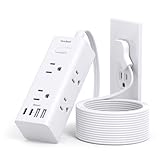
I remember the first time I really needed a long extension cord. I was setting up Christmas lights, and the nearest outlet was about three houses away. I grabbed the longest one I could find, a monstrous 100-footer, and plugged everything in.
It worked, but a little voice in the back of my head kept whispering, ‘Is this actually safe?’ That question, ‘are longer extension cords safe,’ has plagued DIYers and homeowners for years. The answer isn’t a simple yes or no, and frankly, most advice out there is either too technical or dangerously vague.
I’ve spent my fair share of time wrestling with cords, burning through cheap ones, and learning the hard way what keeps your house from becoming a fire hazard.
The truth is, a longer cord can be safe, but only if you understand the risks and choose the right one for the job. It’s not just about length; it’s about thickness, condition, and how you use it. Ignore these details, and you’re asking for trouble. I’ve seen sparks fly, smelled that acrid plastic burning smell, and I don’t want that to happen to you. Let’s cut through the noise.
When Does Length Become a Problem?
Look, nobody likes being tethered to an outlet. Sometimes you just need that extra reach, whether it’s for a garden hose that’s too short, a vacuum cleaner that can’t quite make it to the corner, or a temporary power setup for a tool on a big project.
I’ve been there. My most memorable screw-up involved trying to power a small electric grill on my patio with an extension cord that was probably too thin for the draw. I was about 50 feet from the house, and the cord got noticeably warm after about an hour. Not ‘hot enough to burn you,’ but definitely warm.
The grill, bless its little heart, seemed to be working, but the performance was sluggish. That’s the first sign, the subtle warming. It’s the cord telling you it’s working harder than it should be, like a runner gasping for air on a steep hill.
The main culprit here is voltage drop. Think of electricity like water flowing through a pipe. The longer and narrower the pipe, the harder it is for the water to flow freely.
With electricity, a longer cord means more resistance, and that resistance causes the voltage to drop by the time it reaches your appliance. Appliances, especially those with motors like vacuums, power tools, or even refrigerators, need a specific voltage to run efficiently and safely.
If they don’t get it, they can overheat, damage their internal components, and, yes, even become a fire hazard. This is especially true for older or cheaper appliances that aren’t as forgiving. For me, that grill eventually died a slow, sluggish death a few months later, and I’m pretty sure that underpowered extension cord was a contributing factor.
I learned then that a cheap, long cord is no bargain.
The National Electrical Code (NEC) is pretty clear on some of these points, though they don’t always spell it out in plain English for the average Joe. They talk about wire gauges and ampacity, which are the technical terms for how much electricity a wire can safely handle. A thinner wire (higher gauge number) has more resistance and can’t carry as much power over a long distance. A thicker wire (lower gauge number) has less resistance and is better suited for longer runs and higher power draws. So, when you’re looking at extension cords, the length is only half the story. The gauge of the wire inside is just as, if not more, important. (See Also: Can Extension Cords Be Thriwn Away )
What to Look for: The Nitty-Gritty Specs
This is where most people glaze over, but it’s the most important part. You have to understand wire gauge and amperage. Forget the fancy colors or the number of outlets for a second.
Focus on these two things: the gauge (AWG – American Wire Gauge) and the amperage rating. The lower the AWG number, the thicker the wire.
A 16-gauge cord is thinner than a 14-gauge, which is thinner than a 12-gauge. For general household use, like powering lamps or charging your phone, a 16-gauge cord might be fine, even for longer runs, provided the total wattage isn’t too high. But for anything that draws a significant amount of power – power tools, space heaters, large appliances – you need a thicker cord.
A 14-gauge cord is a good general-purpose choice for medium-duty tasks, like running a lawnmower or a moderately powered tool. It offers a good balance between flexibility, cost, and ability to handle a decent load over 50-100 feet. However, for heavy-duty applications, especially anything with a motor that has a high starting current, or if you’re running the cord 100 feet or more, you really should be looking at a 12-gauge cord. These are beefier, less flexible, and more expensive, but they handle the voltage drop much better and are significantly safer for demanding tasks. Think of them as the heavyweights of the extension cord world.
The amperage rating tells you how much current the cord can safely handle. This needs to match or exceed the amperage requirement of the appliance you’re plugging into it. You can usually find the amperage draw on the appliance’s rating plate or in its manual. Often, appliance manuals will also recommend a specific gauge of extension cord for different lengths. If your appliance draws, say, 10 amps, you don’t want a cord rated for only 7 amps, especially not a long one. Combining a higher gauge number (thinner wire) with a lower amperage rating is a recipe for overheating and disaster. Here’s a quick rundown, and I’ve added my own verdict for typical use cases:
| Gauge (AWG) | Typical Use | Verdict |
|---|---|---|
| 18 | Light-duty electronics, clocks, lamps (short runs only) | Avoid for anything else. Too thin, high risk of overheat. |
| 16 | General household, holiday lights, small fans (up to 50 ft) | Okay for light loads, but check wattage. Can get warm. |
| 14 | Medium-duty tools, lawnmowers, medium appliances (up to 100 ft) | Good all-rounder for most home projects. My go-to for most tasks. |
| 12 | Heavy-duty tools, space heaters, demanding appliances (any length) | The safest bet for high-draw items. Worth the extra cost. |
Always check the total wattage your appliance(s) will draw. You can calculate this by multiplying volts (usually 120V in the US) by amps. For example, a 1200-watt heater drawing 10 amps needs a cord that can handle at least 10 amps. A 16-gauge cord might be rated for 10-13 amps but will struggle over 50 feet. A 14-gauge will be much happier. And for anything over 1500 watts, you’re definitely in 12-gauge territory.
Common Mistakes That Make Cords Dangerous
My biggest pet peeve? People treating extension cords like permanent wiring. They snake them under rugs, run them through doorways where they get pinched, or leave them out in the weather exposed to sun and rain. This is a fast track to frayed insulation, exposed wires, and potential shorts. I once saw a cord that had been run under a heavy Persian rug for months. When I pulled it out, the insulation was completely worn away in spots from the constant pressure and friction. It was a miracle no one got shocked or that it didn’t spark a fire.
Another massive mistake is overloading. Plugging multiple high-draw devices into a single extension cord, especially if it’s a cheaper, thinner model, is a bad idea. The cord has a maximum amperage rating, and exceeding it will cause it to heat up. This can melt the insulation, damage the outlets, and, in the worst-case scenario, start a fire. People do this with Christmas lights, power strips, and even multiple tools on a job site. Always remember that the cord itself has limits, and so does the outlet you’re plugging it into. If you’re using a surge protector or power strip, check its rating too, and be mindful of its combined load.
People also tend to ignore the condition of their extension cords. A cord that’s kinked, has cuts or nicks in the insulation, or has damaged prongs is a no-go. Don’t try to tape it up and keep using it. That’s a temporary fix that rarely holds and is incredibly risky. If you see any damage, the cord needs to be retired. Think of it like an old tire with a bulge; it’s one bump away from a catastrophic failure. I’ve got a bin of retired extension cords that I’ve cut the plugs off of to make sure no one accidentally tries to use them again. It’s a small step, but it feels safer.
Finally, using the wrong type of cord for the environment is a common pitfall. Indoor cords are not designed to withstand moisture, extreme temperatures, or physical damage that outdoor or heavy-duty cords are built for. Using a standard indoor cord outside is a recipe for disaster. Conversely, an outdoor-rated cord might be overkill and less flexible for indoor use, but safety is most important. Always check the cord’s rating – it will usually say “Indoor,” “Outdoor,” or “Heavy Duty” on the plug or packaging.
Real-World Use: My Extension Cord War Stories
I learned a lot about extension cords during a massive landscaping project a few years back. I was digging up a huge old hedge, and my trusty corded angle grinder was key. The nearest outdoor outlet was a good 75 feet away from the main work area, and I needed to get that grinder to every single root. I bought what I thought was a decent 100-foot, 14-gauge cord. It looked thick enough, and the store clerk said it was good for tools. For the first couple of hours, it was fine. But as I was really digging in, grinding through thick roots, I noticed the cord was getting warm. Not scorching, but definitely more than ambient temperature. (See Also: Can Extension Cords Short Out )
The grinder felt a bit anemic, too. It wasn’t cutting as aggressively as it usually does. I started getting worried. I’d planned to run the grinder for most of the day, but the thought of that cord overheating and potentially failing in the middle of all that dirt and debris made me nervous. I ended up having to stop and buy a heavier-duty 12-gauge cord, also 100 feet long, from a local hardware store. The difference was night and day. The new cord stayed cool to the touch, even after an hour of hard grinding, and the grinder performed like a champ. That was a stark, albeit slightly smoky, lesson in not cutting corners on the gauge for demanding tasks.
Another time, I was setting up for an outdoor movie night in the backyard. I needed to run power for the projector, a small sound system, and some fairy lights. I used a single, long 14-gauge cord to power a power strip that had everything plugged into it.
It was a warm summer evening, and the cord was running across the lawn. After about an hour, I noticed the power strip itself felt a bit warm. I checked the extension cord and it was also warm.
I realized I had probably underestimated the total wattage draw. The lights, projector, and sound system weren’t individually massive power hogs, but combined, they were pushing the limits of that 14-gauge cord over a long run. I immediately unplugged everything, moved the setup closer to the house so I could use a shorter, thicker cord (a 12-gauge this time), and avoided a potential issue.
It’s these little moments where you learn the practical implications of ampacity and voltage drop.
The Contrarian View: When Shorter Is Always Better
Now, here’s my contrarian take: everyone talks about how to make longer cords safe, but honestly, if you can avoid a long extension cord altogether, you absolutely should. Most of the time, the need for a super long cord is a symptom of poor planning or a lack of accessible outlets.
I’ve seen people run 100-foot cords across their entire lawn just to power a string of lights that could have been powered by two shorter cords and a couple of strategically placed outlets. Or they’ll use a long cord for a tool that they could have just used a battery-powered version of. My rule of thumb is this: if you can use a cord that’s 25 feet or less, do it.
If you can get away with a 50-foot cord, that’s still pretty good.
Why? Because even with the best-intentioned precautions, long cords are just more prone to damage.
They get stepped on, driven over by lawnmowers, nicked by garden tools, chewed by pests (yes, I’ve seen that too), and generally subjected to more abuse than a cord that stays neatly coiled by the wall. Every connection point, every foot of wire, is a potential failure point.
Even if the cord itself is rated correctly, the connectors can wear out, the insulation can degrade from UV exposure if used outdoors, and the sheer length means it’s more likely to be tangled, stressed, or otherwise compromised. Think about it: a 100-foot cord has 100 feet of material that can get damaged, compared to just 25 feet for a shorter cord. (See Also: Can Extension Cords Be Use With Electric Heaters )
Furthermore, the convenience factor of long cords often leads to their misuse. People are more likely to leave them out, trip over them, or plug too many things into them because they’re already there and in place. It’s a psychological thing. A shorter cord often serves as a natural reminder that you’re operating at the edge of your electrical reach. It encourages you to position your tools or devices closer to the power source, which is inherently safer. So, while we can make longer extension cords safe with the right choices, the safest option is often the shortest one that gets the job done. It’s about minimizing risk, and length inherently increases it.
Faq: Your Burning Questions Answered
Can I Use a Longer Extension Cord Than Recommended?
Using a longer extension cord than recommended can be risky. While it might seem like it works, it significantly increases the chance of voltage drop, which can overheat your appliance and the cord itself. It also increases the physical strain on the cord. Stick to the recommended length or use a thicker gauge cord if you need more reach to compensate for the extra length.
Are 100-Foot Extension Cords Safe?
A 100-foot extension cord can be safe, but only if it’s the right type. For this length, you absolutely need a heavy-duty cord, typically 12-gauge wire, and rated for the amperage of the device you’re powering. A thinner 16-gauge cord of that length is highly unlikely to be safe for anything other than very low-power electronics and carries a significant fire risk.
What Happens If You Use Too Thin of an Extension Cord?
If you use an extension cord that is too thin (higher gauge number) for the appliance’s power draw, the wire will have too much resistance. This causes the wire to heat up, potentially melting the insulation, damaging the appliance, and creating a serious fire hazard. You’ll also experience reduced performance from your appliance due to voltage drop.
Can I Run an Extension Cord Under a Rug?
No, you should never run an extension cord under a rug. The pressure and friction from foot traffic can wear away the insulation, exposing the wires and creating a shock or fire risk. It also hides potential damage, so you might not notice the hazard until it’s too late.
Practical Tips for Using Long Extension Cords
So, how do you actually use these things without setting your house on fire? First, always buy cords from reputable manufacturers and retailers. Cheap, off-brand cords are often made with lower-quality materials and thinner wires than advertised, making them inherently less safe. Look for cords with UL or ETL certification – this means they’ve been tested and meet certain safety standards. It’s not a guarantee against all problems, but it’s a solid starting point.
When you’re using a long cord, especially outdoors, avoid running it across high-traffic areas or where it could be easily damaged. If you must run it across a walkway, consider using a cord protector or runner to shield it from being stepped on or driven over. Make sure it’s not lying in puddles or areas where it could become submerged in water. For outdoor use, always opt for cords specifically rated for outdoor environments; they’re built to withstand moisture and temperature fluctuations better.
Keep them organized. Don’t just yank them out of a tangled mess. Coiling them properly helps prevent kinks and damage. When storing them, especially for longer periods, make sure they are clean and dry. Inspect them before every use. Seriously, take 30 seconds to look for any cuts, frays, or damaged prongs. If you find any, retire the cord. It’s not worth the risk. And as I mentioned, if you can use a shorter cord, do it. Always aim for the shortest, thickest cord that safely powers your device.
Final Thoughts
At the end of the day, the question ‘are longer extension cords safe’ boils down to understanding the physics involved and making smart choices. It’s not about the length itself being inherently dangerous, but about how that length interacts with the electrical current and the cord’s construction. A 100-foot cord made of thin, cheap wire is a ticking time bomb. A 100-foot cord made of heavy-gauge copper, properly rated, and used with care, can be a perfectly safe and useful tool.
My advice? Treat every extension cord, long or short, with respect. Inspect it before every use. Match its gauge and amperage rating to your appliance’s needs. And if you find yourself constantly reaching for the longest cord you own, consider if there’s a more permanent or safer solution, like adding an outlet or using a battery-powered alternative. Your home and your peace of mind are worth more than the few bucks you might save on a bargain-basement cord.