I remember the first time I really looked at a car door hinge. Not just opening and closing it, but the actual metal bits. It got me thinking, in a roundabout way, about how we define things. It’s the kind of question that pops into your head when you’ve spent too much time tinkering in the garage, covered in grease and wondering if you’ll ever get the smell out. So, let’s cut to the chase: are hinges technically wheels? It’s a funny thought, but it’s not as daft as it sounds when you start breaking down the mechanics of motion.
Most folks would just laugh and say no, obviously. But the devil, as they say, is in the details. We use these simple mechanisms every single day without a second thought, letting them swing doors, open trunks, and even support the weight of aircraft wings. They allow movement, rotation, and sometimes, a bit of a squeak that drives you mad until you oil them.
Why Hinges Aren’t Wheels (but It’s Complicated)
Look, let’s be blunt. A hinge is not a wheel. Not even close. A wheel’s whole raison d’être is to roll, to help linear movement across a surface with minimal friction. It’s all about rotation around an axle to move something from point A to point B. Think about it: cars, bikes, shopping carts, even those ancient chariots – they all use wheels for locomotion. The entire principle of transportation, as we know it, hinges (ha!) on the wheel’s ability to turn.
A hinge, on the other hand, is primarily about pivot. It allows rotation, sure, but usually in a fixed arc, connecting two parts that need to move relative to each other. A door swings open and closed, a lid lifts up, a bonnet opens for engine access. It’s controlled, limited motion. If a car door used wheels on its edges, it would just roll off the car. That’s not useful. The common advice is that wheels roll and hinges pivot, and that’s the core difference. It’s a distinction that matters in engineering, physics, and even just basic common sense.
I’ve spent countless hours wrestling with stubborn car parts, and the number of times I’ve wished a hinge would just roll away from me is surprisingly high. But that’s the thing, they don’t. They’re built for a specific job: connection and controlled articulation. The materials, the design, the way they’re mounted – it’s all geared towards that precise function, not the free-wheeling locomotion that defines a wheel. So, technically, no. They serve fundamentally different mechanical purposes.
The Mechanical Heart of a Hinge
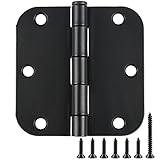
Alright, so hinges aren’t wheels, but understanding why is where the real interest lies. A typical door hinge, the kind you see on almost every house and car door, is a beautiful piece of simple engineering. It’s basically two plates (leaves) joined by a cylindrical pin.
Each leaf is attached to one of the surfaces that need to move relative to each other. When you open or close a door, the pin acts as the pivot point around which the leaves rotate. This rotation is what allows the door to swing open or shut. The whole setup is designed to handle shear forces (forces trying to slide one part past another) and sometimes bending forces, while allowing that controlled rotational movement.
The materials are usually steel, sometimes stainless steel or brass, chosen for strength and corrosion resistance. The pin is often a snug fit within the barrels of the hinge leaves to minimize wobble and wear. Some hinges have removable pins, which makes installation or maintenance easier – you can lift the door off without unscrewing the whole hinge.
Others have non-removable pins, often for security reasons. Then you get into more complex hinges, like those used on car doors.
These aren’t just simple pivot points; they often incorporate stops to prevent the door from opening too far, dampers to control the speed of opening and closing, and sometimes even mechanisms to hold the door open at specific angles. I once had a passenger side door on an old Honda that would only stay open at about a 45-degree angle, no matter how hard I tried to push it further. Turned out the detent mechanism in the hinge had worn out. (See Also: A Box Without Hinges Key )
A real pain in the backside to replace, let me tell you, and not a cheap part either, costing me about $75 for the one side.
The design complexity can skyrocket depending on the application. Think about the hinges on a large industrial gate versus a tiny jewelry box. The fundamental principle of a pivot remains, but the load-bearing capacity, the smoothness of operation, and the need for features like self-closing or locking mechanisms dramatically change the design. In essence, a hinge is a mechanical joint designed for controlled angular displacement between two rigid bodies. It’s all about helping a specific range of motion, not about enabling continuous rolling movement. And that, my friend, is a world away from the humble wheel.
When Hinges Get Fancy: Beyond the Simple Pivot
The basic hinge is simple, but the world of hinges is anything but. We’re not just talking about your front door anymore. Take a look at a modern car door.
It’s not just a pivot. There are usually two or three solid hinges per door, designed to not only swing a heavy piece of metal but also to withstand the forces of wind, impacts, and the constant stress of opening and closing.
They often have multiple detents, those little notches that click when you open the door, holding it at various positions. This is a feature I’ve come to appreciate more with age; fumbling to stop a heavy door from slamming shut against a wall while trying to load groceries is no fun at all. It’s a step up from the basic, providing convenience and preventing damage.
Aircraft wing hinges are another beast entirely. These are massive, complex structures that allow wings to articulate for control surfaces like ailerons and flaps. They’re built to withstand immense forces, operate reliably in extreme conditions, and are subject to incredibly stringent safety standards. They allow rotation, yes, but it’s a highly engineered, controlled rotation that’s absolutely vital for flight. They’re less about just swinging open and more about precise, load-bearing articulation. The engineering involved is staggering, and frankly, far beyond what most people consider when they think of a simple hinge.
Then there are continuous hinges, also known as piano hinges. These run the entire length of the two surfaces they connect, providing continuous support and allowing for a smooth, even swing. You see them on toolboxes, long cabinets, and yes, even some car trunk lids. They distribute the load along the entire edge, making them very strong and preventing sagging over time.
I replaced a flimsy, short hinge on a heavy toolbox lid with a continuous one, and the difference was night and day. The lid felt solid and operated smoothly; it was one of those small upgrades that just made you feel good about your tools, costing me maybe $30 and an hour of my time.
This is a good example of how the design can be adapted for specific needs, moving beyond the simple two-leaf configuration. (See Also: Are Integrated Washing Machine Door Hinges Standard )
The ‘rolling’ Illusion: When Hinges Mimic Wheels (sort Of)
Now, here’s where things get fuzzy and where the original question might stem from. Some hinges do have rolling elements. Think about roller bearings. You find these in heavy-duty drawer slides, some gate hinges, and even in specialized door hardware. In these cases, small cylindrical rollers (like miniature wheels) are placed between moving surfaces to reduce friction and allow for smoother, easier movement. So, while the hinge assembly itself isn’t a wheel, it might incorporate rolling elements to achieve its function. It’s the difference between the wheel being the primary mechanism for motion versus being a component that aids the primary mechanism (which is still usually a pivot or sliding action).
I remember trying to move a massive, antique wardrobe once. The doors were incredibly heavy, and the old wooden runners were shot. We ended up fitting heavy-duty drawer slides with roller bearings to the inside of the wardrobe frame and the doors. It wasn’t a hinge in the traditional sense for the door opening, but it was a system that allowed the doors to slide open with minimal effort, mimicking the effect of rolling. The wardrobe doors now glide like they’re on ice. That was a DIY project that cost about $150 in hardware, but it saved our backs. It’s an example where the effect is similar to rolling, but the underlying principle isn’t a true wheel helping locomotion.
Another area to consider is something like a lazy Susan mechanism, often used in corner cabinets. While not strictly a hinge, it’s a rotating platform that often uses ball bearings or roller bearings. The bearings allow the platform to spin smoothly. This is closer to the concept of a wheel in that it’s about continuous rotation, but it’s usually a dedicated bearing system rather than a hinge. The key distinction is always the purpose. Is the primary goal to help rolling, linear movement (wheel), or to connect two objects and allow controlled rotation or articulation (hinge)? The presence of rolling elements doesn’t automatically make the entire mechanism a wheel. It’s a component that enhances the hinge’s function.
Are Hinges Technically Wheels? A Contrarian View
Here’s my take, and it might ruffle some feathers: everyone says hinges aren’t wheels because they don’t roll freely to move an object from point A to point B. And they’re mostly right. But I disagree that the definition is quite so black and white when you really dig into the physics. A wheel, at its most basic, is a circular object that revolves around an axle. Its purpose is to reduce friction and help motion. Hinges, especially those with integrated bearings or rollers, do involve circular objects revolving around an axle (the pin or the bearings). Their purpose is to help rotational motion with reduced friction compared to a simple sliding surface.
Think about it this way: a wheel on a car is not just sitting there; it’s rotating around its hub. That rotation is what allows the car to move.
A hinge also rotates around its pin. While the application is different – one for locomotion, the other for articulation – the fundamental mechanical principle of rotation around an axle is present in both. If you look at the definition of a wheel in a purely mechanical sense – a disc or hoop that revolves on an axle passing through its centre – a hinge’s pin and barrel system, or a hinge with ball bearings, arguably fits part of that definition. It’s the context and primary function that separates them in everyday language and engineering practice.
My contrarian opinion is that the common understanding of ‘wheel’ is too narrowly focused on locomotion. If we define it more broadly as any rotating component that reduces friction to enable movement, then certain types of hinges, particularly those using roller or ball bearings, blur the lines. The common advice is to differentiate them solely by their end-use (rolling vs. pivoting), but I think that ignores the shared mechanical principles at play. I’ve seen incredibly smooth-operating hinges that feel more like a precision bearing than a simple flap of metal, and that’s where the technicality gets interesting. It’s a semantic argument, perhaps, but an interesting one.
People Also Ask: Hinges vs. Wheels Explained
This section addresses some common questions that people have when they start pondering these mechanical comparisons. It’s natural to wonder about the finer points when you start thinking about definitions and functions.
Do Hinges Help Things Move?
Yes, hinges absolutely help things move. Their primary function is to allow controlled movement, typically rotation, between two connected parts. Without hinges, doors, lids, and many other structures would be fixed in place and unable to open or close. They help the articulation needed for access, operation, or simply changing the configuration of an object. (See Also: Are Hinges Wheeels )
What Is the Main Function of a Wheel?
The main function of a wheel is to help locomotion by reducing friction between a moving object and a surface. By rotating around an axle, a wheel allows an object to be moved from one place to another with significantly less effort than if it were dragged. It’s the cornerstone of most transportation systems.
Can a Hinge Be Considered a Bearing?
Yes, in a sense, a hinge can be considered a type of bearing, or at least it functions similarly to a simple bearing. A bearing is a machine element that constrains relative motion to only the desired motion, and reduces friction between moving parts. Hinges constrain motion to rotation around a pivot point and reduce friction through their design, especially those with pins and barrels or integrated rolling elements.
What Is the Difference Between a Hinge and a Bearing?
The main difference lies in their primary function and complexity. A hinge is specifically designed to connect two objects and allow them to pivot relative to each other, often with built-in features like stops or dampers. A bearing is a more general component whose primary role is to reduce friction and support loads while allowing relative motion, which can be rotational, linear, or a combination. Hinges often incorporate bearing principles, but a bearing is not necessarily a hinge.
Are Hinges Technically Wheels?
Technically, no, hinges are not wheels. While both involve rotation around an axle and aim to help movement, their primary functions are distinct. Wheels are designed for locomotion and rolling motion across a surface, whereas hinges are designed to connect two parts and allow controlled articulation or pivoting. The common understanding and engineering definition clearly separate the two based on their intended use and operational mechanics.
A Practical Comparison: Hinges vs. Wheels in Action
To really nail down the difference, let’s look at a few common applications and compare how hinges and wheels perform. It’s not just about definitions; it’s about what they do in the real world. I’ve had my fair share of experiences with both, from fixing squeaky door hinges to replacing flat tires. The contrast is stark.
| Application | Primary Mechanism | Role of Hinge/Wheel | My Verdict |
|---|---|---|---|
| Car Door | Hinge | Connects door to body, allows controlled opening/closing arc. | Key for access, but limited motion. Not rolling. |
| Car Wheel | Wheel | Enables vehicle to roll over surfaces for locomotion. | The reason cars move. Fundamental to transport. |
| Cabinet Door | Hinge | Allows door to swing open/shut to access cabinet contents. | Simple pivot, gets the job done reliably. |
| Shopping Cart | Wheel | Allows cart to be pushed or pulled easily across floors. | Makes lugging groceries manageable. |
| Aircraft Wing Flap | Hinge (complex) | Allows flap to articulate for flight control. | High-engineering pivot, important for flight, not rolling. |
| Toolbox Lid | Hinge (often continuous) | Connects lid to base, allows opening without losing lid. | Prevents lid loss, provides sturdy opening. |
As you can see, the applications are fundamentally different. A car door uses hinges to swing. A car uses wheels to move. You wouldn’t try to make a car door roll open, and you wouldn’t try to attach a wheel to your car door to make it open. The technologies are distinct because their purposes are distinct. My first car, a beat-up old Corolla, had doors that sometimes stuck open due to worn hinges. Replacing them wasn’t cheap, about $220 for the pair of front door hinges, but it made a massive difference to the feel of the car. They were simple, solid pivots, and that’s exactly what they needed to be.
Verdict
So, when you boil it down, are hinges technically wheels? The answer, by any practical or engineering definition, is a resounding no. They operate on different principles, serve different functions, and are designed with entirely different goals in mind. While some fancy hinges might incorporate rolling elements to reduce friction, their core purpose remains connecting and allowing controlled articulation, not enabling free-rolling locomotion.
The confusion likely arises from the shared concept of rotation around an axle. Both mechanisms involve circular motion, but the context is what truly separates them. A wheel’s job is to make things move across a surface; a hinge’s job is to make one part move relative to another.
Next time you open a door or a car trunk, take a moment to appreciate that hinge. It’s a marvel of mechanical design, but it’s not a wheel. And that’s perfectly fine, because the world needs both for different reasons. If you’re dealing with a sticky hinge on your vehicle, don’t try to jam a wheel on it – proper lubrication or replacement is the real fix.