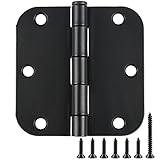
I remember the first time I tried to replace a broken hinge on an old IKEA cabinet. I figured, ‘How hard can it be? They’re just hinges!’ Turns out, pretty hard if you don’t know what you’re doing. The frustration of trying to find an exact match for those specific screws and mounting plates nearly made me chuck the whole cabinet. So, let’s get one thing straight right off the bat: are IKEA hinges standard? The short, blunt answer is usually no, not in the way you’re probably hoping.
This isn’t to say IKEA is deliberately making things difficult. They have their own system, designed to work with their furniture. But for us DIYers, homeowners, and anyone who’s inherited an IKEA piece and needs a repair, it can feel like a specialized language you need to learn.
The Ikea Hinge Ecosystem: Why It’s Not Your Average Hardware Store Find
Look, I’ve spent more hours than I care to admit wrestling with furniture assembly and repairs. When a hinge on my old IKEA wardrobe snapped – the kind that allows for that smooth, almost silent close – my first thought was a quick trip to the local hardware store. Surely, hinges are hinges, right? Wrong. So, spectacularly wrong. I walked out with three different sets of ‘universal’ hinges, none of which lined up with the pre-drilled holes or even the same screw pattern. It was a frustrating afternoon that cost me about $40 and a whole lot of wasted time. This is where the ‘are IKEA hinges standard’ question really bites you.
IKEA’s approach to hardware, including their hinges, is largely proprietary. They design their cabinets and furniture with specific components in mind to make sure a particular look, feel, and ease of assembly within their own ecosystem.
This means that while they might look similar to hinges you see elsewhere, the devil is in the details: the spacing of the screw holes, the type of screw head, the overlay (how much the door covers the cabinet frame), the degree of opening, and the mounting plate system. If you’re building a new IKEA kitchen or wardrobe, you’re buying their hinges, and that’s that. They’re engineered to fit their specific cabinet boxes like a glove.
But when one breaks years down the line, or you want to swap out a door on an older piece, that’s when the standard question becomes a real headache.
Think about it from IKEA’s perspective. They’ve optimized their supply chain and manufacturing. Using a unique, proprietary hinge allows them to control quality, cost, and integration with their flat-pack systems. It’s efficient for them. For us, the end-users, it means that if you need a replacement hinge, your best bet, almost always, is to go directly back to IKEA. Trying to ‘retrofit’ standard hardware store hinges onto IKEA cabinets is usually a recipe for stripped screws, misaligned doors, and a general sense of defeat. The specialized nature of IKEA’s hardware is a core part of their product design, and while it makes assembly a breeze when you have all the original parts, it complicates repairs significantly.
Decoding Ikea Hinge Lingo: What to Actually Look For
Alright, so you’ve established that your IKEA hinges aren’t exactly interchangeable with your grandma’s old kitchen cabinets. Now what? You need to figure out what kind of IKEA hinge you actually have. This is where a little detective work comes in handy. IKEA uses a few main types of hinges, and they’re usually identifiable by their series name, often found on the hinge arm itself or in the product manual. Think of it like learning a secret handshake for your cabinets.
The most common ones are the UTTARA (often for frameless cabinets), the MAXIMERA (for drawers, but the cabinet connection can be relevant), and the BLUMOTION-integrated hinges (these are the fancy ones that offer soft-close functionality, and they’re often made by Blum, a high-quality hardware manufacturer, but branded for IKEA). You’ll find markings on the metal part of the hinge arm. It might say ‘Blum’, followed by a product number or series. Sometimes, it’s just an IKEA product code. If you’re lucky, you might see a series name like ‘STOPSIDIG’ or ‘KOMPLEMENT’.
The key features to note are the overlay type and the mounting method. Overlay refers to how the door sits in relation to the cabinet frame. Is it a full overlay (door covers the entire frame), a half overlay (two doors meet in the middle, each covering half the frame), or an inset door (door sits flush inside the frame)? IKEA primarily uses full overlay hinges for their frameless cabinets. The mounting method involves the hinge arm itself and the separate mounting plate that screws into the cabinet. The hinge arm clicks or screws onto this plate. Sometimes the plate is the part that needs replacing, other times it’s the entire hinge arm, or just the soft-close damper.
Here’s a little trick: take a picture of the hinge, ideally with a ruler next to it for scale. Then, go to the IKEA website and search for ‘cabinet hinges’ or the name of your cabinet series (e.g., ‘SEKTION hinges’). Browse through the hinge options. You’ll often see diagrams showing the overlay and mounting style. Match up what you see on your hinge to the diagrams. If you’re really stuck, customer service at an IKEA store can often help you identify the part if you bring the old one or a detailed photo. (See Also: A Box Without Hinges Key )
Common Ikea Hinge Types & Their Quirks
IKEA has simplified things over the years, but there are still variations. The older systems might have slightly different mounting plates or hinge arms. You’ll encounter hinges with integrated soft-close mechanisms and those that accept separate dampers. The more modern IKEA kitchen systems, like SEKTION, heavily rely on hinges that attach to specialized mounting rails, which can be another layer of complexity if those rails are damaged.
One thing to be aware of is that IKEA sometimes updates its hardware. A hinge that was standard five years ago might have a slightly newer version now. While they try to maintain compatibility, it’s not always a perfect 1:1 swap. Always check the product description for compatibility with your cabinet series. If you’re looking for a specific part, and you know the IKEA product code of the cabinet it came from, that’s your golden ticket. Searching that code on the IKEA site can lead you directly to the spare parts or the compatible hardware.
The DIY Headache: When ‘standard’ Just Doesn’t Cut It
This is where the real frustration sets in for a lot of people. You’ve got a cabinet door that’s hanging crooked, or maybe one that slams shut with the force of a cannon. You head to the hardware store, feeling pretty confident.
You grab a handful of what look like perfectly normal cabinet hinges. You get home, ready to install.
And then… disaster. The screw holes don’t line up. The depth of the hinge cup isn’t right for the cabinet door. The overlay is completely off, making the doors look like they’re playing a game of Tetris gone wrong.
This is the pain of IKEA’s proprietary hardware. It’s designed to work within its own system, not to be a universal fit.
I learned this the hard way when I inherited an IKEA desk with a couple of drawers that had wonky runners, which are basically horizontal hinges. The runners had a specific clipping mechanism into the drawer sides and the cabinet frame. My attempts to replace them with generic drawer slides from the hardware store ended up with drawers that either wouldn’t close properly or would fall off their tracks. It took me a good three evenings of fiddling, drilling new holes (which I regretted immediately), and ultimately admitting defeat to order the correct IKEA replacements. The cost of the official parts was higher than I expected, but the time and sanity saved were well worth it.
The common advice you’ll hear is, ‘Just get standard hinges!’ And for most non-IKEA furniture, that’s often true. You can find a world of hinges at hardware stores: European-style concealed hinges, overlay hinges, inset hinges, full-wrap hinges.
But IKEA’s system, particularly their frameless cabinets, uses a specific design where the hinge often attaches to a separate mounting plate that’s screwed into the cabinet body. The hinge arm itself has a distinct profile and mounting points. Even if you find a hinge that looks the same, the important dimensions – the distance from the screw holes on the hinge arm to the edge of the door, or the spacing of the screws on the mounting plate – are often different. This is why you can’t just grab any old hinge and expect it to work.
It’s a closed system, and breaking into it without the right parts is a recipe for frustration. (See Also: Are Integrated Washing Machine Door Hinges Standard )
What Happens When You Force It?
Trying to force standard hinges onto IKEA cabinets usually leads to a few predictable outcomes. You might end up drilling new holes, which compromises the integrity of the particleboard or laminate. The doors might not sit flush, creating an uneven look. They could bind when opening or closing, leading to premature wear and tear on the hinge or the cabinet. Or, in the worst-case scenario, the door could simply detach, causing damage to both the door and the cabinet frame. It’s a false economy trying to save a few bucks by avoiding the official IKEA parts.
The One Exception: When Ikea might Be Standard
Okay, so I’ve been pretty blunt about IKEA hinges not being standard. But there’s a caveat, a little glimmer of hope for those trying to avoid a direct trip to the blue and yellow store. IKEA does use hardware manufactured by reputable third-party companies, most notably Blum. Blum is a world-renowned manufacturer of high-quality cabinet hardware, and their hinges are widely considered the industry standard in many parts of the world. So, if your IKEA cabinet has Blum hinges, there’s a good chance you can find compatible replacements from Blum directly, or from other hardware suppliers that carry Blum products.
How do you tell if you have Blum hinges? Look for the Blum logo (a stylized ‘b’) or the name ‘Blum’ stamped on the hinge arm. You’ll also often see a product series name, like ‘Clip Top’ or ‘Modul’. If you find these markings, you’re in luck! You can then search for that specific Blum hinge model. These are often sold through specialized cabinet hardware suppliers, online retailers, or even some well-stocked local hardware stores. The advantage here is that Blum hinges are designed for a high degree of adjustability, making them easier to fine-tune for perfect door alignment.
However, it’s not a free pass. Even with Blum hardware, IKEA often specifies particular mounting plates or hinge cup depths that are designed to work with their specific cabinet construction. So, while you might be able to get a Blum hinge arm, you still need to make sure the mounting plate and the overall dimensions match. For example, the ‘overlay’ – how much the door covers the cabinet frame – is important.
If you buy a Blum hinge with the wrong overlay, your doors won’t line up correctly. It’s always best to try and identify the exact Blum model number if possible.
If you can’t find the number, take clear photos of the hinge and its mounting, and compare them to the specifications and diagrams on Blum’s website or from a supplier. This is probably the closest you’ll get to a ‘standard’ IKEA hinge experience.
Blum vs. Ikea Branded: A Comparison
| Feature | IKEA Branded (Proprietary) | Blum (Often Used by IKEA) | Verdict |
|---|---|---|---|
| Availability for Replacements | Primarily IKEA stores/website | Specialty hardware stores, online retailers | IKEA is easier for direct replacement of their unique parts. Blum offers more flexibility if you can identify the exact model. |
| Quality & Durability | Generally good for the price, but can vary. | Excellent, known for smooth operation and longevity. | Blum often edges out IKEA’s own branding in terms of sheer quality and feel. |
| Compatibility with IKEA Cabinets | Designed to fit IKEA’s specific system. | Can fit if the exact model and mounting are compatible; requires careful checking. | IKEA branded is a guaranteed fit. Blum requires more diligence but can be a superior option. |
| Adjustability | Good, but can be less intuitive. | Excellent, with multiple adjustment screws for precise alignment. | Blum wins for fine-tuning door alignment. |
| Cost | Typically lower upfront. | Can be higher, but often worth the investment for durability. | IKEA is cheaper if you just need a quick replacement. Blum is better for long-term quality. |
My personal take? If it’s a Blum hinge clearly marked, go for a Blum replacement. If it’s an obscure IKEA-only part, swallow the cost and get the IKEA original. It’s just not worth the headache trying to improvise with non-standard parts. You’ll end up spending more time and money in the long run.
Practical Tips for Dealing with Ikea Hinges
So, we’ve established that IKEA hinges are generally not standard in the way you’d expect. They’re designed for their specific furniture systems. But this doesn’t mean you’re doomed to a life of perpetually wonky cabinet doors. Here are some practical tips that I’ve picked up over the years that might save you some grief.
First, and I can’t stress this enough: document everything when you buy IKEA furniture. When you assemble a new piece, take a few clear photos of the hinges. Note down any part numbers or series names stamped on them. Keep the instruction manual! These manuals often have diagrams that clearly show the hardware and can be invaluable later. If you’re buying a second-hand IKEA item, ask the seller about the hardware or if they have any original manuals or photos. This proactive approach is your best defense against future hinge headaches.
Second, when in doubt, go to IKEA. Their website is actually quite good for finding spare parts. (See Also: Are Hinges Wheeels )
If you know the name of your cabinet system (e.g., SEKTION, PAX, BESTÅ) or can identify the hinge series from markings on the old part, search for it on the IKEA site. They have a dedicated section for spare parts, or you can often find replacement hardware listed within the product pages. If you have the original product name or article number, that’s even better. You can also visit an IKEA store and speak to customer service.
Bring the broken hinge with you, or at least a very clear photo and its measurements. They have staff trained to help with these specific parts.
Third, measure carefully if you’re trying to source third-party alternatives. If you’ve identified your hinges as Blum (or another identifiable brand), measure everything. The diameter and depth of the hinge cup in the door, the distance from the edge of the door to the center of the hinge cup, the spacing of the screw holes on the hinge arm, and the dimensions of the mounting plate. Compare these measurements meticulously with the specifications of any potential replacement hinge. Even a millimeter’s difference can mean the difference between a perfectly aligned door and one that drags on the floor.
A Note on Older Ikea Systems
It’s also worth remembering that IKEA has updated its product lines and hardware over the years. If you have a very old IKEA piece, the exact hinge might be discontinued. In these cases, you might have to look for a compatible replacement hinge that offers a similar overlay and mounting system. This is where the ‘try to find a Blum equivalent’ approach can be useful, as Blum has a long history and a wide range of hinge options that might cover older styles.
However, be prepared for the possibility that you might need to compromise slightly on functionality or appearance if an exact match isn’t available. It’s a bit like finding a replacement part for a classic car – sometimes you have to make do with what you can find.
Are Ikea Hinges Standard? The Final Verdict
After years of fiddling with furniture, both IKEA and otherwise, I’ve come to a pretty firm conclusion about IKEA hinges: they are not standard in the way most people understand that term. They are proprietary. They are designed by IKEA, for IKEA. While they often use high-quality components like Blum mechanisms internally, the specific way those components are integrated, the mounting plates, and the precise dimensions are usually unique to IKEA’s cabinet systems. This is a deliberate design choice to make sure their furniture assembles easily and looks a certain way.
This means that if you have a broken IKEA hinge or need to replace one, your first and best port of call should almost always be IKEA itself. Trying to find a ‘standard’ hinge at a local hardware store is a gamble that usually doesn’t pay off. You’ll likely waste time and money, and end up with doors that don’t hang right, or worse, you might damage the cabinet. The one significant exception is if you can positively identify the hinge as being made by Blum (look for the logo and markings) and can find a direct replacement model that matches the original specifications, particularly the overlay and mounting type. Even then, it requires careful checking.
For most people, the simplest and most reliable path when dealing with IKEA hinges is to source them directly from IKEA. It might not be the cheapest option upfront, but it saves you the immense frustration and potential for further damage that comes from trying to force non-standard hardware into a system designed for specific parts. It’s a lesson I learned the hard way, and one I’m happy to pass on.
Final Thoughts
So, to wrap this up: are IKEA hinges standard? Generally, no. They are proprietary and designed to work within IKEA’s specific furniture systems. This often means you can’t just pop down to your local hardware store and grab a replacement. For most repairs or replacements, your best bet is to go directly to IKEA or their website. If you’re lucky enough to have Blum hinges with clear markings, you might find compatible replacements elsewhere, but always double-check dimensions and specifications.
My advice? Keep those IKEA manuals and take good photos of your hardware when you assemble new furniture. It’ll save you a world of headache down the line. If a hinge breaks, identify it as best you can and source the exact IKEA part or a verified compatible alternative. It’s usually the most straightforward, albeit sometimes slightly more expensive, path to a properly functioning cabinet door.
Ultimately, understanding that IKEA hinges have their own system is the first step to solving any issues you might encounter. Don’t fight the system; work with it.