I remember struggling for hours to get a heavy oak door to swing just right. It felt like wrestling a bear. Every little adjustment seemed to make things worse. It got me thinking, what’s actually going on here? When you break it down, are hinges a type of lever? Most people just slap them on and forget about them, but there’s some real physics involved. I’ve spent more time than I’d like to admit wrestling with doors, cabinets, and all sorts of mechanical contraptions, and let me tell you, understanding the basic principles can save you a world of frustration. It’s not magic; it’s mechanics, plain and simple.
The Simple Truth About Swinging Doors
Look, the first time you really stop and think about it, a hinge is just a pivot point. It’s that simple. You attach one part to a stationary object (like a door frame) and the other part to the moving object (the door itself). When you apply force to the door – say, to open or close it – the hinge allows it to rotate around that fixed point. This rotational movement is the key. Think about a seesaw. One end goes up, the other goes down, all pivoting around the middle. A hinge does something remarkably similar, but usually in a much tighter, more controlled arc.
The common advice is always to get the right size and number of hinges for the weight and size of the door. And yeah, that’s important.
But if you’ve ever installed a new cabinet door or even a simple gate, you’ve likely encountered that moment where it just doesn’t feel right. It might sag, squeak like a haunted house, or require way too much force to move.
That’s usually a hinge problem, and often, it’s because the hinge isn’t being used as effectively as it could be, or the wrong type is being applied. I once tried to save a buck by using lighter-duty hinges on a solid pine shed door.
Big mistake. That door drooped like a sad balloon within a month, and I ended up buying proper, heavy-duty strap hinges that cost me twice as much in the end.
So, when we ask if are hinges a type of lever, the answer isn’t a simple yes or no. It’s more nuanced, depending on how you define ‘lever’ and how you look at the hinge’s function. The fundamental action of a hinge – rotation around a fixed point – absolutely aligns with the principle of a lever. It’s a pivot, and a pivot is a core component of many lever systems. You’re applying force at a distance from the pivot to create motion. The door itself acts as the lever arm, and the hinge is the fulcrum.
Unpacking the Physics: Fulcrum, Effort, and Load
Let’s get down to brass tacks. In physics, a lever is a rigid bar that pivots around a fixed point called a fulcrum.
It’s used to multiply the mechanical force (effort) applied to an object, allowing you to move a heavier load or make movements easier. There are three main components: the fulcrum (the pivot), the effort (the force you apply), and the load (the object being moved or resisted).
Now, how does a hinge fit into this? When you push or pull a door, you’re applying effort.
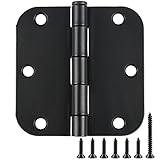
The hinge itself, where the pin connects the two leaves, acts as the fulcrum. The door, or more specifically, the part of the door that is moving away from the frame, is the load you’re trying to move.
It’s a classic lever system.
We can break this down further by looking at the classes of levers. Class 1 levers have the fulcrum between the effort and the load. Think of a seesaw or a crowbar. Class 2 levers have the load between the fulcrum and the effort, like a wheelbarrow.
Class 3 levers have the effort between the fulcrum and the load, such as tweezers or a fishing rod. A hinge, in its most basic operation of opening and closing a door, functions most like a Class 1 lever.
The hinge barrel (the part that spins) is the fulcrum. Your hand pushing on the door is the effort, and the weight and resistance of the door trying to stay shut or simply its inertia is the load. The distance from the hinge pin to where you push on the door is the lever arm.
The further you are from the hinge, the less force you need to apply to move the door, assuming the hinge is working smoothly.
However, it’s not always a perfect textbook example. The ‘rigid bar’ part is a bit flexible with hinges. (See Also: A Box Without Hinges Key )
Most hinges are made of two plates (leaves) joined by a pin. The leaves themselves are rigid, but the connection point, while designed to be minimal, can have a tiny bit of play or friction.
This friction is where the simplicity breaks down slightly from a pure physics model. It means you’re not just overcoming the load; you’re also overcoming the resistance of the hinge itself.
That’s why choosing good quality hinges matters so much. Cheap ones have more friction, meaning you have to apply more effort, and the ‘lever’ action is less efficient. I learned this the hard way with some cheap brass-look hinges on my kitchen cabinets. They looked nice, but the resistance was awful.
Every time I opened a cabinet, it felt like I was fighting the hinge, not just opening the cabinet.
What to Look for When Choosing Hinges (beyond the Shine)
When you’re actually buying hinges, it’s easy to get caught up in the aesthetics. Oh, this antique brass looks perfect, or this brushed nickel will match the handles. But if you want your doors to actually work, you need to think about the mechanics. First off, weight capacity.
This is huge. Every hinge has a recommended weight limit. You can find this in product specs, though often you have to hunt for it.
Ignore it at your peril. A door that’s too heavy for its hinges will sag, bind, and eventually fail. I’ve seen it happen.
For a standard interior hollow-core door, you might get away with lighter hinges, but for solid wood doors, especially larger ones, you need beefier hardware. Three hinges are often better than two for heavier doors, as they distribute the load more evenly, effectively creating multiple fulcrums along the edge of the door.
Material and construction also play a big role in how well a hinge functions as a lever. Steel is strong and durable, making it a good choice for exterior doors or high-traffic areas. Brass is corrosion-resistant and looks good, but can be softer than steel.
Stainless steel is excellent for humid environments. But beyond the base material, look at the pin.
Is it solid? Does it have a tight fit? Some cheaper hinges use hollow pins or pins that are too loose, leading to wobble and premature wear.
The barrel of the hinge, where the pin sits, should also be substantial enough to handle the torque. For a door that swings frequently, or one that needs to stay precisely aligned, ball-bearing hinges or heavy-duty butt hinges are the way to go. They reduce friction significantly, making the hinge operate more smoothly and efficiently as a lever. I’ve replaced a few sets of basic door hinges with oil-impregnated bronze bushings or ball-bearing ones, and the difference is night and day.
The door feels lighter, swings more freely, and stays aligned much better. It’s like going from a rusty bike chain to a freshly oiled one.
Here’s a quick rundown of common hinge types and their suitability:
| Hinge Type | Description | Best For | My Verdict |
|---|---|---|---|
| Butt Hinge | Two leaves joined by a pin, most common for doors. | Standard interior and exterior doors. | Reliable workhorse, but choose quality for weight. |
| Ball-Bearing Hinge | Contains ball bearings to reduce friction. | Heavy doors, high-traffic areas, gates. | Smooth operation, a noticeable upgrade for heavy loads. |
| Continuous Hinge (Piano Hinge) | A long hinge running the full length of the door. | Cabinets, toolboxes, lightweight doors needing full support. | Excellent for even support, but can be less forgiving of frame issues. |
| Surface Mount Hinge | Mounts on the surface, no mortise needed. | Utility cabinets, sheds, quick fixes. | Easy install, but can look less refined and offer less strength. |
| Spring Hinge | Self-closing mechanism. | Screen doors, fire doors (specific types). | Convenient for auto-closing, but can add resistance. |
Common Mistakes That Undermine Hinge Function
You’d think installing a hinge is straightforward, right? Screw it in, done.
But oh, the mistakes I’ve seen – and made. The most obvious one is using the wrong type or size of hinge for the job. (See Also: Are Integrated Washing Machine Door Hinges Standard )
I touched on this, but it bears repeating. Trying to hang a solid oak door with the same thin hinges you’d use for a lightweight MDF interior door is just asking for trouble. It’s like using a spaghetti strainer to bail out a sinking ship.
The hinge is overloaded, its lever action is compromised by strain, and it will fail. I saw a friend’s brand-new, expensive pantry door start to sag within weeks because he skimped on the hinges, opting for a cheap pack that looked ‘good enough’.
Another common blunder is improper alignment. If the hinge leaves aren’t installed perfectly parallel and flush, you’re introducing friction and stress right from the get-go. This means the hinge won’t operate smoothly as a lever. The door will bind, the frame might get stressed, and the hinge pin can even wear unevenly.
This is especially true for mortise hinges where you’re cutting a recess into the wood. If the recess is too deep or too shallow, the hinge won’t sit flush, and you’ll have problems. Even with surface-mount hinges, making sure they are perfectly straight and that the screw holes are pre-drilled correctly can make a huge difference. I once spent an entire afternoon trying to get a gate to close properly, only to realize one of the hinges was installed slightly crooked.
Once I fixed that, it swung like a dream.
Then there’s the issue of not enough hinges. For most interior doors, two hinges are standard, and for heavier ones, three is often recommended.
Adding a third hinge distributes the load and the rotational forces, making the door much more stable and reducing strain on all the hinges. It’s like having more points of support for a bridge. The hinge closest to the top and the one closest to the bottom bear the most torque. A middle hinge helps share that load, making the entire system more solid.
People often skip the third hinge to save a few bucks or because they think it’s overkill, but it’s a classic case of penny-wise, pound-foolish. It’s not just about the weight; it’s about the use forces acting on the door over time.
Finally, and this is a big one for long-term function: don’t neglect maintenance. Hinges can get stiff, rusty, or just plain squeaky over time. A little bit of lubrication – WD-40 is a quick fix, but a graphite-based lubricant or a light machine oil is better for longevity – can make a world of difference. A dry hinge creates more friction, meaning you have to apply more effort to overcome the load.
This makes the hinge work harder than it needs to and reduces its efficiency as a lever. I keep a small can of silicone spray in my toolbox just for this. A quick spray now and then stops squeaks and keeps things moving smoothly.
It’s a tiny effort for a big payoff in how the door feels and operates.
Real-World Applications: More Than Just Doors
When you start thinking about hinges as levers, you realize they are everywhere. Sure, the most obvious is the door on your house – front doors, closet doors, cabinet doors. But think about your car hood or trunk. Those are hinged to allow access, and they function using the same principles. You apply force to lift them, and the hinges act as the pivot points, the fulcrums. The weight of the hood or trunk is the load. Often, these use gas struts to assist, which adds another layer of mechanics, but the fundamental hinge-as-lever concept is there.
Look at furniture. Trays on dining tables, folding desks, even the lids on chests or toy boxes are typically hinged. Each one acts as a lever system. The effort you apply to lift or move them is multiplied or directed by the hinge.
For example, a small cabinet door might have very small, delicate hinges. The lever arm is short, and the load is light. You don’t need much force. But a large industrial cabinet door, or a heavy wooden lid on a storage chest, requires much stronger hinges because the lever arm might be longer, or the load is simply heavier.
The physics of the lever are scaled up or down depending on the application. It’s a fundamental mechanical principle disguised as simple hardware.
Even things that don’t immediately scream ‘hinge’ can involve similar rotational mechanics. Think about certain types of book bindings, or the way a folding laptop opens. While not always a ‘hinge’ in the traditional sense, the pivot mechanism serves the same purpose: controlled rotation. The challenge in these applications is often about creating smooth, precise movement with minimal play. (See Also: Are Hinges Wheeels )
This is where high-quality manufacturing and materials become most important. For instance, the hinge on a high-end piece of equipment needs to feel solid and precise, without any wobble. That precision means the lever action is clean and predictable, allowing for accurate operation.
I once had a very old, very heavy wooden jewelry box with a complex lid. The hinges were intricately made, and they allowed the lid to open almost weightlessly, staying exactly where I put it. It was a testament to how well a hinge can function as a precisely engineered lever.
Frequently Asked Questions About Hinges and Levers
Are Hinges Technically Levers?
Yes, hinges function as a type of lever. They act as the fulcrum (pivot point) around which the load (the object being moved, like a door) rotates when effort is applied.
What Class of Lever Is a Typical Door Hinge?
A typical door hinge, when opening or closing a door, functions most like a Class 1 lever, where the fulcrum is between the effort (where you push) and the load (the door itself). The hinge pin is the fulcrum, your hand applies the effort, and the door’s weight and resistance are the load.
Why Do Some Hinges Feel Stiffer Than Others?
Stiffness in hinges is usually due to friction. This can be caused by poor manufacturing, lack of lubrication, rust, or wear and tear. Higher friction means more effort is required to overcome the load, making the hinge feel less efficient as a lever.
Can a Hinge Be Considered a Simple Machine?
Absolutely. A hinge is a prime example of a simple machine, specifically a type of lever. It allows us to modify force and motion, making it easier to move an object like a door.
How Does the Length of the Door Affect the Hinge’s Lever Action?
The longer the door, the greater the lever arm. This means that for a given amount of force applied at the edge of the door, a longer lever arm (longer door) will create more torque on the hinge. This is why heavier or longer doors require stronger hinges and often more than two of them to distribute the load and the resulting use forces.
A Contrarian View: When Hinges Aren’t just Levers
Now, here’s where I get a bit opinionated, and maybe a little contrarian. Everyone talks about how hinges are levers, and yes, the basic physics is there. But I think focusing solely on that misses some important practicalities. My contrarian take is that while a hinge can be analyzed as a lever, it’s more accurate to see it as a specialized pivot or bearing designed to help controlled rotation. The ‘lever’ analogy is useful for understanding the forces at play, but it doesn’t fully capture the engineering that goes into a good hinge.
A true lever, in the classic sense, often implies a rigid bar that you can freely move through a range of motion, amplifying force. A hinge, especially on a door, is constrained. It has a specific arc of motion, and its primary job isn’t just to multiply force, but to guide movement smoothly and reliably, bearing significant weight and resisting external forces like wind or slamming. If you think about a crowbar (a classic lever), you’re using it to pry something open – a very dynamic, force-amplifying action.
A hinge’s role is more about stability and controlled motion over thousands of cycles. The engineering focuses on reducing friction, distributing load, and maintaining alignment, rather than just pure force multiplication. So, while the physics of use is involved, calling it just a type of lever feels a bit like calling a finely tuned Swiss watch just a type of clock.
It’s technically true, but it undersells the complex design and specific function.
Furthermore, many modern hinges incorporate other mechanical elements that go beyond a simple lever. Think about self-closing mechanisms, soft-close dampeners, or even adjustable tension settings. These features are about controlling the motion and the forces in a more sophisticated way than a basic lever system can. They add layers of complexity that make the hinge an integrated component of a larger mechanical system, not just a standalone lever. So, while the foundational principle of rotation around a fulcrum is undeniably present, the full story of a hinge’s function involves much more nuanced engineering than the simple lever analogy might suggest. It’s a pivot, yes, but a very sophisticated one.
Conclusion
So, after all that, are hinges a type of lever? The short answer, based on the physics, is yes. They possess the core components: a fulcrum (the pin), an effort (your push), and a load (the door). They help rotational movement, which is a hallmark of lever action. But as I’ve hammered home, it’s not always a perfect, textbook example. The friction, the wear, and the specialized design for controlled, repetitive motion mean they’re more than just a simple bar pivoting around a point.
My advice? Understand the lever principle to appreciate why certain hinges work better and why quality matters. But when you’re choosing hardware, think about the hinge as a precision component designed for a specific job, not just a physics experiment. Look at the weight rating, the material, the construction, and the type of pivot. That’s what will actually save you from a sagging door or a squeaky cabinet.
Next time you swing a door open, take a second to appreciate the mechanics. It’s a simple action, but it’s backed by solid engineering. And if you’re installing new hardware, don’t just grab the cheapest option. Your future self, and your doors, will thank you.