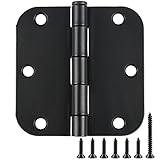
You’re staring at that bare doorway, probably feeling a mix of excitement and dread. You’ve heard about slab doors, the simple, unadorned ones, and the whole idea of pre-hung doors – the ones that come with hinges already attached – sounds like a dream. But then you start digging, and the question pops up: are there slab doors with hinges pee attached?
It sounds straightforward, right? Well, buckle up, because the reality of getting doors installed, especially when you’re trying to save a buck or just get it done, is often a bit messier than the glossy brochures suggest.
I’ve been there, wrestling with awkward deliveries and scratching my head at confusing product descriptions, trying to figure out what actually makes life easier when you’re upgrading your home.
The Real Deal with Pre-Hinged Slab Doors
Look, let’s cut to the chase. When people talk about ‘slab doors with hinges pee attached,’ they’re usually trying to find the easiest, most straightforward way to get a new door into their house. The ‘slab door’ part is simple: it’s just the flat panel of the door itself, no pre-cut holes for doorknobs or hinges. The ‘pre-hung’ part is where the magic is supposed to happen.
A pre-hung door comes already mounted on its own frame, with the hinges fixed to both the door and the frame. This is the holy grail for DIYers or anyone who isn’t keen on mortising hinges into solid wood or perfectly aligning a door in a frame they’ve built themselves.
So, to answer the burning question directly: yes, you can absolutely buy slab doors that come pre-hung, meaning the hinges are attached to both the door slab and the frame, ready to be installed into your rough opening. This is a massive time-saver and often leads to a much cleaner, more professional-looking installation, especially if your existing rough openings aren’t perfectly plumb and square, which, let’s be honest, most aren’t after a few decades.
However, here’s where the ‘slab’ part can sometimes be a bit misleading in common conversation. When you buy a pre-hung door, it’s technically not just a ‘slab’ anymore. It’s a slab plus a frame plus attached hinges. The term ‘slab door’ is usually used to refer to a door panel sold on its own, typically for replacing an existing door slab without changing the frame, or for custom applications.
But in the context of buying a new door unit, ‘pre-hung’ is the keyword you really want. These units are designed to be installed as a complete package. You’re not just buying a slab and then hoping someone magically attached hinges to it; you’re buying a complete door system. The hinges are factory-installed, which means they’re usually set at the correct depth and angle, which is a massive relief when you’re wrestling with a 7-foot-tall piece of wood that weighs more than your dog.
The convenience factor here is huge. Instead of spending hours measuring, marking, chiseling, and shimmying to get hinges right, you’re basically installing a ready-made unit. It makes the whole process feel less like carpentry and more like… well, assembling IKEA furniture, but with less Allen wrench frustration and more potential for back strain.
I remember one particularly frustrating weekend about five years ago. I decided to replace a few interior doors in my old bungalow. I’d picked out some nice, simple shaker-style doors, and I thought, ‘How hard can it be?’ I bought just the door slabs, thinking I’d save a bit of money.
Big mistake. I completely underestimated the time and precision needed to mortise the hinges. My first attempt looked like a beaver had attacked it with a dull chisel. The second door wasn’t much better.
By the third door, I was sweating, swearing, and seriously considering just boarding up the doorways. That’s when I learned the invaluable lesson that sometimes, paying a little extra for pre-hung doors is not just about convenience, it’s about sanity.
So, while ‘slab doors with hinges pee attached’ is a bit of a colloquialism for pre-hung units, understanding that distinction is key to making the right purchase.
What ‘pre-Hung’ Actually Means for You
Let’s break down what ‘pre-hung’ really signifies when you’re shopping for doors. It’s more than just having hinges slapped on. A pre-hung door unit includes the door slab itself, a door frame (also called a jamb), and the hinges already installed on both the door and the frame.
This means when you get it, it’s a self-contained unit ready to be fitted into your wall opening. The frame is typically made of wood, though some might have composite or metal components, especially for exterior doors. The hinges are usually standard steel, but you can often choose the finish (like brushed nickel, oil-rubbed bronze, or classic brass) to match your hardware. The key benefit, and this cannot be stressed enough, is that the door slab is already perfectly aligned within the frame, and the hinges are correctly mortised – meaning the recesses for the hinge leaves are cut into the wood. (See Also: A Box Without Hinges Key )
This is the part that most DIYers struggle with. Getting those mortises perfectly flush and accurately placed takes practice and the right tools, like a sharp chisel and a steady hand. A factory-built pre-hung door takes all that guesswork out.
You’ll often see pre-hung doors advertised with the term ‘jamb width.’ This refers to the thickness of the door frame, and it needs to match the thickness of your wall. Standard interior walls are usually 2×4 studs, which results in a wall thickness of about 4 1/2 inches, so you’ll often see jambs listed as 4 1/2 inches.
However, older homes or walls built with thicker studs can have different thicknesses, so it’s vital to measure your wall depth before you buy. Another thing to consider is the ‘swing’ of the door.
Doors can swing inwards or outwards, and they can swing from the left or the right. Pre-hung doors are typically specified as ‘left-hand’ or ‘right-hand’ swing.
A simple way to check this is to stand facing the door as it would open towards you. If the hinges are on your left, it’s a left-hand swing. If they’re on your right, it’s a right-hand swing. Most pre-hung doors are ordered to match the existing swing of the doorway you’re replacing, unless you’re intentionally changing the layout.
This level of detail is already accounted for in a pre-hung unit, saving you from having to figure out hinge placement and door rotation yourself.
I learned this the hard way when I ordered a pre-hung door for my bathroom. I was so focused on the door style and the size that I completely forgot to check the swing. I ordered a left-hand swing, but the door I was replacing was a right-hand swing. When the unit arrived, I spent a good hour just staring at it, then the doorway, then the door.
I realized I’d have to either return it and wait weeks for a new one or try to reverse the hinge setup and potentially mess up the pre-drilled holes. Thankfully, most pre-hung doors can have their hinges swapped and the swing direction reversed by moving the hinges and potentially re-drilling a few holes, but it added a layer of complexity I really didn’t need that Saturday. It’s a good reminder to always double-check the swing direction when ordering.
The convenience of pre-hung doors extends to this detail as well; they are designed with this in mind, and getting it right from the start saves you a headache later.
Common Mistakes and What to Look For
When you’re diving into the world of doors, especially if you’re trying to get ‘slab doors with hinges pee attached’ (read: pre-hung doors), there are a few pitfalls that can turn a DIY project into a DIY disaster. The most common mistake, hands down, is not measuring accurately. I’m not just talking about the width and height of the door opening; I mean the depth of your wall.
As I mentioned before, jamb widths vary. If you order a 4 1/2-inch jamb for a 6-inch thick wall, you’ll have a gap, and you’ll need to buy separate trim pieces to cover it, which is an extra step and cost. Conversely, too thick a jamb won’t fit.
Always measure the wall thickness at several points, from the inside of the stud on one side to the inside of the stud on the other. Another oversight is forgetting about the swing direction. It seems obvious, but in the excitement of picking out a new door, it’s easy to gloss over.
Get it wrong, and you’ll be cursing yourself when the door opens the wrong way into a closet or a piece of furniture.
When you’re actually looking at pre-hung door options, pay attention to the materials. For interior doors, solid core is generally better than hollow core. Hollow core doors are super light, cheap, and easy to damage. They offer very little in the way of sound insulation. (See Also: Are Integrated Washing Machine Door Hinges Standard )
Solid core doors, which are basically a hollow space filled with a honeycomb or solid material, feel more substantial, dampen sound better, and are much more durable. For exterior doors, you’ll be looking at solid wood (like pine, oak, or mahogany), fiberglass, or steel. Each has its pros and cons regarding cost, durability, maintenance, and insulation. Also, check the quality of the hinges.
While most pre-hung doors come with standard hinges, some higher-end units might offer reinforced or heavier-duty hinges, which are a good idea for heavier doors or for doors that get a lot of use. Don’t be afraid to ask about the hinge type and load capacity if you have concerns.
Here’s a quick comparison table of common door core types. I’ve added my own little verdict column because, let’s face it, not all doors are created equal, and the price doesn’t always reflect the quality you’re getting:
| Core Type | Description | Pros | Cons | My Verdict |
|---|---|---|---|---|
| Hollow Core | Lightweight with a thin veneer over a cardboard honeycomb interior. | Cheapest option, very light and easy to handle. | Poor sound insulation, easily damaged, feels cheap. | Avoid if possible for any door you care about. Fine for a closet you never use. |
| Solid Core | A composite wood material interior, making it denser and heavier. | Better sound insulation, more durable, feels more substantial. | More expensive than hollow core, heavier to install. | My go-to for interior doors. Worth the extra cost for the feel and sound reduction. |
| Solid Wood | Made entirely from solid timber (e.g., pine, oak). | Most authentic look, can be refinished, excellent durability. | Most expensive, prone to warping with humidity changes, requires finishing. | Beautiful, but high maintenance and pricey. Better for specific aesthetic goals. |
Real-World Use and Installation Tips
Using pre-hung doors, the ones with ‘slab doors with hinges pee attached’ effectively, has become my standard practice for interior renovations. The time saved on hinge mortising alone is worth the premium. For a typical interior door replacement, a pre-hung unit can shave hours off the installation time.
The process usually involves preparing the rough opening – making sure it’s clear of debris and relatively plumb and level. Then, you basically ‘drop’ the pre-hung unit into the opening. You’ll use shims to get it perfectly plumb and level, then secure the frame to the wall studs with screws or nails.
This is where the precision of the pre-hung unit really shines. Because the door is already correctly spaced and aligned within the frame, getting the frame itself plumb and level in the opening is the main challenge. Once the frame is secured, you install your doorknob and any other hardware, and you’re pretty much done.
It’s remarkably straightforward compared to fitting a slab door into an existing frame or building a frame from scratch.
For exterior doors, the stakes are higher, and the benefits of pre-hung units are even more pronounced. Exterior pre-hung doors often come with more solid frames, better weather stripping, and integrated thresholds designed to keep out the elements. Installing an exterior door requires a bit more attention to sealing and insulation to prevent drafts and water intrusion.
Most exterior pre-hung door systems come with a rough opening flange, which is a protective flap that you’ll integrate with your house wrap and flashing to make sure a watertight seal. This is a important step. I learned this the hard way on my first exterior door replacement.
I was so focused on getting the door plumb and secure that I rushed the flashing and sealing around the jamb. A few weeks later, during a heavy rainstorm, I noticed a small leak near the bottom. It was a pain to have to pull off some trim, re-flash, and reseal everything. So, my advice?
Take your time with the weatherproofing around the frame, especially the threshold and the top of the frame. Use good quality sealant and flashing tape, and follow the manufacturer’s instructions to the letter.
It’s the difference between a drafty, leaky door and a secure, energy-efficient one.
A practical tip I’ve adopted: for interior doors, I always buy doors that are at least 1/4 inch narrower and 1/2 inch shorter than the rough opening. This gives you plenty of room for shims to achieve perfect plumb and level. You can then use trim (casing) to cover the gaps between the frame and the wall. It’s much easier to fill a gap with trim than to try and force a door into an opening that’s too tight. For exterior doors, the clearance is even more important to make sure a proper seal and allow for expansion and contraction due to temperature changes.
The ‘pee Attached’ Nuance: What It Really Means
Let’s circle back to the phrase ‘slab doors with hinges pee attached.’ It’s a bit of slang, really, a shortcut for describing a pre-hung door unit. (See Also: Are Hinges Wheeels )
The ‘pee’ is short for ‘pre-attached’ or ‘pre-hung.’ So, when someone asks if there are slab doors with hinges pee attached, they are simply asking if they can buy a door where the hinges are already installed onto both the door slab and its frame. It’s not a specific product category with that exact name, but it perfectly describes the function of a pre-hung door.
This is where the confusion can sometimes lie for a novice. They might be looking for a literal ‘slab’ and then expecting hinges to be magically affixed.
But in reality, you buy the whole system: the slab, the frame, and the factory-installed hinges. The term ‘slab door’ is often used more broadly in the industry to refer to a door that hasn’t had any hardware cutouts made, but when you’re buying new and want hinges already on, you’re looking for ‘pre-hung.’
This distinction is important because if you go to a lumber yard or a home improvement store and ask for ‘a slab door with hinges pee attached,’ the salesperson might scratch their head. But if you ask for a ‘pre-hung door,’ they’ll know exactly what you mean. They’ll then ask you about the size, the swing direction, the core type (hollow or solid), and the jamb width.
The hinges are a given; they come with it. The quality of these pre-attached hinges can vary. Standard interior doors often come with simple, non-adjustable hinges. For exterior doors, or for higher-end interior doors, you might find adjustable hinges, which are a godsend for fine-tuning the door’s alignment after installation.
It’s worth checking the specs if that level of detail matters to you. Some manufacturers even offer options for different hinge finishes to match your doorknobs and other hardware.
A contrarian opinion: Some old-school carpenters will tell you that you can get a better fit and a more custom look by buying separate slabs and frames and mortising the hinges yourself. They argue that factory-set hinges can sometimes be slightly off, or that you have less control over the exact gap between the door and the frame. While I respect their skill and the potential for a truly custom result, for 90% of people out there, especially those doing a DIY renovation, the time, frustration, and potential for error saved by buying pre-hung doors far outweighs any marginal improvement you might get from hand-mortising.
The technology and manufacturing precision have come a long way. Unless you’re building a historic reproduction or a high-end custom home where every detail is meticulously crafted by hand, pre-hung is the way to go. It’s the practical choice for modern homeowners.
Can I Buy Just the Slab and Have Hinges Added Later?
Yes, you can buy a door slab separately and have hinges mortised and attached by a carpenter or a hardware store that offers such services. However, this defeats the primary convenience of a pre-hung door. If you’re buying a new door, it’s almost always more cost-effective and time-efficient to purchase a pre-hung unit where the hinges are factory-installed.
What Is the Difference Between a Slab Door and a Pre-Hung Door?
A slab door is just the door panel itself, with no pre-drilled holes for doorknobs or hinges. A pre-hung door unit includes the door slab, a door frame (jamb), and the hinges already attached to both the slab and the frame, ready for installation into a rough opening.
Are Pre-Hung Doors More Expensive Than Slab Doors?
Generally, yes, pre-hung doors are more expensive than buying just a slab door. This is because you are paying for the convenience of the pre-assembled unit, the frame, and the factory-installed hardware. However, the cost difference is often offset by the significant savings in labor and time for installation.
How Do I Know If I Need a Left-Hand or Right-Hand Swing Door?
Stand on the side of the door from which it will swing open towards you. If the hinges are on your left, it’s a left-hand swing door. If the hinges are on your right, it’s a right-hand swing door. This is important to get right when ordering a pre-hung door unit.
Conclusion
So, to finally put the question to bed: yes, there are slab doors with hinges pee attached, and they’re commonly known as pre-hung doors. They represent a massive leap forward in making door installation accessible and less daunting for homeowners. While the term itself might be a bit of slang, the product it describes is very real and incredibly useful.
My advice? Don’t be the guy (or gal) spending a weekend wrestling with chisels if you don’t have to. Measure carefully, understand the swing, and opt for solid core if your budget allows. Investing in a pre-hung unit means investing in your sanity and a cleaner final product. It’s the practical, honest way to get good-looking, functional doors into your home without becoming a professional carpenter overnight.
If you’re staring at an old, worn-out door right now, consider the pre-hung route. It might just be the easiest upgrade you make this year.