I remember the first time I wrestled with a sticking garage door. It wasn’t a graceful moment. I spent an embarrassing amount of time spraying WD-40 everywhere, convinced the problem was just rust. Turns out, the real culprit was something far simpler, and frankly, I felt like a bit of an idiot. It got me thinking about the hidden mechanics in everyday things, and specifically, whether there are wheels in door hinges.
It’s a question that pops up when things aren’t moving smoothly, or even just out of pure curiosity about howstuffworks. Let’s cut to the chase: for most standard household door hinges, the answer is a resounding no. But that doesn’t mean the concept of ‘wheels’ or rolling elements isn’t at play in some specialized applications.
The Standard Door Hinge: Simplicity Is Key (mostly)
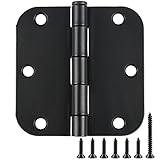
Alright, let’s get this straight right from the jump. When you look at the vast majority of doors in your house – your bedroom door, your bathroom door, the closet doors – their hinges are ridiculously simple. We’re talking two metal plates, usually steel or brass, with a pin running through them to connect them. One plate is screwed to the door frame, the other to the door itself. That pin is the pivot point. That’s it. There are no tiny wheels, no ball bearings for the most part, just metal on metal, lubricated by grease or oil.
The common advice you’ll find everywhere is to just spray some WD-40 or a similar lubricant when a hinge squeaks. And yeah, that often works. But here’s the thing: it’s a temporary fix. The real issue is usually wear and tear on that pin and the knuckles of the hinge. Over time, the metal grinds against itself, creating that ear-splitting squeal. If you’ve ever had to replace a hinge, you’ll see exactly what I mean. You take out the old one, and it’s just these two flat sections connected by a barrel, with a pin you can often pull right out. No wheels, no hidden bearings, just good old-fashioned friction management.
I once had a set of solid oak interior doors that started groaning like a haunted mansion. I went through three cans of lubricant, trying different brands, thinking maybe one was ‘better’. It helped for a day or two, then the noise came back, louder. Finally, I just bought new hinges – plain old, cheap, five-dollar hinges.
The difference was immediate. The old ones were probably worn down by a decade of heavy use.
It wasn’t the lack of exotic lubrication; it was just plain old metal fatigue. This taught me that while fancy lubricants might sound like the answer, sometimes the mechanism itself is just tired and needs replacement. The expectation that a simple hinge should last forever without any moving parts wearing down is a bit unrealistic, but expecting wheels to be in there is even more so for standard doors.
The reason for this simplicity is cost and reliability. Hinges are mass-produced. Adding ball bearings or any kind of rolling element would significantly increase the manufacturing cost. For an interior door that opens and closes maybe a few dozen times a day, simple friction is usually good enough. The materials are chosen to be relatively smooth and durable. The pin is designed to rotate within the hinge knuckles, and the surfaces are often coated or plated to reduce friction. It’s a design that prioritizes efficiency and affordability for its intended purpose.
When Rolling Elements Actually Show Up (and Why)
Okay, so standard doors don’t have wheels in their hinges. But that doesn’t mean the concept is completely out of the picture. You’ll actually find rolling elements, like ball bearings or rollers, in hinges for heavier-duty applications or where ultra-smooth, low-friction movement is absolutely most important. Think about those massive industrial doors, or specialized doors on things like firetrucks, or even some high-end custom cabinetry. The weight and frequency of use in these scenarios would quickly destroy a standard pin-and-knuckle hinge.
These specialized hinges often use ball bearings nestled between the hinge knuckles. As the door opens and closes, the balls roll, drastically reducing the friction and wear. This is why you might see a heavy vault door or a specialized industrial gate move with an almost eerie smoothness. The bearings are designed to handle immense loads and countless cycles without degrading. It’s a completely different class of hardware, engineered for extreme conditions. It’s not just about preventing squeaks; it’s about preventing catastrophic failure under stress.
I saw this firsthand when helping a friend renovate a workshop. They had these enormous, custom-built wooden doors for the main entrance. They weighed a ton. (See Also: A Box Without Hinges Key )
The hinges they originally had were standard, and they were already bowing under the strain. The carpenter recommended replacing them with heavy-duty, ball-bearing hinges. The difference was night and day. The doors swung open like they were made of balsa wood, and the sound of the mechanism was a soft, almost silent roll, not a creak or groan.
They were also significantly more expensive, running something like $180 for a set of three, compared to $15 for standard ones. But for that application, the investment made absolute sense. You could feel the quality and the engineering just by trying to move them.
Another place you might encounter rolling elements, though not strictly in the hinge itself, is in sliding door systems. Think patio doors or some closet doors. The ‘hinge’ here is actually a track system, and the door hangs on rollers that glide along that track. While not a traditional hinge, it’s a similar principle of using rolling motion to help movement, often for much heavier panels or where a swinging arc isn’t practical. The key takeaway is that when you need to move something heavy or do it a lot, rolling elements become key for efficiency and longevity. It’s all about matching the hardware to the job it needs to do.
Hinge Types and Their Bearing Systems
Not all hinges are created equal, and understanding the different types can help you see where rolling elements fit in (or don’t).
| Hinge Type | Bearing System | Typical Use | Verdict |
|---|---|---|---|
| Standard Butt Hinge | Plain pin, metal-on-metal | Interior doors (bedroom, closet, bathroom) | Reliable for light duty, prone to squeaking with wear. Simple and cheap. |
| Ball Bearing Hinge | Ball bearings between knuckles | Heavy interior doors, exterior doors, commercial doors | Excellent for high-traffic or heavy doors. Smoother operation, less wear. Costly. |
| Continuous Hinge (Piano Hinge) | Long pin through multiple knuckles | Cabinets, toolboxes, lightweight gates | Distributes load along the entire door edge. Good for long, narrow applications. |
| Offset Pivot Hinge | Usually a bearing at the top and bottom pivot point | Heavy commercial doors, glass doors | Allows for very large or heavy doors to swing. Hinge is floor or frame mounted. |
| Barrel Hinge | Internal pin, sometimes sealed bearings | Concealed doors, custom furniture | Often designed for flush mounting and a clean look. Can be complex. |
The Squeaky Wheel: Common Hinge Problems and Fixes
So, we’ve established that most household doors don’t have wheels in their hinges. But that doesn’t mean they don’t have problems. The most common issue, hands down, is the dreaded squeak. It’s that high-pitched whine that can drive you insane after a while. Everyone reaches for WD-40 first, and it’s not entirely wrong, but it’s often a superficial fix.
The problem is that WD-40 is primarily a solvent and water displacer, not a long-term lubricant. It can temporarily quiet the noise by washing away dirt and rust and providing a thin film of lubrication. But it evaporates relatively quickly. A better, though slightly more involved, solution for standard hinges is to use a thicker lubricant. Lithium grease, silicone spray, or even a bit of petroleum jelly applied to the pin can provide longer-lasting lubrication. The best method is to remove the hinge pin entirely (you might need a nail and hammer to tap it up from the bottom), clean off any old gunk, coat the pin liberally, and then reinsert it.
My first attempt at fixing a squeaky hinge involved just spraying WD-40. It worked for about a week.
Then, the squeak came back with a vengeance. I tried it again, thinking maybe I didn’t spray enough. Nope.
It was the same old story. Frustrated, I finally watched a video where some old-timer showed how to properly remove the pin. I used a piece of old wire brush I had lying around to clean the pin, then slathered it with some white lithium grease I used for my bike chain. I swear, that door has been silent for over two years now.
The key was getting proper lubrication onto the actual contact surfaces of the pin and the knuckles, not just spraying the outside. (See Also: Are Integrated Washing Machine Door Hinges Standard )
Another common problem is hinges that are loose or sagging. This usually happens when the screws holding the hinge to the door or frame have stripped the wood. The fix here is often to remove the screw, fill the hole with wood glue and toothpicks or a wooden dowel, let it dry completely, and then re-drill a pilot hole for the screw. For really bad cases, you might need to use slightly longer or thicker screws, or even install an anchor if you’re dealing with drywall. It’s not glamorous, but it’s effective. You don’t need fancy tools, just patience and a bit of elbow grease.
Sometimes, the hinge itself is just bent or damaged, especially if a door has been slammed repeatedly or something heavy has been leaned against it. In these cases, no amount of lubrication or screw tightening will help. The only real solution is to replace the hinge. And honestly, for standard interior doors, this is usually a simple and inexpensive fix. A pack of three basic hinges costs less than a decent meal out, and they’ll last for years. Don’t waste time trying to bend a bent hinge back into shape; it’s rarely worth the effort and often makes it worse.
Common Hinge Fixes: A Quick Guide
- Squeaking: Clean and lubricate the pin. Use lithium grease or silicone spray for longer-lasting results. For extreme cases, replace the hinge.
- Sagging/Loose Door: Tighten hinge screws. If the wood is stripped, repair the screw hole with wood filler or toothpicks and glue before re-screwing.
- Bent or Damaged Hinge: Replace the hinge. This is the only effective solution.
- Sticking Door (not hinge related): Check for swelling wood (humidity) or obstruction.
The Mechanics of Movement: Friction vs. Rolling
Understanding why some hinges use rolling elements and others don’t comes down to managing friction. Friction is that force that opposes motion when two surfaces rub against each other. In a standard door hinge, the pin rotates inside the hinge knuckles. This is a sliding friction scenario. As the metal surfaces rub, they generate heat and wear. Lubricants reduce the coefficient of friction, making it easier for the surfaces to slide past each other and reducing wear.
Now, imagine a hinge with ball bearings. Instead of sliding, the surfaces are now rolling. Rolling friction is significantly lower than sliding friction, especially under heavy loads. Think about trying to push a heavy box across the floor versus trying to push it when it’s on a dolly with wheels. The difference is huge. The ball bearings in a heavy-duty hinge basically act like tiny dollies, allowing the hinge components to roll against each other with minimal resistance.
This is why you see ball bearings used in applications where efficiency and durability are key. A high-performance automotive application, for instance, might use roller bearings in its suspension or drivetrain components where immense forces are at play and every bit of efficiency matters. Similarly, industrial machinery often relies on solid bearing systems to handle continuous operation and heavy loads. Even your bicycle chain uses rollers, although that’s a different mechanism, it still uses the principle of reducing friction through rolling contact.
The choice between sliding and rolling friction in hinges is a design decision based on the intended use. For a light interior door, the slight increase in friction from sliding is perfectly acceptable and keeps costs down. For a massive gate that needs to be opened with minimal effort, or a door that opens thousands of times a day in a commercial setting, the reduced friction and increased lifespan offered by rolling elements are absolutely worth the added complexity and cost.
It’s a trade-off between simplicity and performance. I’ve seen cheap drawer slides that use plastic rollers that wear out quickly, and then high-end cabinet slides with sealed ball bearings that glide so smoothly you barely feel them.
The principle is the same, just scaled differently.
So, when you hear about a hinge ‘rolling’, it’s usually referring to the internal mechanism of ball bearings or sometimes a more complex roller system designed to minimize resistance. It’s not typically wheels you’d see on the outside, but they are the hidden heroes making heavy doors feel light and frequent use less damaging to the hardware. It’s a testament to engineering that even seemingly simple items like door hinges can have such varied and sophisticated internal workings when pushed to their limits.
When the ‘wheel’ Is the Whole Hinge System: Sliding Doors
While we’ve focused on traditional swinging doors, it’s worth mentioning that the concept of wheels is fundamental to other types of door systems, most notably sliding doors. These aren’t hinged in the traditional sense, but they rely heavily on rollers, which are basically wheels designed to run in tracks. (See Also: Are Hinges Wheeels )
Think about your patio sliding glass doors, or the doors on a large wardrobe. They don’t swing; they glide. This is achieved by attaching the door to a track system using rollers. These rollers can be simple plastic wheels or more solid ball-bearing assemblies, depending on the weight and expected usage of the door. The track itself is engineered to provide a smooth, consistent surface for the rollers to travel along.
I had a nightmare with sliding closet doors in a rental property once. They were old, cheap, and the rollers on the top of the door had completely disintegrated. The door was basically just scraping along the top track, making a horrible screeching noise and constantly getting stuck. It felt like I was fighting the door every time I wanted to get to my clothes. Replacing those little plastic rollers, which cost maybe $20 for a set of four, transformed the usability of the entire closet. It’s a perfect example of how important those ‘wheels’ are to the function of the whole system, even if they aren’t part of a traditional hinge.
The effectiveness of a sliding door system hinges (pun intended!) on the quality of the rollers and the track. A well-designed system will glide effortlessly, requiring minimal force to operate. Conversely, a worn-out or poorly installed system can be a constant source of frustration. Maintenance often involves cleaning the tracks to remove debris that can impede the rollers and occasionally lubricating the rollers themselves, if they are designed for it. For some high-end systems, you might even find adjustable rollers that allow you to fine-tune the door’s alignment and make sure it hangs perfectly straight.
The advantage of sliding doors, particularly in spaces where a swinging door would be impractical due to layout or furniture placement, is significant. They save space and can offer a very modern aesthetic. However, they also have limitations. They don’t typically provide the same level of sound or draft insulation as a well-fitted swinging door, and they can be more susceptible to damage from impact if not properly protected. But for many applications, the convenience and space-saving aspects make them a popular choice, all thanks to the humble wheel and track system.
People Also Ask
What Is a Barrel Hinge?
A barrel hinge, also known as a concealed hinge or pin hinge, is a type of hinge where the two connecting parts are cylindrical and fit together, with a pin running through them. They are often used for doors that need to sit flush with the frame or for furniture where a clean, minimalist look is desired. Some barrel hinges use internal bearings for smooth operation, but they are not typically visible wheels.
Do All Door Hinges Have Pins?
Yes, virtually all traditional swinging door hinges, regardless of whether they have bearings or are just plain metal-on-metal, have a central pin. This pin is what connects the two leaves of the hinge and allows the door to pivot. The pin is usually removable, allowing for the separation of the door from the frame for maintenance or replacement.
What’s the Difference Between a Ball Bearing Hinge and a Regular Hinge?
The main difference lies in how friction is managed. A regular hinge relies on the pin sliding within the hinge knuckles, which is sliding friction. A ball bearing hinge incorporates ball bearings between the hinge knuckles. These balls roll as the door opens and closes, drastically reducing friction compared to sliding surfaces. This results in smoother operation, less wear, and a quieter experience, especially for heavier doors or high-traffic areas.
How Often Should I Lubricate My Door Hinges?
For standard interior door hinges, lubrication is only needed when they start to squeak or feel stiff, which might be once every few years, or even less if they are high-quality. For exterior doors or high-traffic commercial doors, more frequent checks and lubrication might be beneficial, perhaps annually, to make sure smooth operation and prevent wear. Ball bearing hinges generally require less frequent lubrication.
Can I Add Wheels to My Existing Door Hinges?
No, you cannot simply ‘add wheels’ to standard door hinges. The design of a hinge is integral. If you need the benefits of rolling elements (like reduced friction for heavy doors), you need to replace your existing hinges with a type that is specifically designed with ball bearings or a similar rolling mechanism.
Final Verdict
So, after all this, are there wheels in door hinges? For your average bedroom door, the answer is a solid no. It’s a simple, effective design that relies on a pin and metal contact. But when you step up to heavier doors, industrial applications, or even specialized furniture, the concept of rolling elements—be it ball bearings within the hinge or rollers in a sliding track system—becomes absolutely vital for smooth, durable operation.
Don’t get caught up in the idea that every squeak needs a miracle lubricant or that all hinges are the same. Understanding the mechanics, even at a basic level, helps you diagnose problems and choose the right hardware. For most of us, it means knowing when a little grease on the pin is enough, and when it’s time to consider a more solid hinge solution.
Next time a door sticks or squeaks, you’ll have a better idea of what’s really going on behind the scenes. And remember, if you’re dealing with serious weight or heavy use, look for those specialized, bearing-equipped hinges. They are the unsung heroes making movement possible, even if they don’t have visible wheels on the outside of the hinge itself.