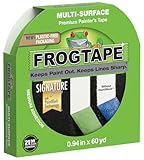
I remember the first time I tried to tape a delicate sketch to a board for a show. I grabbed the brightest blue tape I had, figuring ‘painter’s tape’ meant it was gentle. Big mistake. When I peeled it off, it took a chunk of the paper’s surface with it, leaving fuzzy white scars that screamed ‘amateur’. It made me wonder, can you use painters tape on paper without wrecking it? The short answer is yes, but it’s not as simple as just slapping it on.
There’s a whole spectrum of painter’s tape out there, and not all of them play nice with paper. If you’ve ever seen those grainy bits left behind or, worse, torn edges, you know what I’m talking about.
Why Some Painters Tape Eats Paper Alive (and Others Don’t)
Look, the main reason painter’s tape is supposed to be ‘gentle’ is the adhesive. It’s designed to stick well enough to mask off a wall for painting but be flexible enough to remove without pulling off paint. Sounds ideal for paper, right?
Wrong. The problem is that paper, especially thin art paper, has a surface texture and a strength that’s vastly different from drywall or wood trim.
Many standard blue or green painter’s tapes use a pretty aggressive adhesive, and that stickiness can grab onto the paper fibers. When you pull it off, it’s like ripping a tiny, intricate piece of fabric. The adhesive might be formulated to be ‘low tack’ for walls, but on a porous, delicate surface like paper, it can feel like super glue.
I’ve personally witnessed a brand new roll of what I thought was reliable blue tape obliterate a watercolor painting. The paper was a decent weight, but the tape had clearly latched onto the paper’s surface with a vengeance. Peeling it back felt like I was skinning a peach. It wasn’t just a little fuzz; it was significant damage that I couldn’t easily fix. This happened about four years ago, and it cost me nearly $50 in materials and a whole afternoon of frustration. That’s when I started really paying attention to the type of painter’s tape and the type of paper.
Here’s the thing that most people get wrong: they assume all ‘painter’s tape’ is created equal. It’s not. You have different grades, different brands, and different formulations. Some are meant for delicate surfaces, like fresh paint or wallpaper, and those are usually the ones you want to look at if you’re dealing with paper. Others are for ‘multi-surface’ or even ‘heavy-duty’ applications, and those are generally a no-go for anything less solid than a brick wall.
The adhesive itself is often a rubber-based or acrylic-based polymer. The ‘tack’ – how sticky it feels – is influenced by the type and amount of resin and tackifier agents. For paper, you’re looking for the lowest tack possible that still provides enough hold for your specific task. It’s a delicate balance. The backing material also plays a role; some tapes have a more porous backing that can allow the adhesive to ‘breathe’ a bit, reducing its immediate grip, while others are more impermeable and transfer more direct force.
What to Look for: The Good, the Bad, and the Ugly Tapes
So, if you’re staring down a roll of tape and a ream of paper, what’s the actual difference? It comes down to a few key features. The most important one is the label. You’ll see things like ‘delicate surface,’ ‘low tack,’ or ‘for wallpaper.’ These are your friends. Brands like Scotch-Blue often have a line specifically for delicate surfaces, and that’s usually a safer bet than their standard blue or even their multi-surface green tapes. I’ve found that the tape marketed for fresh paint or delicate surfaces (often a pale blue or purple color) tends to have a less aggressive adhesive than the more common sky-blue or green versions.
Here’s a breakdown of what I look for and what to generally avoid: (See Also: Does Painters Tape Rip Paint Off Walls )
| Tape Type/Color | Typical Use Case | Verdict for Paper | Why |
|---|---|---|---|
| Delicate Surface (Pale Blue/Purple) | Fresh paint, wallpaper, delicate wood | Generally Safe | Low tack, designed to be gentle. Still test! |
| Multi-Surface (Green/Tan) | General masking, trim, windows | Risky | Can be too aggressive for certain papers. Test required. |
| Standard Interior (Blue) | Walls, trim, baseboards | Avoid | Often has a medium to high tack that can damage paper. |
| Exterior/Heavy Duty (Often Orange/Red) | Outdoor use, rough surfaces | Absolutely Do Not Use | Extremely aggressive adhesive. Guaranteed to destroy paper. |
The physical feel of the tape can also be a clue. Tapes meant for delicate surfaces often feel a bit thinner and might have a slightly rougher texture to the backing. The adhesive might not feel as ‘grabby’ immediately. But don’t rely on feel alone; always, always, always do a test patch. Grab a scrap piece of the same paper you’ll be using, apply a small strip of the tape, leave it for a bit (the longer it sits, the more it bonds), and then peel it off slowly. If it leaves residue or pulls fibers, that tape is a no-go.
I learned this the hard way when I tried to use a roll of green tape that a friend swore by for everything. It worked fine on his walls, but when I applied it to a nice archival paper to mask off a border for a charcoal drawing, it pulled up half the charcoal dust and left a sticky residue that looked like a snail had slimed across my work. It took me another hour with an art gum eraser and a whole lot of delicate picking to even make it less noticeable. That was a hard lesson in ‘what works for walls doesn’t always work for art.’
Common Mistakes and How to Avoid Them
The biggest mistake people make, as I’ve said, is assuming all painter’s tape is the same. Beyond that, there are a few other pitfalls that can lead to paper damage. One is leaving the tape on for too long. Even a ‘gentle’ tape can start to bond more permanently over time, especially in humid conditions or if it gets wet. If you’re masking off an area for watercolor or gouache, you generally want to remove the tape while the paint is still slightly damp, or at least before it’s fully cured and dried for days.
Another common error is the removal technique. Ripping it off quickly is almost always a bad idea. Think of it like removing a bandage from a sensitive wound – slow and steady wins the race. Pull the tape back on itself at a sharp angle, keeping it as close to the surface as possible. This helps to minimize the upward pull on the paper fibers. If you’re feeling brave and the tape has been on for a while, you can sometimes use a hairdryer on a low, cool setting to gently warm the adhesive, which can make it more pliable and easier to remove without damage. I’ve had mixed results with this, but it’s worth a shot if you’re desperate.
Applying too much pressure when laying down the tape is also a problem. You want it to stick, but you don’t want to press it down so hard that the adhesive really digs into the paper’s surface. A gentle, smooth application is best. If you’re taping down a loose piece of paper to a board, for example, you’re using the tape to secure it, not to create an airtight seal that the adhesive will then try to rip apart.
My personal ‘oops’ moment in this category involved a large canvas I was priming with gesso. I used standard blue painter’s tape to mask off a border. It worked fine on the raw canvas, but when I decided to paint a thin layer of gesso over the tape’s edge to create a crisper line, the gesso seemed to seep under the tape, and then when I pulled it off, it pulled up the gesso and a thin layer of the canvas fibers.
It wasn’t paper, but the principle was the same: the tape had bonded too strongly to the primed surface, and the added moisture and adhesive interaction just made it worse. I spent ages sanding down the rough edges.
It taught me that even with a substrate like canvas, the type of tape and how it interacts with other mediums matters.
Finally, one of the most overlooked mistakes is the condition of the tape itself. Old, dried-out tape can become brittle, and its adhesive can change properties, becoming either too weak or too aggressive and gummy. If your tape has been sitting in a hot garage or a damp basement for a few years, it might be time to toss it and get a fresh roll. I once tried to use a roll of tape that had been in my car for over a year through scorching summers and freezing winters. It was useless – barely stuck to anything and left a terrible sticky residue. (See Also: Does Masking Tape Work The Same As Painters Tape )
Testing Your Tape and Paper Combination
Before committing to a big project, always test. Here’s a simple process:
- Get a scrap piece of your intended paper.
- Cut a small strip of your chosen painter’s tape.
- Apply the tape to the scrap paper, pressing gently.
- Leave it for at least 30 minutes. For important projects, leave it for several hours or even overnight.
- Slowly peel the tape back at a sharp angle, pulling it back on itself.
- Examine the paper for any residue, lifting of fibers, or discoloration.
If the paper looks pristine, you’re likely good to go. If there’s any sign of damage, try a different tape or a different method of securing your paper.
Real-World Uses: When Painters Tape on Paper Works Best
Okay, so we’ve established that ‘can you use painters tape on paper’ isn’t a simple yes or no. But when does it actually work well? It’s all about matching the right tape to the right paper and the right task. For instance, if you’re doing something where the paper isn’t the final artwork itself, or where a bit of surface texture loss isn’t a dealbreaker, you might have more leeway. Think about:
Masking for Prints: If you’re making prints, especially linocuts or screen prints, you might use painter’s tape to hold down the paper on your work surface or to create a temporary border. Here, the paper is often discarded or heavily altered, so minor surface damage isn’t important. I’ve used delicate surface tape to hold down thin printmaking paper to a drawing board, and it’s worked fine. The key is that the tape isn’t in direct contact with the inked or painted surface.
Temporary Mounting: If you need to temporarily secure a piece of paper to a drafting table or a light box for tracing or drawing, a low-tack tape from the ‘delicate surface’ family is usually perfect. You’re not looking for a permanent bond, just something to stop the paper from sliding around while you work. This is where I found the pale blue tapes really shine. They stick just enough to keep things stable for a few hours without leaving any marks when removed.
Creating Borders: This is a classic use case for masking. If you want a clean white border around a watercolor or acrylic painting, painter’s tape is the go-to. BUT, and this is a massive but, you must use tape specifically designed for delicate surfaces. Apply it firmly but not aggressively.
For watercolor, I’ve found it works best to score the edge of the tape lightly with a craft knife (be careful not to cut the paper itself) after applying it. This helps create a cleaner break when you remove the tape. It also helps to ‘seal’ the edge of the tape by running a very light wash of the painting’s main color right up to the edge of the tape before you start your main painting.
Let that dry, then remove the tape. This seals any tiny gaps and prevents the main paint from bleeding under.
Craft Projects: For scrapbooking, card making, or other general crafting where you might be taping down paper elements, the stakes are usually lower. However, even here, if the paper is valuable or has a special finish, it’s still wise to use a gentler tape. I’ve used standard blue tape on cardstock for a simple card project, and it left a very faint outline but no actual damage. But I wouldn’t do that with a 300gsm watercolor paper. (See Also: Does Painters Tape Peel Paint )
Protecting Edges During Spraying: If you’re using spray adhesive, fixatives, or spray paint, masking tape can protect areas of your paper. Again, ‘delicate surface’ tape is the way to go. You want it to hold firm against overspray but peel away cleanly. A common contrarian opinion I often have is that people overuse masking tape for spray applications. Sometimes, a carefully cut piece of cardstock or a stencil held in place with just a few dabs of a repositionable spray adhesive (applied to the cardstock, not the artwork!) can be a much safer way to mask areas without risking tape damage.
The key takeaway here is that when dealing with paper, especially anything you consider ‘artwork,’ your default should be the gentlest tape available. Think of it as a collaboration between the tape and the paper. You want them to work together, not fight.
Authority on Adhesives and Paper
While there isn’t a single governing body for ‘painter’s tape on paper,’ the principles of adhesive science and paper manufacturing are well-documented. For instance, the Forest Products Laboratory, part of the U.S. Department of Agriculture, conducts extensive research on wood and paper products, including how materials interact under various conditions. Their work touches on the physical properties of cellulose fibers (what paper is made of) and how different substances can affect their integrity. Understanding that paper is made of delicate cellulose fibers helps explain why aggressive adhesives can cause damage through physical tearing or chemical interaction with sizing agents within the paper.
The Verdict: When in Doubt, Test and Go Gentle
After years of messing with this stuff, here’s my blunt take: can you use painters tape on paper? Yes, but only if you’re smart about it. Don’t be like me in my early days and just grab the nearest roll. You need to be intentional. If you’re dealing with anything from a sketch to a watercolor to an important document, your default tape should be a ‘delicate surface’ formulation. These are designed to minimize adhesion and prevent damage to sensitive materials.
The standard blue or green tapes, while great for walls, are often too aggressive for paper. They can lift fibers, leave sticky residue, or even tear the paper surface. My personal rule of thumb is that if the tape leaves any kind of mark or feels like it’s really digging into the paper when you apply it, it’s probably too strong. Always test on a scrap piece of the exact same paper you’re using. Apply the tape, leave it for a decent amount of time, and then peel it off slowly at a sharp angle.
The sensation of peeling tape off paper is something I’ve come to dread if I haven’t done my due diligence. That slight resistance, followed by the faint shhhk of fibers giving way, is a sound that makes my stomach drop. It’s the sound of potential disaster, of hours of work potentially ruined by a few inches of adhesive. But when it peels off cleanly, leaving nothing behind but crisp lines or a perfectly secured piece of paper, it’s immensely satisfying.
So, to recap: choose wisely, test rigorously, and apply and remove with care. Your paper will thank you for it.
Final Thoughts
So, can you use painters tape on paper? The answer is a resounding ‘yes, but be careful.’ It’s not a free-for-all; you have to pick the right tool for the job. For anything precious, stick to tapes specifically labeled for delicate surfaces. They’re designed to be less aggressive, and that’s exactly what your paper needs.
My worst experience involved a beautiful piece of handmade paper that ended up looking like it had a bad skin condition after I tried to remove standard blue tape. I’ve since learned to respect the paper and the tape, and I always do a small test patch. It takes two minutes and can save you hours of regret.
If you’re ever in doubt, err on the side of caution. A little extra time spent testing and choosing the right tape is always better than a ruined piece of work. What’s the gentlest tape you’ve used successfully on paper?