I was staring at a half-painted wall, sweat dripping into my eyes, when I realized the roll of tape I’d grabbed from the convenience store down the block was, frankly, garbage. It bled like a bad watercolor painting. My mind immediately went to the corner CVS, that magical place that seems to have everything from headache pills to socks. It got me thinking: does CVS carry painters tape? Like, actual painters tape that works, or just some cheap knock-off?
I’ve wasted enough money on subpar supplies over the years to know the difference. You think you’re saving a buck, and then you end up with paint where it absolutely shouldn’t be. So, let’s cut to the chase: if you’re in a pinch and need tape, you need to know what you’re likely to find.
Cvs: The Convenience Store Conundrum
Alright, let’s talk about CVS. It’s a place you can find a band-aid, a tube of toothpaste, and maybe, just maybe, some basic home improvement stuff. When I first started doing any sort of DIY around the house – fixing a leaky faucet, touching up a scuff mark, or tackling a bigger painting job – my first instinct wasn’t always to hit up the big box hardware store. Sometimes, you just need something right then and there.
That’s where places like CVS shine. They’re literally designed for convenience. You’re there for your prescription anyway, might as well grab a few other odds and ends. So, the question, does CVS carry painters tape, comes up a lot more often than you might think.
My personal experience with CVS’s non-automotive, non-grocery stock is… varied. They’ve got extension cords that look like they were made in a garage, surprisingly decent travel mugs, and a whole aisle dedicated to things you didn’t know you needed until you saw them. But when it comes to project-specific supplies, it’s a bit of a gamble.
Think about it: they’re not a hardware store. They’re a pharmacy with a retail section. Their inventory has to cater to a broad range of impulse buys and everyday necessities. So, while they might stock a generic version of something, it’s rarely the specialized, high-performance item you’d find at a dedicated shop.
The truth is, if you’re looking for high-quality, professional-grade painters tape, CVS is probably not your go-to. But for those moments when you just need some kind of tape to stop a small amount of paint from bleeding, it’s worth knowing what you might find.
I remember one time I was trying to paint a clean line on a piece of furniture. I needed something I could trust. I zipped into a CVS thinking, ‘How different can tape be?’ Spoiler alert: very different. The tape I ended up with looked like painters tape, felt vaguely like painters tape, but when I pulled it off, it left a gummy residue that took me an hour to scrub off. That was a lesson learned the hard way. So, while the answer to ‘does CVS carry painters tape’ might be a ‘yes’ in terms of stocking something that resembles it, the quality is a whole other ballgame.
What You’re Likely to Find (and What You Won’t)
Let’s be blunt: if you walk into a CVS expecting to find the gold standard of painters tape – the kind the pros use for razor-sharp lines on delicate surfaces – you’re probably going to walk out disappointed. What you are likely to find are generic brands or store-brand versions of masking tape or painters tape. These are usually on the cheaper end, and frankly, they’re often designed for very light-duty tasks. Think covering up a light switch plate while you do some minor touch-ups, or maybe wrapping up a rolled-up poster. They tend to have a weaker adhesive, which sounds good until you realize it doesn’t quite stick well enough to create a proper seal against paint.
The real issue with these budget tapes is their performance under pressure. When you’re painting a wall, especially if you’re using a roller or a brush that applies a decent amount of paint, you need a tape that can handle it. These generic CVS tapes often have an adhesive that’s too aggressive for delicate surfaces, or conversely, not sticky enough to create a watertight barrier against paint.
I’ve seen them lift paint off the surface you’re trying to protect, or worse, they’ll stretch and tear unevenly, making it impossible to get a clean, straight line. The backing material itself can also be problematic.
Cheaper tapes might be more porous, allowing paint to seep through the tape’s edge and bleed onto your surface. It’s the kind of thing that makes you want to throw your paintbrush across the room.
What you won’t typically find are the specialized tapes. You know, the ones with specific formulations for different surfaces or paint types.
For instance, there’s tape designed for delicate surfaces like wallpaper or freshly painted walls (often blue or purple), tapes for high-heat applications (like car bodywork, which is orange), and heavy-duty tapes for outdoor use or rough textures. CVS’s selection, if they even have dedicated painters tape, will likely be a single, all-purpose option that tries to be everything to everyone and ends up being good at nothing. (See Also: Does Painters Tape Pull Off Paint )
They might carry a basic, light-blue or green colored tape that looks like painters tape, but it’s usually a step or two down from what you’d get at a hardware store. It’s the difference between a kitchen knife you got for free with a set of pots and a Wüsthof chef’s knife – both cut, but only one does it with any real precision and satisfaction.
The Real Deal: What Makes Good Painters Tape?
So, if CVS isn’t the place to get the good stuff, what should you even be looking for? It boils down to a few key features that separate the wheat from the chaff when it comes to painters tape.
First off, the type of adhesive is most important. Good painters tape needs to stick firmly enough to create a seal that prevents paint from seeping underneath, but it also needs to come off cleanly without damaging the surface it’s applied to.
This is where the color often gives you a clue. Blue tape, for example, is generally designed for delicate surfaces and offers a cleaner release, especially on freshly painted walls or wallpaper.
Green tape is often a step up in adhesion and might be better for more solid surfaces or when you need a really strong seal.
Then there’s the backing material. High-quality painters tape usually has a crepe paper backing that is somewhat breathable, allowing for a bit of controlled expansion and contraction with temperature changes, which can help prevent the tape from lifting or peeling.
It also needs to be durable enough to withstand the application of paint without disintegrating. I’ve had cheaper tapes basically turn into a soggy mess when wet paint hit them, making them impossible to remove in one piece.
The edge of the tape is also surprisingly important. A well-manufactured edge helps create that crisp, clean line. If the edge is fuzzy or inconsistent, you’re already fighting a losing battle against paint bleed. It’s like trying to draw with a frayed pencil – the result is never going to be as sharp as you want it.
The biggest mistake I see people make is thinking all ‘painters tape’ is created equal. It’s not.
Think about it like this: you wouldn’t use a trowel to spread peanut butter on a sandwich, even though both are tools that move something from one place to another. Different jobs require different tools.
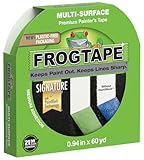
For painting, especially when you want those sharp lines that make a project look professional, investing in a reputable brand of painters tape is a must. Brands like 3M (Scotch Blue is their common offering), FrogTape, and Shurtape are widely regarded because they’ve spent the R&D to get the adhesive, the backing, and the edge formulation just right.
They offer different types for different applications – from multi-surface to delicate surfaces to high-adhesion for rough textures. That’s the stuff you want to be using if you care about the final result.
Real-World Use Cases & When to Buy Elsewhere
So, when is grabbing tape from CVS actually a good idea? Honestly, it’s for those super low-stakes, “don’t-care-if-it’s-perfect” situations. Maybe you’re building a quick fort out of cardboard boxes with the kids and you just need to hold some pieces together. Or perhaps you’re wrapping a gift and need to secure the paper. If you’re doing a super quick, minor touch-up on a wall where a little bleed won’t matter, or you’re taping off a window frame for a job where you’re using spray paint and don’t care about absolute perfection on the frame itself, then sure, a generic tape might suffice. It’s about managing expectations. (See Also: Does Painters Tape Rip Paint Off Walls )
However, for any project where you’re aiming for a professional finish, a clean line, or protecting a surface that’s easily damaged, you absolutely need to look elsewhere. Painting an accent wall? Renovating a room and want crisp lines between different paint colors? Working with delicate wallpaper or a freshly painted surface that’s still curing?
These are the scenarios where you’ll regret grabbing the cheapest option from the corner store. I learned this the hard way when I decided to paint a geometric pattern on my living room wall.
I used some generic tape I found at a convenience store, and the lines were wavy, the paint bled everywhere, and it looked like a toddler had finger-painted the wall. It took me twice as long to fix my mistakes as it would have taken to do it right the first time with good tape. That was a $20 lesson I won’t forget.
When you need good painters tape, your best bet is a dedicated hardware store (like Home Depot or Lowe’s), an automotive supply store, or even a well-stocked craft store might have higher-quality options. These places understand that the quality of your materials directly impacts the quality of your finished work.
They carry a range of brands and types, allowing you to choose the tape best suited for your specific project. For instance, if you’re painting trim that’s already painted, you might want a low-tack tape to avoid pulling off the existing paint. If you’re painting a rough stucco exterior, you’ll need a high-adhesion tape that can conform to the uneven surface.
These aren’t decisions you can reliably make at a CVS.
A Quick Comparison: Tape Types and Verdicts
| Tape Type/Color | Typical Adhesive Strength | Best For | My Verdict |
|---|---|---|---|
| Generic Blue/Green (Convenience Store) | Low to Medium | Very light-duty masking, temporary holding. | Generally avoid for painting projects. High risk of bleed or residue. |
| ScotchBlue Multi-Surface (Blue) | Medium | Most common painting projects: walls, trim, metal, glass. Clean removal up to 14 days. | Solid all-around choice for DIYers. Reliable and widely available. |
| FrogTape Multi-Surface (Green) | Medium to High | Similar to ScotchBlue, but often offers a slightly stronger seal for more demanding jobs. | Excellent performance. If the price is right, it’s a great option. |
| FrogTape Delicate Surface (Delicate Surface – Pink/Purple) | Low | Freshly painted walls (24 hrs), wallpaper, faux finishes, glass. | A must-have for delicate projects. Prevents damage and makes sure clean lines. |
| 3M Automotive Masking Tape (Various Colors, often Orange/Tan) | High | Auto body painting, high-heat applications, rough surfaces. | Overkill for most home painting, but the best for its specific purpose. Don’t use for standard wall painting. |
This table shows why you need to be strategic. While a CVS might carry a tape that looks like the blue or green ones listed, it’s highly unlikely to perform with the same consistency or reliability. The secret sauce is in the formulation, something that convenience stores typically don’t invest in for their limited hardware sections. They focus on volume and general utility, not specialized performance for niche tasks like achieving perfect paint lines.
Common Mistakes and How to Avoid Them
One of the biggest blunders folks make is using the wrong tape for the job. I’ve seen people use packing tape to mask off a wall, and let me tell you, that’s a recipe for disaster. Packing tape is designed to stick like glue and leave a sticky residue that’s a nightmare to remove.
Then there’s the issue of tape getting old. I had a roll of what I thought was good painters tape that had been sitting in my garage for about three years. When I finally used it, it stuck down okay, but when I pulled it off, it came off in tiny, brittle pieces. It was like trying to peel dried-up boogers off a wall.
The adhesive had degraded, making it useless. Always check the age or at least how the tape feels; if it’s brittle or overly stiff, it’s probably past its prime.
Another common pitfall is not pressing the tape down firmly enough. Think of the tape as a dam. If there are tiny gaps where water (or paint, in this case) can get through, your dam is useless.
You need to run your fingernail or a putty knife along the edge of the tape to make sure it’s sealed to the surface. This is especially important on textured walls or surfaces that aren’t perfectly smooth. I learned this when I was painting a textured ceiling.
I thought I had pressed the tape down well, but the little bumps and valleys in the texture created tiny pathways for the paint to seep through. The result was a slightly fuzzy line instead of the crisp edge I wanted. (See Also: Does Masking Tape Work The Same As Painters Tape )
A little extra pressure goes a long way.
Finally, and this is a big one, waiting too long to remove the tape. Everyone has their own theory on this, but the safest bet is to remove the tape while the paint is still wet or at least slightly tacky.
If you let it dry completely, the paint can actually bond with the tape. When you pull it off, you risk peeling up the new paint, or worse, leaving behind jagged edges where the paint cracked along the tape line. I’ve done this multiple times, especially when I get distracted and forget about the paint job.
The frustration of having to go back and meticulously touch up those lines is immense. So, my advice: paint your last coat, let it sit for about 15-30 minutes (depending on the paint and humidity), and then carefully pull the tape off at a 45-degree angle. This is why knowing the right tape for the job, and knowing how to use it properly, is so important.
If you are indeed looking for it, you’ll need to figure out if CVS carries painters tape or if you need to make a trip to a proper hardware store.
Does Cvs Sell Actual Painters Tape?
CVS may carry products that are labeled as painters tape or masking tape. However, these are typically generic or store-brand options. They are generally not designed for the precision and clean removal required for most painting projects. Their adhesive strength and material quality are usually lower than dedicated painters tape brands found at hardware stores.
What Kind of Tape Should I Buy for Painting?
For most interior painting projects, look for reputable brands like 3M (ScotchBlue) or FrogTape. Consider the surface you are painting: use delicate surface tape (often pink or purple) for freshly painted walls or wallpaper, and multi-surface tape (often blue or green) for general use on walls, trim, metal, and glass. For rougher textures, a high-adhesion tape might be necessary.
Can I Use Masking Tape Instead of Painters Tape?
While masking tape and painters tape look similar, they are not interchangeable for most painting jobs. Masking tape generally has a stronger, less forgiving adhesive that can damage surfaces or leave residue. Painters tape is specifically formulated to create a clean line and remove easily without damaging the underlying surface or paint.
When Should I Remove Painters Tape?
The best time to remove painters tape is while the last coat of paint is still wet or slightly tacky. This prevents the new paint from drying onto the tape, which can cause it to peel or crack when removed. Carefully pull the tape off at a 45-degree angle to make sure a clean break line.
Verdict
So, to circle back to the original question: does CVS carry painters tape? The short answer is probably, but with a massive asterisk. You might find a tape that looks the part, but it’s unlikely to perform like the good stuff. My advice? Unless you’re in a dire emergency and just need to tape something together that absolutely cannot have paint on it, make the extra stop. A few extra dollars spent at a hardware store on quality painters tape will save you headaches, frustration, and potentially a lot of time fixing mistakes.
Think of it as an investment in your sanity and the final look of your project. That crisp, clean line you’re dreaming of? You’re not going to get it with bargain-bin tape. I learned that lesson, and I’m telling you so you don’t have to go through the same annoyance. So, before you head to CVS for tape, ask yourself if the project is worth the gamble.
For anything beyond the most rudimentary temporary holding, consider your destination for tape carefully. Your walls will thank you.