I swear, there’s nothing more infuriating than spending hours prepping a room, carefully applying tape to get those razor-sharp lines, only to watch it rip off a chunk of your fresh paint when you pull it off. It’s the stuff DIY nightmares are made of.
So, does painters tape pull off paint? The short, blunt answer is: sometimes. It’s not a simple yes or no, and anyone who tells you otherwise is either lucky or trying to sell you something.
This isn’t about magic tape that never fails. This is about understanding what’s actually happening on your walls and how to avoid that gut-wrenching moment of seeing your hard work get ruined. Let’s get real about it.
Why Painters Tape Sometimes Becomes Your Worst Enemy
Look, the whole point of painters tape is to stick to surfaces and then peel off cleanly, leaving a crisp line. Simple, right?
But it’s not always that simple. The biggest culprit is often the paint itself.
If your paint is still curing, or if it’s an older, flaky paint job, the tape’s adhesive, even the supposedly gentle kind, can bond with loose paint particles instead of just the wall surface. I learned this the hard way painting my son’s room a few years back. I’d rushed the second coat, thinking it was dry enough, and when I pulled the tape, it took a significant chunk of that new blue right off with it. It looked like a three-year-old had attacked the wall with a crayon.
Temperature and humidity play a surprisingly big role too. In humid conditions, the adhesive can become stickier and harder to remove without damage. Conversely, if it’s too hot and dry, some tapes can bake onto the surface, making removal a gamble. I once tried to do a quick touch-up in a garage on a scorching summer day, and the tape just seemed to fuse to the wall.
Pulling it off was like peeling a sunburn – slow, painful, and leaving a mess. The type of paint finish also matters. Matte finishes are generally more forgiving than satin or semi-gloss, which have a smoother, more durable surface that the tape can sometimes grab onto a little too well, especially if the paint hasn’t fully hardened. It’s a delicate dance between the tape, the paint, and the environment.
And let’s not forget about the wall surface itself. Textured walls are inherently more challenging because the tape doesn’t make perfect contact.
It creates tiny gaps where paint can seep under, and when you pull, the tape can snag on the texture, lifting paint. It’s a common pitfall that many people overlook.
The tape’s own adhesive strength is, of course, a major factor. Different brands and different ‘versions’ of painter’s tape exist for a reason. There’s the standard blue stuff most people grab, but there are also delicate surface tapes, exterior tapes, and even tapes designed for long-term masking. Using a tape that’s too aggressive for your specific paint job is a surefire way to invite disaster.
It’s like using a sledgehammer to crack a nut – overkill and prone to causing damage. The trick is to match the tape to the task, and that often means not just grabbing the cheapest roll on the shelf.
I’ve seen people use heavy-duty masking tape meant for car bodywork on interior walls, and the results were predictably awful. That tape is designed to withstand solvents and hold firm for days, not to be removed from painted drywall without a fight.
The Secret Sauce: What to Look for in Good Painters Tape
When you’re staring at rolls of tape, it’s easy to think they’re all the same. They’re not. The biggest difference, and the one you need to pay attention to, is the adhesive. You want a tape that’s designed for the job. (See Also: Does Painters Tape Pull Off Paint )
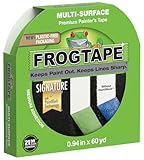
For most interior painting on well-cured paint, a good quality blue painter’s tape is usually sufficient. Brands like 3M and FrogTape are popular for a reason, though even within those brands, there are different types. 3M’s blue painter’s tape is generally a solid all-rounder, but they also make a ‘delicate surface’ version which I’ve found invaluable for older homes or freshly painted walls where you’re nervous.
FrogTape, on the other hand, often markets its ‘PaintBlock Technology,’ which is supposed to create a micro-barrier to prevent paint bleed. I’ve had mixed results with that; sometimes it’s brilliant, other times I still get bleed. It depends heavily on the paint you’re using and how you apply it.
What you’re looking for in the adhesive is a balance: strong enough to create a seal and prevent bleed-through, but weak enough to release from the painted surface without taking chunks of paint with it. This is where things get tricky, because ‘low tack’ or ‘delicate surface’ tapes are often recommended for freshly painted walls or sensitive surfaces. I remember using a delicate surface tape on a wall that had been painted about three weeks prior, and it still pulled off some paint. That’s when I realized that “delicate surface” doesn’t mean “won’t pull off paint ever.”
It just means it’s less likely to than its aggressive counterparts. The packaging can be a bit of a minefield.
Look for terms like ‘low tack,’ ‘interior use,’ or ‘easy release.’ Avoid anything that screams ‘heavy duty,’ ‘long lasting,’ or ‘outdoor use’ unless you’re actually doing something like masking off a brick exterior.
The material of the tape itself also matters. Most standard painter’s tapes are made of a thin, crepe paper. This allows them to conform to curves and edges reasonably well. However, some higher-end tapes might have a slightly different backing that offers better tear resistance or a cleaner edge.
The width of the tape is another consideration. Standard 1-inch or 1.5-inch rolls are common.
Wider tapes can be good for covering larger areas quickly, but they can also be harder to maneuver around corners or intricate trim. For fine detail work, a narrower tape might be preferable. Ultimately, a good quality tape will feel like it has a uniform adhesive coating, won’t tear too easily when you’re unrolling it, and will have a distinct color (usually blue or green, but sometimes yellow or purple) that helps you differentiate it from masking tape.
Common Mistakes That Lead to Paint Disaster
The biggest mistake I see people make, and one I’ve definitely made myself, is not letting the paint dry completely. Seriously, this is the number one reason tape pulls off paint.
Every paint manufacturer will give you recoat times, and while these are often conservative, you absolutely need to respect them. If the label says ‘recoat in 4 hours,’ and you’re trying to tape off after 2 hours, you’re asking for trouble. Paint needs time to cure, and that’s different from just being dry to the touch.
Curing is the chemical process where the paint hardens and becomes more durable. Taping too soon means the tape’s adhesive is grabbing onto wet, soft paint, and when you pull, you’re basically peeling off a sticker from wet glue.
I’ve had to do some pretty gnarly touch-ups because I got impatient. It’s a real confidence killer.
Another classic blunder is pulling the tape at the wrong angle or too quickly. When it’s time to pull, you want to do it slowly and at a 45-degree angle, pulling away from the painted line. (See Also: Does Painters Tape Rip Paint Off Walls )
Think of it like peeling a sticker off a delicate surface – slow and steady wins the race. Yanking it off quickly, especially at a 90-degree angle, puts immense stress on the paint-adhesion bond, making it much more likely to rip. I’ve seen people rip tape off like they’re tearing a band-aid, and then they’re shocked when paint comes with it. It’s not rocket science, but it does require a bit of patience and finesse.
Also, leaving the tape on for too long is a problem. While some tapes are designed for longer application, most standard painter’s tapes can start to bake onto the surface, especially in warmer conditions, or the adhesive can degrade, making it harder to remove cleanly. The general rule of thumb is to remove the tape while the paint is still slightly pliable but not wet.
If the paint is completely rock hard, it’s already a riskier removal.
People also often forget about edge integrity. They apply the tape, paint, and then just rip it off without checking the edge.
Before you pull, run a utility knife or a sharp blade lightly along the edge of the tape where it meets the painted surface. This scores the paint line and breaks any seal that might have formed between the paint and the tape’s edge. This is especially important if you suspect any bleed-through or if you’re working with semi-gloss or gloss paints. It adds an extra step, maybe an extra 10 minutes per room, but it can save you hours of painstaking touch-up work.
This is a tip I picked up from a professional painter years ago, and it’s saved me so much grief. It’s a small thing, but it makes a massive difference to the final look.
Real-World Use: When Painters Tape Works Like a Charm
Let’s be honest, when everything goes right, painters tape is a godsend. I’ve used it for countless projects, from painting trim in my living room to creating accent walls with sharp geometric patterns. The key is preparation and patience. When I’m painting a room where the existing paint is old and possibly chalky, I’ll always do a test patch. I’ll tape a small section in an inconspicuous area and leave it for a few hours, then pull it off. If it pulls off paint, I know I need to clean the walls thoroughly, maybe even prime, or use a delicate surface tape and be extra cautious. This simple test can save you a world of hurt and re-painting.
For projects that require multiple colors with clean lines, like a geometric accent wall or painting stripes, good painters tape is a must. I recently helped a friend paint a nursery with a mountain mural.
We used a high-quality blue tape, applied it meticulously to the dried base coat, and then, before applying the second color, we ran a bead of the base coat color along the edge of the tape. This seals any tiny imperfections and creates a perfect barrier. Once that thin bead dried, we painted the second color.
The results were phenomenal. Pulling off the tape felt like unwrapping a present – crisp, clean lines everywhere. It took extra time, but the finish looked professional, which was the goal.
That technique, often called ‘cutting in the tape,’ is a pro trick that genuinely works for achieving flawless edges.
I also find it indispensable when painting furniture or cabinets. You might be painting a cabinet door but want to keep the frame or hardware untouched.
Good painters tape creates that clean separation. I remember refinishing an old dresser; I wanted to paint the drawers a different color from the frame. (See Also: Does Masking Tape Work The Same As Painters Tape )
I used a good quality tape to mask off the frame sections, making sure it was pressed down firmly to prevent paint seepage. After painting the drawers and letting them dry sufficiently, I pulled the tape slowly.
The lines were perfect, and the contrast between the two colors looked exactly as I’d envisioned. It’s in these detailed applications where the value of decent painters tape truly shines, making a potentially messy job look precise and intentional.
My Contrarian Take: When to Skip the Tape Altogether
Here’s a hot take for you: sometimes, the best way to get a clean line is to not use tape at all. Everyone screams about tape, but I’ve found in certain situations, it’s more trouble than it’s worth. For instance, if you’re painting a ceiling and the walls are already done in a beautiful, expensive finish, the risk of drips or paint seeping under the tape is immense. I’d rather freehand it with a good quality brush and steady hand. It takes practice, sure, but a careful painter can often achieve a cleaner line by brushing directly than by taping and hoping for the best, especially with complex crown molding or intricate architectural details.
Think about it: tape has an edge. That edge, no matter how well applied, is a physical barrier. Paint can pool at that barrier, creating a slightly raised line, or it can seep underneath. When you pull the tape, you’re relying on the paint not sticking to the tape more than it sticks to the wall.
If you have a very steady hand and a good quality angled brush, you can often paint up to the edge of the trim or ceiling with extreme care, creating a naturally smooth transition. This is especially true if you’re doing a color change where the adjacent color is significantly darker. A slight imperfection on the lighter color is far less noticeable than a jagged line caused by tape failure.
It’s a skill that’s worth developing. I’ve seen DIYers spend hours taping off a room, only to end up with bleed, fluff from the tape, or peeling paint, and then spend even more hours fixing it. A few minutes of careful brushwork can sometimes bypass all that stress.
This doesn’t apply to every situation, of course. For large, flat walls where you need a perfectly straight line between two colors, tape is usually the best bet. But for detailed work, older homes with imperfect surfaces, or when you’re dealing with very delicate existing finishes, a steady hand and a good brush might be your best friends. It’s about knowing when to trust your tools and when to trust your own ability. Don’t be afraid to ditch the tape if you think it’s going to cause more problems than it solves. It’s a tool, not a mandate.
The Tape-to-Paint Interaction: A Quick Cheat Sheet
When you’re selecting tape, it’s not just about the brand. The type of paint and how long it’s been on the wall are massive factors in whether painters tape pull off paint. Here’s a rough guide to help you choose the right tape for the job, based on my own experiences and a bit of common sense. Remember, always do a test patch if you’re unsure!
| Wall Condition | Paint Type | Recommended Tape | Verdict |
|---|---|---|---|
| Recently Painted (less than 24 hrs) | Any | Delicate Surface Tape (e.g., Scotch Blue Delicate Surface) | High risk of pulling. Test extensively. Remove ASAP. |
| Painted 1-3 Days Ago | Matte or Eggshell | Delicate Surface Tape or Standard Blue Painter’s Tape | Moderate risk. Remove carefully when paint is dry to touch. |
| Painted 3 Days – 2 Weeks Ago | Matte, Eggshell, Satin | Standard Blue Painter’s Tape (e.g., 3M Blue) | Good balance. Apply firmly, remove slowly. |
| Fully Cured Paint (2+ Weeks) | Matte, Eggshell, Satin, Semi-Gloss | Standard Blue Painter’s Tape or Mid-Adhesion Tape | Low risk. Can use slightly more aggressive tapes if needed. |
| Gloss or High-Gloss Paint | Any (fully cured) | Standard Blue Painter’s Tape, make sure sharp edge score | Surface can be very smooth, tape can stick hard. Score edge before removal is key. |
| Textured Walls | Any | Standard Blue Painter’s Tape, press firmly into texture | Tape may not seal perfectly. Expect potential minor bleed. |
| Delicate or Old Paint | Any | Specialty Delicate Surface Tape ONLY | Very high risk. Test patch is mandatory. Consider masking fluid instead. |
People Also Ask: Common Questions Answered
Does Painters Tape Pull Off Paint If Left on Too Long?
Yes, it absolutely can. When left on for an extended period, especially in warm or humid conditions, the adhesive can effectively “bake” onto the painted surface. This makes removal much more difficult and significantly increases the chance of the tape ripping off paint. It’s best practice to remove painters tape while the paint is still slightly pliable but dry to the touch, typically within 24 hours of application, or as soon as you’ve finished painting the section.
Can I Use Painters Tape on Fresh Paint?
It’s highly risky and generally not recommended. Fresh paint, even if it feels dry to the touch, is still curing and is very vulnerable. The adhesive on painters tape, even delicate versions, can bond with this uncured paint. When you pull the tape, you’re likely to pull off paint along with it, leaving jagged lines and damaged areas. Always wait for the paint to be fully dry, and preferably a few days to a week, before applying any tape. A test patch is always a good idea.
What Is the Best Painters Tape to Use on Walls?
For most interior walls with paint that has been cured for at least a few days, a good quality standard blue painters tape (like 3M’s blue tape) is usually the best all-around choice. If you’re working with newly painted walls, delicate finishes, or historical paint, opt for a tape specifically labeled for delicate surfaces. FrogTape is another popular option, often marketed for its paint-blocking technology, though results can vary depending on the paint and application.
How Do I Stop Painters Tape From Pulling Off Paint?
The key is preparation and the right technique. Make sure your paint is fully cured before applying tape. Use the correct type of tape for your wall condition and paint finish (e.g., delicate surface tape for fresh paint). Apply the tape smoothly and press down the edges firmly to create a good seal. When it’s time to remove, pull the tape slowly at a 45-degree angle, away from the painted line. If you’re concerned about bleeding, consider painting a thin bead of the base coat color along the tape’s edge before applying your new color.
Final Thoughts
So, does painters tape pull off paint? As you can see, it’s not a simple yes or no. It’s a complex interaction between the tape’s adhesive, the paint’s condition, the surface type, and even the weather. My biggest takeaway after years of battling with this stuff is that patience and using the right product for the job are everything.
Don’t cheap out on tape. A few extra bucks for a quality roll can save you hours of frustration and re-work. And for the love of all that is holy, let your paint cure properly before you even think about taping over it. It’s the most basic, yet most violated, rule in painting.
Next time you’re staring down a painting project, remember these tips. Take your time, do a test patch if you’re unsure, and always, always pull that tape slowly. Your walls will thank you, and your sanity will remain intact. Happy painting!