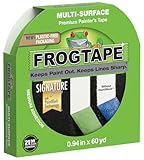
I remember staring at a blank wall in my first apartment, armed with a handful of posters and a roll of blue painters tape. “Easy peasy,” I thought. Famous last words. By the time I was done, I had tape residue everywhere, a couple of posters peeling off, and a distinct feeling of being ripped off by the packaging.
So, the question on your mind might be: can you use painters tape to hang stuff? The short answer is a resounding ‘sometimes, but with major caveats.’ It’s not the magic bullet everyone makes it out to be, and if you’ve ever wondered if there’s a better way, you’re in the right place.
Let’s get real about what works and what’s just marketing hype.
The Blue Tape Myth: What It’s Actually For
Look, painters tape is one of those things that sits in everyone’s toolkit. You see it everywhere, and the packaging always boasts about its ‘gentle adhesion’ and ‘residue-free removal.’ Sounds perfect for hanging posters, right? That’s the marketing angle, and it’s a big part of why so many people end up disappointed. I’ve been there, staring at that sticky blue residue that looks like it’s been painted onto the wall itself. It’s frustrating, and frankly, a waste of time and money when you have to spend another hour with Goo Gone.
The primary job of painters tape is exactly what it says on the tin: to mask off areas when you’re painting. It’s designed to create a clean line between a wall and a trim, or between two different paint colors. The key here is ‘paint.’ When applied to a painted surface and removed within a reasonable timeframe (usually before the paint fully cures, but not immediately after), it generally does its job well. It’s supposed to stick enough to prevent paint bleed but not so much that it rips off the underlying paint when you pull it off. That’s the ideal scenario, and it works for that specific purpose.
The problem arises when you start using it for anything else, especially hanging items that have any weight or require long-term adhesion. Most painters tapes are formulated for temporary use on surfaces that are typically smooth and previously painted. They aren’t designed to hold anything up for more than a few hours, sometimes even less, depending on the environment.
Think about humidity, temperature fluctuations, or even just the sheer weight of what you’re trying to stick. That gentle adhesion becomes a liability when the task demands more holding power.
I learned this the hard way with a framed print that ended up on the floor, tape clinging stubbornly to the wall and the print itself. It wasn’t pretty, and my landlord definitely wasn’t pleased.
There are different types of painters tape, of course. You’ve got your standard blue stuff, which is the most common. Then there’s delicate surface tape, often in a pink or green color, which is even weaker, designed for things like wallpaper or freshly painted walls that are still curing. And then there’s the ‘heavy duty’ or ‘exterior’ painters tape, which is stronger but can still leave residue on certain surfaces. None of these are designed to be a substitute for proper hanging hardware, and that’s a fact that gets lost in translation for a lot of DIYers.
The main takeaway is that while it might hold something up for a short while, it’s a gamble. And when it fails, it often fails spectacularly, leaving behind a mess that’s harder to clean up than the initial problem. So, can you use painters tape to hang stuff? Technically, yes, for a very short period and for very lightweight items. But should you? Generally, no, if you want your stuff to stay on the wall and your walls to remain pristine.
When Painters Tape might Actually Work (and When to Run Away)
Let’s be brutally honest: there are a few fringe cases where painters tape might seem like it’s doing the job. I’m talking about those super lightweight, almost-flat items. Think a single sheet of paper, a very thin flyer, or maybe a small, unframed photo that weighs next to nothing.
If you’re just trying to tack something up for a few hours to get through a quick meeting or to show someone a draft, and you’re prepared for the possibility it might fall, then sure, go ahead. I’ve used it in a pinch to temporarily hold a wire out of the way while I was working on something else, just for an hour or two. It stayed put, but I was constantly glancing at it, half-expecting it to give up.
The real danger zone is when you start thinking about anything with even a modicum of weight or permanence. Posters, unframed prints, lightweight decorations, even small fabric swatches. These are the items that will test the limits of painters tape, and they will almost always win. The adhesive on most standard blue painters tape is water-based acrylic. It’s formulated for easy removal and doesn’t have the long-term tack or shear strength needed to hold anything up for days, weeks, or months. Over time, gravity is a relentless force, and that weak adhesive will eventually lose the battle. (See Also: Does Painters Tape Rip Paint Off Walls )
Another factor is the surface. Painters tape performs best on smooth, clean, painted surfaces. If your wall has any texture – and most walls do, even if it’s just a subtle eggshell finish – the tape won’t get a full, solid bond. It’ll stick to the high points, but the valleys will compromise its holding power. Trying to hang something on wallpaper is even riskier, as the tape can easily peel off the wallpaper itself, or worse, damage the paper. I once tried to hang a lightweight banner on a textured wall for a birthday party, and by the end of the night, one side had already started to sag. Not the ‘wow’ factor I was going for.
Then there’s the environment. High humidity, like in a bathroom or kitchen, can break down the adhesive on many tapes, making them less sticky. Extreme temperatures can also affect performance. So, even if it holds for a day in your climate-controlled living room, it might fail miserably in a garage or a damp basement.
So, when should you steer clear? Pretty much any time you’re hanging something that you care about staying on the wall. If it’s a framed picture, a mirror, shelving, or anything that could be damaged if it fell, or that could cause damage when it falls, painters tape is a big no-go. The ‘residue-free’ promise often turns into a sticky mess, and the ‘gentle adhesion’ means it’s not going to hold up long-term. It’s like using a band-aid to hold a broken bone – it might offer some superficial coverage, but it’s not going to do the actual job.
Common Mistakes and Why They Happen
The biggest mistake, hands down, is believing the marketing hype. Companies sell painters tape as this universally useful, gentle adhesive. They don’t emphasize the temporary nature and the specific use case (painting) as much as they should.
It’s a classic case of a product being used for something it wasn’t designed for, and then people get mad at the product when it fails. I’ve seen people try to hang up small shelves with it, or even multiple picture frames in a gallery wall. It’s a recipe for disaster. I tried to hang up a lightweight corkboard once, thinking, ‘It’s not that heavy, blue tape should do it.’
Within 24 hours, it was peeling away from the wall at the top, and I knew I was just delaying the inevitable crash.
Another common error is not preparing the surface properly. Even though painters tape is supposed to be forgiving, it still needs a clean, dry surface to adhere to. If you try to stick it over dust, grease, or any other grime, its holding power will be significantly reduced from the get-go. And if the surface is damp, forget about it. The adhesive will have a tough time bonding. People often just slap it on without a second thought, assuming it will stick to anything. That’s a shortcut that rarely pays off.
People also misuse different types of painters tape. They’ll grab the cheapest blue roll they can find for a job that might require a slightly stronger adhesion, or conversely, they’ll use a stronger tape on a delicate surface and ruin the paint. Understanding that not all blue tape is created equal, and that there are specific formulations for different needs, is key. But again, even the ‘stronger’ painters tapes aren’t really designed for hanging heavy items long-term. They’re for more demanding painting jobs, not for replacing nails or screws.
The duration of adhesion is another point of confusion. People assume ‘temporary’ means ‘a few weeks’ or ‘a month.’ For painters tape, ‘temporary’ usually means ‘a few hours to a few days, while painting.’ Anything beyond that is pushing your luck. Trying to hang holiday decorations with it, for example, is a gamble. The weight of the decoration, combined with potential temperature changes and the sheer length of time it’s up, will likely lead to failure. I’ve seen tinsel cascading down a wall because the tape gave out after a week. It looked less ‘festive’ and more ‘disaster zone.’
Finally, there’s the classic ‘more is better’ mentality. People think if one strip isn’t holding, two or three will do the trick. While this might temporarily increase adhesion, it also increases the risk of leaving behind a massive sticky mess when you eventually take it down. You end up with more residue to clean, and the item still might not be secure. It’s often better to use the right tool for the job from the start than to overcompensate with the wrong one.
Real-World Use Cases: What Works, What Doesn’t
Let’s break down some practical scenarios where you might consider painters tape, and more importantly, where you absolutely should not. This is based on years of wrestling with various tapes for various projects, some successful, many not.
| Item to Hang | Painters Tape Verdict | Opinion/Why |
|---|---|---|
| Paper printouts, notes, single sheets of paper | Use with Caution (Temporary) | Okay for a few hours or a day. Risk of falling increases over time. Best for temporary displays. |
| Lightweight posters (unframed, thin paper) | Risky (Temporary Only) | Might hold for a day or two, but expect sagging. Residue is a high possibility. Not for long-term. |
| Fabric swatches, lightweight tapestries | Not Recommended | Fabric has weight and can shift. The tape will likely fail, leaving adhesive marks. |
| Small, lightweight framed pictures (e.g., 5×7) | Big No-No | Even small frames have weight. The tape adhesive isn’t strong enough for long-term hold. High risk of falling and damage. |
| Mirrors (any size) | Absolute Disaster | Mirrors are heavy and fragile. Painters tape will fail, leading to breakage and potential injury. |
| Shelving units, wall art with significant weight | Completely Unsuitable | Requires proper mounting hardware. Painters tape has zero chance of supporting this weight safely. |
| Temporary cord management (e.g., holding a cable to a baseboard for a few hours) | Acceptable (Short-Term) | Works if you need to keep a wire tidy for a brief period. Remove promptly to avoid residue. |
| Masking off areas for painting | Perfect (Primary Use) | This is what it’s designed for. Provides a clean line and removes without damaging paint if used correctly. |
| Securing a dropped hem on pants for a quick fix | Emergency Use Only | Might work in a pinch for a few hours, but it’s not durable and will likely peel. Not a permanent solution. |
The core issue with using painters tape for hanging is the fundamental difference in adhesion requirements. When you’re painting, you need the tape to stay put for a while but then come off cleanly. When you’re hanging something, you need it to stay put, reliably, for an extended period. No painters tape on the market is engineered for that kind of long-term, weight-bearing task. It’s like trying to use a garden hose to put out a house fire. It’s the wrong tool for the job, no matter how many times you see someone try it. (See Also: Does Masking Tape Work The Same As Painters Tape )
Consider the science behind it. Most general-purpose painters tapes use a pressure-sensitive adhesive (PSA) that is designed to release easily. This is achieved with a specific chemical formulation and a relatively low tack. For hanging items, you need a PSA with higher tack and better shear strength, meaning it can resist the sliding force of gravity.
Even ‘heavy-duty’ painters tape is still primarily designed for painting applications that require a stronger bond than delicate surface tape, but not for holding significant weight for extended periods. They might hold a bit longer, but the risk of failure and residue increases, especially on less-than-perfect surfaces. This is why, when you look at the packaging, it will always, always talk about painting and not about hanging pictures or decorations.
If it’s not on the box, don’t assume it can do it.
Alternatives: What to Use Instead
Okay, so we’ve established that relying on painters tape to hang stuff is usually a bad idea. Now, what should you use? Thankfully, there are plenty of better options out there, and they’re not all complicated or expensive. The best choice really depends on what you’re hanging and the type of wall you have. My toolbox is overflowing with various types of adhesive solutions because I’ve learned that investing a few extra dollars in the right product saves you a ton of headaches (and wall repair costs) down the line.
For lightweight items like posters or unframed prints, there are specialized adhesive strips and putty. Command Strips are probably the most well-known. They come in various weight classes, and the adhesive is designed to hold strong but remove cleanly. I’ve used them for everything from calendars to lightweight wall decor, and for the most part, they work as advertised. Just make sure to follow the instructions precisely, especially regarding cleaning the wall surface and applying pressure. There’s also poster putty, which is a moldable, reusable adhesive that’s great for paper items. It’s not super strong, but it’s usually enough for unframed posters and doesn’t damage most surfaces. I keep a tub of it handy for temporary displays.
For slightly heavier items, or when you want a more secure hold, consider mounting putty designed for heavier objects, or even double-sided tape specifically made for hanging. Gorilla Tape is a beast, but it’s a very strong adhesive, and while it can leave residue if left on too long or on certain surfaces, it’s far more solid than painters tape. There are also specific hanging strips and hooks that use a stronger adhesive formulation. Again, check the weight limits and the surface compatibility. I’ve found that the ‘heavy duty’ versions of these adhesive hangers can hold up a surprising amount, often enough for medium-sized framed pictures.
For anything with real weight – framed art, mirrors, shelves, or decorative items that you don’t want falling – you really need to use hardware. This is where nails, screws, and wall anchors come into play. For drywall, you’ll likely need anchors to provide a secure point for your screws.
There are different types of anchors: plastic expansion anchors, self-drilling anchors, and toggle bolts. The type you need depends on the weight you’re trying to support and the type of wall. For heavier items, toggle bolts or molly bolts are usually the best bet in drywall.
If you have plaster walls, you might need different anchors altogether. It’s worth a quick trip to the hardware store to ask for advice if you’re unsure.
They can point you to the right anchors for your specific wall type and the weight of the item.
And don’t forget the classic method: picture hanging hooks with nails. For lighter framed items, a simple picture hook hammered gently into the wall can be surprisingly effective and leaves a minimal hole. For heavier items, you’ll want to locate studs in your wall using a stud finder, as screwing directly into a stud provides the most secure mounting point. It takes a little more effort, but the peace of mind knowing your belongings are securely attached is well worth it. My rule of thumb now: if the item is valuable, breakable, or could cause damage if it fell, it gets proper hardware. Everything else gets a Command Strip or a dab of putty.
Can Painters Tape Hold Up a Poster?
Painters tape can hold up a poster temporarily, for a day or two, especially if the poster is lightweight and the wall is smooth. However, it’s not a reliable long-term solution. The adhesive isn’t designed for sustained weight, and you risk the poster sagging or falling, potentially leaving behind sticky residue on your wall. (See Also: Does Painters Tape Peel Paint )
Will Painters Tape Damage My Walls?
Generally, good quality painters tape is designed to be ‘low tack’ and remove cleanly from most painted surfaces when applied and removed correctly (typically within a few days of application). However, problems can arise if the tape is left on for too long, if the paint is old or poorly adhered, or if you’re using a very strong or exterior-grade painters tape. In these cases, it can pull off paint, leave a sticky residue, or even damage the surface underneath.
What Is the Difference Between Blue Painters Tape and Green Painters Tape?
Blue painters tape is the standard, designed for most general painting tasks where you need a clean line and easy removal. Green painters tape, often labeled as ‘delicate surface’ tape, is even gentler. It’s formulated for surfaces like freshly painted walls (that are still curing), wallpaper, or wood finishes that are easily damaged. It has a lower tack, meaning it sticks less strongly, making it safer for sensitive areas but less suitable for holding things up.
Is There a Tape That Can Hang Things Without Damage?
Yes, there are several alternatives. For lightweight items, Command Strips and poster putty are excellent choices, as they are designed for temporary adhesion and clean removal. For heavier items, you’ll need to use actual mounting hardware like screws, nails, and wall anchors, which provide secure fastening without damaging the wall when installed and later removed carefully.
How Long Can Painters Tape Stay on a Wall?
For optimal results and residue-free removal, painters tape should ideally be removed within 24 hours to 3 days of application, depending on the specific product and environmental conditions. Leaving it on for longer periods, especially in fluctuating temperatures or humidity, significantly increases the risk of it becoming difficult to remove or damaging the underlying surface.
The Real Deal on Adhesion: Why It Fails
The science behind why painters tape fails when trying to hang stuff boils down to its intended purpose and the nature of adhesives. Painters tape is designed for masking. This means it needs to stick well enough to prevent paint from bleeding underneath, but it also needs to peel off cleanly once the paint has dried, without lifting the paint itself. This balance is achieved through a low-tack adhesive, typically a modified acrylic or rubber-based PSA (Pressure Sensitive Adhesive).
These adhesives are engineered for easy release. They have a lower cohesive strength (how well the adhesive sticks to itself) and a lower adhesive strength (how well it sticks to a surface) compared to tapes designed for permanent bonding or heavy-duty holding.
When you try to hang something with painters tape, you’re asking it to perform a task it wasn’t designed for: sustained shear strength. Gravity is constantly pulling your item downwards. The low-tack adhesive on painters tape simply doesn’t have the molecular structure or the sheer stickiness to resist this constant pull over time. Think of it like trying to hold a heavy bag of groceries with just your fingertips – you might manage for a few seconds, but eventually, your grip will slip. The adhesive on painters tape does the same thing; its grip weakens under sustained load.
Surface energy also plays a huge role. Painters tape adheres best to smooth, non-porous surfaces with high surface energy, like clean, painted drywall. However, even slight variations in wall texture, the presence of dust, or a thin layer of oil or grease can drastically reduce the tape’s ability to form a strong bond. The adhesive might look like it’s sticking, but the contact area is compromised.
When you try to hang something, this weak initial bond is easily overcome. Furthermore, environmental factors like humidity can break down the adhesive’s chemical bonds, and temperature fluctuations can cause the adhesive to expand and contract, further weakening its hold. I once had a framed picture fall in a bathroom because the humidity made the tape lose its grip overnight. It wasn’t a cheap picture, and the frame was damaged.
The ‘residue-free’ claim is also often misunderstood. It means it shouldn’t leave behind adhesive when removed under ideal conditions shortly after application. But when you’re asking it to hold weight for days or weeks, the adhesive can cure or break down in a way that leaves sticky gunk behind. This gunk is often a result of the adhesive migrating into the surface or degrading. Cleaning it off can be a real pain, often requiring solvents that might damage the paint or finish. My personal experience with residue involves a lot of scrubbing and despair, especially on wood finishes where it can be nearly impossible to remove completely without refinishing.
Ultimately, the failure of painters tape for hanging tasks is a combination of insufficient adhesive strength for shear loads, sensitivity to surface imperfections and environmental conditions, and the adhesive’s design for easy release rather than permanent adhesion. It’s a tool for a specific job, and trying to force it into another role is where the disappointment and wall damage often occur.
Final Thoughts
So, after all that, can you use painters tape to hang stuff? Look, if you’re tacking up a single piece of paper for an hour, maybe. But for anything else? I’d strongly advise against it. You’re far more likely to end up with a mess of sticky residue and a fallen item than a securely hung decoration. My advice? Save the painters tape for its intended purpose: painting. For hanging anything that matters, invest in the right tools, whether that’s Command Strips for lighter jobs or actual hardware for anything with a bit of heft. Your walls (and your sanity) will thank you.
I’ve wasted enough time and money on failed attempts with the wrong tape to know that a few extra bucks for a proper adhesive strip or a small box of screws is always a better investment. Don’t let the blue stuff fool you into thinking it’s a do-it-all solution.
What’s the worst thing you’ve ever tried to hang with tape? I’m genuinely curious to hear your war stories.