I remember the first time I really tried to tackle figurative painting. It was less a gentle introduction and more like being tossed into the deep end of a pool filled with murky water and a bunch of experts yelling contradictory advice. I’d downloaded what I thought was ‘a brush with the real figurative painting today pdf,’ full of glossy examples and promises of instant realism. What I got instead was a digital doorstop that made me question my artistic abilities and, frankly, the sanity of whoever wrote it.
Most of the online tutorials and books I’d skimmed before felt like they were written by people who’d never actually struggled with a charcoal smudge or a wonky perspective line. They talked about light and shadow like it was obvious, like you just knew where it should go. Spoiler alert: you don’t. Not at first, anyway.
So, What Exactly Is Figurative Painting, Anyway?
Look, let’s cut the fluff. Figurative painting is basically painting things that look like stuff. You know, people, animals, trees, that weird coffee mug you’ve had since college.
It’s about representation, making your canvas look like a window onto the world, or at least a recognizable version of it. It’s the opposite of abstract art, where you’re more concerned with shapes, colors, and feelings than with making something look exactly like a cat. I’ve seen some truly baffling ‘modern art’ that looked like someone sneezed paint onto a canvas, and while that might be someone’s jam, it’s not what we’re talking about here. We’re talking about skill, about observation, about making your brush strokes mean something in terms of form and likeness.
It’s about capturing the essence of something tangible, whether it’s the subtle curve of a cheekbone or the rough texture of an old brick wall. This isn’t about just slapping paint on; it’s about building form, understanding light, and telling a story through recognizable elements.
My first encounter with a so-called ‘easy guide’ to figurative painting left me utterly bewildered, convinced I’d never get it. The sheer volume of information, much of it seemingly assuming prior knowledge I absolutely did not possess, was overwhelming. It felt like trying to learn surgery by reading a pamphlet.
The Nitty-Gritty: What to Actually Look For
When you’re starting out, or even if you’ve been painting for a while but feel like you’re hitting a wall with figures, you need resources that are honest. Forget the glossy, over-edited PDFs that make it look like every stroke is perfect.
What you want are guides that show the messy middle. That means detailed breakdowns of anatomy, not just vague mentions.
You need to understand how muscles connect, how bones sit under the skin. It’s not about memorizing every single tendon, but about understanding the underlying structure that dictates the surface form. Light and shadow are your best friends here. You need to see how light wraps around a form, creating highlights and casting shadows that define its three-dimensionality.
This is where many guides fall flat; they show you a finished painting but don’t adequately explain how they achieved those believable shadows. Color mixing is another big one. Skin tones are notoriously tricky.
It’s never just ‘flesh color.’ It’s a blend of reds, yellows, blues, and even greens, depending on the light and the individual. A good resource will show you palettes and explain the reasoning behind them.
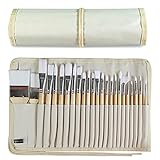
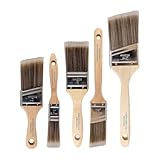
I’ve wasted a silly amount of money on brushes that promised to make my life easier, only to find they were just… brushes. Same with paints. The medium matters, sure, but it’s the understanding of form, light, and color that makes the difference.
Don’t fall for the ‘miracle brush’ or ‘instant realism paint’ hype. Focus on the fundamentals.
For example, understanding how to render fabric is as important as understanding anatomy if you’re painting a person. Does the fabric hang loosely, or is it stretched taut? Where are the folds created by the underlying form and movement?
These details add layers of believability. I once bought a set of ‘artist-grade’ oils that cost me nearly $200, convinced they’d transform my work.
They didn’t. My cheap student oils, combined with better knowledge of color theory, produced far superior results. (See Also: Can Acrylic Paint Go In An Air Brush )
Common Mistakes and How to Avoid Them
Oh, the mistakes. I’ve made them all. The most common one? Rushing.
You see a beautiful figurative painting, and you want to replicate it now. So, you skip the sketching, you don’t block in the basic shapes, and you end up with a lopsided mess. Anatomy is another big tripping point. People draw heads too big, arms too short, hands that look like they belong to a cartoon character.
A common piece of advice is to ‘draw from life,’ which is great, but if you’re drawing a person who won’t sit still for three hours, you’re going to have a bad time. Using good reference photos is perfectly acceptable, but you need to understand how to interpret them.
Don’t just copy; see. What is the light doing? Where are the darkest darks?
Where are the subtle transitions? Another mistake is trying to paint every detail at once. You end up with a muddy, overworked piece. It’s better to establish your big shapes and values first, then work your way down to finer details.
I’ve seen countless beginners get bogged down in rendering individual hairs before they’ve even figured out the basic structure of the head. It’s like trying to tile a bathroom floor before the foundation is laid. My own early attempts often suffered from this, resulting in flat-looking figures because I was too focused on surface texture rather than underlying form.
I remember one particularly frustrating portrait where I spent hours on the eyes, convinced they were the key to likeness. They looked great, but the rest of the face was completely out of proportion.
The ‘paint by numbers’ mentality, where you just fill in areas with color without understanding how they relate to the whole, is a fast track to disappointment. My first charcoal figure drawing exercise was a disaster.
I was so focused on getting the shading on the arm just right that I completely messed up the shoulder joint, making it look like it was about to detach. It was a harsh lesson in understanding structure before surface.
Real-World Application: Beyond the Pdf
Okay, so you’ve got a PDF, or a book, or a bunch of online videos. Great.
Now what? The key is to get your hands dirty. Seriously. Figurative painting, especially if you’re aiming for realism, is a physical skill.
You need to feel the paint, understand how it behaves. My advice?
Start with simple forms. A sphere, a cube, a cone.
Paint them under different lighting conditions. This teaches you about light and shadow without the pressure of making a perfect portrait. Then, move on to simple objects with more complex forms – a vase, a piece of fruit. When you feel comfortable, start with simple human forms.
Don’t jump straight to a full, detailed portrait. Try drawing hands from reference, or feet. They’re notoriously difficult, but incredibly rewarding to get right. I found that breaking down the figure into simpler geometric shapes – cylinders for limbs, spheres for joints – made a huge difference. (See Also: Can Acrylic Paints Be Used In An Aqua Brush )
It’s like building with Lego before you try to build a detailed model. For capturing likeness, I highly recommend gesture drawing.
It’s about capturing the movement and energy of the pose, not just the static form. Do quick sketches, 30 seconds to a minute per pose. It forces you to see the big picture, the flow of the body.
My own journey involved a lot of ‘observational drawing’ from old master copies. I’d try to break down their paintings into basic shapes and see how they built form. It was tedious at first, but it fundamentally changed how I saw.
I recall spending an entire weekend just drawing hands from various angles, using my own as reference. It was painstaking, but the next time I tried to paint a hand, it felt infinitely easier. The sheer amount of practice needed for believable figurative work is often underestimated. It’s not just about talent; it’s about consistent, focused effort.
Many people download a resource expecting a magic bullet and then get discouraged when they don’t see immediate results. The reality is far more about grinding it out.
A Contrarian View: Does ‘realism’ Mean ‘perfect’?
Everyone talks about realism like it’s the holy grail of figurative painting. And yeah, it’s impressive when someone can make a painting look like a photograph.
But here’s my take: realism is just one style. I’ve seen so-called realistic paintings that were technically brilliant but emotionally dead.
They looked like something, but they didn’t feel like anything. I disagree with the common advice that you must achieve photographic realism before you can call yourself a painter. That’s a gatekeeping mentality.
You can have a powerful figurative painting that’s looser, more impressionistic, or even slightly stylized, and it can still convey immense emotion and tell a compelling story. Think of artists like Sargent, or even some of the Fauvists. Their figures weren’t photorealistic, but they were undeniably figurative and incredibly effective. My own approach has shifted over the years.
While I appreciate the skill involved in hyperrealism, I find more joy and expressive power in allowing my brushwork to show, in letting the paint itself contribute to the feeling of the piece. Sometimes, the most ‘real’ thing you can capture isn’t photographic accuracy, but the artist’s emotional response to the subject.
The pursuit of perfect realism can sometimes stifle creativity. It can make artists so afraid of making a mistake that they become rigid and hesitant. I’d rather see a painting with a few ‘flaws’ that sings with life and character than a technically perfect but soulless rendition.
This is why I often advocate for students to experiment with different approaches rather than get stuck on one idea of what ‘good’ figurative painting should be. The pressure to be perfectly realistic can be paralyzing for beginners who are still developing their fundamental skills. It’s like telling someone to write a Shakespearean sonnet before they’ve learned the alphabet.
There’s beauty in the slightly imperfect, in the artist’s hand showing through. It adds a layer of humanity that clinical perfection can miss.
Practical Tips for Your Own Brushwork
Alright, let’s get practical. If you’re looking to get better at figurative painting, beyond just staring at PDFs, here are a few things that actually helped me. First, invest in decent drawing tools. Good pencils, erasers, and paper that can handle some abuse.
Sketching is the bedrock of figurative art. Second, get a solid understanding of light and shadow. Practice rendering simple forms like spheres and cubes in pencil and then in paint. (See Also: A Brushes Digital Painting )
Understand where the light source is and how it interacts with the form. Third, study anatomy, but focus on the major structures. You don’t need to be a doctor, but knowing where the major bones and muscle groups are will make your figures look far more believable.
Fourth, use references, but learn to see them. Don’t just copy blindly. Analyze the shapes, the values, the colors.
Fifth, paint! Seriously, the best way to learn is by doing. Don’t be afraid to make mistakes.
Every painting, even the bad ones, is a learning opportunity. I used to spend hours just doing charcoal studies of classical sculptures. It was free, and it taught me so much about form and volume. Another practical tip: paint from life whenever possible.
Even if it’s just your own hand, or a still life arrangement of objects. It’s a different experience than working from photos. The nuances of light and shadow are more subtle and complex. For color mixing, I found creating my own color charts, mixing a primary color with black, white, and other primaries, was incredibly illuminating.
It helped me understand how colors interact and how to achieve a wider range of tones. The temptation is to rely on pre-mixed colors, but that bypasses a important learning process. My personal rule: at least 20% of my painting time is dedicated to sketching and planning before I even touch a brush with paint.
This prevents so many common errors in proportion and composition. It’s a bit like building a house – you wouldn’t start hammering nails without a blueprint. The ‘a brush with the real figurative painting today pdf’ I initially downloaded had a section on creating a limited palette, which was actually quite useful. Sticking to fewer colors forces you to learn how to mix a wider range, which is a valuable skill.
What Is the Most Important Aspect of Figurative Painting?
The most important aspect of figurative painting is observation. You need to be able to see and interpret the world around you, understanding form, light, shadow, and color. Without keen observation, your ability to represent subjects accurately and expressively will be limited. It’s about translating what you see into a visual language on the canvas.
How Can I Improve My Drawing Skills for Figurative Painting?
Consistent practice is key. Dedicate time daily to drawing exercises, focusing on gesture drawing, contour drawing, and value studies. Study anatomy to understand the underlying structure of the human body. Work from life whenever possible, using models or still life setups, and don’t be afraid to make mistakes – they are learning opportunities.
Is It Necessary to Use Expensive Materials to Learn Figurative Painting?
No, it’s not necessary to use expensive materials. While high-quality materials can be a pleasure to work with and may offer some advantages, beginners can learn effectively with affordable student-grade supplies. Focusing on developing your skills and understanding fundamental principles is far more important than the cost of your materials.
What Is the Difference Between Figurative and Representational Art?
Figurative art is a broad term referring to art that depicts recognizable subjects, typically human or animal forms. Representational art is a more encompassing category that includes figurative art but also depicts other recognizable objects or scenes. Basically, all figurative art is representational, but not all representational art is figurative (e.g., a still life of fruit is representational but not necessarily figurative).
Conclusion
Look, navigating the world of figurative painting can feel like wading through treacle sometimes. There’s a lot of information out there, and not all of it is gold. The ‘a brush with the real figurative painting today pdf’ you might download could be a starting point, but it’s the hours you put in, the mistakes you make, and the genuine effort to understand form and light that will actually move the needle.
Don’t get bogged down in chasing some unattainable ideal of perfection. Focus on building your observational skills, practicing consistently, and learning to see. The journey is messy, frustrating, and sometimes downright infuriating, but the payoff – being able to translate the world you see onto a canvas in a way that feels real to you – is absolutely worth it.
So, grab some paper, grab some charcoal, and start looking. Really looking. Your next masterpiece, or at least your next learning experience, is waiting.