
Look, let’s cut to the chase. You’ve got a Patek Philippe, probably a beautiful piece. And you’re staring at it, wondering how do unscrew Patek Philippe watch parts without turning a priceless heirloom into expensive scrap. I’ve been there, staring down a tiny screw on a delicate mechanism, heart pounding a little faster than usual. It’s not like changing a faucet washer, that’s for sure.
This isn’t a job for brute force or a generic screwdriver from the junk drawer. These watches are engineering marvels, and their components are made with tolerances that would make a brain surgeon sweat. So, if you’re thinking about a quick DIY fix, slow down. We need to talk about the right way, the safe way, to tackle this.
The Unvarnished Truth About Patek Philippe Screws
Anyone who tells you that how do unscrew Patek Philippe watch screws is just a matter of finding the right size screwdriver is either a genius or full of it. These aren’t your run-of-the-mill screws you find on IKEA furniture. Patek Philippe uses some of the smallest, most precisely machined screws in the world.
We’re talking about screws that can be less than a millimeter in diameter, often with very fine threads. Trying to tackle these with a standard watchmaker’s set you picked up online for $20 is a fast track to disaster.
I once tried to adjust a loose bracelet link on a decent Swiss watch (not a Patek, thankfully, but still pricey) with what I thought was the right tiny screwdriver. It slipped. Not only did I strip the screw head, but I also put a nasty little scratch right on the lug. Lesson learned: precision tools are a must for high-end watch repair.
The materials used for these screws are also important. They’re often made of very hard, brittle alloys to maintain their shape and integrity. This means they don’t bend easily, but they also mean they can shatter or strip very easily if you apply the wrong kind of torque or the wrong angle. The heads are designed to accept a very specific engagement from the screwdriver blade.
If the blade isn’t perfectly flat and the correct width for the slot, you’ll damage the screw head in seconds. This isn’t just about appearance; a damaged screw head can prevent proper tightening, compromise water resistance, and make future servicing a nightmare. For a Patek, a stripped screw head is like a stain you can never fully remove. It’s a mark of a job done wrong, and it will haunt you (and the watch) forever.
People also ask if these screws are glued in. Generally, no.
High-end watch screws are held in place by the tightness of their threads and, in some cases, a tiny amount of a mild, reversible threadlocker designed for watchmaking. This isn’t the super-strength stuff you use on car engines. It’s specifically formulated to hold under vibration but release with the correct torque and a bit of heat or solvent. The key here is ‘mild’ and ‘reversible.’
You’re not supposed to need to pry or force them. If a screw feels like it’s seized, it’s usually a sign of corrosion, damage from a previous attempt, or simply the wrong technique being applied.
Don’t assume it’s just stuck; it might be signaling a bigger problem.
The sheer variety of screws used even within a single Patek Philippe movement is astounding. You’ll find different sizes, different head types (slotted, sometimes very tiny Phillips or even proprietary shapes on ultra-complications), and different materials. This complexity is why a single, universal approach won’t work. Each screw serves a specific purpose and is designed to interact with its corresponding component in a very particular way. So, when you’re asking how do unscrew Patek Philippe watch components, the first step is recognizing that there’s no single answer; it’s a nuanced process that depends on the exact part you’re trying to access.
The Key Toolkit: What You Actually Need
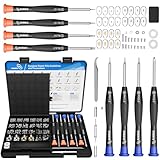
Forget the cheap, multi-piece watch repair kits you see advertised everywhere. For Patek Philippe, you need tools that are built to an exceptionally high standard.
This means investing in a set of Swiss-made or German-made watchmaker’s screwdrivers. Brands like Bergeon, Glardon-Vallorbe, or Elma are the gold standard. These aren’t cheap; a good set can easily run you $200-$400 or more, but they are worth every penny. (See Also: How To Fix Eyeglasses Arm Without Screw )
The blades are made from high-carbon steel, hardened and tempered precisely, and then ground to razor-sharp tolerances. They will fit the screw slots perfectly, minimizing the risk of slippage and damage.
You need a range of sizes, from the tiniest ones that look like they’re for dollhouse furniture up to slightly larger ones for case screws, if applicable.
Beyond screwdrivers, you’ll need a set of high-quality tweezers. Not the eyebrow-plucking kind, but fine-tipped, anti-magnetic, and often serrated tweezers designed to grip tiny components without damaging them. A loupe or magnifying glass is absolutely key. You need to see what you’re doing. A 5x to 10x magnification is usually sufficient for basic screw work. Some professionals use a binocular microscope for extreme precision, but for most tasks, a good loupe held to your eye or a head-mounted magnifier will do the trick. You also need a clean, well-lit workspace. A watchmaker’s mat, a soft, non-abrasive surface that prevents parts from rolling away and provides a clean background for visibility, is also a must-have.
And then there’s the debate about case openers. For Patek Philippe, especially their prized Nautilus or Aquanaut models with their distinctive bezel locking systems, you cannot just use a generic case knife.
Many Patek cases require specific tools that fit into notches or around bezels without marring the precious metal or steel. These tools are often proprietary or require specialized knowledge to use. For a screw-back case, you’d need a high-quality case wrench that can grip the case back securely without slipping.
Again, brands like Bergeon make excellent ones. But here’s a contrarian thought: If you’re asking how do unscrew Patek Philippe watch case backs, and you don’t already own a specialized, high-end case wrench and know how to use it without scratching, you probably shouldn’t be opening the case back yourself.
Let’s talk about screw removal aids. There are specialized tools designed to grip a stripped screw head, like tiny extractors. These are very specialized and require immense care.
They work by gripping the outside of the screw head or by biting into the slot. However, using them on a Patek without prior experience is incredibly risky. For a standard, unstripped screw, the best tool is simply the perfectly fitting screwdriver.
Avoid anything that claims to ‘make any screw easy to remove.’ If it sounds too good to be true, it almost always is, especially with something as delicate as a Patek Philippe movement. The number of specialized tools required for different watch parts is why watch repair is a profession, not a hobby for the impatient.
Common Mistakes and How to Sidestep Them
The most common mistake, hands down, is using the wrong tool. I’ve seen people try to use a flathead screwdriver that’s too wide for the slot, a Phillips head on a screw that needs a flathead, or even a bent paperclip. This immediately damages the screw head, making it harder to remove and potentially impossible to put back properly. This is why investing in quality screwdrivers sized to match the screw slot precisely is the first and most important step. If the screwdriver blade doesn’t fit snugly, stop. You’re about to make a mistake.
Another huge mistake is applying too much force or the wrong kind of force. Watch screws are tiny. They don’t need a lot of torque to loosen or tighten.
You need steady, controlled pressure that’s applied straight down into the screw head. Twisting or prying will strip the head or even damage the threads in the watch plate. Think of it as a gentle nudge, not a determined shove.
If a screw feels stuck, it’s often because of accumulated grime, a tiny bit of old lubricant that has hardened, or slight corrosion. Forcing it will only make things worse. (See Also: How Measure Metric Computer Screws )
Sometimes, a tiny drop of a specialized watchmaking degreaser or a mild solvent can help, but this is venturing into territory where professional knowledge is most important.
Over-tightening is another common error, especially when reassembling. People worry the screw might come loose, so they crank it down. This can strip the threads in the movement’s plates, crack the screw itself, or even deform the component the screw is holding down. The correct tightness is just enough to secure the part without stressing it. This comes with experience and understanding the materials. For example, brass plates are softer than steel bridges, and you need to be gentler with them. This is why learning how do unscrew Patek Philippe watch components also means learning how to put them back together correctly, which is arguably even more important.
A less obvious mistake is working in a cluttered or dirty environment. Dust, lint, or debris can get into the movement, contaminate lubricants, or even get lodged under a screw head, preventing it from seating properly.
I learned this the hard way when a tiny fiber from my shirt landed on a movement bridge while I was working on a vintage Seiko. It looked like a speck of dust, but it was enough to prevent the bridge from sitting flush, causing a tiny misalignment that I only discovered hours later.
A clean, organized workspace with good lighting is a must. Use a watchmaker’s mat.
Keep your tools organized. And for goodness sake, don’t try to do this while watching TV or with kids running around.
When ‘diy’ Becomes ‘destroy’
Let’s be brutally honest: there are times when asking how do unscrew Patek Philippe watch parts is a rhetorical question, and the answer should be ‘you don’t.’ If the reason you need to unscrew it is for a routine service, a battery change (though most Pateks are mechanical, so this is rare), or a minor adjustment that you’re not 100% confident about, the best thing you can do for your watch and your wallet in the long run is to take it to an authorized Patek Philippe service center or a highly reputable independent watchmaker who specializes in high-end Swiss brands. These professionals have the specialized tools, the training, and the experience to work on these intricate timepieces without causing damage.
I once had a friend who insisted on trying to ‘fix’ his high-end chronograph himself. He’d watched a few YouTube videos, bought a cheap toolkit, and thought he was ready. He was trying to adjust a tiny lever inside the movement.
He ended up breaking the lever, stripping two screws, and somehow managed to get a fingerprint smudge on the inside of the mainspring barrel. The repair bill from a certified watchmaker? It was astronomical, far exceeding the cost of a professional service from the start. He learned a very expensive lesson that day about respecting the complexity of high-end mechanical watches.
It’s not about whether you can unscrew it; it’s about whether you have the knowledge, the tools, and the steady hand to do it correctly.
Consider the materials. Patek Philippe uses precious metals like gold and platinum, as well as high-grade stainless steel and titanium. These materials, while durable, can be easily scratched, dented, or marred by improper tools or techniques. A slip of a screwdriver, a poorly used case knife, or an abrasive cleaning cloth can leave permanent marks. These aren’t just cosmetic issues; they affect the value of the watch. A perfectly preserved Patek Philippe is worth significantly more than one that shows signs of amateur tampering. So, if your goal is to maintain the integrity and value of your watch, sometimes the ‘do it yourself’ approach is the quickest way to ‘do it wrong’.
The risk isn’t just about damaging the components you’re working on. It’s also about introducing foreign contaminants into the movement. A single grain of sand, a stray fiber, or even skin oils can disrupt the delicate lubrication, leading to increased wear and premature failure of parts. The intricate nature of a Patek movement means that even seemingly minor contamination can have significant repercussions down the line. This is why professional servicing involves a clean room environment and specialized cleaning procedures. When you’re thinking about how do unscrew Patek Philippe watch components, remember that the subsequent steps of handling, cleaning, and reassembly are just as important as the initial unscrewing.
Practical Tips for the (cautious) Enthusiast
If you’ve decided you absolutely must try a minor adjustment yourself, and we’re talking about something as simple as removing a case back on a standard screw-down model, here are a few tips. First, identify the exact model of your Patek Philippe. Look up its case construction and any specific requirements for opening it. Some older models might have very specific notches for a case knife. Modern screw-backs usually have a pattern of notches that require a high-quality, adjustable case wrench. (See Also: How To Adjust Eyeglass Screw )
Get the best possible tool for the job. If you’re opening a screw-back case, invest in a Bergeon adjustable case wrench with a set of different jaws. Make sure the jaws are clean and fit the notches on the case back perfectly. If you feel any slipping, stop immediately. For accessing the movement itself, if your watch has a snap-back, there’s usually a small lip or notch where a specialized case knife is used. Again, use a dedicated, sharp watchmaker’s knife, and apply gentle, steady pressure to lift the back straight off, not to pry it open sideways.
When dealing with movement screws, always work on a watchmaker’s mat. Use a loupe to make sure you have the correct screwdriver for each screw. Turn counter-clockwise to loosen. Apply downward pressure to keep the screwdriver engaged in the slot. If a screw feels excessively tight, resist the urge to force it. Try a tiny bit of a specialized watchmaking degreaser applied with a fine needle if you’re comfortable. Let it sit for a minute. Sometimes, that’s all it needs. But if it still resists, it’s time to stop. My own rule of thumb is this: if I have to ask myself ‘Am I sure about this?’, the answer is no. Put the tool down.
Here’s a table to help you consider the risks versus rewards of DIY for different Patek Philippe tasks. It’s not exhaustive, but it gives you a general idea of where the danger lies.
| Task | Complexity | Risk Level (DIY) | Opinion/Verdict |
|---|---|---|---|
| Removing standard screw-back case | Low to Medium | Medium | Potentially doable with the right tools and care, but risk of scratching is high. |
| Removing snap-back case | Medium | High | Requires specialized knife; easy to scratch case or damage gasket if done improperly. |
| Accessing movement screws (e.g., bridges, plates) | High | Very High | Extremely fine screws. Stripping is easy, and damage to plates can be catastrophic. Best left to professionals. |
| Adjusting balance wheel or regulating | Very High | Extreme | Requires specialized tools, deep understanding of horology, and a sterile environment. Do not attempt. |
| Bracelet adjustment (pin removal) | Low to Medium | Medium | With proper pin removal tools, often manageable. Risk of bending pins or scratching end links. |
The key takeaway here is understanding your limits and the value of your timepiece. For anything involving the internal movement, it’s almost always best to seek professional help. Knowing how do unscrew Patek Philippe watch components isn’t just about the physical act; it’s about understanding the responsibility that comes with it.
Are Patek Philippe Screws Standard Sizes?
No, Patek Philippe screws are not standard sizes. They use incredibly small, precisely manufactured screws specific to each application within their movements and cases. The dimensions and head types are highly specialized to meet the exacting standards of Patek Philippe engineering, meaning generic screwdrivers will almost certainly not fit correctly and can cause damage.
Can I Use a Magnifying Glass to See the Screws?
Yes, a magnifying glass or a watchmaker’s loupe is absolutely key when working with Patek Philippe screws. The screws are often microscopic, and you need magnification to clearly see the slot, make sure proper screwdriver engagement, and avoid errors. A magnification of 5x to 10x is generally recommended for this type of detailed work.
What If I Strip a Screw Head on My Patek Philippe?
If you strip a screw head on a Patek Philippe, do not attempt to force it further. The best course of action is to immediately stop and seek professional help from a qualified watchmaker specializing in high-end timepieces. They have specialized tools like screw extractors and the expertise to remove stripped screws with minimal damage, often saving the component or replacing it with a genuine part.
How Often Should a Patek Philippe Watch Be Serviced?
Patek Philippe recommends a full service for their mechanical watches approximately every 3 to 5 years. This includes a complete disassembly, cleaning, lubrication, reassembly, and regulation of the movement. Regular servicing makes sure the longevity and accuracy of your timepiece and is important for maintaining its value and performance.
Is It Safe to Open the Back of My Patek Philippe Watch?
Opening the back of a Patek Philippe watch can be safe if you have the correct, specialized tools and a deep understanding of watchmaking procedures. However, for most owners, it is not recommended due to the high risk of scratching the case, damaging gaskets, or accidentally harming delicate internal components. The complexity and value of a Patek Philippe mean that professional servicing is generally the safest option.
Verdict
So, you want to know how do unscrew Patek Philippe watch parts? The short, blunt answer is: with extreme care, the right tools, and ideally, professional guidance. This isn’t a task for the faint of heart or the poorly equipped. You’re dealing with micro-engineering that represents decades of horological advancement. Every tiny screw, every polished surface, is a testament to Swiss craftsmanship.
If you’re considering any work beyond perhaps changing a bracelet pin with dedicated tools, I strongly advise you to reconsider. The cost of a mistake far outweighs the savings of a DIY attempt. Think about the years of intricate design, the countless hours of labor, and the sheer prestige that goes into a Patek Philippe. Protecting that investment means respecting the skill required to maintain it.
My advice? For anything more involved than admiring its beauty or winding it gently, find a reputable watchmaker. If you’re curious about the inner workings, watch documentaries, read books, or even consider a basic watchmaking course for less valuable timepieces. But for your Patek, let the experts handle the screws. That’s the honest truth from someone who’s learned the hard way about what happens when you push your DIY skills beyond their limits.
![AXTH 25-in-1 Small Precision Screwdriver Set, Professional Magnetic Mini Repair Tool Kit for Phone, Computer, Watch, Laptop, Macbook, Ring Doorbell, Eyeglass, Electronic, [Bearing Steel] Screw Driver](https://m.media-amazon.com/images/I/518YlLmPTcL._SL160_.jpg)
