
You know the drill. You’re out, maybe grabbing coffee or just trying to read a menu, and suddenly your glasses are doing that annoying little wobble. You push them up, and one arm just… droops. A loose screw. It’s happened to me more times than I care to admit, usually right when I need my glasses the most. It’s not a world-ending problem, but it’s a real pain in the backside. Figuring out how can I tighten my glasses screws yourself can save you a trip to the optician and a bit of cash.
Most people just live with it, or worse, try to jam a fingernail in there or use whatever random bit of metal they can find. That’s a fast track to making things worse, trust me. I’ve done it. It’s better to have the right (or at least, the least wrong) tool for the job. Thankfully, it’s usually a simple fix, and you don’t need a whole workshop.
The Tiny Screw Conundrum: What’s Actually Going on?
Alright, let’s talk about these minuscule metal devils. The screws holding your eyeglass frames together are typically very fine-threaded, often a tiny Phillips head or sometimes a flathead. The frame material – whether it’s plastic, acetate, or metal – plays a role too. In plastic frames, the screw threads directly into a tiny metal bushing embedded in the plastic, or sometimes directly into the plastic itself if it’s a higher-end, more solid frame. Metal frames usually have a small threaded hole directly in the metal arm or bridge.
The problem is, these screws are small, and the hinges they’re in are under constant, albeit light, stress. Every time you put your glasses on or take them off, you’re twisting and pulling. Every time you clean them, you’re applying pressure. Over time, this micro-movement, combined with vibrations from, you know, living your life, can cause the screw to gradually loosen. It’s not like a big bolt on a car that comes loose from heavy vibration; it’s more of a slow, insidious creep.
I remember one time I was on a camping trip, and my favorite pair of Ray-Bans started getting loose. I didn’t have a proper screwdriver, so I tried to tighten it with the edge of a coin. Big mistake. I ended up stripping the head of the tiny screw, and then I was properly screwed (pun intended). For the rest of the trip, I had one arm flapping around like a broken wing. It was incredibly frustrating and made me realize that sometimes, the simplest problems require the most basic, proper tools. Don’t be like me. Don’t use coins.
What’s actually happening is the threads are just backing out. There’s usually no thread locker or glue on these tiny screws unless they’ve been professionally serviced. They rely on the friction of the threads and the tension from being tightened. When that friction is overcome, they just start to spin out. The fix is simple: re-tighten them. But how you do it, and with what, is the key to not making it worse. I’ve found that most issues stem from using the wrong size screwdriver, or trying to force it when it’s already starting to strip. A little bit of common sense goes a long way, but sometimes, you just need to know the common sense.
The common advice is to use a specialized eyeglass screwdriver. And yeah, that’s usually the best way. But what if you don’t have one handy? I’ve experimented with alternatives, and honestly, most of them are garbage. Your best bet, if you can’t get a proper kit, is to find the absolute smallest flathead or Phillips head screwdriver you own and carefully try to engage the screw head. But if it slips, stop. Seriously, just stop. The damage you can do to those tiny screw heads is often irreversible without professional help.
What Tools Are Actually Worth Your Money?
When it comes to tools for tightening glasses screws, you’ve got a few tiers. At the bottom, you have random bits of metal, fingernails, and sharp objects. Don’t. Seriously, just don’t. At the next level, you have those tiny screwdrivers that sometimes come with cheap electronics or even some promotional items. They can work, but they’re often made of flimsy metal that bends easily, and the tips are usually not precise enough. I’ve had them round off screws within seconds.
Then you get into the dedicated eyeglass repair kits. These are what you want.
They typically cost anywhere from $5 to $20. For that price, you’re getting a small case with a few key tools.
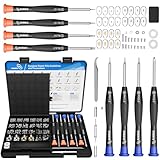
Usually, this includes a few sizes of Phillips head screwdrivers, a few flathead screwdrivers, and sometimes even tiny tweezers and replacement nose pads. The key here is precision. The tips on these tools are designed to fit the tiny screws perfectly, minimizing the risk of stripping the head. I bought a kit a few years back for about $15, and it’s paid for itself so many times over.
It came with a little plastic case that keeps everything organized, which is a huge win for me because I’m notorious for losing small things. (See Also: How To Fix Eyeglasses Arm Without Screw )
When choosing a kit, look for one that specifies the types of screws it’s designed for. Most standard eyeglasses use very small Phillips head screws. If your glasses have a different type, make sure the kit accommodates that. I’ve seen kits that only have flatheads, which would be useless for many people. Also, consider the build quality. If the screwdrivers feel light and flimsy, they’re probably not going to last. I prefer kits where the metal tips feel solid and well-attached to the handle.
There’s also a specific type of screwdriver called a jeweler’s screwdriver. These are basically higher-quality, more precise versions of what you find in basic eyeglass kits. If you do a lot of fine detailed work – jewelry repair, watch repair, or, yes, glasses repair – investing in a good set of jeweler’s screwdrivers might be worthwhile. They offer better grip, more durable metal, and a wider range of sizes for even finer work. I’ve got a set of these that I use for all sorts of fiddly tasks, and they’re fantastic. They feel substantial in your hand, and the tips are incredibly sharp and well-defined.
One thing to look out for in kits, especially if you have metal frames, is tiny replacement screws and nuts. Sometimes, when you’re trying to tighten a screw, it’s already so worn down that it just spins endlessly. Or worse, you accidentally drop it and it vanishes into the ether. Having a few spare screws of common sizes can be a lifesaver. I haven’t personally needed to replace a screw yet, but I’ve seen friends struggle because they lost the original and couldn’t find a match. It’s a good idea to check if the kit includes a small assortment of these. Many do, and they’re often organized in a little compartment within the case.
Here’s a quick look at what you might find and my take:
| Tool Type | Typical Price | My Verdict | Use Case |
|---|---|---|---|
| Random Metal Object (e.g., coin edge, paperclip) | $0 | Terrible. High risk of damage. | Emergency only, and still not recommended. |
| Cheap Electronic Screwdriver Set | $3 – $8 | Meh. Can work in a pinch but low quality. | Occasional use, but expect them to wear out. |
| Dedicated Eyeglass Repair Kit | $5 – $20 | Recommended. Good value and precision. | Regular use for glasses maintenance. |
| Quality Jeweler’s Screwdriver Set | $20+ | Excellent. Durable and precise for fine work. | Frequent fine mechanical work, including glasses. |
Ultimately, spending a few bucks on a decent eyeglass repair kit is the smartest move. It’s not just about the screwdriver; it’s about having the right tool that fits the job without causing more harm than good. I’ve seen people pay $100+ for glasses and then try to fix them with a butter knife. Makes no sense.
The Actual Step-by-Step: How to Tighten It Without Messing Up
Alright, you’ve got your tools. Let’s get this done. First things first: find a well-lit area. Seriously, these screws are microscopic. Trying to do this in dim light is like performing surgery with a blindfold on. I usually end up on my desk, right under my desk lamp. Make sure you have a stable surface to work on, too. You don’t want your glasses sliding around while you’re trying to get a tiny screw into place. A soft cloth or a mousepad can provide a bit of grip and prevent scratches.
Okay, identification time. Look at your glasses. Where is the loose screw? Is it on the hinge where the arm meets the frame, or is it a screw holding a nose pad in place? Most commonly, it’s the hinge. Identify the type of screw head. Is it a tiny cross (Phillips) or a straight line (flathead)? Grab the appropriate screwdriver from your kit. It should fit snugly into the screw head. If it feels loose or wobbly, try a slightly different size. The goal is a perfect fit.
Now, the delicate part. Place the tip of the screwdriver into the screw head. Apply gentle downward pressure. You’re not trying to force it. You just want the screwdriver to engage properly with the grooves of the screw. Once it’s seated well, start turning it clockwise. Very slowly. Just a tiny bit at a time. You’ll feel resistance when the screw starts to thread back in. Keep turning until it feels snug. Snug, not tight. Over-tightening can strip the threads in the frame or the screw itself, which is a much bigger problem. It should feel firm, and the arm of your glasses should no longer feel loose or wobbly.
If you’re trying to tighten a screw that holds a nose pad, the process is similar, but the screw might be even smaller or a different type. These often attach to a little metal arm that plugs into the frame. Be extra gentle here, as the plastic or metal surrounding the nose pad itself can be quite delicate. Again, clockwise, gentle pressure, and stop when it feels secure. If the nose pad itself is loose, that’s usually a different issue – often needing a new nose pad or a different kind of adhesive.
What if the screw just keeps spinning and never tightens? This is the dreaded stripped screw situation. It means the threads on either the screw or in the frame are damaged. In this case, you can’t just tighten it. You’ll likely need to replace the screw. If your kit came with spare screws, try swapping it out. Make sure to get a screw of the exact same size and type. If you don’t have spares, or the new screw still spins, you might have to take it to an optician. They have specialized tools and techniques for dealing with stripped threads, sometimes involving tiny taps and dies or even specialized glues.
A word of caution: sometimes, the hinge itself can be damaged. If the screw is tight, but the arm still feels loose, the hinge might be bent or broken. This is usually beyond a simple DIY fix and will require professional attention. Don’t try to bend metal hinges back into shape yourself unless you’re very experienced with metalwork, as you’re more likely to snap them. I learned this the hard way with a pair of metal-framed sunglasses; trying to bend a hinge back resulted in a clean snap, and they were toast. (See Also: How Measure Metric Computer Screws )
So, the recap: good light, stable surface, right tool, gentle pressure, clockwise turn, stop when snug. It sounds basic, but doing it with care is what makes the difference between a quick fix and a trip to the repair shop.
When to Just Take Them to the Pros
Look, I’m all for DIY. I’ve built decks, fixed toilets, and rewired lamps. I believe most problems have a fixable solution with the right tools and a bit of patience. However, there are times when you need to admit defeat and call in the cavalry. For glasses, this usually happens when the problem is more than just a loose screw, or when you’ve tried the simple fix and made it worse.
First off, if you’ve stripped the screw head badly, and you don’t have replacement screws or the knowledge to deal with it, it’s time for an optician. Trying to force a stripped screw with the wrong tool can permanently damage the frame. I’ve seen people get so frustrated they’ve cracked the plastic around the hinge. That’s usually game over for that frame. An optician has specialized tools to extract damaged screws and can often repair stripped threads or replace them with a slightly larger size if necessary. This is a common problem they deal with daily, so they’re well-equipped.
Another situation is if the hinge itself is damaged. If the screw is tight, but the arm still feels loose, wobbly, or doesn’t fold properly, the hinge mechanism might be bent, broken, or worn out. This is particularly common with metal frames, where hinges can be subjected to more stress. Trying to force a bent hinge back into alignment can easily break it off entirely. Opticians have a range of replacement hinges and the expertise to fit them. It’s a repair that requires precision and specific parts, not just a screwdriver.
If your glasses are high-end or have intricate designs, like those with decorative elements or unique hinge systems, it might be best to avoid DIY repairs altogether. You don’t want to risk damaging expensive materials like titanium, gold, or custom acetate. The risk of making a costly mistake is higher, and the potential repair cost if you mess up can be significant. Some high-end brands even have proprietary screw or hinge systems that only their authorized repair centers can handle.
I had a friend whose expensive designer glasses had a loose screw, and they tried to fix it themselves. They ended up scratching the lens and bending the frame. The repair cost them more than if they’d just gone to the optician in the first place. It was a hard lesson for them about knowing your limits, especially with delicate and expensive items. For me, anything over $300 for a pair of glasses, I’m probably heading straight to the store if something goes wrong, or at least calling them first.
Finally, if you’re just not comfortable with the process, or if you’ve tried and failed, don’t beat yourself up. Glasses are key for many people, and the thought of damaging them can be stressful. An optician provides peace of mind. They can usually do a quick adjustment or repair while you wait, and they’ll often do it for free or a very small charge, especially for simple screw tightening. They also have magnifying equipment and specialized lighting that makes the job much easier and makes sure a perfect outcome.
So, when should you go to the pros? Stripped screws you can’t fix, damaged hinges, expensive frames you’re scared to touch, or simply if you’re not confident in your own abilities. It’s not a sign of weakness; it’s a sign of smart decision-making.
Common Mistakes People Make (and How to Avoid Them)
It’s easy to mess up even the simplest of tasks, and tightening glasses screws is no exception. I’ve seen people do some truly baffling things. The most common, and the one I’ve fallen victim to, is using the wrong tool. This usually means a screwdriver that’s too big, too small, or the wrong type. Forcing a too-large Phillips head into a tiny screw will instantly start to round off the cross-slots. Trying to use a flathead on a Phillips screw is just asking for trouble, as it will slip and dig into the surrounding frame. The fix? Use a dedicated eyeglass repair kit. It’s not expensive, and the bits are precisely sized for those tiny screws.
Another huge mistake is over-tightening. People feel a little wobble and think “more is better.” Nope. These tiny screws are not meant to be cranked down like lug nuts on a car. Over-tightening can strip the threads in the frame, especially in plastic frames. Once those threads are gone, the screw will just spin endlessly, and you’ll need professional repair. It can also damage the screw itself, making it impossible to remove later. The fix? Tighten until you feel firm resistance, and then stop. You don’t need to put your weight into it. Just snug is the goal.
I’ve also seen people try to use super glue or other adhesives to “secure” a screw that keeps loosening. This is a terrible idea. While it might temporarily hold the screw in place, it makes future adjustments or replacements incredibly difficult. If the screw needs to come out for any reason, you’ll be fighting hardened glue, potentially damaging the frame. If the screw head is stripped and you’re tempted to glue it, that’s a sign you need to replace the screw or get professional help, not reach for the adhesive. The fix? Avoid glue for screw-related issues. If a screw constantly loosens, it might indicate a worn-out screw or frame, which needs proper repair, not a quick fix with adhesive. (See Also: How To Adjust Eyeglass Screw )
People also tend to forget about the frame material. Plastic frames, especially cheaper ones, have less durable threads than metal frames. You have to be much more gentle with them. Metal frames can also be damaged, of course, but the threads are usually more solid. If you have acetate frames, they can be brittle if they’re old or have been exposed to heat. Be aware of what your glasses are made of and adjust your pressure accordingly. The fix? Gentle pressure and understanding that different materials require different handling.
Finally, there’s the “I’ll just ignore it” approach. A slightly loose screw might not seem like a big deal, but it can lead to bigger problems. A wobbly arm puts uneven stress on the hinge, which can eventually cause it to bend or break. It can also cause the screw itself to become more worn, making it harder to tighten later. Plus, let’s be honest, it’s annoying. The fix? Address the loose screw as soon as you notice it. It’s a five-minute job that saves you potential headaches and repair costs down the line.
Here’s a quick rundown of what NOT to do:
- Use a screwdriver that doesn’t fit the screw head.
- Apply excessive force.
- Use super glue or other permanent adhesives on screws.
- Ignore the problem and hope it goes away.
- Try to bend or force damaged hinges back into place.
Avoiding these common mistakes will save you a lot of frustration and potentially keep your glasses in good working order for much longer.
The ‘what If’ Scenarios: Faqs About Glasses Screws
Here are some questions I get asked a lot, or that people seem to be struggling with when it comes to their glasses screws.
Can I Use Nail Polish to Tighten My Glasses Screws?
Some people suggest putting a tiny dab of clear nail polish on the threads to act as a mild thread locker. It can work in a pinch, but it’s a risky move. If you use too much, it will harden and make the screw impossible to remove or adjust later without specialized tools. It’s generally better to use actual thread-locking fluid designed for small applications, or to simply tighten the screw properly. If you do use nail polish, use the absolute smallest amount possible, and only on the threads, not the head. It’s a last resort for me.
My Glasses Screw Keeps Falling Out, What Should I Do?
This usually means the threads are stripped or worn. The best solution is to replace the screw. If your eyeglass repair kit came with spare screws, try using one of those. Make sure it’s the same size and type. If the new screw also falls out, the threads in the frame might be damaged, and you’ll likely need to take it to an optician. They have the tools to repair stripped threads or use slightly larger screws.
How Do I Know If I Need a Jeweler’s Screwdriver or Just an Eyeglass Kit?
For most standard eyeglasses, a good quality eyeglass repair kit is perfectly sufficient. These kits are designed with the common sizes and types of screws found in eyeglasses. A jeweler’s screwdriver set offers higher precision and durability, with a wider range of very fine tips. If you frequently work on very small, delicate items beyond just your glasses (like watches, jewelry, or electronics), then a jeweler’s set is a worthwhile investment. For just tightening glasses screws occasionally, an eyeglass kit is the more practical and cost-effective choice.
What If My Glasses Are Made of Titanium? Can I Still Tighten the Screws Myself?
Yes, you generally can tighten screws on titanium frames yourself, but you need to be extra careful. Titanium is strong but can still be scratched or damaged. Use the correct-sized screwdriver that fits snugly. Apply gentle pressure and turn slowly clockwise. The threads in titanium are usually very durable, but be mindful not to cross-thread or over-tighten, as this can still damage the frame. If you’re unsure or the screw seems stuck, it’s always safer to consult an optician, especially with premium materials like titanium.
Is It Safe to Use a Tiny Bit of Loctite on My Glasses Screws?
I strongly advise against using standard Loctite (like blue or red) on your glasses screws. These are typically too strong for the tiny threads and materials of eyeglass frames. They can make the screws impossible to remove without damaging the frame, and the chemical composition might even degrade certain plastics. There are specialized, low-strength thread-locking fluids designed for electronics or very fine mechanics that might be usable, but even then, it’s a risky proposition. For most people, it’s best to stick to proper tightening or professional repair rather than risking adhesives.
Verdict
So there you have it. Figuring out how can I tighten my glasses screws doesn’t require a degree in engineering. More often than not, it’s a simple matter of having the right tiny screwdriver and applying a bit of gentle pressure in the right direction. I’ve learned the hard way that trying to improvise with random objects is a recipe for disaster, leading to stripped screws and damaged frames.
My advice? Spend the ten bucks on a decent eyeglass repair kit. Keep it in a drawer, in your car, or even in your purse. When that tell-tale wobble starts, you’ll be prepared. It’s a small investment for the peace of mind and the ability to keep your vision clear without a drooping arm.
If you’ve tried the simple fix and it’s still not holding, or if you’ve managed to strip the screw, don’t force it. Take them to your local optician. They deal with this stuff every single day and can usually fix it in minutes. It’s better than risking a costly mistake on your favorite pair of specs.
![AXTH 25-in-1 Small Precision Screwdriver Set, Professional Magnetic Mini Repair Tool Kit for Phone, Computer, Watch, Laptop, Macbook, Ring Doorbell, Eyeglass, Electronic, [Bearing Steel] Screw Driver](https://m.media-amazon.com/images/I/518YlLmPTcL._SL160_.jpg)
