
There’s nothing more annoying than a wobbly pair of glasses. You know the feeling: that constant little slide down your nose, the way your vision shifts just when you need it most. It’s like a tiny, persistent heckler reminding you that your focus is off, literally.
For years, I’d just deal with it, or worse, throw away a perfectly good pair and shell out another hundred bucks. Then I realized, after a particularly irritating afternoon at the DMV where my glasses kept slipping during the eye test, that this was just dumb. I decided to finally figure out how do I tighten the screw on my glasses, and honestly, it’s ridiculously simple once you know what you’re doing.
It’s not rocket science, and you don’t need a whole workshop. Just a few bits of knowledge and maybe one tiny tool.
The Tiny Screw That Causes Big Problems
The culprit behind that infuriating wobble is almost always a loose screw. These aren’t just regular screws; they’re usually micro-screws, specifically designed for the delicate frames of eyeglasses. They connect the temple (the arm that goes over your ear) to the hinge of the frame, or sometimes the nose pads to the frame itself. Over time, vibrations from daily wear, fiddling with them, or even just the expansion and contraction of materials due to temperature changes can cause them to loosen. It’s a mechanical thing, plain and simple. The friction holding them in place just… wears out.
I remember one time I was trying to fix my own glasses with a normal screwdriver. Big mistake. I ended up stripping the head of the screw and almost made it impossible to fix without a professional. It felt like I was wrestling a mosquito with a sledgehammer. That’s when I learned that you absolutely need the right tool. You can’t just grab anything from your junk drawer. The heads on these tiny screws are often Phillips head, but incredibly small, or sometimes Torx. Using the wrong size or type of screwdriver is like trying to hammer in a nail with a rubber chicken – it’s just not going to work and you’ll likely cause more damage.
The most common place to find these loose screws is at the hinge. This is the part that allows your glasses to fold. When that screw is loose, the temple arm feels floppy, and the glasses won’t sit properly on your face. They’ll sag, they’ll slip, and you’ll find yourself constantly pushing them back up. It’s a low-grade annoyance that can really impact your day. The good news is, once you tighten that tiny screw, the world of clear, stable vision snaps back into focus. It’s a small fix with a huge payoff in terms of comfort and practicality.
What You Actually Need (spoiler: It’s Not Much)
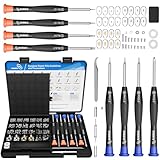
Okay, let’s cut to the chase. You don’t need to buy a whole toolkit for this. The absolute best thing you can have is a dedicated eyeglass repair kit. I’ve seen them at drugstores, supermarkets, and online for as little as $5 to $10. They usually come with a few different sizes of tiny screwdrivers and a handful of replacement screws. Honestly, just having one of these kits lying around is a lifesaver. It’s like having a mini-toolbox specifically for your face furniture.
The screwdrivers in these kits are usually very small, with a swiveling head. You’ll find both Phillips (cross-shaped) and flathead options, and sometimes even Torx (star-shaped). (See Also: How To Fix Eyeglasses Arm Without Screw )
The key is to match the screwdriver tip to the screw head on your glasses. Look closely. Does it have a tiny plus sign, or a straight line, or a little star? Grab the corresponding screwdriver from your kit.
If you’re not sure, try the smallest Phillips first; that’s the most common. The handle is often color-coded or labeled, making it easy to pick the right one.
I keep a small kit in my car, one in my desk drawer at home, and one in my travel bag. It’s paid for itself a hundred times over in saved trips to the optician and avoiding the temptation to buy new glasses prematurely.
Beyond the kit, there’s not much else you need. Maybe a clean, lint-free cloth (like a microfiber cloth for cleaning lenses) to hold the glasses steady and wipe away any tiny dust bunnies that might have taken up residence. Good lighting is also your friend. Trying to do this in a dimly lit room is a recipe for frustration.
Sit near a window or under a bright desk lamp. Some people like to use a small pair of tweezers to hold the tiny screws, especially if they’re prone to dropping things, which I definitely am. A tiny bit of clear nail polish can be used as a dab of ‘thread locker’ to help keep the screw from backing out again, but that’s an advanced move and not always necessary.
For most cases, the right screwdriver and a steady hand are all you need.
Common Mistakes to Avoid
The biggest mistake I see people make is using the wrong tool. I already touched on this, but it bears repeating. Using a regular eyeglass screwdriver from a generic toolkit is often too large and can strip the screw head. Trying to use a butter knife, a coin, or a pair of pliers is just asking for trouble. You’re more likely to scratch your frames, bend them, or completely mangle the screw. Pliers are particularly bad because they grip the outside of the screw head, and if it’s tiny, you’ll likely crush it or slip and damage the frame. (See Also: How Measure Metric Computer Screws )
Another common pitfall is overtightening. You feel that screw turn, and you think, ‘Great, it’s tight!’ But then you keep going. These screws are tiny, and the threads in the frame are often delicate. Overtightening can strip the threads in the frame itself, meaning the screw will never hold again. You’ll feel it just spin freely. The goal is snug, not Herculean. Tighten it until you feel resistance and the temple arm moves with a satisfying, controlled stiffness, not floppiness. If it feels too stiff and hard to open or close, you’ve gone too far.
Finally, don’t try to fix a screw if the frame itself is damaged. If the hinge area is bent, cracked, or the screw hole is worn out, just tightening the screw won’t help. In that case, you’re probably looking at a repair from an optician or even needing new glasses. Sometimes, the screw is missing entirely. If that’s the case, your repair kit should have spares, but if the hole where the screw goes is stripped, you’ll need professional help.
The Actual Process: Step-by-Step
Alright, you’ve got your glasses, you’ve identified the loose screw (usually at the hinge), and you have your tiny screwdriver from a repair kit. Let’s get this done.
- Prepare Your Workspace: Find a well-lit area. Lay down a soft cloth or towel to catch any dropped screws. This is important. Tiny screws have a habit of vanishing into the ether if dropped on carpet or hard floors.
- Inspect the Screw and Hinge: Look closely at the screw. Is the head damaged? Is it just loose? Gently try to wiggle the temple arm. This will confirm which screw is the offender.
- Select the Right Screwdriver: Based on your inspection, choose the correct screwdriver from your kit. It needs to fit snugly into the screw head without wobbling. If it feels loose, try a different size or type.
- Position the Screwdriver: Carefully place the tip of the screwdriver into the slot of the screw head. Apply gentle downward pressure to make sure it’s seated properly.
- Tighten (Gently!): Turn the screwdriver clockwise. Start with small, controlled turns. You’ll feel resistance as the screw tightens. Stop as soon as you feel firm resistance. The temple arm should feel stable and not wobble, but it should also open and close smoothly without excessive force.
- Test the Movement: Open and close the temple arm a few times. It should feel secure and move with a smooth, deliberate motion. If it feels too stiff or too loose, make a tiny adjustment. A little goes a long way.
- Check the Other Side (Just in Case): While you’re at it, check the screws on the other temple arm. Sometimes, one loosens, and then the stress shifts, causing the other to loosen later.
- Clean Up: Wipe down your glasses with a microfiber cloth to remove any fingerprints.
If the screw just keeps spinning, the threads are likely stripped. In this scenario, you might try a tiny dab of clear nail polish on the threads of the screw before reinserting it. Let it dry for a few minutes, then try tightening again. This can sometimes provide enough grip. However, for a permanent fix, you’ll likely need an optician.
When DIY Isn’t Enough: Professional Help
Look, I’m all for fixing things yourself. It saves money, and there’s a certain satisfaction in it. But there are times when you just need to hand it over to the pros. If your glasses frame is bent or cracked, especially around the hinge area, no amount of screw-tightening will fix it. Trying to force a bent frame can lead to further damage. Similarly, if the screw hole itself is stripped and the screw just spins endlessly, you’ve probably gone past the point of a simple DIY fix.
Eyeglass repair services, usually found at your local optician’s shop, are surprisingly affordable. Most will tighten screws, replace lost screws, or even do minor frame adjustments for a small fee, often just a couple of bucks, or sometimes even for free if you bought your glasses there. They have specialized tools and a keen eye for the subtle nuances of frame repair. They can also often replace nose pads that have fallen off or are digging into your skin. For about $20-$30, they can often fix things that would cost you hundreds if you had to buy new glasses.
I once had a pair of expensive titanium frames where a screw vanished. I tried everything to get a replacement in myself, but the hole was so tiny and the metal so precise, I was afraid I’d ruin them. I took them to the optician, and they had it sorted in literally two minutes. They had a tiny, specialized screw and a mini-screwdriver, and it was good as new. It was worth every penny, and I learned that knowing when to seek professional help is just as important as knowing how to handle a screwdriver yourself. It’s not a sign of failure; it’s a sign of good judgment. (See Also: How To Adjust Eyeglass Screw )
When to Consider New Glasses
Sometimes, despite your best efforts and even professional intervention, it’s time to let go of a beloved pair of glasses. If the frame is significantly bent, cracked, or corroded, it might not be safe or comfortable to wear them anymore. For example, if the bridge of the frame has a hairline fracture that’s widening, it’s a safety hazard. Also, if you’ve had to replace screws or repair the same spot multiple times, it might indicate that the frame material itself is compromised.
Consider the age and condition of your glasses. Lens coatings can wear off, causing glare or making them harder to clean. If your prescription has changed significantly, wearing old glasses can cause eye strain and headaches. It’s also worth thinking about whether your current frames still suit your face shape or your style. Sometimes, a simple screw tightening is just a temporary band-aid on a situation that requires a fresh start. If the cost of repairs starts to outweigh the value or usability of the glasses, it’s a clear sign to look for a new pair. Don’t feel guilty about it; it’s just part of maintaining your vision and your look.
| Problem | DIY Fix Potential | Optician Fix Potential | Verdict |
|---|---|---|---|
| Loose hinge screw | High | Very High (Free/Low Cost) | DIY is easy and recommended. Optician is a quick backup. |
| Missing screw | Medium (if kit has spares) | Very High (Low Cost) | DIY with kit is possible. Optician is more reliable for correct fit. |
| Stripped screw hole | Low (Nail polish trick sometimes works) | High (May require specialized tools/epoxy) | Optician is your best bet for a lasting repair. |
| Bent frame | Very Low | High (May involve heating/reshaping) | Leave to the professionals; DIY risks further damage. |
| Cracked frame | Very Low | Low to Medium (Depends on material/location) | Professional assessment needed. May be unrepairable. |
| Worn out nose pads | Medium (Can buy replacements) | Very High (Usually included with frame fitting) | DIY is doable, but optician makes sure perfect fit. |
The Joy of a Stable View
There’s a genuine, almost embarrassingly simple, joy that comes from having your glasses sit perfectly on your nose again. That little wobble is gone. The way you look at things is stable. It’s not a huge, life-altering event, but it’s one of those small comforts that makes a big difference in your daily experience. Think about it: you use your eyes all day, every day. Having eyewear that functions correctly is, dare I say, pretty darn important. It affects how you read, how you work, how you see the world literally.
I used to get so frustrated with glasses slipping. It’s a constant, subconscious battle to keep them in place, which takes mental energy you could be using for, you know, actual thinking. When a tiny screw is tight, that battle ends. Your glasses become an extension of you, not a needy accessory that needs constant adjustment. It’s freeing. It’s the kind of thing you don’t realize how much you miss until it’s fixed.
And it’s a reminder that a lot of the little annoyances in life can be fixed with a bit of knowledge and the right tiny tool. You don’t always need to spend a fortune. For me, the satisfaction of tightening that screw myself, of reclaiming the stable view, is worth more than the few dollars I might have spent on a quick fix at the optometrist. It’s about being a little more self-sufficient, a little less reliant on others for minor inconveniences. So, next time you feel that familiar slide, don’t despair. Grab that tiny screwdriver.
Verdict
So there you have it. Figuring out how do I tighten the screw on my glasses is one of those small wins that really makes life smoother. It’s a simple fix, often done in minutes with a basic repair kit, that can save you a lot of daily frustration and money.
Don’t let a loose screw turn into a full-blown crisis. Keep a small repair kit handy, and remember to be gentle when you’re tightening. Overtightening is the enemy here. If you’re not comfortable doing it yourself, or if the frame itself is damaged, don’t hesitate to visit your local optician. They’re usually happy to help with these minor issues for little to no cost.
The next time your glasses start to slip, take a deep breath, grab that tiny screwdriver, and get them back to their proper place. Your eyes will thank you for it.
![AXTH 25-in-1 Small Precision Screwdriver Set, Professional Magnetic Mini Repair Tool Kit for Phone, Computer, Watch, Laptop, Macbook, Ring Doorbell, Eyeglass, Electronic, [Bearing Steel] Screw Driver](https://m.media-amazon.com/images/I/518YlLmPTcL._SL160_.jpg)
