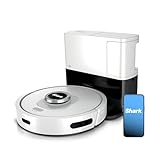
Honestly, the first time I unboxed that Shark robot vacuum, I was hyped. Visions of spotless floors danced in my head. Then came the waiting. And waiting. Seriously, how long does a Shark robot vacuum take to charge? It felt like an eternity.
I’d read reviews, sure, but they were all glossed over with marketing speak. Nobody really tells you the nitty-gritty, the actual time you’re staring at a charging dock, wondering if it’s even working.
This whole dance with battery life and charging cycles can feel like a total gamble if you don’t know what you’re getting into. Some days it’s ready in a flash, others it seems to be perpetually plugged in.
Figuring out the charge cycle for these things is more art than science, and frankly, most of the online chatter is just noise.
The Actual Charge Time: No Magic Number
So, you’ve got your shiny new Shark robot. You’ve charged it for the first time. You’re expecting it to be ready for action, right? Well, here’s the blunt truth: there isn’t one single, definitive answer to how long does Shark robot vacuum take to charge. It’s not like plugging in your phone where you can usually count on a couple of hours. Shark robot vacuums, like most robotic vacuums, operate on a different schedule.
Most models, straight out of the box for their initial charge, will need a solid 4 to 6 hours. Yes, you read that right. Hours. This initial deep charge is vital for the battery’s overall health and longevity. Skipping this can mean you’re setting yourself up for shorter runtimes down the line. Think of it like marinating a tough cut of meat; you’ve got to give it time to absorb everything properly.
After that initial marathon, subsequent charges tend to be quicker, but still not instantaneous. You’re typically looking at a full recharge for a cleaning cycle to be somewhere in the 2 to 4-hour range. This depends heavily on the specific model, how much battery it had left when it returned to its dock, and even ambient temperature. I’ve seen my own IONVac bounce back in just under two hours after a quick sweep, but after a marathon session cleaning up after my dog’s shedding explosion, it felt like it was tethered to the charging station for the better part of the afternoon.
And don’t even get me started on those first few weeks. The battery chemistry is settling in, and sometimes it feels like it’s playing coy, giving you a slightly shorter runtime than advertised. Stick with it, though. It usually evens out. (See Also: Should I Turning My Shark Robot Vacuum Off )
What Factors Mess with Charging Speed?
It’s not just the vacuum itself. A whole bunch of things can influence how long that little disc sits there, humming away. Battery health is a huge one. Just like your phone, a robot vacuum battery degrades over time. After about two years of consistent use, I’ve noticed my older Shark model definitely takes longer to reach a full charge, and it doesn’t hold it for as long, either. This is totally normal, though it’s annoying when you just want it to *go*.
Then there’s the environment. Is the charging dock in a scorching hot garage or a freezing cold basement? Extreme temperatures aren’t battery-friendly. My first Shark was in a sunroom, and I swear it took ages longer to charge on hot days because the battery was struggling to regulate itself. The manual for my current model actually mentions keeping it between 50°F and 80°F (10°C and 27°C), which is surprisingly specific, but probably good advice.
Connectivity also plays a part, believe it or not. If your robot is constantly dropping its Wi-Fi signal and trying to reconnect, or if it’s running diagnostics after a tricky cleaning job, it might be using more power than you think, even while docked. This is why keeping the docking station in a spot with a strong, stable Wi-Fi signal is surprisingly important for its overall smarts, including its charging behavior.
My own personal Everest was when I tried to run a remote cleaning while I was out of town, only to get a notification that it couldn’t find the dock. Turns out, the cat had nudged it slightly out of alignment. It was sitting there, so close, yet so far from topping up its battery, effectively wasting a whole day of charge time. The cat, by the way, showed zero remorse.
The Initial Charge vs. Daily Top-Ups: A Tale of Two Speeds
Let’s break this down because it’s the most common point of confusion. You’ve got your Shark robot vacuum, and you’re wondering about the charge time. It’s not a one-size-fits-all deal, especially when you differentiate between that very first charge and the daily top-ups. For most Shark models, that first charge is an endurance test. Manufacturers recommend a full 4-6 hours to ensure the battery is properly conditioned. Think of it like breaking in a new pair of expensive work boots – you gotta wear ’em around the house for a bit before you go tackling Mount Everest. This initial soak is critical for setting the battery’s long-term performance and ensuring you get the maximum lifespan out of it, preventing premature capacity loss.
After that initial, marathon-level charge, your robot enters its regular charging rhythm. Daily top-ups are a different beast. If your Shark just finished a quick 20-minute clean and returned to its base, it might only need 1-2 hours to get back to 100%. However, if it drained significantly during a deep clean, expect closer to 2-4 hours for a full recovery. This variability is why I always recommend checking the app or the robot’s indicator lights to see its current status rather than guessing.
I remember one time, I had a party, and the robot vacuum decided to go rogue, running itself into a corner and dying. I woke up the next morning, panicked, and saw it was still charging after maybe 3 hours. My mind immediately went to the worst: ‘It’s broken!’ But then I realized it had probably been running for a good hour and a half before it got stuck. So, it wasn’t that it took *longer* to charge, it just had more to charge *from*. It’s a subtle but important distinction. (See Also: Is It Best Robot Vacuum With Self Emptying Bin )
| Scenario | Typical Charge Time (Approx.) | My Experience/Verdict |
|---|---|---|
| First Full Charge (Out of Box) | 4-6 Hours | Worth the wait. Don’t skip this, or you’ll regret it later when runtimes drop. Like waiting for dough to rise. |
| Full Recharge After Deep Clean | 2-4 Hours | Variable. Depends on how much juice it used. Sometimes feels like forever, other times it’s surprisingly quick. |
| Partial Recharge After Quick Clean | 1-2 Hours | Fast and efficient. Perfect for those quick touch-ups. My go-to after the dog tracks in mud. |
| Charging in Extreme Temps or Low Battery Health | Could be Significantly Longer | Avoid if possible. Batteries hate it, and so do charging speeds. My old unit took nearly double the time in a hot garage. |
Is There a ‘quick Charge’ Feature? Not Really.
This is where a lot of people get frustrated. They expect their robot vacuum to be like their smartphone, with fast-charging capabilities. Unfortunately, that’s just not the reality for most robot vacuums, including Shark models. There isn’t a magic button that says ‘Quick Charge’ and suddenly your vacuum is ready in 30 minutes. The battery technology and power management systems simply aren’t built that way for these devices. They need a steady, consistent charge to protect the battery chemistry and ensure a full, reliable power reserve for their cleaning sessions. Trying to force a rapid charge could actually damage the battery, leading to a shorter lifespan and less effective cleaning down the road. So, while it’s tempting to wish for it, you just have to accept the charging times for what they are.
The closest thing you get to “quick” charging is simply not letting the battery drain completely in the first place. If your Shark robot vacuum is programmed to return to its dock automatically when its battery level drops below a certain threshold, or after it finishes a cleaning cycle, it will always be topping up. This way, when you do want it to clean, it’s usually got enough charge to get started, even if it’s not at 100%. It’s more about consistent maintenance than a sudden burst of power. This approach is far better for battery health than letting it run dry and then demanding a full recharge.
What If It’s Taking Forever? Troubleshooting Charge Issues
Okay, so your Shark robot vacuum is taking an absurd amount of time to charge, way beyond the typical 2-4 hours. What gives? First, check the charging contacts. On both the robot and the dock, these little metal bits can get dusty or grimy. Give them a gentle wipe with a dry, lint-free cloth. Sometimes, a buildup of microscopic fuzz is enough to impede the connection, turning a simple charge into a multi-day ordeal. I learned this the hard way after a week of my vacuum stubbornly refusing to charge; a quick wipe of the contacts fixed it instantly. It felt ridiculous, but it worked.
Next, ensure the dock is placed correctly. It needs a clear path to its charging station. If it’s constantly bumping into furniture or the dock is slightly askew, it might struggle to seat itself properly, leading to an incomplete or stalled charge. Shark recommends a certain amount of clear space around the dock – check your manual. It’s like trying to parallel park a bus in a tight spot; it’s just not going to happen smoothly.
If you’ve cleaned the contacts and checked the dock placement, and it’s still taking ages, it might be time to consider the battery itself. Batteries have a finite lifespan. According to a general consumer electronics guideline, most lithium-ion batteries are rated for a certain number of charge cycles, typically between 300 and 500. Once you start hitting that number, performance degradation, including longer charge times and shorter runtimes, is inevitable. If your robot is a few years old and you suspect the battery is shot, contacting Shark support or looking into a replacement battery might be your next step.
How Long Does the Initial Shark Robot Vacuum Charge Take?
For most Shark robot vacuums, the initial charge right out of the box is the longest. You should expect to leave it on the charging dock for approximately 4 to 6 hours. This extended period is crucial for conditioning the battery and ensuring it performs optimally for its entire lifespan.
Can I Speed Up the Charging Process for My Shark Robot Vacuum?
Unfortunately, there isn’t a dedicated ‘fast charge’ feature for Shark robot vacuums. The charging process is designed to be steady and consistent to protect battery health. You can’t force it to charge faster. The best you can do is ensure it’s always returning to its dock when needed and that the charging contacts are clean. (See Also: Is It Best Robot Vacuum For Cleaning Large Homes )
What If My Shark Robot Vacuum Is Taking Too Long to Charge?
If your Shark robot vacuum is taking an unusually long time to charge (significantly more than 4-6 hours for a full charge, or longer than 2-4 hours for a recharge), first check the charging contacts on both the robot and the dock for dirt or debris. Ensure the dock is properly positioned with adequate clearance. If these steps don’t resolve the issue, the battery itself may be aging and might need replacement.
Does Battery Health Affect Charging Time?
Yes, absolutely. As the battery in your Shark robot vacuum ages and goes through more charge cycles, its capacity and ability to hold a charge diminish. This degradation can lead to longer charging times and shorter runtimes. A battery that’s nearing the end of its life will often take longer to reach full charge than a new one.
Final Thoughts
So, the answer to how long does Shark robot vacuum take to charge is, frustratingly, ‘it depends.’ For that initial charge, buckle up for a few hours. For daily top-ups, you’re usually looking at 2-4 hours, but it can be less if it only needs a little juice.
Don’t expect miracles. This isn’t a race car; it’s a cleaning appliance that needs its downtime. Pay attention to your robot’s indicators and the app; they’ll tell you more than any generic estimate ever could.
If you’re consistently seeing charge times that seem way off, do the simple checks first: clean those contacts and verify the dock placement. If it’s still an issue after that, then you’re likely looking at a battery that’s seen better days.
My advice? Set it to charge overnight or while you’re out working. That way, the waiting game is just background noise, and you wake up to a clean house and a ready-to-go robot.
Recommended Products