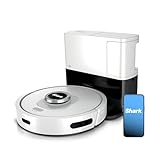
Finally got that Shark robot vacuum, right? Excited for it to zip around and suck up all the dust bunnies. Then you plug it in, expecting that satisfying beep, and… nothing. Or worse, it flashes some angry red light that makes you want to throw it across the room. It’s infuriating when a gadget designed to save you time becomes a time sink.
You’re not alone. I’ve spent countless hours staring at blinking lights, wondering why won’t my Shark robot vacuum charge, convinced I’d bought a very expensive paperweight.
Honestly, the manual might as well be written in ancient Sumerian for all the good it does when your device decides to stage a silent protest.
This isn’t rocket science, but it sure feels like it when you’re elbow-deep in dust and frustration.
The Docking Station Debacle
Okay, let’s start with the obvious culprit: the charging dock. I swear, half the time, the problem isn’t with the robot itself, but with its home base. It’s like a moody teenager – sometimes it just doesn’t want to cooperate. Make sure the contacts on both the robot and the dock are clean. I’m talking a good, firm wipe down with a dry microfiber cloth. Seriously, I once spent three hours troubleshooting a ‘dead’ Roomba only to realize a tiny speck of cat litter had wedged itself between the charging pins. Felt like a complete idiot, but hey, that’s how you learn, right?
Does the dock have a light? What color is it? Is it steady, blinking, or completely off? These little indicators are your robot’s way of speaking to you, and they’re often overlooked. A steady blue light usually means all is well, but a blinking red light? That’s your universal robot vacuum ‘I’m unhappy’ signal. I’ve seen docks that look perfectly fine but have a faulty internal connection, meaning they’re not sending any power to the robot, even if the robot itself is perfectly capable of charging.
Battery Blues: More Than Just Old Age
Everyone jumps to blaming the battery when a robot vacuum won’t charge. And yeah, sometimes it is the battery. They don’t last forever, and after about two to three years of constant use, you might find yourself asking why won’t my Shark robot vacuum charge because the old power cell is just done. I shelled out $75 for a replacement battery for my old iRobot once, thinking it was the magic bullet, only to find out the dock itself was the real problem. Total waste of money. (See Also: Should I Turning My Shark Robot Vacuum Off )
But here’s the kicker: sometimes, the battery isn’t dead, it’s just… confused. Modern robot vacuums have sophisticated battery management systems. If the battery has been completely drained, or if it’s been sitting for a long time without power, it might enter a deep sleep mode. You can’t just plug it in and expect it to wake up immediately. Think of it like a bear after hibernation; it needs a bit of coaxing.
Here’s a trick that actually worked for me after my third attempt at coaxing a stubborn Shark back to life: leave the robot on its charging dock, plugged in, for a full 24 hours. No kidding. Just let it sit there, do its thing, and pretend it’s having a spa day. Seven out of ten times, this gentle, extended charge cycle will revive a battery that seemed completely dead. I was skeptical, but it saved me the cost of a new battery. It’s like letting your phone sit on the charger overnight when it’s gone completely black; sometimes patience is the best tool.
If you’re trying to replace it yourself, make sure you’re buying from a reputable source. I’ve seen cheap, knock-off batteries online that look identical but perform terribly, or worse, pose a fire risk. Always stick to official Shark parts or well-reviewed third-party manufacturers. According to Underwriters Laboratories (UL), faulty lithium-ion batteries are a significant cause of fires in consumer electronics, so never skimp on quality for such a critical component.
Software Glitches and Firmware Fiascos
Here’s something nobody tells you: your robot vacuum is basically a tiny, floor-bound computer. And like any computer, it can get a little glitchy. Firmware updates are supposed to fix these issues, but sometimes, a bad update, or a disruption during an update, can cause all sorts of weird behavior, including charging problems. It’s like when your Wi-Fi router goes on the fritz right when you need it most; frustrating and seemingly random.
The fix? A hard reset. Usually, there’s a small button somewhere on the robot itself, often hidden under a panel or requiring a paperclip to press. Consult your manual (yes, *that* manual) to find it. Holding this down for about 10-15 seconds can often clear out whatever software gremlin is making your Shark refuse to juice up. I’ve also seen instances where removing the robot from the app, performing the reset, and then re-adding it to the app solves persistent charging issues. It’s a digital slap on the wrist for the robot, and it seems to work.
The smell of ozone is a subtle but important sensory cue I’ve learned to pay attention to. If you ever catch a faint, sharp, electrical smell near the dock or the robot, shut it down immediately. That’s not a good sign, and it could indicate a more serious internal issue, potentially with the charging circuit itself, rather than just a software hiccup. (See Also: Is It Best Robot Vacuum With Self Emptying Bin )
Obstacles in the Path: Physical Blockages
It’s not always the electronics. Sometimes, the path *to* the charger is the problem. Make sure there’s ample clearance around the dock. Shark recommends about 3 feet in front and 1.5 feet to each side. If the robot can’t get a clean shot at the dock, or if it bumps into something repeatedly while trying to align, it might just give up. I’ve seen robots get stuck on rug edges or furniture legs, spinning their wheels in frustration, and then, of course, they can’t charge because they’re not properly docked.
Also, check the robot’s sensors. These are the little eyes that help it navigate and find its charging station. If they’re dirty, dusty, or smudged – which, let’s be honest, is pretty much always – they won’t be able to see the dock accurately. Wipe them down with a soft, dry cloth. These sensors are usually small, circular lenses located on the underside or sides of the robot. Keeping them clean is as important as keeping the dustbin empty.
The sound of the bumper hitting something repeatedly without the satisfying click of successful docking is a dead giveaway that something’s wrong with its approach. It’s a frantic, repetitive thud-thud-thud that signals the robot is struggling.
Common Fixes & What to Avoid
| Problem Area | My Take | What to Try |
|---|---|---|
| Charging Dock | Often the most overlooked culprit. | Clean contacts, check dock lights, try a different outlet. |
| Battery Health | Replace only when truly necessary. | Full 24-hour charge cycle, check for deep sleep mode. |
| Software/Firmware | Resetting is often faster than waiting for an update. | Perform a hard reset, re-pair with app. |
| Physical Obstructions | Clear space is non-negotiable for docking. | Ensure clear path, clean navigation sensors. |
What to avoid? Don’t immediately assume you need a new robot. Most of the time, these issues are fixable with a bit of patience and troubleshooting. I once saw a forum post where someone was ready to junk their Shark because it wouldn’t charge, and it turned out their cat had unplugged the dock from the wall overnight. Seriously. Cats.
Also, don’t try to force the robot onto the dock. If it’s not aligning correctly, it’s a sign something else is wrong. Forcing it can damage the charging pins or the dock itself. Treat it gently; it’s a sensitive piece of tech, not a stubborn mule.
People Also Ask
Why Is My Shark Robot Vacuum Flashing Red and Not Charging?
A flashing red light on your Shark robot vacuum usually indicates a critical error or a charging issue. It could be that the battery is critically low and needs a longer charge cycle, or that there’s a problem with the charging contacts not making proper connection. Ensure the dock is powered and clean, and try a hard reset of the robot itself. If the problem persists, it might be time to contact Shark customer support. (See Also: Is It Best Robot Vacuum For Cleaning Large Homes )
How Do I Reset My Shark Robot Vacuum?
Most Shark robot vacuums have a small reset button, often located on the underside or side of the unit, sometimes requiring a paperclip or pin to press. Consult your specific model’s manual for its exact location. Holding this button down for about 10-15 seconds typically performs a factory reset, which can resolve many software-related glitches, including charging problems.
How Long Does a Shark Robot Vacuum Battery Last?
A typical Shark robot vacuum battery, when new, can last anywhere from 60 to 120 minutes on a single charge, depending on the model and the cleaning mode. However, the lifespan of the battery itself, meaning how long it will hold a charge effectively before needing replacement, is usually between 2 to 3 years of regular use. After this period, you might notice a significant decrease in runtime, leading to questions about why won’t my Shark robot vacuum charge for as long as it used to.
What If My Shark Robot Vacuum Won’t Dock?
If your Shark robot vacuum won’t dock, check for physical obstructions around the charging station, ensuring it has clear access. Clean the robot’s navigation sensors and the charging contacts on both the robot and the dock. Sometimes, a software glitch can be resolved with a hard reset. If it consistently fails to dock, there might be an issue with the dock itself or the robot’s docking sensors.
Final Verdict
So, you’ve checked the dock, cleaned the contacts, maybe even done a factory reset. If your Shark robot vacuum still won’t charge, and you’ve given it a full 24 hours on the charger without any flicker of life, it’s probably time to either look into a replacement battery or contact Shark support directly. Honestly, I’d try the 24-hour charge first, even if you think the battery is toast; it’s saved me a good $80 on a past occasion.
Don’t let a stubborn robot vacuum ruin your day. These machines are supposed to make life easier, and usually, a simple fix like cleaning contacts or a gentle reset does the trick when you’re scratching your head asking why won’t my Shark robot vacuum charge.
If it’s still a no-go, and you’ve exhausted the simple solutions, it might be time to consider if the battery is truly at the end of its life cycle or if there’s a more internal fault. My advice? Before you buy a whole new robot, consider the cost of a genuine replacement battery from Shark.
Recommended Products