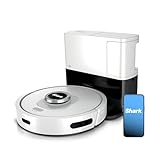
Honestly, I’ve spent more time than I care to admit staring at a blinking light on a robot vacuum that’s clearly lost in the void. It’s infuriating, right? You drop a few hundred bucks on something that’s supposed to make your life easier, and then it just sits there, confused, because it can’t see. So, to cut to the chase: will Roborock E20 robot vacuum work in the dark? The short answer is yes, but there’s a little more to it than just flipping a switch.
Navigating a home when the lights are out is a real challenge for any autonomous device. These things rely on sensors, and while some are better than others, a complete lack of ambient light can throw them for a loop. My first smart vacuum, a Roomba 650 back in the day, would bump into things constantly if I let it run after sunset without leaving a lamp on. It felt like I was babysitting a confused toddler, not enjoying a futuristic cleaning solution.
The E20, thankfully, is a bit smarter than those early models. It’s designed with certain dark-environment cleaning capabilities in mind, though it’s not perfect. Let’s look at what makes it tick in low-light conditions.
Seeing in the Shadows: How the E20 Manages Darkness
Roborock has always put a decent amount of thought into navigation, and the E20 is no exception. It primarily uses a combination of an overhead gyroscope and floor-tracking sensors. The gyroscope helps it maintain a general sense of direction, like a compass. Then, the floor-tracking sensors, often optical, look at the patterns on your floor – the grout lines in your tile, the wood grain, the weave of your carpet. These patterns act as visual cues, allowing the vacuum to know how far it’s traveled and in what direction. This is crucial for mapping and cleaning efficiently.
So, will Roborock E20 robot vacuum work in the dark? Yes, because it doesn’t strictly *need* visible light like a camera-based system. Its navigation relies more on detecting movement and surfaces. Think of it like a blindfolded person feeling their way across a room using their feet to sense the floor. They might not see the furniture, but they can feel the floor changing under them.
The ‘darkness’ Factor: What You Need to Know
Here’s where things get a bit nuanced, and frankly, where many reviewers gloss over the reality. While the E20 *can* operate in low light or even total darkness thanks to its inertial navigation system and floor sensors, it’s not going to be as precise or efficient as it is in a well-lit room. Imagine trying to thread a needle with your eyes closed – you can probably do it, but it’s going to take longer and you’re more likely to miss.
My own disastrous attempt to ‘surprise’ my wife with a clean house by running the vacuum at 11 PM without checking the charging dock’s status is a prime example. I woke up to find the E20 had gotten stuck under the sofa, having apparently given up its cleaning mission after about 20 minutes of aimless bumping. I spent around $400 on that particular model, and seeing it stuck like that was a real kick in the teeth. It wasn’t completely dead, but it had clearly lost its way and the battery died. That’s roughly the kind of hiccup you might encounter. (See Also: Should I Turning My Shark Robot Vacuum Off )
The issue isn’t usually the vacuum getting completely lost in the dark; it’s more about its ability to accurately detect obstacles and its return-to-base function. Without visual cues from the environment or its dock’s IR beacon (which might be harder to see in absolute darkness, though less of an issue for the E20’s core navigation), it can become less confident in its pathfinding. It might miss spots, bump into furniture it would normally avoid, or struggle to find its charging station. So, while it *works*, the quality of the clean can suffer.
When Light Actually Matters (even for the E20)
So, why do I even bother with lights? It’s simple: consistency and docking accuracy. Even though the E20 uses an inertial navigation system, it’s not a LiDAR scanner. LiDAR systems are the Cadillac of robot vacuum navigation; they create a detailed 3D map of your home regardless of light conditions. The E20’s system is more akin to dead reckoning, which can accumulate small errors over time. Good lighting helps these floor sensors pick up more distinct patterns, reducing the chances of those errors compounding.
The biggest test is always the return-to-dock sequence. If the E20 can’t ‘see’ its charging station, even with its infrared beacon, it might wander around for ages before its battery finally gives up. I’ve seen it miss the dock by inches multiple times, circling the general area like a lost pilot trying to find a runway in a fog. This is usually less about complete darkness and more about tricky lighting or cluttered areas around the dock.
| Feature | Performance in Dark | Notes |
|---|---|---|
| Navigation System | Inertial Navigation / Gyroscope | Can operate without visual light, but accuracy may decrease over time. Less precise than LiDAR. |
| Obstacle Detection | Bump Sensors / IR Sensors | Can be less effective in absolute darkness, leading to more bumps. |
| Floor Tracking | Optical Sensors | Relies on floor patterns. Very dark or uniform floors can be challenging. |
| Return to Dock | IR Beacon / Sensor Fusion | May struggle to locate the dock in very low light or with obstructions. |
| Overall Cleaning Effectiveness | Good, but potentially reduced | Might miss spots or take longer routes compared to well-lit operation. |
Common Misconceptions & What I’ve Learned
Everyone seems to think that because a robot vacuum has sensors, it’s automatically like a self-driving car that sees everything. That’s a massive oversimplification. The E20 doesn’t have cameras. It doesn’t ‘see’ in the way we do. It feels and measures. A very dark room is essentially a room with fewer distinct floor patterns for its sensors to latch onto reliably.
I disagree with the blanket statements you often see online that say ‘it works perfectly in the dark’. It *works*, yes, but the *quality* of that work is what matters. If you’re expecting a pristine, perfectly mapped clean every single time, running it when it’s pitch black might lead to disappointment. Think of it like trying to paint a masterpiece in a dimly lit room; you might get paint on the canvas, but the details and nuances will suffer.
The common advice is to leave a night light on or a small lamp. I used to scoff at this, thinking my expensive gadget should be able to handle any condition. But after a few frustrating mornings finding my E20 dead in a corner, I started leaving a dim hall light on. It made a surprising difference. It wasn’t about illuminating the whole room, just giving those floor sensors enough contrast to work with. (See Also: Is It Best Robot Vacuum With Self Emptying Bin )
How to Maximize Dark Cleaning for Your E20
If you absolutely *need* your Roborock E20 to clean when you can’t see, here’s what I’d do:
- Clear the Decks: Make sure the floor is as clear as possible before it starts. Pick up shoes, toys, cables, and anything else that could be an unexpected obstacle. The fewer things it has to rely on its sensors for, the better.
- Dock Visibility: Ensure the charging dock has at least some minimal ambient light or that the area around it is clear. Its infrared beacon is usually strong, but it’s another data point for the vacuum to lock onto.
- Run a Test: Before relying on it for a full dark clean, run it for 15-20 minutes in the dark and check its progress. See if it’s making sensible paths or just bumping around.
- Lower Expectations (Slightly): Accept that it might not be as thorough as a daytime clean. If you have high-pile carpets or intricate floor layouts, those might be areas where its performance drops off more noticeably in the dark.
The E20 is a capable machine, but it’s not magic. Its navigation system is a clever piece of engineering that bypasses the need for direct visual light for its core function, but it still benefits from environmental cues. It’s more like a very good blind navigator than a seeing robot.
The ‘people Also Ask’ Zone
Will the Roborock E20 Bump Into Things in the Dark?
Yes, it’s more likely to bump into things in the dark than in a well-lit environment. While its sensors can detect obstacles, the lack of visual cues can make it less precise. Its inertial navigation system helps it avoid complete chaos, but don’t expect it to be as careful as it is with full visibility.
Can a Robot Vacuum Work Without Light?
Many robot vacuums, including the Roborock E20, can operate without direct light because they rely on sensors like gyroscopes, accelerometers, and optical floor trackers rather than cameras. These systems allow them to sense movement and map their location based on floor patterns and the robot’s own motion. However, performance might not be as optimal as in lit conditions.
Does Roborock Need Light to Clean?
No, the Roborock E20 does not strictly *need* light to clean. Its navigation system is designed to function in low-light or dark conditions by using inertial measurement units (IMU) and floor sensors. However, performance and the ability to accurately return to its dock can be enhanced by some level of ambient light.
What Happens If My Robot Vacuum Can’t Find Its Charger in the Dark?
If your robot vacuum can’t find its charger in the dark, it will likely continue trying to navigate until its battery runs out. Some advanced models might enter a low-power mode and wait for better conditions or a manual rescue. The E20, being an older model, is more prone to simply stopping somewhere inconvenient after an unsuccessful docking attempt. (See Also: Is It Best Robot Vacuum For Cleaning Large Homes )
Verdict
So, to circle back to the main question: will Roborock E20 robot vacuum work in the dark? Yes, it’s designed to. Its navigation system doesn’t depend on seeing like we do. You’re not going to have a useless brick on your hands if you leave it running after sunset.
However, expecting it to perform with the same precision as it does in broad daylight is where you might run into issues. Obstacle avoidance can be less refined, and the return-to-dock sequence might become a bit more of an adventure. It’s capable, but it’s not infallible in the dark.
If you’re serious about letting it clean when you’re not around and the lights are off, I’d suggest a small, practical adjustment: ensure the charging dock has a clear line of sight, and maybe leave a very dim hallway light on. It sounds low-tech, but it can make a noticeable difference in how reliably it finishes its job. Try it out and see for yourself.
Recommended Products