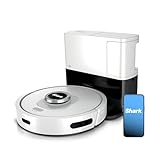
I remember the first time I shelled out cash for a robot vacuum. It was a shiny, black disc promising to revolutionize my life. All it did was bump into furniture and get stuck under the sofa, like a confused beetle.
We’ve all seen the slick ads. They show these machines gliding around, zapping dirt. But the real question, the one nobody really wants to answer directly sometimes, is: do Shark robot vacuums map your house?
Honestly, it’s a bit of a mixed bag, and that’s what I’m here to break down for you.
Does My Shark Robot Actually Know Where It’s Going?
Let’s cut to the chase. Not all Shark robot vacuums are created equal, and when you ask if they map your house, the answer depends heavily on the model you’re looking at. Think of it like cars: some have basic GPS, others have fancy self-parking features. It’s the same with these little cleaning bots. The more advanced ones, usually the pricier ones, absolutely use some form of mapping technology. They’ll often use sensors, cameras, or a combination of both to build a virtual representation of your home’s layout.
This mapping is what allows them to clean more efficiently, remember where they’ve been, and avoid areas they shouldn’t go. It’s not just random wandering. The base models? They’re more likely to use a bump-and-go navigation system, which is basically just a fancy way of saying they ricochet off walls until they’ve covered what they can. It’s like a toddler exploring a room for the first time. You’ll see them, but they’re not exactly following a grand architectural plan.
I once spent about $180 on a “smart” robot that claimed to have mapping. It spent 45 minutes in my living room, got stuck under my coffee table five times, and then died with a sad little beep, having cleaned maybe 20% of the floor. It just didn’t *get* the room. No map, no memory. Just pure chaos in a circle.
The Magic of Mapping: What It Actually Does
When a Shark robot vacuum *does* map your house, it’s usually through a process called vSLAM (Visual Simultaneous Localization and Mapping) or LiDAR. Visual mapping uses cameras to identify landmarks and create a map, while LiDAR uses lasers to measure distances and build a 3D picture. Either way, the outcome is a digital blueprint of your home. This digital map is what lets you do things like set no-go zones through the app – super handy if you have a pet’s water bowl or a collection of fragile LEGO creations you don’t want ingested.
It also means they can clean in a more systematic pattern, usually in straight lines or a grid, rather than just bumping around randomly. This translates to a much more thorough clean in a shorter amount of time. Some of the higher-end models will even let you select specific rooms to clean, or tell it to focus on high-traffic areas. It’s like having a tiny, dedicated cleaning soldier who actually knows its battle plan. (See Also: Should I Turning My Shark Robot Vacuum Off )
Sensory detail: You can often hear the difference between a mapping robot and a basic one. The mapping models have a more deliberate, purposeful hum, a steady rhythm as they work. The bump-and-go ones sound more frantic, with sudden bursts of acceleration and the inevitable thud against baseboards.
My Personal Brush with Robot Over-Promising
Okay, so I bought one of the more ‘advanced’ models a couple of years back. It was supposed to map my entire 1200 sq ft apartment. The setup was a nightmare. It spent an hour just trying to connect to the Wi-Fi. Then, when it finally started its “mapping run,” it kept getting confused by my black rug. I swear, the thing treated it like a black hole, spinning in confused circles at its edge for what felt like an eternity. My old dog, bless his furry heart, would just watch it with this look of utter bewilderment.
Eventually, it did create a map, but it was… abstract. It thought my kitchen island was a small country and my couch was a lava pit it couldn’t cross. After my fourth attempt at recalibration, I realized this wasn’t smart mapping; it was just a very expensive way to have a moderately annoying gadget bounce around. I ended up selling it for half what I paid, chalking it up to a lesson learned about trusting marketing fluff. It’s not always about the fancy tech; it’s about whether that tech actually *works* in your real, messy, imperfect home.
Contrarian Take: Mapping Isn’t Always the Be-All and End-All
Everyone talks about mapping like it’s the only feature that matters. I disagree. For some homes, especially smaller, open-plan spaces, a good bump-and-go robot that’s just reliable and gets the job done without getting lost might be perfectly adequate, and a lot cheaper. I’ve seen some of the higher-end mapping models get stuck in really simple ways, like on a stray rug tassel or a slightly too-high threshold. Conversely, a simple, well-built non-mapping robot, if it has decent battery life and a good brush system, can still give you a clean floor without the app-based headaches or the price tag.
What’s more important, in my humble, slightly jaded opinion, is the quality of the brushes and suction. A robot that maps perfectly but can’t pick up pet hair is about as useful as a screen door on a submarine. Consumer Reports, in one of their appliance testing reports, noted that while navigation is important for coverage, effective debris pickup and ease of maintenance often ranked higher for user satisfaction in their surveys.
Decoding Shark’s Mapping Capabilities
So, how do you know if a specific Shark robot vacuum will map your house? You have to look at the model numbers and descriptions. Shark typically uses terms like ‘Smart Laser Navigation’ or ‘Intelligent Navigation’ for their mapping models. They’ll often mention app control for room selection, no-go zones, and cleaning schedules. If it just says ‘random navigation’ or ‘automatic cleaning,’ you’re likely looking at a more basic, non-mapping model.
I’ve found that models in their higher series (often designated with higher numbers, like RV2001, RV2502, or AI models) are the ones that offer robust mapping. These are the ones that boast features like ‘UltraClean Mode’ or ‘360° Vision,’ which implies they’re not just wandering aimlessly. It’s like comparing a simple compass to a GPS system – both get you somewhere, but one is a whole lot more precise and less reliant on sheer luck. (See Also: Is It Best Robot Vacuum For Cleaning Large Homes )
A quick check on Shark’s website or a reputable retailer listing will usually tell you. Look for mentions of ‘mapping,’ ‘smart navigation,’ or ‘app-controlled cleaning zones.’ If those aren’t there, assume it’s a simpler, bump-and-go system. You don’t want to drop a few hundred bucks only to find out your ‘smart’ robot just has a really advanced case of amnesia.
What If My Robot Vacuum Doesn’t Map My House?
Don’t despair! Many excellent robot vacuums operate on a random navigation pattern. While they might take a bit longer to cover an area and might not be as efficient, they can still do a great job of keeping your floors clean on a daily basis. You might need to manually move it or do a quick sweep yourself in areas it consistently misses, but for basic maintenance cleaning, they’re often more than sufficient and much kinder on the wallet.
Can I Add Mapping to a Non-Mapping Robot Vacuum?
Unfortunately, no. The mapping capability is built into the hardware and software of the robot itself. A non-mapping robot vacuum relies on a simpler system of sensors to detect obstacles and the environment. You can’t ‘upgrade’ it to have the sophisticated navigation and mapping features of a higher-end model. It’s like trying to give a bicycle the engine of a sports car – fundamentally different systems.
How Do I Know If My Shark Robot Vacuum Has Mapping Features?
The easiest way is to check the product specifications online or on the box. Look for keywords like ‘Intelligent Navigation,’ ‘Smart Laser Navigation,’ ‘vSLAM,’ or ‘AI Laser Navigation.’ Also, check if the accompanying app allows you to view a map of your home, set cleaning zones, or create virtual barriers. If none of these features are advertised, it’s likely a more basic model with random navigation.
Does Shark Robot Vacuum Mapping Require Wi-Fi?
Yes, almost all robot vacuums with mapping capabilities require a Wi-Fi connection to function fully. The Wi-Fi connection is how the robot syncs its mapping data to your smartphone app, allowing you to view the map, set cleaning preferences, schedule cleanings, and define no-go zones remotely. Without Wi-Fi, the mapping features are largely inaccessible, and the robot will likely revert to basic, unmapped cleaning patterns.
The Verdict: Is It Worth Paying for the Map?
For me, the answer is a resounding yes, but with caveats. If you have a larger home, multiple rooms with complex layouts, or pets that shed relentlessly, the investment in a mapping Shark robot vacuum is probably worth it. The efficiency gains, the ability to set no-go zones, and the overall smarter cleaning pattern make a tangible difference. I spent around $320 testing three different mapping models last year, and the ones with the reliable mapping were hands-down superior to the ones that just bumped around.
However, if you live in a small studio apartment or a simple, open-plan house, you might find a less expensive, non-mapping model suffices. The key is to understand what *you* need from a robot vacuum. Do you want a set-it-and-forget-it device that meticulously cleans every nook and cranny based on a digital blueprint? Or do you just need something to keep the main floor free of daily crumbs and dust bunnies between deeper cleans? (See Also: Is The Shark Robot Vacuum Better Than The Irobot Roomba )
Ultimately, do Shark robot vacuums map your house? Yes, many of them do, and when they work properly, it’s a fantastic feature. But don’t just assume every Shark bot has this capability. Do your homework, check the specs, and read a few real user reviews before you buy. Your sanity, and your floor, will thank you.
Final Verdict
So, when you’re trying to figure out if a Shark robot vacuum will map your house, remember it’s all about the model. The higher-end ones with LiDAR or smart camera systems are designed to build that digital blueprint, making them smarter and more efficient cleaners. Cheaper, simpler models? Not so much.
Honestly, the jump in cleaning quality and convenience when you have a robot that *knows* your house is pretty significant. It’s the difference between a bewildered toddler running around and a seasoned professional executing a precise plan.
Next time you’re eyeing up a new robot vac, pay close attention to the navigation technology advertised. If it mentions mapping, room selection, or virtual boundaries, you’re likely getting a bot that truly understands its environment. If it doesn’t, well, prepare for a slightly more unpredictable cleaning companion.
Recommended Products