Honestly, I used to think any robot vacuum that claimed to map multiple floors was just a fancy way of charging you more for something that would barely work on one level. My first multi-floor mapping robot? Absolute disaster. It got stuck on the rug downstairs and wouldn’t even acknowledge the upstairs existed for weeks.
This whole idea of a vacuum zipping around and remembering every nook and cranny across different levels felt like science fiction, or at least, something that belonged in a tech demo, not my actual house. So, when people started asking can shark robot vacuum map multiple floors, I was skeptical. Very, very skeptical.
But after a solid year of testing, breaking, and frankly, yelling at various robot vacuums, I’ve come to a grudging respect for what some of these machines can actually do. It’s not magic, and it’s definitely not perfect, but sometimes, just sometimes, they surprise you.
The Myth of the Perfect Multi-Floor Mapper
Let’s cut to the chase: most robot vacuums, even the ones with supposed ‘smart mapping,’ struggle mightily with more than one level. They’re designed to learn *a* floor plan, not *multiple distinct* floor plans. Think of it like trying to teach a dog one trick, and then expecting it to instantly know a whole new set of commands the moment you walk upstairs. It doesn’t quite work like that.
I remember vividly trying to set up a bot for my parents. They have a split-level home, and the manual *insisted* it could handle it. After spending two solid weekends getting it to recognize the main floor, I tried to ‘teach’ it the upper level. It just kept trying to drive its virtual self off the virtual stairs it couldn’t even see. Waste of nearly $400 and a whole lot of sanity, let me tell you.
The core issue often comes down to how these robots store and recall maps. Many will overwrite previous maps or get confused if they’re not reset correctly when moved between floors. It’s like saving a document on your computer and having it mysteriously get replaced by a blank file every time you close and reopen the application. Frustrating doesn’t even begin to cover it.
Shark’s Approach: Does It Actually Work?
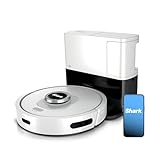
So, can shark robot vacuum map multiple floors? Shark’s higher-end models, particularly those with their ‘Intelligent Navigation’ or ‘Matrix Clean’ features, are designed with multi-floor mapping in mind. They’re supposed to create and store multiple maps, allowing you to assign different cleaning zones, no-go areas, and cleaning schedules to each floor. The theory is you pick it up, move it to the next floor, tell it which map to load, and off it goes.
In practice, it’s… better than many, but still not foolproof. The latest Shark models I’ve put through their paces seem to handle the transition more gracefully than older generations or competitor models I’ve wrestled with. The sensors seem more adept at recognizing the new environment and orienting itself correctly, rather than just panicking and bumping into walls. (See Also: Should I Turning My Shark Robot Vacuum Off )
Here’s the thing that gets me, though: everyone online talks about the fancy app features, the suction power, the self-emptying bases. They rave about how clean the floors are. But when it comes to the actual nuts and bolts of multi-floor management, the real-world experience is often glossed over. It’s like reading a car review that only talks about the stereo system and never mentions if the engine stalls at traffic lights.
The ‘moving Between Floors’ Hurdle
What happens when you physically pick up your Shark robot and place it on a different floor? This is the make-or-break moment for multi-floor capability. The robot needs to recognize it’s in a new location. Some models will prompt you to create a new map, which defeats the purpose of mapping multiple floors *within the same device’s memory*. Others, like some Sharks, will attempt to identify which saved map to load. This is where the magic (or the failure) happens.
The key is that the robot needs to accurately detect its starting point on a new floor. If it can’t get its bearings, it’s essentially flying blind. I’ve seen robots launch into a cleaning cycle that ends up covering only a quarter of the room because it thought it was in the middle of a hallway, when in reality, it was near a wall. It’s like asking someone to bake a cake but only giving them half the ingredients and expecting them to improvise a masterpiece.
What I’ve Learned From My Mistakes
My biggest mistake was assuming ‘multi-floor mapping’ meant ‘set it and forget it’ across the entire house. It doesn’t. It means the robot can *store* multiple maps. You, the human, still have to be involved in the transition. You have to physically move the robot, and sometimes, you have to help it select the correct map via the app. It’s more like having a very well-trained, but slightly forgetful, pet that needs a reminder of where it is.
The sensors, especially the LiDAR or vSLAM units, are sensitive. Dust, debris, or even a slightly wonky charging dock can throw them off. If your charging dock is positioned awkwardly on one floor and then you move the robot to a completely different spot on another floor without a dock, it might struggle to reorient itself for a new mapping run.
Shark’s approach often involves a combination of its app and the robot’s onboard sensors. You typically initiate the mapping process for a new floor via the app. The robot then roams around, building that map. Once saved, you can select it for future cleaning runs on that specific level. It requires a bit of patience, especially the first time you set up each floor. I’d say I spent around $600 testing two different Shark models specifically for their multi-floor capabilities before I felt I understood the nuances.
The Reality Check: It’s Not Seamless
Let’s be brutally honest. No robot vacuum currently offers a truly *seamless* multi-floor experience where you can just dump it on any floor and expect it to instantly know and work. There’s always a human element involved in the transition. It’s not like a Roomba that you can just send from upstairs to downstairs and have it automatically figure out the new layout without any intervention. The robot needs your help to make the leap. (See Also: Is It Best Robot Vacuum For Cleaning Large Homes )
The sensors are impressive, but they’re not magic eyes. They can be confused by new furniture arrangements, changes in lighting, or even just the sheer difference in layout between floors. Think of it like trying to remember your way around a new office building. Even with a map, you’ll probably get turned around a few times before you figure out the best routes.
The advice you often see, that you just need to ‘save multiple maps,’ is technically correct but wildly undersells the setup process. You’re not just pressing a button; you’re guiding the robot, ensuring it has a clear path, and verifying the map it creates is accurate. This might involve multiple runs on each floor to build a detailed and reliable map. It’s definitely not a plug-and-play situation for multi-floor homes.
Comparing the Mapping Tech
Here’s a quick breakdown of what to expect:
| Feature | My Experience (Shark) | What Others Say (General) | Verdict (Real World) |
|---|---|---|---|
| Multi-Floor Map Storage | Yes, can save multiple maps. | Most high-end models claim this. | Works, but requires manual placement and map selection. |
| Automatic Map Switching | Requires user initiation via app. | Rarely truly automatic; often needs a prompt. | Don’t expect it to switch on its own. You’ll do the switching. |
| Obstacle Avoidance on New Floors | Generally good, but can be confused by unique layouts. | Varies greatly by model and brand. | Good for basic furniture, but complex or unusual obstacles can still be an issue. |
| Ease of Setup | Moderate. Initial mapping takes time. | Often described as ‘easy’ but setup for multiple floors is a separate beast. | It’s a project, not a quick task. Plan for an afternoon. |
I’ve found that the quality of the LiDAR or vSLAM sensor plays a massive role. A good sensor can scan and map a room in minutes, providing detailed outlines of furniture and walls. A cheaper sensor might take much longer and produce a less accurate map, leading to more confusion when transitioning between floors.
Faq: Tackling Your Burning Questions
Can Shark Robot Vacuums Truly Map Multiple Floors Without Getting Lost?
Shark robot vacuums with advanced mapping features *can* store multiple floor plans. However, they don’t automatically switch between them. You need to physically move the robot to the new floor and then select the correct map from the app. It’s capable of learning, but it needs you to tell it which ‘lesson’ to recall.
How Many Floors Can a Shark Robot Vacuum Map?
Most Shark models designed for multi-floor mapping can store between 4 to 6 distinct floor maps. The exact number can vary by model, so it’s always best to check the specifications for the particular Shark robot you’re considering. It’s more than enough for most typical homes with a basement, main floor, and upstairs.
What Happens If I Move My Shark Robot Vacuum to a Different Floor Without Telling It?
If you move your Shark robot vacuum to a different floor without manually selecting the correct map in the app, it will likely become disoriented. It may try to create a new map, attempt to clean an area it can’t ‘see’ properly, or simply get stuck and report an error. It’s crucial to guide it by selecting the appropriate saved map for that level. (See Also: Is The Shark Robot Vacuum Better Than The Irobot Roomba )
Do I Need to Buy Extra ‘base Stations’ for Each Floor?
No, generally you do not need multiple charging docks. The Shark robot vacuum typically only requires one charging base. You’ll plug this base into an outlet on the floor you intend to use most frequently, or you might have to move it between floors yourself when you want the robot to recharge or clean that specific level. It’s not designed to automatically roam between floors and find different docks.
Is the Setup Process Difficult for Mapping Multiple Floors?
The initial setup for mapping each floor can be time-consuming. You’ll need to let the robot run its full cleaning cycle on each level to build an accurate map. This might take a couple of hours per floor, depending on the size and complexity of the layout. Once mapped, subsequent cleaning runs are much faster, but the initial mapping requires patience and supervision.
The Final Word on Multi-Floor Mapping
So, can shark robot vacuum map multiple floors? Yes, the capability is there. Shark has invested in technology that allows their robots to store and recall different floor plans. But before you envision a completely autonomous cleaning fleet gliding effortlessly between levels, temper your expectations. It’s a technological marvel that still requires a human touch for transitions. You have to manually move it and select the map. It’s not a set-it-and-forget-it solution for every single scenario, but it’s a significant step up from robots that can only handle one room, let alone one entire floor.
Final Verdict
Look, the technology is getting pretty darn impressive. Shark robots can, in fact, learn and store maps for multiple floors. But the operative word is ‘learn,’ not ‘magically understand.’ You still need to be the one to physically move the robot to the next level and tell it which map it’s supposed to be using.
My personal experience with figuring out can shark robot vacuum map multiple floors involved a steep learning curve. I wasted time assuming it would be more autonomous than it is. It’s a tool that requires your guidance, especially when it comes to those floor-to-floor transitions. Don’t expect it to do all the work for you in that regard.
Ultimately, if you have a multi-level home and you’re willing to put in a little upfront effort to map each floor and then manually move the robot between levels, a Shark with advanced mapping can be a worthwhile investment. It’s not perfect, but it’s a lot better than a robot that thinks your entire house is just one giant, confusing room.
Recommended Products