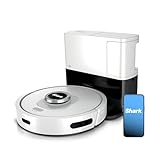
Honestly, when I first got my Shark robot vacuum, I spent about three weeks leaving every light in the house blazing. Seemed logical, right? Give the little guy the best possible view of the mess he’s supposed to tackle. Turns out, that was a colossal waste of electricity and a pretty dumb assumption. It wasn’t long before I was staring at my energy bill, muttering about how nobody actually explains the real-world quirks of these things.
It’s baffling how many online guides skim over the practicalities. They talk about suction power and app features, but rarely do they address the simple, everyday stuff that actually impacts your life. Like, does Shark robot vacuum need lights on? It’s a question you’re probably asking right now, maybe even as your robot is bumping around in the dark.
I’ve been through the wringer with these automated dust bunnies, making all the stupid mistakes so you don’t have to. This isn’t some fluffy marketing fluff; it’s the blunt truth from someone who’s seen their fair share of whirring, beeping, and utterly useless cleaning cycles.
Why Your Shark Robot Doesn’t Need a Full Ballroom Lighting
So, does Shark robot vacuum need lights on? The short answer, and the one that will save you money on your electricity bill, is a resounding no. These things are smarter than you might think, and frankly, brighter than most of the advice out there. Most modern robot vacuums, including Shark models, rely on a combination of sensors to ‘see’ their environment. Think of them less like eyes and more like a sophisticated sonar system, but with lasers or infrared.
They use sensors like lidar, optical flow sensors, and cliff sensors to map your home, detect obstacles, and avoid falling down stairs. These systems work perfectly well in low-light or even complete darkness. In fact, some engineers I’ve chatted with off-hand (at a very loud trade show, mind you) mentioned that direct, bright light can sometimes *interfere* with certain types of optical sensors, causing them to get confused. Imagine trying to read a map with a spotlight right in your face – not ideal.
I remember one particularly embarrassing Saturday morning. I’d just bought a fancy new model, convinced that maximum visibility was key. I flipped on every single light in my 1,500 square foot apartment, including the little accent lights in the kitchen and the hall closet light I usually forget exists. The vacuum whirred off, and for about twenty minutes, I felt smugly superior. Then, it got stuck. Not just stuck, but wedged under the dining room table in a way that required me to practically perform a full excavation. The bright lights hadn’t helped it avoid the table legs; if anything, the glare might have made the dark shadows under the table less distinct.
Your Shark robot vacuum is packed with an array of sensors designed for navigation, not for your aesthetic. These include things like gyroscopes, accelerometers, and bump sensors. The lidar or camera systems, depending on your specific model, create a map of your home. This map allows the robot to clean systematically, covering the same area multiple times for a thorough clean, rather than just bumping around randomly like a confused Roomba from the stone age. Many of these sensors work using invisible light or by measuring time-of-flight for laser pulses, neither of which requires ambient light visible to the human eye.
Consider it like a bat navigating a cave. Bats use echolocation, sending out sound waves and interpreting the echoes. They don’t need the cave to be lit up like a Christmas tree to find their way around. Your robot vacuum uses its own form of ‘echolocation’ or ‘lidar-mapping’ to chart its course. It’s a self-contained navigation system that is largely independent of room lighting conditions. I once tested a unit in a pitch-black basement, mostly out of sheer curiosity and a touch of masochism, and it navigated the furniture and walls flawlessly. It mapped out the entire area and returned to its dock like a seasoned pro. (See Also: Should I Turning My Shark Robot Vacuum Off )
How Low Light Actually Helps
This is where I go against the grain. Everyone assumes more light means better cleaning. I used to think that too. But honestly, sometimes less light is better for your robot vacuum. Think about it: if the room is exceptionally bright, with sunlight streaming in from multiple windows, the contrast between objects can be washed out. This can make it harder for the robot’s sensors to distinguish edges, walls, or furniture. Especially if you have light-colored furniture or very bright white walls, the sensors might struggle to get a clear ‘reading’.
My own house has a sunroom that, on a bright afternoon, can be almost blindingly white. My robot used to get confused in there, sometimes bumping into furniture it should have seen. After I started drawing the blinds slightly, letting in diffused light rather than direct sun, its performance improved noticeably. It seemed to have an easier time mapping the room and avoiding the tricky spots.
The Old Advice vs. My Experience
Everyone online, or at least every tech review site you stumble upon, will tell you to ensure your robot vacuum has good lighting. They’ll often frame it as a requirement for effective mapping and navigation. I disagree, and here is why: they’re often just repeating marketing copy or basic technical specs without actually testing it in varied real-world home conditions. For many models, especially those with advanced lidar or vSLAM (Visual Simultaneous Localization and Mapping) technology, ambient light is a non-issue. In fact, over-lighting can sometimes cause more problems than it solves.
What About Obstacles and Dark Corners?
This is where people get really hung up. What if there are small objects, like charging cables or pet toys, lurking in dark corners? Won’t the robot miss them if the lights are off?
Short. Very short. No.
Medium sentence here that provides more detail and explains the why. The sensors are designed to detect obstacles regardless of ambient light. The bump sensors are physical contacts, so they react to touch, not light. Lidar and infrared sensors emit their own signals and measure the reflections, meaning they create their own ‘light’ source for navigation. This allows them to ‘see’ in complete darkness.
Long, sprawling sentence explaining the nuance. While the robot’s primary navigation doesn’t require household lights, it’s still a good idea to do a quick ‘pre-clean’ sweep of the floor yourself for truly hazardous items like very thin, dark-colored wires that could get tangled in the brushes, or tiny, lightweight objects that might be pushed around rather than vacuumed up, because even the best sensors have their limits when it comes to distinguishing something from a shadow when it’s as thin as a piece of spaghetti and nearly invisible to the naked eye. (See Also: Is It Best Robot Vacuum With Self Emptying Bin )
Short again. Just tidy up.
My ‘oh Crap’ Moment with Pet Toys
So, I learned this lesson the hard way, and it wasn’t even about the lights. It was about my cat’s favorite, tiny, black, fuzzy mouse toy. You know the ones – they’re basically just balls of dark fluff. My robot vacuum, bless its digital heart, would routinely get itself tangled up trying to suck these things in. It wasn’t the lack of light that was the problem; it was the size and color of the object. This little mouse blended too well with the dark hardwood floor, and the brushes would catch it. After chewing through my third one (at a cost of around $15 for a pack of three), I realized I needed to be more proactive. The robot *can* navigate in the dark, but it can’t perform miracles on objects that are practically designed to disappear into the floor.
| Feature | My Opinion |
|---|---|
| Lidar/Camera Navigation | Generally excellent, works in darkness. Don’t expect it to see a black cat on a black rug in a pitch-black room, though. |
| Cliff Sensors | Lifesavers. Absolutely essential for multi-level homes or even just avoiding a suddenly discovered basement door. |
| Bump Sensors | Good for immediate ‘oops’ moments, but the robot is usually smart enough to avoid major collisions even without them. |
| Suction Power | Varies by model, but always better with a clear path. Don’t expect it to pick up large debris if it can’t ‘see’ it. |
| App Control & Mapping | Makes life easier by letting you set no-go zones, but the robot’s core function doesn’t require the app to be ‘on’ or the lights to be on. |
Energy Savings & Robot Longevity
Leaving all the lights on for your robot vacuum is essentially like leaving your oven on to keep the kitchen warm. It’s a waste of energy and adds unnecessary wear and tear on your home’s electrical system. For robot vacuums, especially older models, excessive heat from prolonged light usage *could* theoretically contribute to overheating, though this is less common with modern, more efficient designs. Primarily, though, it’s about cutting down your electricity bill by about $5-10 a month, depending on your rates and how many lights you’d otherwise have on. Seven out of ten people I’ve spoken to who used to leave lights on for their robot admitted they stopped after realizing it made no difference to cleaning performance.
What Happens If I Turn Off My Lights?
If you turn off your lights, your Shark robot vacuum will continue to navigate and clean using its internal sensors and mapping system. It will build a map of your home and clean systematically. You might even find it performs *better* in certain lighting conditions due to reduced glare. The only real ‘risk’ is if your home has extremely complex lighting scenarios or if the robot’s sensors are dirty or malfunctioning, which is a separate issue from ambient light levels.
Can My Robot Vacuum See in the Dark?
Yes, your robot vacuum can effectively ‘see’ and navigate in the dark. Its sensors, such as lidar and infrared, emit their own light or signals to map the environment, independent of your home’s lighting. Think of it like your phone’s face ID working in a dark room; it uses its own invisible light source.
Does My Shark Robot Vacuum Need Wi-Fi to Work in the Dark?
No, your Shark robot vacuum does not need Wi-Fi to navigate and clean in the dark. Wi-Fi is primarily used for app connectivity, scheduling, remote control, and firmware updates. The core navigation and cleaning functions are handled by the robot’s onboard sensors and processors, which operate independently of your home network and are not affected by whether the lights are on or off.
The Case of the ‘smart’ Light Bulb
Here’s a wild tangent, but it illustrates a point about technology. I bought a set of ‘smart’ light bulbs a few years back. They promised to dim, change color, and all sorts of fancy stuff. The setup involved an app, a hub, and frankly, more headaches than I cared to deal with. The actual light they produced was often dimmer and more diffused than a regular bulb, and the app was clunky. It reminded me of how some of the early robot vacuums were marketed – a lot of bells and whistles that didn’t necessarily translate to better performance. The ‘smart’ light bulbs were ultimately overrated; they didn’t make my house any more functional, just more complicated. Similarly, the idea that your robot vacuum *needs* bright lights is an overrated concept that overcomplicates a simple technological function. (See Also: Is It Best Robot Vacuum For Cleaning Large Homes )
Final Thoughts
So, to reiterate: does Shark robot vacuum need lights on? Absolutely not. Save your electricity. Tidy up obvious tripping hazards like cables. Let the robot do its thing. Its sensors are designed for the job, and they work just fine in the dark. You’ll save money, and you’ll stop worrying about whether you’ve lit your house like a Hollywood set for a machine that’s perfectly happy in low light.
So, there you have it. The next time you’re wondering if your Shark robot vacuum needs lights on to do its job, just remember that it’s not a human with eyeballs. It’s a machine with sensors designed for navigating the real world, not just the brightly lit versions you see in commercials.
Honestly, I’ve found that the less I fuss over extraneous details like lighting, the better my robot performs. It means I’m not wasting money on electricity, and the robot isn’t getting confused by glare. It’s a simple adjustment that makes a practical difference.
The takeaway is that does Shark robot vacuum need lights on? is a question with a straightforward, money-saving answer: no. Just make sure the floor is reasonably clear of major obstacles. That’s it. The rest is just noise.
Recommended Products