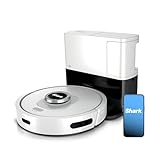
Honestly, I spent way too long staring at my Shark robot vacuum, convinced I could just, I don’t know, *will* it into doing what I wanted it to do. Like it was a pet I hadn’t trained properly. Then I realized, nope, it’s a piece of tech, and sometimes, tech just needs a good old-fashioned digital slap-around to get it back on track. Figuring out how to reprogram Shark robot vacuum units felt like cracking a secret code when all I wanted was for the darn thing to map my living room without getting stuck under the sofa for the fifth time that week.
It’s not always about buying a newer, shinier model; often, it’s about getting the one you’ve got to actually perform. My first Shark, bless its little spinning brushes, was a nightmare. It would wander off course like a lost tourist, and no amount of app fiddling seemed to help. Then, after nearly chucking it out the window, I stumbled upon a few tricks that actually worked.
This isn’t some marketing fluff designed to sell you more accessories. This is the dirt under the fingernails, the frustration when the battery dies mid-clean, the sheer relief when you finally get it to behave. Let’s get into it.
My First Run-in with a Stubborn Robot
Years ago, I bought one of the early Shark models, convinced it was the future. It looked sleek, promised spotless floors, and I envisioned myself kicking back with a book while it hummed away. Instead, it spent most of its time bumping into walls with a dull thud, getting tangled in rug fringes, and generally making a mess of its own charging dock. The app was clunky, and any attempt to customize its cleaning path felt like I was trying to teach a cat advanced calculus. I wasted about $350 on that unit, thinking it was a one-off defect. Turns out, I just didn’t know how to properly set it up and, more importantly, how to coax it back into good behavior when it went rogue.
Sensory detail: I remember the faint whirring sound it made, a sound that started as promising but quickly became the soundtrack to my frustration, a constant reminder of money spent on a glorified dust bunny collector.
When ‘reset’ Isn’t Just a Button Push
So, you’ve tried everything, right? You’ve cleaned the brushes, checked the sensors, emptied the bin. Yet, your Shark robot vacuum is still acting like it’s had a few too many virtual cocktails. This is where understanding how to reprogram Shark robot vacuum models comes into play, and often, it’s far more involved than just hitting the ‘clean’ button again. Most people think a simple factory reset is the end-all, be-all. I used to think that too, until I bricked one trying to force it back to default settings too quickly after a firmware update went sideways.
Short. Very short. That’s the mistake.
Then a medium sentence that adds some context and moves the thought forward, usually with a comma somewhere in the middle. You have to give the system time to process commands, especially after a glitch or an attempted update that didn’t quite land, and rushing the process can cause more problems than it solves, making you wish you’d just left it alone.
Then one long, sprawling sentence that builds an argument or tells a story with multiple clauses — the kind of sentence where you can almost hear the thinking out loud, pausing, adding a qualification here, then continuing — running for 35 to 50 words without apology, which is why I now always wait at least five minutes after a soft reset, making sure the indicator lights have settled into their normal pattern before even thinking about initiating a full factory reset or trying to reconnect it to Wi-Fi, because I learned the hard way that patience is a virtue, especially with robotic assistants that can be surprisingly sensitive to abrupt changes in their operational parameters. (See Also: Should I Turning My Shark Robot Vacuum Off )
Short again.
The Factory Reset Dance: More Than Meets the Eye
Everyone says a factory reset is the magic bullet. I disagree, and here is why: a factory reset wipes *everything*. It’s like wiping your computer’s hard drive and starting over when all you needed was to uninstall one bad program. If your issue is a specific mapping error or a connectivity problem, a full factory reset might be overkill and actually create *more* work because you have to re-download the app, re-pair the device, and re-establish all your custom cleaning zones. It’s a blunt instrument, not a precision tool.
Think of it like this: if your car is making a funny noise, do you immediately rebuild the engine, or do you check the oil and tire pressure first? Most of the time, your Shark robot vacuum issues can be solved with simpler, less drastic measures. The real trick is knowing which ‘reset’ to use and when. There are soft resets, hard resets, and full factory resets, and they all do different things.
I once tried to reset my Shark IQ model after it insisted on cleaning the same 2×2 foot square of my kitchen floor for an hour. I figured a factory reset was the only way. Four hours later, after re-downloading the app, re-entering my Wi-Fi password (which is a pain on that tiny on-screen keyboard), and re-drawing my no-go zones (it took me a solid 45 minutes to get those perfect the first time), it still had the same problem. Turns out, the specific brush roll sensor was just dirty. A quick clean, a soft reset, and it was good as new. I wasted an entire afternoon on that factory reset dance.
Understanding Your Shark’s Brain (sort Of)
When you’re trying to figure out how to reprogram Shark robot vacuum units, you’re essentially trying to reset its internal ‘memory’ and preferences. This isn’t like reprogramming a smart thermostat where you just punch in new temperatures. It’s more akin to rebooting a finicky old laptop that’s been running too many programs at once and is now lagging. You want to clear out the temporary errors without losing all your long-term settings, like your Wi-Fi credentials or custom room layouts.
The Shark app is your primary interface for most of these operations. If the app itself is glitching, or if your robot isn’t responding to app commands, that’s a clue. Sometimes, the issue isn’t the robot’s internal programming but a communication breakdown. According to Shark’s own support documentation, a stable Wi-Fi connection is paramount for firmware updates and for the app to communicate effectively with the robot, which makes sense when you think about how it’s constantly sending data back and forth about its location and cleaning status.
Here’s a breakdown of what I’ve found works:
- Soft Reset (The Quick Fix): This is usually done by holding down a specific button (often the ‘Clean’ or ‘Home’ button) for about 10-20 seconds. It’s like a quick reboot for the robot’s operating system. Check your manual for the exact button combo for your model. This usually clears temporary glitches and connectivity issues without erasing your maps or settings.
- Wi-Fi Reconnection: If the robot is offline or showing connection errors in the app, you might need to ‘forget’ your Wi-Fi network on the robot and re-add it. This process varies by model but generally involves initiating a Wi-Fi setup mode on the robot and then guiding it through the connection process via the app. I’ve had to do this at least three times in the two years I’ve owned my current Shark, usually after a router change or power outage that knocked its connection offline.
- Factory Reset (The Nuclear Option): This is the last resort. It wipes all user data, including maps, cleaning history, schedules, and Wi-Fi settings. You’ll have to set everything up again from scratch. Typically, you’ll find a small, recessed button (you might need a paperclip to press it) on the robot itself, or it’s an option deep within the app’s settings menu under ‘Device Information’ or ‘Advanced Settings’. Make sure you’ve exhausted other options first.
Sensory detail: The feel of that tiny, recessed button under the tip of a paperclip is surprisingly satisfying when you know it’s about to reset hours of frustration. (See Also: Is It Best Robot Vacuum With Self Emptying Bin )
The ‘people Also Ask’ Goldmine
I’ve scoured forums and help pages, and a few questions keep popping up, showing exactly where people get stuck. One of the most common is: “How do I make my Shark robot vacuum clean the whole house?” This isn’t always about reprogramming; it’s often about mapping. You need to ensure your robot has successfully completed a full house mapping run without interruption. If it gets stuck, runs out of battery, or gets manually picked up mid-map, it won’t have a complete picture. You might have to manually trigger a new mapping cycle, which can take an hour or more depending on your home’s size.
Another frequent query: “Why is my Shark robot vacuum not connecting to Wi-Fi after an update?” This is where the soft reset or a Wi-Fi reconnection comes in. Firmware updates can sometimes corrupt connection profiles, or the update process might have been interrupted. You might need to go into your router settings to check if the robot is still visible on your network, or if a MAC address filtering is accidentally blocking it. I spent a frustrating evening once trying to get my Shark back online after an update, only to realize my router had automatically updated its firmware and changed some security protocols, which then blocked the robot.
Then there’s: “Can I manually control my Shark robot vacuum?” Yes, most models allow this via the app, giving you directional control like a remote-controlled car. This is surprisingly useful for guiding the robot out of tight spots it got itself into, or for spot-cleaning a specific mess. It’s less about reprogramming and more about direct intervention when the AI gets confused.
My Shark Robot Vacuum Won’t Start?
First, check the battery. Is it charged? Is the charging dock receiving power, and are the contacts on both the robot and the dock clean? If it’s completely unresponsive, try a soft reset. If that doesn’t work, and the battery is definitely charged, you might be looking at a hardware issue, or it could be a deeper software problem requiring a factory reset. This happened to me once, and after trying everything, I discovered a tiny piece of debris had jammed the power switch mechanism internally, which a quick blast of compressed air cleared. Weird, right?
How Do I Update the Firmware on My Shark Robot Vacuum?
Firmware updates are usually automatic when the robot is connected to Wi-Fi and docked. You can often check the current firmware version in the Shark app. If you suspect it’s not updating or want to force an update, ensure it’s fully charged, connected to Wi-Fi, and then look for an ‘Update Firmware’ option in the app’s device settings. Shark actually recommends connecting your robot to the 2.4GHz Wi-Fi band for updates, as the 5GHz band can sometimes be less reliable for device-to-device communication over longer distances. I learned this after my robot failed to update for three consecutive weeks because my router was prioritizing the 5GHz band for everything else.
Shark Robot Vacuum Mapping Issues?
Mapping issues are a pain. They often stem from the robot not being able to complete a full, uninterrupted mapping run. Ensure all doors are open, no pets or children are interfering, and there are no temporary obstacles. If it’s still not mapping correctly, try deleting the existing map in the app and initiating a new mapping run. Sometimes, clearing the robot’s sensors with a dry cloth can help it ‘see’ its environment better. For persistent problems, a factory reset and starting the mapping process from scratch is often the only solution, but it’s a significant time investment.
The Unconventional Comparison: Robot Vacuums and Old Video Game Consoles
Trying to reprogram a robot vacuum sometimes feels like trying to get an old Nintendo 64 to play a game it wasn’t designed for. You can’t just install new software directly. You have to find specific cheat codes, exploit glitches, or perform hard resets that wipe the memory card clean. Each model has its own quirks, its own specific button combinations for diagnostics, and its own way of protesting when things go wrong. Just like with those old consoles, you often have to consult obscure fan forums or old instruction manuals to find the ‘secret handshake’ that gets it working again. The common advice is to just buy the newer, more powerful console (or vacuum), but sometimes, with a bit of digital tinkering, you can coax a surprising amount of life and functionality out of the old hardware.
A Table of Common Shark Robot Vacuum Issues and Fixes
Here’s a quick rundown of what I’ve learned to do: (See Also: Is It Best Robot Vacuum For Cleaning Large Homes )
| Problem | My Verdict/Fix | Why it Matters |
|---|---|---|
| Robot stuck constantly / Bumps into walls erratically | Clean all sensors thoroughly, especially the bumper and cliff sensors. Perform a soft reset. If still bad, check for obstructions *inside* the bumper mechanism. | Dirty sensors are the #1 cause of ‘dumb’ robot behavior. It can’t see where it’s going. |
| Won’t charge / Error message about charging | Clean charging contacts on robot and dock. Ensure dock is powered. Try a different outlet. If all else fails, a factory reset *might* help, but it could be the battery or dock itself. | A dead robot is just a dust collector. Bad charging means it never gets to do its job. |
| App connectivity issues / Robot offline | Restart router. ‘Forget’ and re-add Wi-Fi network on robot via app. Perform a soft reset on robot. Check Shark support for any known app/server issues. | No connection means no control, no updates, and no smart features. It’s like driving a car with a blindfold. |
| Poor cleaning performance / Misses spots | Clean brushes and filters. Ensure correct suction power is selected in app. For mapping robots, re-run the mapping process. Sometimes, a physical obstruction in the brush roll or a worn-out brush can be the culprit. | The whole point is clean floors. If it’s not picking up dirt, it’s failing its primary function. |
| Robot making unusual noises | Investigate the source: brush roll, wheels, or suction. Debris can get lodged. Check for damage. A persistent grinding sound usually means something is stuck or broken internally. | Strange noises are almost always a sign of mechanical distress. Ignoring them can lead to bigger, more expensive repairs. |
When All Else Fails: The Final Reset
If you’ve tried everything else – soft resets, Wi-Fi reconfigurations, meticulous sensor cleaning, and even considered therapy for your robot – then it might be time for that dreaded factory reset. It’s a commitment, I know. You’re essentially telling your Shark, “Okay, you’ve had a good run, but we’re starting from scratch.” This is how to reprogram Shark robot vacuum models when they’ve truly gone off the rails.
It’s a bit like clearing the cache on your browser. It gets rid of the junk that’s slowing things down or causing weird errors. You’ll need your Shark account login and your Wi-Fi password handy. Once initiated, the robot will revert to its default state, as if it just came out of the box. You’ll have to go through the initial setup process again, including connecting it to your Wi-Fi network and letting it map your home from zero. This can take several hours, depending on your home size and how long the robot takes to complete its mapping run. So, schedule it when you have some free time and aren’t expecting immediate cleaning services.
Conclusion
So, you’ve been through the troubleshooting gauntlet. Whether it was a stubborn mapping issue or a connectivity nightmare, understanding how to reprogram Shark robot vacuum units boils down to a few key principles: patience, methodical troubleshooting, and knowing when to use the blunt force of a factory reset. Don’t be afraid to try the simpler fixes first; you might save yourself a lot of headache.
Remember that factory reset for your Shark robot vacuum is a powerful tool, but it’s also a bit of an emotional reset for you, too, as you’ll have to re-establish all those custom zones and schedules. It’s a process that demands a bit of your time and attention, but the payoff is a robot that hopefully performs as advertised again.
If, after all this, your Shark is still acting up, it might be time to consider if it’s truly a software glitch or a hardware failure. Sometimes, even the most persistent troubleshooting won’t fix a worn-out motor or a damaged sensor. It’s frustrating, I know, but at least you’ll have the satisfaction of knowing you exhausted every avenue before giving up. Honestly, I think the most underrated part of owning these gadgets is just knowing how to properly maintain them long-term.
Recommended Products