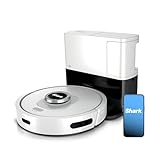
Honestly, the first time my Shark robot vacuum just sat there, silent and dead, I panicked. Had I forgotten to plug it in? Was the outlet dead? Hours later, after wrestling with the manual and Googling frantically, I discovered a tiny little LED I’d completely overlooked. It’s the dumbest thing, but when you’re staring at a useless disc on your floor, you want to know exactly how to tell if Shark robot vacuum is charging.
There are a few visual cues, and some not-so-obvious ones, that will tell you if your little cleaning buddy is getting juice. It’s not rocket science, but it’s also not always immediately apparent, especially if you’ve just unboxed it or it’s been sitting dormant for a bit.
We’ve all been there: the expensive gadget that promises the world, only to leave you scratching your head. This is one of those times.
Is It Even Plugged in? The Obvious Stuff
Let’s start with the absolute basics, the things that make me want to bang my head against the wall because I’ve wasted precious time on them. First, the charging dock itself. Is it plugged into the wall? I know, I know. But seriously, check the plug. Then, is the robot vacuum sitting squarely on the charging contacts? These things aren’t always as forgiving as your phone charger. A millimeter off, and you’re not getting any power. I spent about twenty minutes once figuring out my cat had nudged the dock just enough to misalign it. Twenty minutes of my life I’ll never get back, all because I assumed it was making contact.
Look for a light on the dock itself. Most Shark robot vacuum charging docks have a small indicator light that lets you know it’s receiving power from the wall. If that light is off, the problem is probably with your wall outlet or the dock’s power cord. Try a different outlet; sometimes, circuit breakers trip unexpectedly.
Visual Clues: Lights, Camera, Charging!
This is where most people look, and rightly so. Your Shark robot vacuum has several indicator lights that will tell you its status. The most important one is usually on the top of the robot itself, or sometimes on the front. When it’s actively charging, this light will typically show a specific color or pattern. For many Shark models, you’ll see a pulsing blue or green light while it’s charging. When it’s fully charged, this light often turns solid blue or green, or it might turn off entirely, depending on the specific model. You really have to check your manual for the exact color coding, but a pulsing light is almost always a sign it’s drawing power. (See Also: Should I Turning My Shark Robot Vacuum Off )
Think of it like a tiny, electronic heartbeat. If the light is off completely while it’s on the dock, it’s not charging. If it’s blinking rapidly in an error code pattern, that’s a whole other problem, but a slow, rhythmic pulse usually means everything’s good. The feel of the robot when you gently press down on its top surface can also give you a hint; sometimes, you can feel a very faint hum or vibration if it’s actively charging, though this is subtle and not a primary indicator.
The Dock’s Own Lights
Don’t forget the charging dock itself. Some docks have a small light that indicates they are receiving power from the wall outlet. If this light is off, your robot won’t charge, even if it’s sitting perfectly on the contacts. It’s like trying to charge your phone with a dead power strip; the phone might be connected, but no juice is flowing.
What About the App?
If your Shark robot vacuum model has a companion app, this is your best friend for confirmation. Open the app, and it should clearly display the robot’s current battery level and its charging status. It will usually say something like “Charging” or show a battery icon that’s filling up. If the app says it’s docked but not charging, or if the battery level isn’t increasing over time, then you’ve got an issue. This is far more precise than just looking at lights.
Troubleshooting When It’s Not Charging
So, you’ve checked the lights, the app, and the dock. Nothing. What now? I once spent $150 on a replacement charging dock because I was convinced the original was broken, only to find out the robot’s charging contacts were just filthy. Seriously, grime and dust build-up on those little metal points can prevent a charge. Get a soft, dry cloth or a pencil eraser and gently clean both the contacts on the robot and on the dock. It sounds too simple, but it worked for me after three days of frustration.
Another common issue is firmware. Sometimes, a robot vacuum needs a software update to communicate properly with its charging base. Make sure your robot is connected to Wi-Fi and check the app for any pending updates. If all else fails, and you’ve tried different outlets, cleaned the contacts, and ensured the robot is seated correctly, it might be time to contact Shark customer support. They can often walk you through more advanced troubleshooting steps or arrange for a repair or replacement if the unit is under warranty. I’ve had to do this twice in five years, which is more than I’d like, but at least their support was decent. (See Also: Is It Best Robot Vacuum For Cleaning Large Homes )
Contrarian Opinion: Don’t Obsess Over Full Charges
Everyone says you should always charge your robot vacuum to 100% before it runs. I disagree. While it’s good to know it *is* charging, constantly worrying about hitting that 100% mark can be unnecessary. If your robot is going to clean a room and then return to its dock, it just needs enough charge to complete that cycle and make it back. Leaving it on the dock for an extended period after it’s full doesn’t necessarily extend its battery life in the long run. In fact, keeping lithium-ion batteries constantly at 100% can sometimes degrade them faster, similar to how you shouldn’t leave your phone plugged in all night, every night, if you can avoid it. Just ensure it’s docked and charging after its run, and let it top itself off as needed.
How to Tell If Shark Robot Vacuum Is Charging: A Quick Summary Table
Here’s a breakdown, because sometimes a simple table makes things clearer than a thousand words:
| Indicator | What it Means (Likely) | Action if Not Charging |
|---|---|---|
| Robot Light Pulsing (Blue/Green) | Charging | N/A |
| Robot Light Solid (Blue/Green) | Fully Charged | N/A |
| Robot Light Off | Not charging or battery depleted | Check dock power, seating, clean contacts |
| Dock Light Off | Dock not receiving power | Check wall outlet, power cord |
| App Status: ‘Charging’ | Charging | N/A |
| App Status: Battery Level Not Increasing | Not charging | Check dock, contacts, try rebooting robot |
| Robot Not Seated Properly | No contact, no charge | Manually reposition robot on dock |
The Lowdown on Indicators
Ultimately, knowing how to tell if Shark robot vacuum is charging boils down to observing a few key indicators. The lights on the robot and its dock are your primary visual cues. For modern models, the companion app offers definitive confirmation. Don’t underestimate the power of simple maintenance, like cleaning those charging contacts; I learned that the hard way, spending around $80 on a new dock that I didn’t actually need after a quick wipe-down fixed everything.
People Also Ask
Why Is My Shark Robot Vacuum Not Charging?
Several things could be wrong. The most common reasons are that the robot isn’t properly seated on the charging dock, the charging contacts (on both the robot and dock) are dirty, or the charging dock itself isn’t receiving power from the wall. Less common issues include a dead battery in the robot, a firmware glitch, or a faulty charging dock or robot.
How Do I Know If My Shark Robot Vacuum Is Fully Charged?
Typically, the indicator light on the robot will change from a pulsing color (like blue or green) to a solid color, or it might turn off completely. The companion app will also usually indicate ‘Fully Charged’ or show the battery icon as 100% full. Some users also report hearing a subtle chime or beep when the charging cycle is complete. (See Also: Is The Shark Robot Vacuum Better Than The Irobot Roomba )
Can I Leave My Shark Robot Vacuum on the Charger All the Time?
Yes, for most models, it’s designed to be left on the charger. However, as mentioned, keeping any lithium-ion battery at 100% constantly can, in theory, slightly reduce its long-term lifespan. It’s generally fine, but if you’re looking to maximize battery health over many years, you might consider letting it discharge a bit before it automatically tops itself off. The convenience usually outweighs this minor consideration.
What Does a Flashing Red Light Mean on My Shark Robot Vacuum?
A flashing red light usually indicates an error or a problem that requires attention. This could be anything from a jammed brush roll to a sensor error, or indeed, a charging issue. Check the companion app for specific error codes or consult your user manual. It’s not a direct indicator of charging status, but rather a signal that something is wrong.
Final Verdict
So, you’ve got the indicators, the app, and the cleaning tricks. The key to knowing how to tell if Shark robot vacuum is charging is really about paying attention to those little lights and understanding what they mean. It’s not complex, but it requires a moment of observation.
My advice? If you’re ever in doubt, just put it on the dock and walk away for an hour. Then check the app or the robot’s light. Nine times out of ten, it’ll be happily juicing up. If not, then you can start digging into the troubleshooting steps, starting with those grubby charging contacts – trust me on that one.
Honestly, the most common reason I’ve seen these things not charge is just a simple lack of contact, or a bit of dust. Don’t go buying new parts until you’ve tried a good old-fashioned wipe-down, and maybe a different outlet. It’s saved me a bundle.
Recommended Products