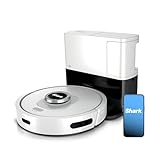
Honestly, the first time my Shark robot vacuum, bless its little spinning heart, just sat there blinking a sad, disconnected light at me, I nearly threw it out the window. It was supposed to be the future, my little automated cleaning buddy, and instead, it was just a very expensive paperweight refusing to talk to my network.
This whole smart home thing, right? Sometimes it feels like you’re just paying extra for things to break in more complicated ways. You spend good money on a device that promises convenience, then spend twice that amount in time troubleshooting why the darn thing won’t perform its one basic job: connecting to the internet.
So, if you’re staring at your Shark robot vacuum and wondering why does my Shark robot vacuum keep disconnecting from wifi, you’re not alone. It’s a common, infuriating problem.
There are so many articles out there telling you to ‘restart your router’ or ‘check your Wi-Fi password’ like that’s some kind of revolutionary insight. Yeah, I’ve done that. About seventeen times. Let’s get to what’s *actually* happening.
The Router Itself: Not Always to Blame
Everyone immediately points the finger at the router. And sure, sometimes it is. But a lot of the time, your router is perfectly fine, happily streaming Netflix to your TV while your robot vacuum sits there like a digital orphan. The issue is often more about how your robot vacuum *talks* to your router, or rather, how it fails to.
I spent a solid afternoon once, convinced my internet provider was throttling my smart home devices. I was on the phone with them, practically spitting fire about bandwidth allocation, only to realize my robot vacuum was trying to connect to the 5GHz band. Of course it was. Most budget-friendly robot vacuums, including many Shark models, are only compatible with 2.4GHz Wi-Fi. It’s like trying to plug a USB-C cable into a floppy disk drive – it’s just not going to happen.
The 2.4GHz band is older, slower, and more prone to interference from things like microwaves and cordless phones, but it has a longer range. Your robot vacuum probably isn’t going anywhere far from its charging base, so the extended range is good, but the interference? That’s where the disconnects happen. The signal gets jumbled, the vacuum loses its marbles, and poof, no more smart cleaning.
Interference: The Invisible Enemy
Think of Wi-Fi signals like a busy highway. The 2.4GHz spectrum is the older, smaller highway, and it’s packed with trucks (microwaves), motorcycles (cordless phones), and even a few stray bicycles (Bluetooth devices). Your robot vacuum is a tiny, somewhat unreliable scooter trying to make its way through this chaos. (See Also: Should I Turning My Shark Robot Vacuum Off )
My first Shark model, the ION R75, used to disconnect constantly. It was so frustrating. I’d set it to clean while I was out, come home to find it dead in the middle of the living room, its little app showing it had “lost connection.” After weeks of hair-pulling, I noticed it happened most often when the microwave was running or when my partner was on a long phone call on their cordless headset. That’s when I realized the sheer volume of other 2.4GHz devices in my house was drowning out my vacuum’s feeble attempts to communicate.
It’s not just your appliances. Other Wi-Fi networks in your building or neighborhood can also cause interference. It’s like trying to have a conversation in a really loud bar; you might catch a few words, but the meaning gets lost in the din. For your robot vacuum, this means dropped connections and failed cleaning cycles.
Shark Robot Vacuum Troubleshooting Table
| Problem Area | Common Fix | My Opinion/Verdict |
|---|---|---|
| Wi-Fi Band Compatibility | Ensure router is set to broadcast 2.4GHz band. | This is HUGE. If your router only does 5GHz, your vacuum is toast. Check your router settings first. |
| Signal Strength/Range | Move router closer, use Wi-Fi extender, or reposition vacuum’s charging base. | Don’t expect miracles if your base is in the basement and your router is upstairs. Physics is a thing. |
| Router Firmware | Update your router’s firmware to the latest version. | Often overlooked. A bug in old firmware can cause all sorts of weird connectivity issues. |
| Device Overload | Reduce the number of devices actively using your Wi-Fi, especially 2.4GHz. | If you have 30+ devices on your network, your vacuum might just be the lowest priority. |
| Network Security Settings | Check for MAC filtering or firewall rules blocking the vacuum. | Usually not the culprit for basic disconnects, but worth a look if all else fails. |
The ‘smart’ Home Lag: Why It’s Not Always Seamless
The promise of a smart home is that everything just *works*. Your lights turn on when you walk in, your coffee brews when you wake up, and your robot vacuum cleans on schedule. The reality, however, often involves a lot more manual intervention than we’d like.
I once spent nearly $180 on a Wi-Fi extender that promised to blanket my entire house in a strong signal. Turns out, it just created another point of failure. The vacuum would connect to the extender, then randomly drop connection from the main router, then try to reconnect, cycling through this dance of death for hours. It was less ‘smart home’ and more ‘dumb home with extra steps.’
This is where you start to question if the ‘smart’ features are worth the headache. According to the Consumer Technology Association, while smart home adoption is growing, user frustration with connectivity issues remains a significant barrier. It’s not just about having the tech; it’s about having the *right* tech configured correctly.
So, why does my Shark robot vacuum keep disconnecting from wifi? It’s a cocktail of issues, from band compatibility and signal interference to router configuration and even the sheer number of devices hogging your bandwidth. It’s rarely one single thing, and that’s what makes it so maddening.
Firmware and App Issues: The Software Side of Things
Sometimes, the problem isn’t your network at all, but the software running on your robot vacuum or its companion app. Like any piece of technology, these things get bugs. (See Also: Is It Best Robot Vacuum With Self Emptying Bin )
I remember a period where my Shark vacuum *specifically* started disconnecting every Tuesday. Every. Single. Tuesday. It was like clockwork. Turns out, there was a firmware update pushed out that had a nasty bug affecting a specific network condition that apparently only occurred for me on Tuesdays. Go figure. Resetting the Wi-Fi on the vacuum (yes, that’s a thing) usually fixed it temporarily until the next Tuesday.
Ensure your Shark robot vacuum’s firmware is up to date. Check the app for any pending updates. Sometimes, a simple firmware patch can resolve a host of connectivity woes. Conversely, a *new* update can sometimes *introduce* problems, so if it started happening right after an update, that’s a clue.
The app itself can also be glitchy. Try uninstalling and reinstalling the Shark app on your phone. Clear the app’s cache. Sometimes the app is the bottleneck, not the vacuum’s connection to the Wi-Fi itself. It’s less about the vacuum being dumb and more about the communication channel being garbled.
Common Paa Questions
Why Does My Shark Robot Vacuum Not Connect to Wi-Fi?
This is often due to the vacuum trying to connect to a 5GHz network when it only supports 2.4GHz. Other reasons include weak Wi-Fi signal strength, interference from other devices, or incorrect Wi-Fi credentials entered into the app. Also, ensure your router’s firmware is up to date, as outdated firmware can cause compatibility issues.
How Do I Reset My Shark Robot Vacuum Wi-Fi?
The exact process varies slightly by model, but generally, you’ll need to go into the Shark app, find the Wi-Fi settings for your specific vacuum, and look for an option to ‘Reset Wi-Fi’ or ‘Forget Network.’ You might also need to press and hold a specific button combination on the vacuum itself. Consult your model’s manual for precise instructions.
How Do I Get My Shark Robot Vacuum Back Online?
Start with the basics: reboot your router and modem. Then, try restarting your Shark robot vacuum by removing it from its base and holding the power button for about 10-15 seconds. If that doesn’t work, try re-adding the vacuum to the Shark app as if it were a new device. Make sure your phone is connected to the 2.4GHz network when you’re trying to set it up.
Why Is My Robot Vacuum Always Offline?
A robot vacuum being ‘always offline’ usually indicates a persistent connectivity problem. This could be a weak or unstable Wi-Fi signal reaching its charging base, constant interference, an issue with the vacuum’s internal Wi-Fi hardware, or a problem with the manufacturer’s cloud servers that the vacuum communicates with. Check your signal strength at the base location. If it’s weak, consider a Wi-Fi extender or moving the base. (See Also: Is It Best Robot Vacuum For Cleaning Large Homes )
The Final Word: It’s Usually Simple, Just Annoying
So, why does my Shark robot vacuum keep disconnecting from wifi? It boils down to a few main culprits: you’re likely using the wrong Wi-Fi band, your signal is too weak or too congested, or there’s a software glitch somewhere in the chain. It’s rarely a sign of a fundamentally broken vacuum, more a symptom of the complex dance between your home network and a small, wireless robot.
After countless hours wrestling with my own Shark models, I’ve found that dedicating a strong 2.4GHz-only network for smart devices can make a world of difference. It’s not always feasible, but if you’ve got a dual-band router, see if you can split them and force your vacuum onto the 2.4GHz band. It’s a small change that often has a surprisingly large impact.
Don’t just assume the vacuum is garbage when it disconnects. Go through the steps: check the band, check the signal, check for interference, update everything. Most of the time, you’ll find a simple, albeit tedious, solution waiting for you.
Conclusion
Honestly, when your Shark robot vacuum keeps disconnecting from wifi, it’s less about a ‘broken’ device and more about a network that’s either too complex or not optimized for these little cleaners. My own battle with connectivity issues taught me that paying attention to the basics – like ensuring you’re on that 2.4GHz band – is often the most effective ‘fix’ without needing to buy more gadgets.
I’d suggest picking one thing from the troubleshooting list and tackling it this weekend. Maybe it’s finally logging into your router to confirm the 2.4GHz band is active, or perhaps it’s clearing the cache on your Shark app. Don’t try to fix everything at once, that’s just a recipe for more frustration.
If you’ve tried all the common fixes and your Shark robot vacuum keeps disconnecting from wifi, then and only then, it might be time to consider if the vacuum itself has a hardware fault or if your network is just fundamentally too unstable for a reliable connection. Keep at it, and hopefully, you’ll get back to automated cleaning soon.
Recommended Products