You finally did it. You bought a robot vacuum. Now it’s sitting in its charging dock, looking all sleek and futuristic, and you can’t for the life of you remember the exact model number. It’s like trying to recall the name of that actor from that thing you watched last week. Been there. Done that.
Honestly, figuring out what shark robot vacuum do I have can feel like a minor quest, especially when you just want to know if you can buy that specific brush roll replacement or if that app feature you read about actually applies to your particular disc-shaped helper.
These things are supposed to simplify life, not add another layer of digital detective work. So, let’s cut through the clutter and get you sorted.
First Steps: The Obvious Stuff (that You’ve Probably Already Checked)
Before we get into the nitty-gritty, let’s cover the basics. Most of the time, the answer is staring you right in the face, but in the heat of unboxing and the initial setup frenzy, it’s easy to overlook. Think of it like trying to find your keys when they’re literally in your hand.
Look for a sticker or plate on the underside of the robot. Seriously. This is where manufacturers usually hide the model number, serial number, and sometimes even a QR code. I once spent about twenty minutes frantically searching online forums for a replacement filter, only to find the model number printed in tiny font on the bottom of the unit. Embarrassing, but common.
When the Sticker Is Gone or Illegible
Life happens. Stickers peel off, get smudged, or are just plain too small to read after a year of dust bunnies accumulating. If the physical label is a bust, don’t panic. Your next best bet is usually the SharkClean app. If you set up your robot vacuum using the app (and you really should, it’s where all the magic happens), your robot’s name and model should be listed right there.
Open the SharkClean app on your phone or tablet. Navigate to your devices. It should be listed with a name you probably gave it – maybe ‘Dusty’ or ‘Sir Sucks-a-Lot’. Tap on that device. Somewhere in the device settings or information page, the exact model number will be displayed. This is usually the most reliable method after the physical label.
Sometimes, even the app can be a bit vague, or you might have set it up ages ago and forgotten the login details. If that’s the case, the next place to look is the original packaging. Remember that big box it came in? If you’re a hoarder of such things (no judgment, I still have the box for my first coffee maker from ’08), the model information will be plastered all over it. (See Also: Should I Turning My Shark Robot Vacuum Off )
The ‘i Can’t Find It Anywhere!’ Scenario
Okay, deep breaths. You’ve checked the robot, you’ve checked the app, you’ve checked the box (or you’ve recycled it into oblivion). What now? This is where it gets a little more investigative, but still totally manageable. You need to start looking at the features and design of the vacuum itself. Shark has a few main lines, and they have distinct characteristics.
Shark Iq Series vs. Shark Ai Series
This is often where people get confused. They sound similar, but they have different capabilities. The Shark IQ Robot Vacuum models generally have row-by-row cleaning and are controlled via the app. They’re pretty good, but they don’t have the fancy self-empty bases like some of the higher-end models.
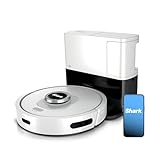
The Shark AI Robot Vacuum models are the ones with the more advanced navigation. These are the ones that can map your home, target specific rooms for cleaning, and often come with a self-emptying base (the ‘XL’ models). If your robot docks and then a bigger whooshing sound happens as it empties itself into a larger base station, you’ve almost certainly got an AI model. I remember seeing one of these in action at my sister’s place; the self-empty function was loud enough to wake the dog, but man, was it convenient. She’d only have to empty the base station itself once every 30 to 45 days. That’s a far cry from the daily emptying required by some older, simpler models I’ve fiddled with.
Identifying by Features and Design
Think about what your vacuum *does*. Does it just randomly bump around, or does it clean in neat, organized lines? If it’s the latter, it’s probably an IQ or AI model. If it has a camera on top, it’s almost certainly an AI model – that’s how it maps your home. The AI models with self-emptying bases usually have a much larger, more prominent docking station than the simpler charging docks of the IQ models.
Another telltale sign is the brush roll. Some Shark robots have a single, wide brush roll, while others might have dual spinning brushes at the front to help pull in debris. If you have a model with what looks like a little spinning brush on the side that kicks up dirt towards the main suction path, that’s a common feature across many of their lines, but how it’s integrated with the overall navigation system can give clues.
A Personal Mistake Story: The ‘just Buy It’ Trap
Early on, before I really got into the weeds with these things, my old Shark robot (a much simpler, pre-mapping model) finally kicked the bucket after about three years of faithful service. I needed a replacement filter immediately because, you guessed it, the dustbin was overflowing with the fluff of a thousand dust bunnies. I went to Amazon, searched ‘Shark robot vacuum filter,’ and bought the first pack that looked vaguely like my old one. They were cheap, came in a six-pack for around $25, and arrived the next day. Great, right? Wrong. They fit, technically, but they didn’t seal properly. Dust started leaking out the sides of the filter compartment and into the motor. Within two weeks, my new-to-me robot was making this awful grinding noise, like a tiny badger trapped in a metal box. I ended up wasting another $30 on a *different* brand of filter that still didn’t quite fit, before finally admitting defeat and spending $50 on the *official* Shark replacement filter. Turns out, the official filter had a slightly different edge design that created a much better seal. My advice? Even if you can’t find the exact model number, try to identify the *series* (IQ, AI, etc.) and look for official Shark brand accessories. It’s usually worth the extra few bucks to avoid a miniature appliance disaster.
Decoding the Model Numbers (if You Find Them)
If you *do* manage to find a model number, it’s not always immediately obvious what it means. Shark’s naming conventions can be a bit like trying to decipher ancient hieroglyphs. Generally, you’ll see something like RVxxxx, where ‘RV’ stands for Robot Vacuum, and the numbers that follow are specific to the model. The higher the numbers, sometimes the more advanced the features, but not always. (See Also: Is It Best Robot Vacuum With Self Emptying Bin )
For example, you might see an RV2001, RV2502, or even an RV2001WD. The ‘WD’ often indicates a ‘with dock’ feature, usually the self-emptying base. If you see an ‘AE’ or ‘UK’ or ‘EU’ at the end, that typically denotes the region it was manufactured or intended for. For most of us in North America, you’re looking for the RV numbers. If you find one, punch it into Google or the Shark website, and you’ll usually get a direct hit.
Shark’s ‘signature’ Features
Shark has a few signature features that can help you narrow it down. The Home Mapping Technology, for instance, is a big one. If your vacuum can create a floor plan on its app and let you clean specific rooms or set ‘no-go’ zones, it’s likely an AI series model. The IQ series also maps, but the AI series is generally more advanced in its mapping and navigation algorithms. Think of it like the difference between a basic GPS app and one with real-time traffic updates and predictive routing.
Another key differentiator is the Self-Emptying Base. If your robot vacuum’s primary dock is a large station designed to suck debris out of the vacuum’s bin for you, you’re looking at a higher-end AI model, often designated with ‘XL’ in its name (e.g., Shark AI Robot Vacuum XL). These are the ones that give you that “set it and forget it” experience for weeks on end. Consumer Reports, in their extensive testing of robot vacuums, has highlighted how self-emptying bases significantly reduce user maintenance frequency, making them a popular choice for busy households.
The Brushroll Debate: What’s Yours?
Shark uses different brushroll technologies. Many of their robots feature a ‘Self-Cleaning Brushroll’ designed to minimize hair wrap. If you have long hair in your household, this is a feature you’ll want to pay attention to. Does your brushroll look like it has little comb-like structures integrated into it? That’s the self-cleaning tech at play.
Some models might use a single, wide brush, while others might opt for dual edge-cleaning brushes that spin out from the sides. The presence and design of these brushes can offer clues. The dual edge brushes are fantastic for getting into corners and along baseboards, a common complaint with less sophisticated robot vacuums that just seem to push dirt around in circles.
Table: Shark Robot Vacuum Series at a Glance
| Series | Key Features | Navigation | Self-Empty Option? | My Take |
|---|---|---|---|---|
| IQ Robot | Row-by-row cleaning, app control | Systematic, but less advanced than AI | No (usually) | Solid for basic, consistent cleaning. Good value if you don’t need room-specific cleaning. |
| AI Robot | Home mapping, room selection, voice control integration | Advanced, uses camera/LiDAR for precision mapping | Yes (common on XL models) | The smart choice for homes that need targeted cleaning or a ‘set it and forget it’ approach. Worth the extra cost for convenience. |
When All Else Fails: Contacting Shark
If you’ve gone through all these steps and are still utterly stumped, it’s time to call in the cavalry. Shark customer support is generally quite helpful. If you can provide them with any identifying marks, even if it’s just the color scheme or the general shape, they might be able to guide you.
You can usually find their contact information on the Shark website. Be prepared to describe the robot as best you can. Have your purchase history handy if you bought it online, as that might contain the model number. It’s a bit of a last resort, but if you absolutely need to know what shark robot vacuum do I have for a specific part or troubleshooting, it’s your most direct route. (See Also: Is It Best Robot Vacuum For Cleaning Large Homes )
Common Paa Questions (people Also Asked)
How Do I Know If My Shark Robot Is an Iq or Ai?
The easiest way to tell is by looking at the navigation. If your Shark robot creates a detailed map of your home within its app, allowing you to select specific rooms for cleaning or to set ‘no-go’ zones, it’s almost certainly an AI model. IQ models typically clean in more systematic rows but don’t offer the same level of granular room control or advanced mapping. Also, if it has a camera on top, it’s an AI model.
Where Is the Model Number on a Shark Robot Vacuum?
Typically, the model number is printed on a sticker located on the underside of the robot vacuum itself. It might also be present on the original packaging or within the SharkClean app under the device’s settings. Sometimes, it’s just a small label near the charging contacts or battery compartment.
Can I Use Any Shark Filter for My Robot Vacuum?
No, you really can’t. Shark robot vacuums are quite specific about their filters. Using a generic or incorrect filter can lead to poor suction, dust leakage into the motor, and potential damage to the vacuum. Always try to find the exact replacement filter for your specific Shark robot vacuum model or series. My own filter fiasco taught me that lesson the hard way, costing me both time and money.
What Does the ‘xl’ Mean on a Shark Robot Vacuum?
The ‘XL’ designation on a Shark robot vacuum typically indicates that the model comes with a larger self-emptying base station. These larger bases can hold weeks’ worth of debris, meaning you’ll need to empty the base itself much less frequently than you would a standard dock or the vacuum’s onboard bin. It signifies a higher capacity and extended convenience.
Final Verdict
So, there you have it. Figuring out what shark robot vacuum do I have shouldn’t be a scavenger hunt, but sometimes it feels like it. Start with the underside sticker, then the app, and if all else fails, use the features and design cues to narrow it down to the IQ or AI series.
Honestly, most of the time, if it maps your house and has a charging station that looks like a small spaceship, it’s an AI model with all the bells and whistles. If it cleans in lines but doesn’t offer much in the way of home mapping, it’s likely an IQ model. Both are good, just different levels of smart.
Don’t stress too much if you can’t find the exact serial number for a replacement part. Identifying the series is usually enough to get you the right accessories. Just aim for official Shark parts when possible; your robot’s motor will thank you.
Recommended Products