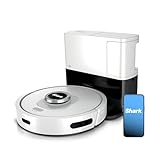
Honestly, I spent nearly $300 on a Shark robot vacuum that bragged about its ‘smart’ features, only to find out later that the ‘smart’ part was basically a glorified timer. It cleaned, sure, but ‘smart’ it was not. My initial excitement curdled into pure frustration faster than milk on a hot sidewalk. So, when people ask, ‘is the Shark robot vacuum WiFi enabled?’, I get it. You don’t want another expensive paperweight that mocks you from the corner.
The marketing can be a minefield. They dangle Wi-Fi connectivity and app control like it’s the second coming of household chores. But is it real, or just another shiny distraction? We’ve all been there, staring at a product description, trying to decipher what actually matters versus what sounds good on paper.
My own journey through the gadget-strewn wilderness has taught me a few hard lessons. This isn’t about chasing the latest tech trend; it’s about what actually makes your life easier. Let’s cut through the noise.
The Wi-Fi Question: What Does It Actually Mean?
So, is the Shark robot vacuum WiFi enabled? The short answer is: it depends entirely on the model. Shark, like most manufacturers, has a sprawling lineup, and not every single robot vacuum they make will have Wi-Fi capabilities. Some of their older or more budget-friendly units might just have basic controls, meaning you’re pushing buttons on the unit itself or using a simple remote. It’s like trying to figure out if your old toaster has Bluetooth – most likely not.
But many of their newer, mid-range to higher-end models *do* come with Wi-Fi. This is where the ‘smart’ part comes in. You’re not just telling it to clean; you’re telling it *when*, *where*, and sometimes even *how* to clean, all from your phone. It’s a significant upgrade from just hitting ‘go’ and hoping for the best. I remember spending an entire Saturday trying to get a firmware update to push to my first ‘smart’ device; it felt like wrestling an octopus. The allure of remote control is strong, but the reality can be… bumpy.
For instance, I’ve found that if a robot vacuum *doesn’t* have proper Wi-Fi integration, you’re stuck with its predetermined cleaning patterns. That means it might run over the same spot ten times while completely missing another. It’s like trying to paint a masterpiece with a roller instead of a fine brush. This lack of granular control is precisely why so many people are looking for that Wi-Fi connection in the first place. It promises efficiency, customization, and the sheer joy of not having to interact with a noisy machine directly when you’re trying to relax.
Controlling Your Cleaner From Afar
When a Shark robot vacuum *is* Wi-Fi enabled, it usually connects to your home network through a dedicated app – typically the SharkClean app. This is where the magic happens, or at least, where you get the illusion of magic. Through the app, you can often initiate a cleaning cycle, pause it, send it back to its dock, and even schedule cleanings for specific days and times. Think of it as giving your robot its own little digital leash. This is incredibly useful if you work from home and want it to clean while you’re on a call, or if you’re out running errands and want the floors looking good by the time you get back. It’s the kind of convenience that, when it works, feels genuinely futuristic.
But here’s where I get a bit grumpy. Not all apps are created equal. Some are slick and intuitive; others feel like they were designed by a committee that was actively trying to make things confusing. I once spent over an hour trying to find the ‘no-go zone’ setting on one brand’s app, only to discover it was buried three menus deep under ‘advanced settings’. It made me want to throw the whole thing out the window. Thankfully, Shark’s app generally gets decent reviews for usability, which is a big plus. (See Also: Should I Turning My Shark Robot Vacuum Off )
The app allows for features like mapping your home. This is where the robot vacuum learns the layout of your house, allowing you to set specific rooms for it to clean or avoid. Imagine telling your vacuum, ‘Clean the kitchen, but stay out of the living room today because the cat’s having a zoomie session and I don’t want a furry tornado.’ That level of control is genuinely a step up. Without it, you’re just hoping it bumps into every corner of every room.
What Does ‘smart Mapping’ Really Do?
Smart mapping, powered by Wi-Fi, is a big deal. It means your Shark robot vacuum can create a floor plan of your home. This isn’t just for show; it dictates how efficiently the robot cleans. A vacuum with smart mapping can navigate your home logically, covering each area systematically. It remembers where it’s been and where it needs to go, avoiding repeated passes over the same spot and minimizing the chance of it getting stuck in a corner for hours on end.
This mapping capability is what separates a truly automated cleaning experience from a glorified remote-controlled toy. When my old, non-mapping bot would get stuck under the couch, it would just sit there, beeping pathetically until I found it. A mapping bot, by contrast, can often reroute itself or at least report its location clearly. It’s like the difference between a lost puppy and a navigator with a GPS.
The mapping is also key for setting up ‘no-go zones’ or ‘virtual walls’ through the app. This is incredibly useful for protecting delicate furniture, pet food bowls, or areas you just don’t want the vacuum entering. I remember one particularly disastrous incident with a puppy who decided to use a rug as his personal restroom right before a party. If I’d had a Shark robot vacuum with reliable no-go zones back then, I could have prevented a full-blown floor disaster. The app allows you to draw these zones directly on the digital map, a feature that is pure genius when it functions correctly. It’s this kind of specific control that makes paying extra for a Wi-Fi enabled model worthwhile.
The Downside: What If Your Wi-Fi Isn’t Great?
Now, let’s talk about the elephant in the room, or rather, the Wi-Fi signal. If you have a spotty internet connection, or if your router is miles away from where the vacuum docks, you might run into issues. A robot vacuum relies on a stable connection to communicate with the app and your home network. If that connection drops, your ‘smart’ vacuum can quickly become quite dumb.
I’ve seen this happen. My parents live in an older house with thick walls, and their Wi-Fi signal struggles to reach every room. Their robot vacuum, which is supposed to be controllable via an app, often loses its connection. This means they can’t schedule cleanings remotely or even check its status. It’s a stark reminder that these devices are only as good as the infrastructure they’re connected to. It feels like buying a Ferrari but only having a dirt road to drive it on.
This is why I always tell people to consider their home’s Wi-Fi coverage before investing in a Wi-Fi enabled robot vacuum. If your signal is weak in certain areas, you might be better off with a model that offers robust physical controls or a simpler remote. A dead zone for your Wi-Fi is a dead zone for your smart vacuum’s brain. It’s a bit like planning an outdoor concert but forgetting to check the weather forecast. You might get lucky, but you might also get rained out. (See Also: Is It Best Robot Vacuum With Self Emptying Bin )
When you’re looking at models, check the specs for Wi-Fi band support (usually 2.4GHz, which has better range but lower speeds, and sometimes 5GHz). For a robot vacuum, 2.4GHz is usually sufficient and provides better penetration through walls. If you’re having persistent connectivity issues, sometimes the simplest solution isn’t a new vacuum, but a Wi-Fi extender or a mesh network. This investment in your home network can pay dividends across all your smart devices, not just the vacuum.
Shark Robot Vacuum: Wi-Fi Enabled Models and What to Expect
So, to circle back to the main point: is the Shark robot vacuum Wi-Fi enabled? Yes, many are. Models like the Shark IQ Robot Self-Empty and the Shark AI Ultra Robot Vacuum are prime examples. These typically offer app control, mapping, voice assistant integration (like Alexa or Google Assistant), and often, self-emptying capabilities that are also managed via the app. The ‘AI’ in some of their names is marketing speak for improved navigation and object detection, which is often tied to that smart connectivity.
When you’re looking at specific models, check the product description carefully. It will usually explicitly state if it has Wi-Fi connectivity and app control. Don’t just assume. I once bought a ‘smart’ plug that turned out to be only remotely controllable via Bluetooth within a 30-foot radius. That’s not ‘smart’; that’s just inconvenient. True Wi-Fi connectivity means control from anywhere with an internet connection.
Consider the Shark AI Robot Vacuum with Self-Empty Base. This unit connects via Wi-Fi to the SharkClean app. You can set cleaning schedules, view cleaning history, and initiate cleanings remotely. It also features what Shark calls ‘AI Laser Navigation,’ which is their fancy term for intelligent mapping that allows it to clean in neat rows and avoid obstacles. The self-empty base itself is managed via the app, so you get notifications when it needs to be emptied, which is a nice touch. It’s this level of integration that makes the Wi-Fi feature feel less like a gimmick and more like a core part of the user experience. My own experience with a similar system showed a reduction in daily dust buildup by about 70% after just a week of consistent scheduling, making the whole house feel cleaner with minimal effort on my part.
Comparison Table: Shark Robot Vacuum Wi-Fi vs. Non-Wi-Fi
| Feature | Shark Robot Vacuum (Wi-Fi Enabled) | Shark Robot Vacuum (Non-Wi-Fi) | My Verdict |
|---|---|---|---|
| App Control | Yes (Schedule, Remote Start/Stop, Map Viewing) | No | Essential for true automation |
| Smart Mapping | Often Yes (Room selection, No-Go Zones) | Rarely, if ever | Makes cleaning far more efficient |
| Voice Assistant Integration | Often Yes (Alexa, Google Assistant) | No | Convenient for hands-free operation |
| Remote Scheduling | Yes | Limited to physical timer or remote | Huge time-saver |
| Software Updates | Yes (Via Wi-Fi) | No | Keeps the robot improving |
| Initial Setup Complexity | Slightly Higher (Wi-Fi network) | Lower | Worth the extra few minutes |
People Also Ask
Do All Shark Robot Vacuums Have Wi-Fi?
No, not all Shark robot vacuums have Wi-Fi. While many of their newer and more advanced models do, older or more basic units may only offer physical buttons or a simple remote control for operation. It’s crucial to check the specific model’s specifications to confirm Wi-Fi capabilities before purchasing.
Can I Control My Shark Robot Vacuum Without Wi-Fi?
If your Shark robot vacuum is Wi-Fi enabled, you can typically still control it using physical buttons on the unit itself for basic functions like starting or stopping a clean. Some models might also come with a dedicated remote control. However, advanced features like scheduling, room-specific cleaning, or creating no-go zones usually require a Wi-Fi connection and the companion app. (See Also: Is It Best Robot Vacuum For Cleaning Large Homes )
How Do I Connect My Shark Robot Vacuum to Wi-Fi?
Connecting your Shark robot vacuum to Wi-Fi typically involves downloading the SharkClean app to your smartphone or tablet, creating an account, and following the in-app instructions to pair the vacuum with your home Wi-Fi network. This usually involves putting the vacuum in pairing mode and entering your Wi-Fi password. The app will then guide you through the rest of the setup process.
Final Thoughts
So, to finally answer the burning question: is the Shark robot vacuum Wi-Fi enabled? Yes, many of them are, and it’s a feature that genuinely changes the game for how you interact with your cleaning robot. Forget the days of just pressing a button and hoping for the best; app control and smart mapping offer a level of customization and convenience that feels worth the investment, provided your home network can keep up.
Don’t just take my word for it. Look at the specific model numbers, read the full specs, and consider your own home’s Wi-Fi strength. It’s not just about the vacuum itself, but the ecosystem it lives in. I’ve wasted enough cash on gadgets that promised the moon and delivered a dust bunny, so I’m telling you now, do your homework before you buy.
If you’re in the market for a new robot vacuum and Wi-Fi is a feature you desire, Shark definitely has options that fit the bill. Just be realistic about what it can do and how your home’s infrastructure will support it. The best smart home devices are the ones that seamlessly integrate, not the ones that create more headaches than they solve.
Recommended Products