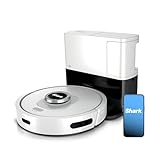
Sparkling floors with zero effort. That’s the dream, right? Then you shelled out good money for that Shark robot vacuum, picturing it zipping around, gobbling up pet hair and dust bunnies while you sip iced tea. Suddenly, silence. Or worse, a sad little beep and a blinking light. Why isn’t my Shark robot vacuum working? It’s a question that has definitely crossed your mind, probably with a healthy dose of frustration.
Honestly, I’ve been there. More times than I care to admit, I’ve stared at a stubbornly immobile robot, wondering if I’d just bought an expensive paperweight.
Forget the glossy manuals that talk about ‘optimizing performance.’ Most of the time, it’s something far more mundane, something you can actually fix without calling tech support and waiting on hold for an hour. Let’s cut through the marketing fluff and get down to what’s actually going on.
The Obvious Stuff First: Is It Even on?
Right, this sounds daft, but hear me out. I once spent a solid twenty minutes trying to coax my Roomba into action, only to realize the power switch on the bottom was… off. Yep.
Seriously, check the power button. Is it actually engaged? For Shark models, look for that little physical button, usually on the top or side. Sometimes it gets accidentally nudged.
Also, the charging dock. Is it plugged in? Is the little indicator light on the dock lit up? Your robot needs a solid connection to juice up. I found out the hard way that a slightly jiggled plug can be the culprit, leaving my bot with just enough power to do a pathetic wiggle before dying. Smelled faintly of ozone, too, which was my first clue something was seriously wrong with the power source.
Battery Woes: The Silent Killer of Robot Vacuums
This is where a lot of people get really frustrated, and honestly, I don’t blame them. The battery. It’s the heart of the whole operation, and when it’s toast, your fancy robot is just a shiny disc.
When you first got your vacuum, it probably ran for a good hour, maybe more. Now? If it barely makes it across the living room, that battery is likely on its last legs. Shark robot vacuums, like most electronics, have batteries that degrade over time. It’s not a sign of a faulty unit; it’s just… physics.
I remember when I first noticed this. My bot started getting stuck halfway through its cycle, right in the middle of the floor, looking utterly defeated. I’d charged it overnight, checked for blockages, even cleaned the sensors – the whole nine yards. Turned out, the battery had simply lost its ability to hold a charge. I’d spent about $150 on a replacement battery, which felt like highway robbery at the time, but at least it brought the little guy back to life. It’s a common issue that most manufacturers don’t shout about but everyone experiences eventually. (See Also: How To Empty Shark Robot Vacuum 2 In 1 )
What If It Won’t Charge at All?
If your Shark isn’t even showing a charging indicator when it’s on the dock, that’s a different kettle of fish. First, double-check that the dock is properly seated on the floor and that the vacuum’s charging contacts are clean. Sometimes, a bit of dust or debris can get lodged in there, creating a barrier. I use a dry cloth or a soft brush to gently clean the metal contacts on both the robot and the dock. It’s a surprisingly effective, no-cost solution that often gets overlooked.
This is where things get a bit more technical, but it’s often the reason your robot goes rogue. If your Shark robot vacuum isn’t working properly, especially if it’s bumping into things it shouldn’t or getting lost in familiar territory, it’s usually a navigation or mapping issue.
These robots rely on sensors – little eyes and ears all over their bodies – to understand their surroundings. If these sensors are dirty, blocked, or damaged, the robot can’t ‘see’ properly. This is like trying to drive a car with your eyes covered; it’s not going to end well.
Everyone says to wipe down the sensors with a soft cloth. And yeah, that’s step one. But sometimes, it’s more than just dust. I once had a robot that kept veering off course, only to discover a tiny, almost invisible scratch on its main front sensor. It was so minor I almost missed it, but it was enough to throw off its entire navigation system. It’s like when a tiny speck of dirt gets on your glasses; suddenly, the whole world looks distorted. That little scratch cost me a new sensor unit, which I had to order separately, adding another $50 to my troubleshooting expenses.
Think of it like a self-driving car losing GPS signal. If the LiDAR, cameras, or infrared sensors are compromised, the robot has no idea where it is, where it’s been, or where it’s going. This can lead to it repeatedly cleaning the same small area or getting stuck in places it should easily avoid. I’ve seen robots get caught in ‘loops’ for hours, just going back and forth between two pieces of furniture, a digital hamster on a wheel.
Obstacles and Cliff Sensors
Your robot has specific sensors to detect drops, like stairs. If these ‘cliff sensors’ are dirty, the robot might think there’s a drop where there isn’t one, causing it to stop dead or turn back. Similarly, if its main bumper sensor is stuck, it might interpret every wall as an insurmountable obstacle. I’ve seen people mistake a dark rug for a drop, and the robot just refuses to go on it! The sensor is just doing its job, albeit with a bit too much caution.
Brush Roll and Suction Problems
So, the robot’s moving, it’s charging, but it’s not actually *cleaning*. This is another classic. You hear the motor whirring, but nothing’s getting picked up. Usually, this points to the brush roll or the suction system.
The main brush roll is a magnet for hair, strings, and general floor gunk. If it’s completely tangled, it can’t spin properly to agitate and pick up debris. This is probably the most common reason for a robot vacuum not cleaning effectively. I used to dread cleaning it out, all those little hairs wrapped around the bristles like a woolly mammoth’s coat. It would take me a good ten minutes of wrestling with scissors and tweezers. Some newer models have self-cleaning brushes, which are a lifesaver, but if yours doesn’t, this is your culprit. (See Also: How To Remove Dust Bin From Shark Robot Vacuum )
After my fourth attempt to clear my old bot’s brush roll, I finally realized the plastic end caps were cracked. This meant the brush wasn’t seating properly, and even though it looked clean, it wasn’t engaging the floor right. That little crack, barely visible, made the whole thing useless. I ended up just buying a new brush assembly rather than trying to patch it.
Related to this is the suction power. If the dustbin is full, or if there’s a blockage in the intake or the hose leading to the bin, suction will drop dramatically. Think of trying to drink a milkshake through a straw that’s half-clogged; it’s a pathetic trickle. Empty the dustbin regularly, and periodically check the intake port for any lodged debris. A clogged filter is also a major suction killer. These filters are like the lungs of your vacuum; clogged lungs can’t breathe, and a vacuum with no airflow can’t suck anything up.
Software Glitches and App Issues
Sometimes, it’s not the hardware at all. It’s the software, the digital brain telling the robot what to do. If your Shark robot vacuum isn’t working, and you’ve tried all the physical fixes, it might be time to look at the app or firmware.
I’m no tech guru, but I’ve learned that these robots are essentially little computers on wheels. And like any computer, they can get confused. A firmware update might have gone wrong, or the app might be out of sync with the robot. I once had a robot that would just refuse to start a cleaning cycle from the app. It was completely unresponsive, but if I pressed the button on the robot itself, it worked fine. Took me ages to figure out it was a weird Bluetooth handshake issue between my phone and the vacuum. A simple app reinstall fixed it, but not before I spent $50 on a replacement filter thinking the old one was somehow jamming the signal – a truly idiotic mistake.
A factory reset is often the digital equivalent of a hard reboot for your computer. It wipes out any wonky settings or corrupted data that might be causing problems. It’s a bit drastic, as you’ll lose your custom maps and schedules, but it can sometimes clear up persistent software gremlins that are making your robot vacuum not working as it should.
Connectivity Problems
Many modern robot vacuums rely on Wi-Fi for app control and updates. If your Wi-Fi signal is weak or unstable in the area where the robot operates, it can lead to all sorts of strange behavior. It might disconnect randomly, fail to start on schedule, or just act sluggishly. Shark’s customer support often recommends ensuring a strong Wi-Fi signal as a first step for connectivity issues, and honestly, they’re right. A weak signal is like trying to have a conversation in a hurricane; the message just gets lost.
When All Else Fails: Professional Help
Look, I’m all for DIY. I’ve spent countless hours tinkering with my robots, saving myself a few bucks here and there. But there comes a point where you have to admit defeat and seek professional help. If you’ve gone through all the basic troubleshooting steps and your Shark robot vacuum is still not working, it might be time to contact Shark customer support or a local repair shop.
Sometimes, the problem is a more complex internal component failure – a motor issue, a motherboard problem, or a sensor array that’s completely fried. These aren’t things you can usually fix with a screwdriver and a prayer. For instance, if you hear a grinding noise from the motor that sounds like tiny rocks in a blender, that’s a pretty bad sign. I’ve experienced that once, and it meant replacing the entire drive system, which was more than half the cost of a new vacuum. That’s when you have to weigh the cost of repair against the cost of a new unit. (See Also: How Prevent Roomba Robot Vacuum Entering Room )
Don’t be afraid to reach out. Shark, like most reputable manufacturers, has a warranty period. If your vacuum is still under warranty, you might be able to get it repaired or replaced for free. Even if it’s out of warranty, they can often diagnose the issue and provide a quote for repair. Remember, the Federal Trade Commission (FTC) has rules about warranties, stating that companies can’t void your warranty just because you used a third-party repair service or part, as long as it didn’t cause the damage. This means you have some options beyond their official service centers, though sticking with the manufacturer is often the safest bet for complex issues.
The Final Verdict: Don’t Give Up Too Soon
A broken robot vacuum is infuriating. But before you toss it out the window, remember that most of the time, the solution to why isn’t my Shark robot vacuum working is surprisingly simple. It’s often about a dirty sensor, a tangled brush, a dead battery, or a software hiccup.
Give these steps a real try. You might be surprised at how often a bit of cleaning or a simple reset brings your cleaning companion back to life. And hey, even if it doesn’t work out, you’ll at least have learned a whole lot about how these things tick, which can only help when you’re shopping for your next one.
Verdict
So, you’ve checked the power, cleaned the sensors, and maybe even wrestled with a tangled brush roll. If your Shark robot vacuum is still giving you grief, and you’re still wondering why isn’t my shark robot vacuum working, take a deep breath. Often, it’s a combination of small things that just snowball.
Seriously, don’t underestimate the power of a clean charging dock and a fully functional battery. Those two alone fix more issues than people realize. If you’ve tried everything and it’s still acting up, consider if the cost of replacement parts is worth it compared to a new unit, especially if your vacuum is a few years old.
Before you order a whole new vacuum, take one last look at the charging contacts and make sure the dustbin seals properly; sometimes, a tiny bit of grit can prevent it from docking correctly, which then stops the charging cycle. It’s the little things.
Recommended Products