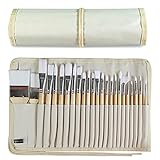
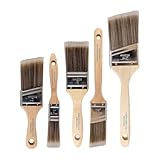
I remember staring at a wall of brushes at the art store years ago. So many shapes, sizes, bristled and synthetic. I just grabbed a few cheap multipacks, figuring how much difference could they possibly make? Spoiler alert: a lot. That was my first introduction to the blunt truth: a brush is a painter’s tongue. It’s how you articulate your ideas, how you speak your vision onto the canvas, and if your tongue is clumsy, your message gets garbled. Wasting money on subpar tools is a rite of passage for some, but it doesn’t have to be yours.
You can have the most brilliant concept in your head, but if your brush can’t execute it, it stays locked away. We’re going to talk about why these seemingly simple tools are so damn important, and how to stop throwing cash down the drain on junk.
Why Your Brush Choice Isn’t Just About Price
Look, I get it. When you’re starting out, or even just trying a new medium, the last thing you want to do is drop $50 on a single brush. The temptation to grab a giant pack of synthetics for $15 is strong.
I fell for it. Hard. I once bought a ‘professional artist’ starter kit that promised the world.
It contained maybe ten brushes. Within a month, half of them had splayed out like a startled cat’s fur, losing all shape and control. The bristles were shedding like a husky in July, and the ferrules (that metal bit holding the bristles to the handle) were loose.
Painting with them felt like trying to write a delicate sonnet with a charcoal briquette. It was frustrating, and it made me doubt my own abilities, not the tools.
The truth is, the quality of your brush directly impacts the quality of your mark-making. A good brush holds its shape, allowing for precise lines, smooth gradients, and controlled textures. A bad brush does none of that.
It splatters unpredictably, leaves chunky streaks, and feels scratchy on the canvas. It’s like trying to conduct an orchestra with a broken baton. You can’t get the nuanced control you need.
Different media also demand different brushes. Oil paints require stiffer bristles that can push thick pigment, while watercolors need softer, more absorbent hairs that can carry a lot of water and release it smoothly.
Forcing the wrong brush onto a medium is like trying to use a spoon to hammer a nail – it’s inefficient and just makes a mess.
Think about the different strokes you want to make. Do you need razor-thin lines for detail work? That requires a fine-tipped round brush with excellent snap.
Do you want to lay down broad, flat washes? A good quality flat or filbert brush with a clean edge is key.
Are you working with heavy body acrylics and need to build texture? A stiff, synthetic bristle brush will be your best friend.
Conversely, if you’re doing delicate glazes with oils, you’ll want soft natural hair brushes that can blend without disturbing the underlying layers. It’s about matching the tool to the task, and frankly, a cheap brush rarely has the specific characteristics needed for nuanced application. (See Also: Can Acrylic Paint Go In An Air Brush )
I learned this the hard way, spending more money over time replacing shoddy brushes than I would have if I’d just bought a few decent ones upfront. My wallet still hasn’t forgiven me.
What to Actually Look for (beyond the Price Tag)
Alright, so you’re convinced you need better brushes. Now what?
It’s not just about grabbing the most expensive set. You need to know what you’re looking for. First off, consider the hair. Natural hairs like sable (especially Kolinsky sable for watercolors and finest oils) are legendary for their ability to hold water or solvent and release it with control.
They have a natural taper and a soft, springy feel. Hog bristle is your go-to for oils and acrylics where you need stiffness and texture.
Synthetic brushes have come a long way, though. High-quality synthetics can mimic natural hair very well, are often more durable, and are less expensive.
For acrylics, a good synthetic is often preferred because it’s more resistant to damage from the paint itself. For watercolors, a synthetic that mimics sable’s water-holding capacity is a great budget-friendly option.
The ferrule is the next big thing. This is the metal band that connects the bristles to the handle. It should be snug, smooth, and made of good quality metal, usually nickel-plated brass. Cheap brushes often have thin, crimped ferrules that loosen quickly, leading to wobbly bristles. A good ferrule feels solid and doesn’t flex. The handle is important too, for comfort. Most artist brushes have wooden handles, and their length can vary. Longer handles are typically for larger works where you’re standing back, while shorter handles offer more control for detail work. The balance of the brush in your hand is also a factor – it should feel comfortable and natural, not heavy or awkward.
Here’s a little table I put together to break it down. It’s not exhaustive, but it covers the basics of what I look for:
| Feature | What to Look For (Good Quality) | Why It Matters | My Verdict |
|---|---|---|---|
| Bristle Material | Kolinsky Sable (watercolor/fine oil), Hog Bristle (oils/acrylics), High-Quality Synthetic (versatile) | Affects paint/water holding, release, and bristle durability. | Sable is king for watercolor, but good synthetics are closing the gap. Hog bristle is a workhorse. |
| Ferrule | Smooth, nickel-plated brass, securely attached | Prevents bristle shedding and ferrule loosening, making sure longevity. | A loose ferrule is a deal-breaker. Period. |
| Bristle Shape & Snap | Crisp point (rounds), sharp edge (flats), good spring-back | Determines control for lines, edges, and blending. | Snap is everything for control. If it bends and stays bent, it’s trash. |
| Handle Comfort | Balanced, comfortable grip, appropriate length for your style | Reduces fatigue during long painting sessions. | You’ll be holding it for hours. Make it comfy. |
When you’re shopping, don’t be afraid to gently bend the bristles. They should spring back to their original shape immediately. If they stay bent or feel mushy, they’re probably not going to give you the control you need. You’re looking for brushes that feel like an extension of your hand, not a separate, clumsy entity.
Common Brushes Every Painter Needs (and Why)
Okay, so you don’t need 50 brushes to start. You need a few good ones that cover your bases. When I talk about a brush being a painter’s tongue, I mean it’s how you articulate. You need a few different ‘words’ in your vocabulary. For most painting, especially oils and acrylics, you’re going to want a selection of flats, rounds, and filberts. These three shapes are incredibly versatile.
A flat brush has a broad, square tip with a chisel edge. They’re fantastic for laying down smooth, even strokes, sharp edges, and for blending large areas. Think skies, backgrounds, or broad strokes of color. I tend to gravitate towards flats in sizes like 1/2 inch and 1 inch for blocking in large shapes. You can also turn a flat on its side to get finer lines. The quality here really matters, as a cheap flat will leave choppy marks and uneven coverage.
A round brush has a pointed tip. They’re your go-to for detail work. Lines, dots, small accents – that’s what rounds are for. For fine detail, you want a brush with a sharp point that holds its shape. Smaller sizes, like a size 0, 1, or 2, are key for those delicate touches that bring a painting to life. Even if you’re primarily a landscape painter who uses big brushes for the background, you’ll eventually need a small round for signing your work or adding tiny highlights. Trying to do detail with a worn-out flat is a recipe for frustration and wonky lines.
A filbert brush is a bit of a hybrid. It’s like a flat brush with the edges rounded off, creating an oval shape. This makes them incredibly versatile. (See Also: Can Acrylic Paints Be Used In An Aqua Brush )
They can lay down broad strokes like a flat, but also create softer edges and more rounded marks. They are excellent for blending and for creating forms that aren’t strictly angular or perfectly round. Many artists find filberts to be their workhorse brush because of this adaptability.
A medium size, perhaps a size 6 or 8 filbert, can do a surprising amount of work on a canvas. When starting out, I’d recommend getting a couple of sizes in each of these: maybe a 1/2 inch flat, a size 2 round, and a size 6 filbert. Invest in decent quality for these core brushes, and you’ll be miles ahead.
For watercolors, the game changes slightly. You’ll still want rounds for detail, but the focus shifts to water-holding capacity. A good synthetic round that mimics sable, or a genuine sable brush (if your budget allows), is key. For washes, wider flats and mops are useful, but a large round can also do double duty for both washes and larger strokes. Regardless of the medium, the principle remains: choose brushes that allow you to execute your intentions clearly.
The Dreaded Splayed Brush and Other Nightmares
We’ve all been there. You’re painting along, feeling good, and suddenly your brush goes rogue. The bristles splay out, refusing to cooperate. It’s like your painter’s tongue has suddenly developed a lisp, and then some. This is usually a sign of a cheap brush or, more often, poor care. One of the biggest mistakes I see people make is how they clean their brushes. You absolutely cannot just rinse them under water and leave them sitting in a jar bristle-down. That’s a fast track to ruining them.
For oil paints, you need to use a solvent like turpentine or odorless mineral spirits to break down the oil. Swirl your brush in the solvent, wipe it on a rag, and repeat until no more paint comes off.
Then, you need to wash them with soap and water – a gentle artist brush soap is best, or even dish soap in a pinch. For acrylics, the cleanup is more urgent.
Acrylics dry fast and hard. If you let acrylic paint dry in your brush, it’s pretty much game over. You need to rinse them thoroughly under water and clean them with soap while they’re still wet.
Never let brushes sit in water for extended periods, as this can loosen the ferrule and damage the glue holding the bristles together.
Another cardinal sin is letting brushes dry standing in water or solvent. Always clean them thoroughly and then shape the bristles back into their original form. Lay them flat to dry, or if you must store them in a jar, do so bristle-up. Storing them bristle-down will warp the bristles and permanently ruin their shape. I made this mistake early on, thinking it was just easier to leave them soaking. It wasn’t easier; it was just destructive. I lost several decent brushes that way because I was too lazy or didn’t know any better.
The other nightmare is using the wrong brush for the job. Trying to get a sharp line with a worn-out, splayed brush is impossible. Trying to blend smoothly with stiff, cheap synthetics that have no give is equally futile. It’s not about being a perfectionist; it’s about respecting the process and giving yourself the best chance to succeed. When your tools are fighting you, your painting becomes a battle. When they work with you, it flows. The common advice to “just use whatever” is simply wrong. Your brush is your voice, and you need to treat it with respect if you want it to speak clearly.
The Contrarian View: Do You really Need Sable?
Now, here’s where I might ruffle some feathers. Everyone, everywhere, always talks about Kolinsky sable for watercolors and the finest natural hairs for oils. And yes, they are magnificent. If you have the budget and you’re painting with delicate glazes or doing hyper-realistic botanical work, then a top-tier sable brush is an investment that can pay dividends in control and pigment load. I’ve used them, and there’s a reason they’re revered. They feel incredible in your hand and perform beautifully.
However – and this is a big however – for the vast majority of painters, especially those who are not yet at a professional, highly specialized level, or those working with acrylics, you do NOT necessarily need to break the bank on pure sable. High-quality synthetic brushes have improved SO much. I’ve got synthetic rounds that can hold a beautiful point and release water just as effectively as some of my older, less expensive sable brushes. For acrylics, synthetics are often superior due to their durability and resistance to the harsh mediums.
The key word here is quality. A cheap synthetic is still a cheap synthetic, and it will perform poorly. (See Also: A Brushes Digital Painting )
But a well-made, high-end synthetic brush from a reputable brand can be an absolute workhorse. I’ve seen artists do incredible, nuanced work with nothing but well-cared-for synthetics.
The common advice is that sable is the only way for serious watercolorists, but I disagree. Invest in the best synthetics you can afford, care for them meticulously, and you’ll find they’re more than capable for most applications.
I’ve spent hundreds on sable over the years, and while some are irreplaceable, I’ve found fantastic synthetic alternatives that perform almost as well for a fraction of the price. It’s about finding what works for your hand and your medium, not just chasing the most expensive material.
The Science of Bristle Behavior
Why do different bristles behave differently? It’s down to their structure.
Natural hairs, like sable or hog bristle, have microscopic scales. These scales help them hold more paint and water, and they create a certain ‘drag’ or friction against the canvas, which aids in blending and texture.
Sable hairs are hollow and have a natural taper, which allows them to come to a fine point and hold a reservoir of liquid. Hog bristle is coarser and stiffer, with splits in the tips that trap pigment and create texture.
Synthetics, on the other hand, are engineered. They can be made to mimic the properties of natural hair, with variations in diameter, length, and even surface texture to control how they hold and release paint. Manufacturers are constantly experimenting with different polymers and manufacturing processes to get closer to the performance of natural fibers, especially for water retention and ‘snap’.
Practical Tips for Brush Care and Use
Let’s get down to brass tacks. You’ve bought some decent brushes. Now, how do you keep them in fighting shape so your painter’s tongue stays sharp?
- Clean Immediately and Thoroughly: This is the golden rule. Don’t let paint dry in your brushes, ever. For oils, use solvent to remove the bulk, then wash with soap and water. For acrylics, rinse and soap immediately while wet.
- Shape and Dry Properly: After washing, gently reshape the bristles with your fingers. Lay brushes flat to dry, or store them bristle-up in a jar. Never let them dry standing on the bristles.
- Use the Right Brush for the Medium: Oils need stiffer brushes, watercolors need absorbent ones, acrylics need durable ones. Don’t force a delicate watercolor brush to tackle thick acrylics.
- Don’t Overwork the Ferrule: Try not to immerse the ferrule in paint or solvent, as this can weaken the glue and loosen the bristles over time. Load paint onto the bristles themselves.
- Invest in Brush Cleaners and Conditioners: While soap and water work, specialized brush cleaners and conditioners can extend the life of your brushes significantly, especially for oils.
- Protect Your Brushes: When transporting brushes, use a brush case or roll to prevent damage to the bristles.
I also like to have a dedicated brush for each color if I’m doing a lot of blending where I don’t want color contamination, especially with watercolors. But for general blocking in or less precise work, I’ll use a brush for multiple colors and clean it well between uses. It’s a balance between efficiency and preserving the integrity of your tools. Remember, a well-maintained brush is a happy brush, and a happy brush makes for a happy painter.
People Also Ask:
What Is the Best Type of Brush for Beginners?
For beginners, a good set of synthetic brushes in various shapes (rounds, flats, filberts) is usually the best starting point. They are forgiving, durable, and more affordable than natural hair. Focus on getting a few different sizes of these core shapes rather than a huge pack. This allows you to experiment and learn what works best for your chosen medium without a significant financial investment. The key is to choose quality synthetics, not the cheapest ones available.
Can You Use Watercolor Brushes for Acrylics?
You can, but it’s generally not recommended long-term, especially if the watercolor brushes are natural hair like sable. Acrylic paint is a plastic polymer that dries quickly and can be very abrasive. It can damage and break down the delicate fibers of watercolor brushes, causing them to splay and lose their shape. Stiffer synthetic brushes designed for acrylics or oils are much more durable and can withstand the wear and tear of acrylic paint. If you must use a watercolor brush for acrylics, clean it immediately and thoroughly, and be prepared for it to have a shorter lifespan.
Are Expensive Paint Brushes Worth the Money?
Expensive paint brushes are absolutely worth the money if they are high-quality and suited to your needs. They offer superior control, better paint-holding capacity, and greater durability. A well-made brush feels like an extension of your hand, allowing for more nuanced marks and a more enjoyable painting experience. While you don’t need the most expensive brushes to start, investing in a few good quality brushes in core shapes and sizes will serve you much better and last longer than a multitude of cheap ones. They can transform your ability to translate your vision onto the canvas.
Final Verdict
So, there you have it. It’s not just about the pigment or the canvas; it’s about the conduit. Your brushes are your instruments, and learning to choose, use, and care for them properly is fundamental. A cheap brush can talk, but a good brush can sing. Don’t let your artistic voice be muffled by subpar tools.
Stop buying those bargain multipacks that promise everything and deliver nothing. Instead, invest in a few quality brushes that fit your medium and your hand. Learn their quirks, treat them with respect, and you’ll find your painting experience transforms. It’s a simple shift, but one that will dramatically improve your work and your enjoyment of the process. Your painter’s tongue deserves to speak clearly and beautifully.