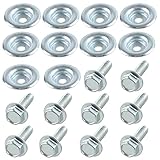
I remember wrestling with the front end of my buddy’s ’13 Fiesta, trying to get those stubborn strut bolts out. We were both sweating, covered in grease, and pretty sure we were going to snap something. The question on our minds, like probably yours right now, was: are 2013 Ford Fiesta strut bolts TTY?
It’s a question that can save you a massive headache, or cost you one if you get it wrong. I’ve learned the hard way that ignoring these little details can turn a simple repair into a multi-day ordeal. Let’s cut through the noise and get to what actually matters for this specific job.
Why You Need to Know About Tty Strut Bolts
Alright, let’s get straight to it: are 2013 Ford Fiesta strut bolts TTY? The short, unvarnished answer is yes, they are designed to be Torque-To-Yield (TTY). What does that even mean for you, the person wrestling with a wrench? It means these bolts are engineered to stretch to a very specific point to achieve maximum clamping force. They’re not like regular bolts you can just crank down forever. Once they’ve yielded, they’ve done their job, and trying to reuse them is like trying to un-bake a cake – it just doesn’t work right, and you risk stripping them, stretching them unevenly, or just not getting the proper torque.
This is a important detail for anyone doing suspension work, especially on the front struts of a 2013 Ford Fiesta. If you’re replacing struts, shocks, or even just doing some brake work that requires removing the strut assembly, you absolutely must use new TTY bolts.
Reusing old ones is a gamble I wouldn’t take. I learned this lesson the expensive way on a different car.
I thought, ‘Ah, it’s just a bolt, I’ll tighten it a bit more.’ Turns out, that bolt stretched beyond its usable limit, and the strut mount started to loosen up within a few hundred miles.
The knocking sound was awful, and I ended up having to do the whole job over again, buying new bolts and wasting time and money. Don’t be like me.
The reason manufacturers use TTY bolts is for safety and longevity. They make sure the connection between your suspension components and the vehicle’s chassis is incredibly secure under all sorts of driving conditions – bumps, turns, braking, you name it. A properly torqued TTY bolt provides a clamping force that’s optimized for the specific materials and loads involved.
But once that stretch has happened, the bolt’s ability to maintain that precise clamping force is compromised. For suspension components, where vibration and stress are constant, this is a recipe for disaster. So, when the service manual says you need new TTY bolts for your 2013 Ford Fiesta strut job, believe it.
It’s not a suggestion; it’s a requirement for a safe and lasting repair. (See Also: A 490 Bolts )
What to Look for When Buying Fiesta Strut Bolts
Okay, so you know you need new bolts. Now, where do you get them, and what should you be looking for? This is where it gets a little murky because not all aftermarket parts are created equal, and sometimes the exact OEM part can be pricey. For your 2013 Ford Fiesta strut bolts, you’ll typically be looking for the bolts that attach the top of the strut to the strut tower, and sometimes the lower bolt that secures the strut to the steering knuckle. Always double-check your specific repair manual or a reputable parts diagram for your exact model year and trim to confirm which bolts are TTY and need replacing.
When you’re shopping, you’ll see a few options. You can go with genuine Ford OEM parts. These are guaranteed to be the correct specification, but they often come with a premium price tag. For a safety-important item like strut bolts, if your budget allows, OEM is usually the safest bet. I’ve seen cheap aftermarket bolts fail prematurely, leading to more headaches and potentially dangerous situations. I once bought a set of ‘compatible’ strut bolts for an old Honda, and within a month, they were corroded and looked like they’d been in service for a decade. Not a good sign.
Alternatively, there are reputable aftermarket brands that specialize in suspension components. Look for brands that have a good track record and offer parts specifically listed for your 2013 Ford Fiesta. Brands like Dorman, Mevotech, or ACDelco (though ACDelco is GM, they do cross-reference and supply many parts) can be good options. The key is to make sure they explicitly state that the bolts are TTY or are direct replacements for the OEM TTY bolts. Don’t just grab any M10 or M12 bolt off the shelf, even if it looks right. You need the correct grade, thread pitch, length, and most importantly, the correct material and design that allows for the specified yield before failure.
Always check reviews if you’re buying online. See what other mechanics or DIYers have said about these specific bolts for your Fiesta. Pay attention to comments about fitment, material quality, and how well they held up. Sometimes, a slightly higher price for a well-regarded aftermarket part is money well spent compared to a cheap alternative that might compromise your car’s safety. I’d also recommend getting the nuts that go with them, if applicable, as those can also be stretch bolts or part of the TTY system. It’s better to have all new hardware for that important connection.
What to Look for in Replacement Strut Bolts
| Feature | Recommendation | Notes |
|---|---|---|
| Type | Torque-To-Yield (TTY) / Stretch Bolts | Absolutely required for safety and proper fitment. Do NOT reuse old TTY bolts. |
| Brand | OEM Ford or Reputable Aftermarket (Dorman, Mevotech, etc.) | OEM is best for guaranteed fit and spec. Reputable aftermarket can be good if confirmed TTY. |
| Material | High-strength steel | Look for specs confirming hardness and tensile strength if available. |
| Fitment | Exact for 2013 Ford Fiesta (specify trim if possible) | Verify against parts diagrams for your VIN. |
| Coating | Corrosion-resistant (e.g., zinc plated) | Helps prevent rust and seizing in the future. |
| Verdict | Buy New, Buy Correct. | This is not the place to cut corners. Your safety depends on it. |
The Strut Bolt Replacement Process: Do’s and Don’ts
So, you’ve got your new TTY strut bolts, and you’re ready to tackle the job. This is where things can go from straightforward to frustrating in a hurry if you don’t know a few key things. The process for replacing struts on a 2013 Ford Fiesta involves disconnecting the sway bar link, unbolting the strut from the steering knuckle (usually one or two large bolts), and then unbolting the top strut mount from the strut tower in the engine bay. Once those are out, the strut assembly can be lowered and removed. Installation is the reverse, but with some important TTY bolt procedures.
Here’s the most important part: installing the new TTY bolts and tightening them to the manufacturer’s specified torque sequence and values. This is where most DIYers run into trouble because it’s not just about getting them tight; it’s about getting them exactly right. Ford’s service manual will specify a multi-stage torque process for these bolts. It often involves a low initial torque, followed by an angle-based tightening. This is why they are TTY – they need to be stretched to a precise degree.
A common mistake I see people make is using a regular torque wrench for the angle tightening. Standard torque wrenches only measure rotational force. For TTY bolts, you often need an angle gauge or an impact wrench with an angle setting.
You’ll torque the bolt to a certain foot-pounds, then rotate it a specific number of degrees (e.g., 90 degrees, 180 degrees). If you don’t have an angle gauge, you can mark the bolt head and the surrounding surface with a paint pen and use that as a visual guide, but it’s less precise.
I always recommend getting the right tools; it makes the job so much easier and safer. I ended up buying a cheap angle gauge for about $20, and it’s saved me so much grief on jobs like this. (See Also: Am Ticketmaster Bolts )
Another pitfall is overtightening or undertightening. Undertightening means the strut mount won’t be secure, leading to noise, vibration, and potentially catastrophic failure. Overtightening can strip the threads in the strut tower or knuckle, or worse, stretch the new TTY bolt beyond its yield point prematurely, compromising its integrity. Always refer to the Ford service manual for your specific 2013 Ford Fiesta for the exact torque specifications and sequence. Don’t guess. Don’t eyeball it. Get the numbers and follow them precisely.
One practical tip: when you’re lowering the old strut assembly, be careful. It can be heavy and awkward. Make sure you have a way to support it or catch it. Also, before you unbolt the top mount, it’s a good idea to note the orientation of the strut relative to the mount. Sometimes there are alignment marks, or you might want to mark it yourself so you put it back together the same way, especially if you’re not replacing the springs or dealing with an alignment issue. This helps make sure the suspension sits correctly when you’re done.
Strut Bolt Tightening: The Tty Difference
- Clean Threads: Make sure threads on the bolts and in the receiving holes (strut tower, knuckle) are clean and free of debris.
- Initial Torque: Tighten bolts to the specified initial torque value.
- Angle Tightening: Use an angle gauge or mark your bolts to rotate them an additional specified number of degrees (e.g., 90°, 180°).
- Sequence Matters: Always follow the specified tightening sequence if there are multiple bolts.
- Do Not Reuse: Never reuse TTY bolts. Always install new ones.
When to Replace Strut Bolts: More Than Just Struts
So, we know you absolutely need new TTY bolts when you’re replacing the struts on your 2013 Ford Fiesta. But are there other times you might encounter these specific bolts and need to consider replacement? Absolutely. Think about any major suspension component replacement that involves the strut assembly or its mounting points. If you’re replacing the entire strut assembly, which is common, new bolts are a must.
What about the lower strut bolt that connects to the steering knuckle? This is often a large bolt and can also be a TTY bolt on many vehicles, including the Fiesta. If you’re doing brake caliper replacement, rotor replacement, or anything that requires removing the strut from the knuckle, you should seriously consider replacing this bolt if it’s identified as TTY. The forces transmitted through this connection are immense, and a compromised bolt could lead to wheel alignment issues or, in the worst case, the strut separating from the knuckle. That’s a terrifying thought, and a cheap bolt replacement can prevent it.
Another scenario is if you’re dealing with any kind of front-end collision repair. Even a minor fender-bender can put stress on suspension components. If the struts or their mounting points were involved, it’s wise to have them inspected. If there’s any doubt about the integrity of the bolts, replace them. Mechanics performing alignment checks might also identify stretched or damaged strut bolts and recommend replacement as part of the alignment process. It’s always better to be safe than sorry when it comes to steering and suspension.
I had a situation where I hit a massive pothole, and my car started pulling to one side. I thought it was just an alignment issue. The shop put it on the lift and found that the lower strut bolt had stretched from the impact. They couldn’t align it properly until we replaced that bolt. It was a good reminder that impact damage isn’t always obvious and can compromise important fasteners. So, while the primary driver for replacing these bolts is routine maintenance or strut replacement, keep an eye out for any unusual noises, handling changes, or signs of impact damage that might indicate a need for inspection and replacement of your 2013 Ford Fiesta strut bolts.
Common Mistakes and How to Avoid Them
Let’s talk about the screw-ups that people, including myself at times, tend to make when dealing with TTY strut bolts. Number one, and we’ve hammered this home: reusing old TTY bolts. I can’t stress this enough. The service manual says replace them for a reason. It’s not a dealer conspiracy to make you spend more money; it’s about the engineering of the fastener. You might get away with it once, but the risk isn’t worth the savings. You’re gambling with your car’s safety and your own.
Mistake number two is using the wrong torque specifications or angle settings. This is where an angle gauge or at least a good indelible marker and a steady hand become your best friends. Eyeballing it or just tightening until it feels ‘snug’ is a recipe for disaster. I’ve seen guys use impact wrenches set to ‘full blast’ to tighten these bolts, and that’s just asking for trouble. You’ll either strip the threads or, more likely, stretch the bolt beyond its intended limit, compromising its strength. Always, always, always consult the official service manual for the precise torque and angle values for your 2013 Ford Fiesta.
Mistake number three is not replacing associated hardware. Often, the TTY bolts come with specific nuts or washers that are also part of the clamping system. If the manual calls for new nuts or a specific type of washer, make sure you get them. Skipping these small, seemingly insignificant parts can still affect the overall clamping force and integrity of the connection. Think of it like building a chain – one weak link can compromise the whole thing. (See Also: Are 305 Vortec Heads Center Bolt )
Mistake number four, and this is a big one for DIYers, is not having the correct tools. Trying to do suspension work without the proper jack stands, wrenches, sockets, a torque wrench, and an angle gauge (for TTY bolts) is not only frustrating but also incredibly dangerous. A car falling off a jack because you used cinder blocks is not a funny story. Invest in decent tools. It makes the job safer, faster, and frankly, more enjoyable. For a job involving suspension and safety-important fasteners like TTY strut bolts, having the right equipment is a must.
Finally, a common oversight is forgetting to re-torque after a short driving period. While TTY bolts are designed to yield precisely, sometimes it’s recommended to re-check the torque after a few hundred miles, especially on suspension components. While not always explicitly stated for every TTY bolt application, it’s a good practice to be aware of any unusual noises or vibrations after a suspension job and address them promptly. If you’ve done the job right with new TTY bolts and proper torque, you should be golden, but staying vigilant is key.
Common Strut Bolt Mistakes & Solutions
| Mistake | Solution |
|---|---|
| Reusing old TTY bolts | Always purchase and install new TTY bolts. They are designed for single use. |
| Incorrect torque/angle settings | Use an angle gauge and a reliable torque wrench. Consult the service manual for exact specs. |
| Skipping associated hardware | Replace all specified nuts, washers, and any other hardware mentioned in the service manual. |
| Using inadequate tools | Invest in quality jack stands, wrenches, sockets, and torque/angle tools. Safety first. |
| Ignoring post-job checks | Listen for unusual noises and consider re-checking torque if recommended or if issues arise. |
Frequently Asked Questions (faq)
Are 2013 Ford Fiesta Strut Bolts Reusable?
No, the strut bolts on a 2013 Ford Fiesta are typically Torque-To-Yield (TTY) bolts. This means they are designed to stretch to a specific point to achieve the correct clamping force. Once they have yielded, they are compromised and must be replaced with new ones for safety and proper function.
What Happens If I Reuse Tty Strut Bolts?
If you reuse TTY strut bolts, you risk them not holding the correct torque, leading to looseness in the suspension. This can cause noise, vibration, premature wear on other components, and in severe cases, could lead to a dangerous failure of the suspension system.
Where Can I Buy New 2013 Ford Fiesta Strut Bolts?
You can purchase new strut bolts from Ford dealerships for OEM parts, or from reputable aftermarket auto parts retailers (online or in-store). Make sure the aftermarket bolts are specified as direct replacements for your 2013 Ford Fiesta and are confirmed to be TTY type.
Do I Need a Special Torque Wrench for Tty Bolts?
You need a standard torque wrench to achieve the initial torque setting, but for the angle-tightening phase of TTY bolts, you will also need an angle gauge or a way to accurately measure the specified rotation in degrees. Some advanced torque wrenches have this feature built-in.
How Tight Should 2013 Ford Fiesta Strut Bolts Be?
The exact torque specifications and angle settings vary. You must consult the official Ford service manual for your 2013 Ford Fiesta. It will provide a multi-stage tightening procedure, typically involving an initial torque followed by a specific degree of rotation.
Final Verdict
So, to wrap it up, if you’re poking around your 2013 Ford Fiesta’s front suspension and dealing with strut bolts, the answer to ‘are 2013 Ford Fiesta strut bolts tty’ is a resounding yes. Treat them with the respect TTY fasteners deserve: don’t reuse them, use the right tools, and follow the torque procedures religiously. Trust me, the few extra bucks for new bolts and the right torque wrench will save you a massive headache and potentially keep you safe on the road.
It’s easy to get frustrated when a seemingly simple bolt replacement turns into a complex procedure, but that’s the reality with modern automotive engineering. Skipping steps or cutting corners on important components like suspension fasteners is never worth the risk. Get the correct parts, get the right tools, and do it right the first time.