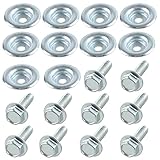
I remember staring at a pile of hardware, trying to fix a wobbly shelf. The little packet of bolts I’d grabbed from the corner store looked right, but then the nightmare began. None of them fit. Not the ones I had, not the ones I bought later. It was a frustrating introduction to the world of fasteners, and it hammered home one thing: knowing what’s common and what’s not can save you a ton of headaches.
So, let’s cut to the chase. Are 6mm bolts common? The short answer is yes, but with some important caveats that can trip you up if you’re not paying attention.
The Ubiquitous 6mm: Where You Actually Find Them
Honestly, if you’ve ever tinkered with anything mechanical, from a bicycle to a piece of flat-pack furniture, chances are you’ve encountered 6mm bolts. They’re not some obscure specialist item; they’re the workhorses of many everyday applications. Think about it: furniture assembly, basic automotive repairs, even some hobbyist electronics enclosures often rely on the humble 6mm. I’ve used them to reattach a showerhead holder, secure a garden gate latch, and even build a rudimentary workbench. They strike a good balance – strong enough for many tasks without being overly bulky or requiring massive tools.
The reason they’re so prevalent is their size. A 6mm bolt is about a quarter of an inch in diameter. That’s a sweet spot.
It’s significantly stronger than smaller 4mm or 5mm bolts, which can strip or bend under moderate load, but it’s not as beefy as an 8mm or 10mm bolt, which might be overkill for lighter-duty applications and require larger wrenches or sockets. This makes them incredibly versatile. They’re the go-to for joining two pieces of metal or wood where you need a secure, reliable connection but don’t need to hold up a bridge. When I’m building something where durability matters but I don’t want to over-engineer it, 6mm is usually my first thought.
The availability is also a massive plus. You can walk into almost any hardware store, auto parts store, or even a well-stocked general store and find a decent selection of 6mm fasteners.
However, here’s where things can get tricky, and why my initial shelf repair was such a disaster. While 6mm is a common diameter, the type of bolt and its other specifications are where the confusion starts.
Are you looking for a hex head bolt, a carriage bolt, a flange bolt, or a set screw? What about the thread pitch – coarse or fine? These details are just as important, if not more so, than the diameter itself.
I once spent an hour trying to find a specific 6mm bolt for a motorcycle fairing, only to realize the bike used a fine-thread metric bolt, while all I could find were standard coarse-thread ones. The packaging might say ‘6mm,’ but that’s just the first piece of the puzzle.
Threads, Heads, and Materials: The Nitty-Gritty of 6mm Bolts
This is where most DIYers, myself included in my early days, get tripped up. Just because it’s a 6mm bolt doesn’t mean it’s the right 6mm bolt for your job.
The most common confusion point for metric bolts is thread pitch. Most 6mm bolts you’ll find are M6, meaning they have a coarse thread. The standard coarse pitch for M6 is 1.0mm. However, fine-thread versions exist, with a 0.75mm pitch.
If you try to thread a coarse bolt into a fine-threaded hole, or vice-versa, it’s not going to work. It might feel like it’s going in a little, but you’ll strip the threads on both the bolt and the mating part, rendering them useless. I learned this the hard way trying to replace a bolt on an old Italian scooter; the manual specified a fine thread, and my local shop only had coarse. (See Also: A 12 Bolt Automotive Battery Contains How Many Cells )
A quick trip to a specialty fastener shop saved the day, but cost me extra time and money.
Then there’s the head style. The most common for 6mm bolts are hex heads, which you tighten with a wrench or socket. These are great for general-purpose use where you have access to the head.
Carriage bolts, with their smooth, rounded head and square neck, are fantastic for wood applications or where you want to prevent tampering, as the square neck digs into the wood and stops the bolt from turning when you tighten the nut. Flange bolts have an integrated washer-like flange at the base of the head, which distributes the load over a larger area, preventing the need for a separate washer and often providing a more secure connection. Socket head cap screws, often made of high-strength steel, are used in applications requiring a sleek, recessed finish and high clamping force, typically with an Allen wrench. Each style has its purpose, and choosing the wrong one can lead to a weak connection or damage to the material you’re fastening.
Material is another huge factor. Most common 6mm bolts you’ll grab off the shelf are made of zinc-plated steel, which offers decent corrosion resistance for indoor or mild outdoor use. For more demanding environments, like marine applications or areas prone to salt exposure, you’ll want stainless steel.
This comes in different grades, like 304 (common, good corrosion resistance) and 316 (better for harsh marine environments). There are also higher-strength bolts, often graded 8.8, 10.9, or even 12.9, which are used in automotive and heavy machinery where significant stress is involved. These are typically black oxide coated or have a different plating. For a simple shelf or a garden gate, plain zinc-plated steel is usually fine.
For anything important, like structural components or high-vibration areas, you absolutely need to check the grade and material.
When 6mm Isn’t Enough: Common Mistakes and When to Go Bigger (or Smaller)
The biggest mistake people make is assuming that because a bolt is the right diameter, it’s the right bolt. As I’ve stressed, thread pitch, head style, length, and material all matter. I’ve seen folks try to force a coarse thread into a fine hole, strip out the threads on a perfectly good piece of equipment, and then blame the bolt. It’s rarely the bolt’s fault; it’s usually a mismatch.
Another common error is using the wrong length. Too short, and you won’t get enough threads engaged for a secure hold. Too long, and the bolt might bottom out before it tightens, or the excess threads can snag on things or look messy.
Always measure the material you’re joining and add the thickness of your nut and washer (if used) to determine the correct bolt length.
People also underestimate the strength needed for a particular application. A 6mm bolt might seem sufficient, but if the joint is under significant shear or tensile stress, or subject to vibration, it could fail. This is particularly true with softer materials like aluminum or plastics.
For example, I tried to use 6mm bolts to mount a heavy-duty bracket for a large TV. It seemed okay at first, but after a few weeks, I noticed the mount was sagging. I ended up having to upgrade to 8mm bolts with reinforcing washers to distribute the load properly. It’s always better to err on the side of caution and go slightly larger or stronger if you’re unsure. (See Also: A 325 Bolts )
The cost difference is usually minimal, but the safety and reliability gains are huge.
Conversely, sometimes people use bolts that are too big. While it’s rare to accidentally put an 8mm bolt in a 6mm hole (they just won’t fit), people might over-engineer a project with larger fasteners than necessary. This can lead to unnecessary weight, require larger tools, and sometimes even crack or damage the material being fastened if it’s thin or brittle. For instance, using 10mm bolts to attach a lightweight decorative panel would be ridiculous; it’s over-specifying and adds complexity for no benefit.
Understanding the load requirements is key. If you’re just joining two pieces of wood for a bookshelf, 6mm is likely fine. If you’re attaching an engine component, you’ll need to consult the manual for the specific grade and size required, which will almost certainly be larger than 6mm.
Here’s a quick comparison of common metric bolt diameters and their general use cases:
| Diameter (mm) | Common Uses | My Verdict |
|---|---|---|
| M4 | Small electronics, appliance panels, lightweight fixtures | Good for delicate work, easily stripped |
| M5 | Bicycle components, smaller furniture, basic fixtures | A step up from M4, still a bit light for heavy use |
| M6 | General furniture, cabinetry, light automotive, DIY projects | The versatile workhorse, great balance of strength and size |
| M8 | Automotive parts, heavier furniture, structural brackets, machinery | For when M6 just won’t cut it, more solid |
| M10 | Heavy-duty automotive, structural steel, larger machinery, towing equipment | Serious strength, requires larger tools |
Real-World Applications: Where 6mm Bolts Shine (and Where They Don’t)
Let’s talk about where 6mm bolts are genuinely useful. Furniture is a big one. Many IKEA-style flat-pack items use M6 bolts extensively, often in conjunction with cam locks or dowels. They provide the necessary clamping force to keep the pieces together without being so massive they detract from the furniture’s design. I’ve assembled countless pieces of furniture, and M6 bolts are practically a standard. They’re also common in cabinet hardware – think drawer pulls, hinges, and mounting brackets. If you’re building custom cabinetry or replacing existing hardware, 6mm is a size you’ll encounter frequently.
In the automotive world, 6mm bolts are used for less important components. You’ll find them securing interior trim panels, certain brackets for non-structural parts, electrical components, and sometimes even on smaller motorcycle fairings or accessories. They are generally not used for important structural connections like suspension parts, engine mounts, or chassis components. Those applications require much larger and higher-grade fasteners. However, for those small jobs like replacing a license plate bolt, reattaching a mirror housing, or securing a piece of trim, a 6mm bolt is often exactly what you need. I’ve had to replace a few fender bolts on older cars, and M6 was the go-to size.
DIY projects are another area where 6mm bolts are invaluable. Building shelves, creating custom jigs for woodworking, mounting accessories to a workbench, or even putting together a small metal fabrication project – these are all prime candidates for 6mm fasteners. Their ease of use with common tools like socket sets and wrenches, combined with their decent strength, makes them perfect for the home workshop.
I once built a sturdy planter box out of wood and metal L-brackets. The M6 bolts were perfect for securing the brackets to the wood, providing a strong and clean finish. They’re also great for attaching things like casters to larger DIY furniture pieces.
The key is matching the bolt length and material to the specific load and environment.
Where they don’t shine is in high-stress, high-vibration, or safety-important applications. Trying to use a standard M6 bolt to hold together a suspension component on a car or to secure a load-bearing beam in a structure would be a recipe for disaster. The forces involved would quickly exceed the bolt’s shear and tensile strength, leading to failure. Always consult the manufacturer’s specifications or a structural engineer for any application where failure could cause injury, damage, or significant financial loss. For these scenarios, you’ll likely be looking at M8, M10, M12, or even larger bolts, often made from higher-grade hardened steel.
Buying Tips: Don’t Get Caught Out
When you’re out shopping for 6mm bolts, the first thing to do is understand exactly what you need. Don’t just grab the first packet that says “6mm.” You need to know the length, the thread pitch (coarse is most common for M6, but check), and the head style. If you’re replacing a bolt, take the old one with you if possible. If not, measure it carefully. (See Also: Are 115mm And 114 3mm Bolt Patterns Interchangeable )
Measure the threaded portion for length and try to determine the thread pitch – sometimes you can gauge it by how many threads fit into a known distance, or by comparing it to a known thread gauge. If you’re unsure about thread pitch, it’s always safest to buy a small assortment of both coarse and fine thread M6 bolts in the length you need, or visit a specialty fastener shop where they can help you identify it.
Don’t be afraid to buy in bulk if you use a lot of a particular size and type. Small boxes of a few bolts can get expensive quickly. Many hardware stores and online retailers offer much better pricing when you buy in larger quantities, like bags of 50 or 100.
This is especially true for common sizes like M6. I used to buy individual bolts for small projects, but I quickly realized that having a good stock of common sizes like M6, M8, and M10 in various lengths saved me a ton of time and money in the long run. Plus, it’s incredibly satisfying to have exactly what you need when you need it, rather than having to make a special trip.
Consider the material and finish. For most indoor home use, standard zinc-plated steel is perfectly fine. It’s affordable and offers decent corrosion resistance.
If your project is going outdoors, or in a humid environment like a bathroom or garage, you’ll want to step up to stainless steel (at least 304 grade). It costs more, but the rust resistance is well worth it. For applications requiring higher strength, look for the grade markings on the bolt head (e.g., 8.8, 10.9, 12.9).
If your project demands it, don’t skimp on grade. The cheapest bolt might be tempting, but it’s not a bargain if it fails. Always remember that the nut and any washers you use should ideally be of the same material or a compatible material to avoid galvanic corrosion, especially with stainless steel.
People Also Ask: Addressing Your Burning Questions
What Is the Standard Thread Pitch for a 6mm Bolt?
The standard, or coarse, thread pitch for a 6mm metric bolt (designated as M6) is 1.0 millimeter. This means there are 1.0mm of distance between each thread crest. While M6 x 1.0 is the most common, you can also find M6 bolts with a fine thread pitch of 0.75mm. It’s important to match the thread pitch to the receiving nut or threaded hole to avoid stripping threads.
What Is the Equivalent of a 6mm Bolt in Imperial Sizes?
A 6mm bolt is roughly equivalent to a 1/4-inch bolt in diameter. However, this is where it gets tricky. While the diameter is similar (6mm is about 0.236 inches, and 1/4 inch is 0.25 inches), their thread pitches are different. Standard 1/4-inch bolts typically use a 20 threads per inch (TPI) coarse thread or a 28 TPI fine thread. Metric coarse thread (1.0mm) is not the same as imperial coarse thread. Therefore, you cannot directly interchange metric and imperial bolts even if the diameters are close; you must use the correct thread system.
What Is the Strength of a 6mm Bolt?
The strength of a 6mm bolt depends heavily on its material grade. A standard zinc-plated steel M6 bolt, often found in furniture or general hardware, is typically around grade 4.8 or 8.8. A grade 4.8 bolt has a tensile strength of about 400 MPa, while a grade 8.8 bolt has a tensile strength of about 800 MPa. This means a single grade 8.8 M6 bolt can withstand significant force before yielding or breaking, but for important applications, you’ll need to consult specific engineering tables for the exact grade and load conditions.
Are 6mm Bolts Metric or Imperial?
6mm bolts are metric. The “M” designation in M6, for example, stands for metric. Metric fasteners are measured in millimeters for diameter and pitch. Imperial (or standard) fasteners are measured in inches for diameter and threads per inch (TPI). While a 6mm bolt and a 1/4-inch bolt are similar in diameter, they use completely different thread systems and are not interchangeable.
Final Verdict
So, to circle back to our main question: are 6mm bolts common? Absolutely. They are the unsung heroes of a vast number of everyday items and DIY projects. You’ll find them everywhere from your furniture to your car’s interior trim.
The key takeaway isn’t just their commonality, but the importance of specificity. Just knowing it’s a ‘6mm bolt’ is only half the battle. You need to nail down the thread pitch, length, head style, and material grade to make sure your fix or project holds strong and looks good. Don’t get caught out by the details, especially when it comes to thread pitch.
Next time you’re at the hardware store or working on a project, take a moment to really look at the bolts. Understanding these small details will save you trips back to the store and potentially save a project (or your sanity) from going sideways. And if you’re ever in doubt, taking a photo or the old bolt with you is always a good bet.