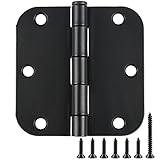
I once spent an entire Saturday wrestling with a new interior door, convinced the frame was warped. Every hinge I tried seemed to be in the wrong spot, and I was about to give up and call a carpenter. It turns out, the problem wasn’t the frame or my supposed lack of skill, but a subtle difference in the hinge design I’d bought. It got me thinking: are all door hinges spaced the same? It’s a simple question, but the answer isn’t as straightforward as you might hope, and it can save you a lot of headache.
The truth is, while there’s a standard, not everything follows it to the letter. Understanding these variations is key to a smooth installation, whether you’re hanging a new door or replacing an old hinge.
The Myth of the Universal Hinge Spacing
Let’s cut to the chase: no, not all door hinges are spaced the same. If you’ve ever slapped a new set of hinges on a door and found it doesn’t quite sit right, or the screws won’t line up perfectly, you’ve likely encountered this. The common wisdom, or what you might pick up from a quick online search, often implies a universal standard. For the most part, this is true for standard interior and exterior residential doors. We’re talking about the distance between the center of the screw holes on the two leaves of the hinge – the part that attaches to the door and the frame.
For a standard 3-hole door hinge, you’ll typically see a measurement of 5-1/2 inches from the center of the top hole to the center of the bottom hole. The middle hole is usually centered between the top and bottom, making it roughly 2-3/4 inches from each. This is the most common spacing you’ll find on residential doors.
When you buy a new door and new hinges, they are usually designed to be compatible. But here’s where things get tricky: manufacturers don’t always adhere rigidly to this, and older homes, custom doors, or doors for specific applications can throw a wrench in the works. I learned this the hard way when I was trying to replace a single hinge on a pantry door.
The old hinge was a standard butt hinge, or so I thought. I grabbed a replacement from the hardware store, same size, same material, but when I went to screw it in, the middle screw hole was off by maybe an eighth of an inch.
Just enough to make it impossible to get all three screws in flush. The door sagged a bit on that side, and it drove me nuts for weeks until I went back and found a slightly different model that, thankfully, had the correct spacing for that specific door.
What’s actually happening is that the pin and barrel assembly, the part that allows the door to pivot, takes up a certain amount of space. The leaves are then designed with screw holes that accommodate this. The difference often comes down to how much material is between the pin and the edge of the leaf, and how the screw holes are drilled relative to the overall hinge length and the pin’s position.
Some manufacturers might slightly adjust these dimensions for aesthetic reasons, manufacturing tolerances, or even to make their hinges stand out as a unique product. It’s a small detail, but a vital one for a perfect fit. If you’re not careful, you could end up with a door that doesn’t close properly, looks uneven, or worse, puts undue stress on the frame and the hinge itself.
Decoding Hinge Specifications: What to Actually Look For
So, how do you avoid my pantry door headache? You need to get a little detective-like with your hinges. The most important measurement isn’t just the overall length of the hinge, but the spacing of those screw holes. For a standard 3-hole hinge, you’re looking for that 5-1/2 inch measurement from the center of the top hole to the center of the bottom hole. (See Also: A Box Without Hinges Key )
The distance between the top and middle, and the middle and bottom holes, should be roughly equal. However, this isn’t an official, legally mandated standard that every single manufacturer must adhere to. It’s more of a widely adopted industry convention. Think of it like the spacing on a standard electrical outlet – most are the same, but you can find variations.
When you’re at the hardware store, or browsing online, don’t just grab the hinge that looks right. Pick it up. Look closely at the screw holes. If you have an old hinge you’re replacing, bring it with you. Measure the distance between the center of the top screw hole and the center of the bottom screw hole. If you’re buying new, and the packaging doesn’t clearly state the hole spacing, try to find a display model you can inspect. Many hinge manufacturers will list the dimensions in their product specifications online or on the packaging. Look for terms like ‘screw hole spacing’ or ‘hole pattern dimensions’.
Beyond spacing, other factors matter too. The width of the hinge leaf (the part that mounts to the door and frame) is important for structural integrity and how much clearance you have. The thickness of the hinge pin and the overall gauge of the metal also play a role.
A heavier door will need thicker, more solid hinges. But for the specific question of whether they’re spaced the same, the hole-to-hole distance is your primary concern. Another thing to consider is the radius of the corners on the hinge leaves. Most modern doors have slightly rounded corners, but older doors might have sharp, square corners.
Hinges come in both styles, and using the wrong one can leave a gap or look out of place.
For heavier doors, or doors that see a lot of use, you might also see hinges with four screw holes per leaf. While the spacing between the top and bottom holes might still be similar, the addition of extra holes can sometimes alter the distribution. These are often used for security doors or very large, heavy entry doors. Always check the specifications. A little bit of pre-purchase diligence can save you hours of frustration and make sure your door swings smoothly and looks professional.
| Hinge Type | Typical Hole Spacing (Center-to-Center) | Common Use | My Verdict |
|---|---|---|---|
| Standard 3-Hole Butt Hinge | 5-1/2 inches (top to bottom) | Interior doors, lightweight exterior doors | Reliable for most standard jobs. If in doubt, measure your old one. |
| 4-Hole Heavy Duty Hinge | Often similar vertical spacing to 3-hole, but with an extra hole for added support. | Heavy exterior doors, commercial doors, high-traffic areas. | Overkill for interior doors, but a lifesaver for substantial ones. |
| Specialty Hinges (e.g., security, pivot) | Varies wildly. | Specific applications requiring unique movement or security features. | Do NOT assume standard spacing here. Always check manufacturer specs. |
Common Pitfalls and How to Avoid Them
The biggest pitfall, as I discovered, is assuming all hinges are interchangeable just because they look alike or have the same number of holes. This leads to problems like misaligned screw holes, doors that sag, squeak, or won’t close properly. I’ve seen people try to force screws into slightly off-center holes, stripping the wood or even cracking the hinge leaf. It’s a recipe for a botched job.
Another common mistake is not considering the door’s weight and swing. A light interior bedroom door doesn’t need the same heavy-duty hinges as a solid wood exterior entry door. Using undersized hinges on a heavy door is a surefire way to have problems down the line. The door will sag, the hinges will bend, and you’ll end up replacing them anyway, likely with the correct, heavier-duty ones. On the flip side, using overly large or heavy hinges on a lightweight door can look clunky and might not even fit correctly due to their size. It’s about balance and appropriate specification.
People also often overlook the ‘ więcej ‘ (more) aspect of a hinge – the knuckle. The number of knuckles on a hinge (the cylindrical parts that the pin goes through) affects its strength and stability. Most standard interior doors use hinges with two knuckles. Heavy doors might benefit from three or even four. The more knuckles, the more support points there are, distributing the weight better. If a hinge feels flimsy or the door has a lot of flex, the knuckle count might be a contributing factor, alongside the gauge of the metal. (See Also: Are Integrated Washing Machine Door Hinges Standard )
One contrarian opinion I have is about the ‘self-drilling’ screws that sometimes come with hinge kits. While they’re convenient, I often find that using separate, high-quality wood screws that are specifically designed for the type of wood you’re working with provides a much stronger and more secure hold. The self-drilling screws can sometimes strip out easily or not bite into the wood as effectively, especially in older, softer wood. I’ve learned to set those aside and use my own screws, especially for anything I want to last. It might cost a few extra bucks, but it’s worth it for the peace of mind.
Finally, don’t forget the orientation of the hinge. For most standard doors, you’ll use ‘plain’ or ‘regular’ swing hinges. However, some applications might require ‘swing-clear’ hinges, which allow the door to swing completely clear of the opening when opened 90 degrees. These are often used in places where you need maximum clearance, like hallways or doorways leading to small rooms. Using the wrong type of swing hinge can impede door function or even cause damage.
When Standard Doesn’t Cut It: Specialty Hinges
While the 5-1/2 inch spacing is the most common for standard residential doors, there are many situations where you’ll encounter hinges that deviate from this. These are often referred to as specialty hinges, and they’re designed for specific purposes or door types. Take, for example, cabinet hinges. These are almost universally smaller and have a completely different mounting system and spacing, often involving a concealed mechanism. Trying to use a standard door hinge on a cabinet door would be a disaster.
Then there are pivot hinges. These are often used for heavier doors, like some types of entry doors or modern interior doors that want a minimalist look without visible hinges on the edge. Pivot hinges mount at the top and bottom of the door and frame, allowing the door to pivot on a single point. Their ‘spacing’ is dictated by the pivot mechanism itself, not by screw holes on a leaf. The placement of the pivot point is important for the door’s operation.
Security doors, especially those made of steel, often use heavy-duty hinges with different mounting patterns. These might have multiple holes, or larger, more solid mounting plates designed to withstand force.
The spacing on these is purely functional, prioritizing strength and security over a standardized aesthetic. You might also find specialized hinges for things like garage doors, screen doors, or even antique furniture doors. Each of these has its own set of dimensional requirements and often unique mounting hardware.
I remember helping a friend install an old, salvaged saloon-style door in his basement bar. The hinges were stout, with a unique offset and multiple large, hand-forged screws.
They were nothing like the standard butt hinges I was used to, and the spacing was entirely different, designed to accommodate the door’s weight and its specific swing.
Another area where you might see variations is with fire-rated doors. These doors and their hardware are built to specific safety standards, and while they might use a hinge that looks similar to a standard one, the internal construction and mounting specifications can be different to make sure fire resistance. It’s not just about the door itself, but the entire system working together. When you encounter a door that doesn’t look like a typical interior or exterior residential door, it’s always best to assume the hinges are specialized. (See Also: Are Hinges Wheeels )
Resist the urge to grab the closest-looking thing from the hardware aisle. Take photos, measure everything you can, and try to identify the type of door and its intended function.
This will give you clues as to what kind of hinge you’ll need.
DIY Tips: Measuring and Installing for Success
When you’re faced with replacing a hinge or installing a new door, accurate measurement is your best friend. As we’ve established, are all door hinges spaced the same? No. So, here’s the process I follow to make sure a good fit:
- Identify the Hinge Type: Is it a standard butt hinge, a ball-bearing hinge, a security hinge, or something else? This will tell you what kind of measurements to focus on.
- Measure Existing Hinges (if replacing): With the door open, remove one hinge at a time. Carefully measure the distance between the center of the top screw hole and the center of the bottom screw hole on the leaf that attaches to the door (and the frame, if you have access). If it’s a 3-hole hinge, this measurement should be around 5-1/2 inches for a standard door. Also, note the width of the hinge leaf.
- Check Manufacturer Specifications (if buying new): If you’re buying new hinges, always check the product description or packaging for dimensions. Look for the hole spacing. If it’s not listed, and you can’t inspect the hinge in person, be cautious.
- Consider Door Weight and Material: Heavier doors require thicker, stronger hinges. A solid oak door needs different hinges than a hollow-core interior door.
- Note Corner Radius: Are the corners of the hinge leaves square or rounded? Match this to your door and frame.
- Prepare the Opening: If the screw holes in the door frame are stripped or enlarged, you’ll need to repair them. Wood filler, dowels, or even golf tees (a classic trick!) can be used to create new material for the screws to bite into.
- Install One Hinge at a Time: When installing new hinges, start with the top hinge. Align it carefully and drive in the screws partially. Then move to the middle, and finally the bottom. This helps make sure the door hangs straight.
- Test the Swing: Once all hinges are installed, open and close the door several times. Check for any binding, sticking, or uneven movement. If it’s not right, you may need to adjust screw tightness or, in worse cases, replace a hinge that’s not quite the right fit.
I once tried to speed things up by installing all three hinges on a new door at once. Big mistake. The door ended up slightly off-kilter, and I spent an hour trying to shim the hinges to get it to hang properly. The lesson? Patience and one hinge at a time, especially when you’re not 100% sure about the hinge specs.
Frequently Asked Questions About Door Hinge Spacing
What Is the Standard Spacing for Door Hinges?
For most standard interior and exterior residential doors, a 3-hole butt hinge has a common spacing of approximately 5-1/2 inches from the center of the top screw hole to the center of the bottom screw hole. The middle hole is typically positioned halfway between these two.
Can I Use Hinges with Different Screw Hole Spacing?
Generally, no. If the screw hole spacing differs significantly from your existing hinges or the door frame’s pre-drilled locations, you’ll have problems. The screws won’t align, the door won’t hang correctly, and you could damage the door or frame. It’s best to match the spacing exactly or use hinges designed for adjustable mounting.
What If My Old Hinges Have Non-Standard Spacing?
If you’re replacing hinges on an older home or a custom door and the spacing isn’t standard, you’ll need to measure your existing hinges carefully. Take those measurements to the hardware store or consult with a supplier to find replacement hinges that match. Sometimes, slight adjustments can be made with filler, but it’s always better to find an exact match if possible.
How Do I Measure Hinge Screw Hole Spacing Accurately?
With the hinge leaf laid flat, use a ruler or tape measure to find the exact center of the top screw hole and the exact center of the bottom screw hole. Then, measure the straight-line distance between these two center points. This measurement is important for making sure compatibility.
Are Hinges for Pre-Hung Doors Different?
Pre-hung doors come with hinges already installed, and the spacing is designed to match the frame they are attached to. When you buy a separate door slab to fit into an existing frame, you need to make sure your new hinges match the existing hinge mortises and screw hole locations in the frame and on the door, which is where understanding spacing becomes vital.
Conclusion
So, to answer the big question: no, are all door hinges spaced the same? Not precisely, though there’s a common standard that works for most residential doors. The devil is in the details, and those small variations in screw hole placement can turn a simple DIY job into a frustrating ordeal. My pantry door incident, while minor, taught me to respect those measurements. Don’t just eyeball it. Grab your tape measure, check the specs, and if you’re unsure, bring the old hinge with you to the store.
Investing a few extra minutes in accurate measurement and careful selection will pay off in a door that swings smoothly, closes perfectly, and lasts for years without issue. It’s the kind of small detail that makes a big difference in how your home functions. Next time you’re dealing with a door hinge, you’ll know exactly what to look for.