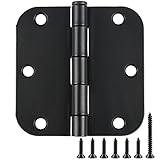
I was wrestling with this massive old oak door in my garage, the kind that weighs more than a small car. It was sticking, groaning, and generally being a pain. I needed to get it off to do some serious rust-proofing, and that meant removing it from the frame. My buddy Dave, who’s a carpenter by trade, pipes up with a smirk, “You know, technically, those door hinges are a type of wheel, right?” My first thought was, ‘What in the actual hell are you talking about, Dave?’ It got me thinking, though. Are door hinges technically wheels? Let’s get down to brass tacks on whether door hinges are wheels.
The Rolling Element: What Makes a Wheel a Wheel?
Okay, let’s break this down. What’s the basic idea behind a wheel?
It’s something that rotates around an axle, usually to reduce friction and allow for movement. Think about a car tire, a skateboard wheel, or even the casters on your office chair. They all have a central point of rotation and a circular or near-circular outer edge that rolls against a surface. The primary function is always about making things move more easily.
When you’re talking about automotive and vehicles, this concept is even more central. Cars, bikes, trucks – they all rely on wheels to get from Point A to Point B with any sort of efficiency. Without them, you’re just dragging everything, which is exhausting and incredibly inefficient. My first bike had solid rubber tires, and hitting a single pebble felt like a major event.
The upgrade to pneumatic tires? A revelation.
That’s the power of a good rolling element.
Door hinges, on the other hand, are designed to allow a door to swing. They pivot.
They have a pin, usually, and two barrels that rotate around that pin. On the surface, it sounds a bit like the definition of a wheel. They allow movement, they have a rotating element. But the way they move and their purpose is different.
A wheel is typically about linear motion, overcoming resistance to travel across a distance. A hinge is about rotational motion, allowing something to open or close on a fixed axis. It’s a subtle difference, but it’s a big one when you get into the nitty-gritty of mechanics. You wouldn’t use a door hinge to roll your car down the street, and you certainly wouldn’t use a car tire to hang a cabinet door.
It’s about application. When people think ‘wheels,’ they’re thinking about transport and locomotion. Hinges are about access and clearance.
However, I’ve also seen some pretty dodgy setups where people have jury-rigged things. I remember a time I was helping a mate move some ridiculously heavy antique furniture.
We were trying to slide a massive armoire across a polished wooden floor, and it was a nightmare. I’d seen those furniture sliders, but we didn’t have any.
My mate, bless his resourceful heart, grabbed a couple of old, cheap door hinges, laid them flat on the floor with the pin upwards, and we carefully placed the armoire on top of them. The idea was that the barrel of the hinge would act like a rudimentary roller. It was a terrible idea, honestly.
It scratched the floor something fierce, and it barely moved. But for a fleeting moment, in a very, very crude way, the rotating part of the hinge was acting like a roller. It’s a testament to how the core concept of rotation can be adapted, even if it’s not its intended or effective use.
The Mechanics: How Do They Actually Work?
Let’s get into the guts of it. A standard door hinge, the kind you find on most interior and exterior doors, typically consists of three main parts: the two knuckles (or leaves) that attach to the door and the frame, and the pin that connects them.
The knuckles have hollow cylinders (barrel) that slide over the pin. When the door opens or closes, the knuckles rotate around the pin.
This rotation is what allows the door to swing. It’s a simple pivot mechanism. (See Also: A Box Without Hinges Key )
The pin itself might be removable, allowing you to lift the door off its frame. Sometimes it’s fixed.
Lubrication is key here. A dry hinge squeaks like a banshee and can eventually seize up.
I learned that the hard way when I bought a fixer-upper house and every single door in the place sounded like it was being tortured. A can of WD-40 and a bit of patience sorted most of it, but some were so far gone they needed replacing.
Compare this to a wheel. A wheel needs a hub, spokes (sometimes), and a rim, all designed to turn around an axle. The axle is usually fixed, and the wheel spins on it. The primary interaction is the outer circumference of the wheel rolling against a surface. The friction is minimized by the rolling motion. With a hinge, the rotation is happening within the hinge itself, between the pin and the barrels. The friction is between these surfaces. While both involve rotation, the mechanism and the way that rotation is used are fundamentally different. A wheel is designed to help linear movement over a surface. A hinge is designed to help angular movement around an axis.
Now, there are some specialized hinges that blur the lines a bit. Think about something like a lazy susan mechanism. That has a series of ball bearings that allow for smooth, 360-degree rotation. It functions very much like a set of wheels arranged in a circle, but its purpose is still about allowing something to spin rather than roll across a surface.
Or consider a barrel hinge, which is basically a cylindrical hinge where the barrel itself is the main rotating component. Again, it’s about swing, not transport. The common door hinge, however, is far from a wheel. It’s a pivot, pure and simple.
The common advice to just ‘lubricate your hinges’ is solid, but it’s not going to turn them into anything resembling a wheel.
| Component | Door Hinge | Wheel | Verdict |
|---|---|---|---|
| Primary Motion | Rotation around a fixed pin (swing) | Rotation around an axle (rolling) | Different |
| Friction Reduction | Between pin and barrel | Between axle and hub, and rolling surface | Different |
| Purpose | Allowing doors to open/close | Helping linear movement/transport | Different |
| Common Form | Two knuckles, pin, barrel | Hub, spokes, rim (varied) | Different |
| Technical Classification | Pivot joint | Rotary bearing (simplified) | Not a wheel |
The “people Also Ask” Angle: Do Hinges Need Grease?
This question pops up a lot, and it’s a good one because it gets to the heart of hinge maintenance, which is often neglected. Yes, absolutely, hinges often need grease, or at least some form of lubrication. Why? Because as those knuckles rotate around the pin, metal-on-metal contact creates friction. Over time, this friction can cause wear, noise, and make the hinge stiff or even seize up entirely. For standard door hinges, a light oil like 3-in-One oil or even a spray lubricant like WD-40 (though that’s more of a degreaser and water displacer, it works in a pinch) is usually sufficient. For heavier duty applications, like gate hinges or industrial doors, a thicker grease might be more appropriate.
I once dealt with a set of old, heavy wooden shutters on a shed. They hadn’t been touched in decades. When I tried to open them, they screeched like tortured souls and felt like they were welded shut. I figured I’d have to rip them off and replace the hinges.
But I decided to try a liberal application of thick, black bearing grease I had lying around for my motorcycle chain. I worked it into the pin and the barrels as best I could. After a lot of forcing, they started to move.
Over the next few days, I kept reapplying and working them. Eventually, they swung smoothly. It was a dirty job, and the grease looked awful, but it saved me a lot of money and hassle. So, to answer directly: yes, hinges often need lubrication to function properly and prevent wear.
Whether it’s grease, oil, or a spray depends on the hinge and its application.
This lubrication aspect is another point where hinges differ from wheels. While bearings in wheels often need grease or specialized lubricants, the fundamental interaction for a wheel is rolling contact. For a hinge, it’s sliding contact between the pin and the barrel. This difference in interaction dictates the type and amount of lubrication needed. So, while both might benefit from lubrication, the ‘why’ and ‘how’ are distinct. You wouldn’t typically “grease” a car tire, but you absolutely grease the bearings that allow the wheel to spin freely on the axle.
Do You Need to Lubricate All Door Hinges?
Not necessarily all of them, but it’s a good preventative measure. Hinges on interior doors that are used frequently or are prone to squeaking will benefit most. Exterior hinges, especially those exposed to the elements, are even more likely to need lubrication to prevent rust and seizing. If a hinge is silent, smooth, and easy to operate, it might not need immediate attention, but a quick squirt of oil every year or two can extend its life significantly.
Contrarian View: Why They’re Not Wheels (and Why It Matters)
Here’s where I go against the grain a bit. Everyone might want to find a clever technicality, but let’s be blunt: door hinges are not wheels. My friend Dave’s comment, while technically playing on the word ‘rotation,’ completely misses the point of what a wheel is and what it does. A wheel’s primary function is to enable rolling motion, thereby reducing friction and enabling transport or continuous movement over a surface. A hinge’s primary function is to enable key motion, allowing an object to swing or rotate around a fixed point.
The core difference lies in the type of motion and the interaction with the environment. Wheels are designed for linear displacement. They are the fundamental components of locomotion for most vehicles. Hinges are designed for angular displacement. (See Also: Are Integrated Washing Machine Door Hinges Standard )
They are components of articulation, allowing for controlled movement in a fixed arc. Trying to classify a hinge as a wheel because it rotates is like saying a doorknob is a wheel because it spins. It’s a spin, sure, but its purpose and mechanical function are entirely different.
The mechanical engineering principles are distinct. Wheels are about overcoming inertia and friction for forward progress. Hinges are about controlled articulation and access. You might have wheels on a cart that carries a door, but the hinge on the door itself doesn’t make the door roll.
My reasoning is simple: context and function. In automotive and vehicle contexts, wheels are a must for movement. In construction or general mechanics, hinges are about connecting two parts in a way that allows for specific, limited motion. You wouldn’t consider the axle of a car wheel a hinge, even though it allows rotation. It’s the whole assembly and its role that defines it. The common understanding, and the practical application of these terms, clearly separates them. So, while I appreciate the lateral thinking, functionally, they’re miles apart. Anyone who tells you otherwise is probably trying to sell you something or just being pedantic.
Are Door Hinges Considered Bearings?
In a very broad sense, yes. The pin and barrel of a hinge act as a form of plain bearing, allowing one surface to slide smoothly against another. However, this is a very general classification. When people typically refer to bearings in a mechanical context, especially related to wheels or rotating machinery, they usually mean components designed for significantly lower friction and higher rotational speeds, often involving ball or roller elements. A door hinge is a much simpler, load-bearing pivot joint.
Common Mistakes and What to Look For
When people think about hinges, they often don’t give them much thought until something goes wrong. A common mistake is ignoring squeaks and stiffness. That grinding noise isn’t just annoying; it’s a sign of wear and tear. If you let it go, you’ll eventually damage the hinge, potentially making it impossible to fix without replacement.
Another mistake is using the wrong type of hinge for the job. For instance, using a light-duty interior hinge on a heavy exterior gate is a recipe for disaster. It’ll sag, bind, and probably break. You need to match the hinge’s strength, size, and material to the weight and function of the door or object it’s supporting.
I learned this the hard way trying to hang a custom-made, solid wood interior door that was much heavier than standard. The builder put in basic hinges, and within months, the door started to sag noticeably. Had to pay extra to have them swapped out for heavy-duty ones.
When buying new hinges, whether for a door, a cabinet, or a gate, consider the material. Steel is common and durable, but it can rust if not treated or painted, especially in damp environments.
Brass is corrosion-resistant and looks good, but it’s softer and can be more expensive. Stainless steel is the best for outdoor or marine applications, offering excellent corrosion resistance.
You also need to consider the finish: polished brass, brushed nickel, oil-rubbed bronze, black. These are mostly aesthetic but can affect durability. The pin type also matters. Some have a non-removable pin, which offers a bit more security.
Others have a removable pin, which makes door removal easier but can be a security risk if the pin can be easily tapped out from the outside.
What Is the Difference Between a Wheel and a Hinge?
The fundamental difference is their purpose and method of movement. A wheel is designed for rolling motion to help linear travel, minimizing friction by rotating around a fixed axle. A hinge is designed for key or rotational motion around a fixed axis, allowing an object to swing open or closed. While both involve rotation, the context of that rotation – rolling on a surface versus swinging on a pivot – is what distinguishes them. Wheels are about locomotion; hinges are about articulation.
Real-World Applications: Where Hinges Shine (and Aren’t Wheels)
Door hinges are everywhere, and their applications are incredibly diverse, none of which involve rolling your way down the street. Think about the massive, heavy doors on a bank vault – they use specialized, solid hinges designed to support immense weight and allow smooth operation under extreme conditions. Or consider the delicate hinges on a jewelry box; they’re tiny, often decorative, and designed for a gentle swing. Then there are the hinges on car doors themselves. These are complex, multi-axis hinges engineered to allow the door to swing out and often slightly up, providing clearance while maintaining structural integrity. They are absolutely important for vehicle functionality, but they’re not wheels. The wheels are what the car rolls on.
Even in the automotive world, hinges play a supporting role. They hold the hood, the trunk lid, the gas cap cover, and, of course, the doors.
They enable access and maintenance. I remember when I was younger, I thought I’d save a few bucks by buying cheap hood hinges for my old pickup. Big mistake.
They were flimsy, and the hood didn’t sit flush. Every time I opened it, I worried they’d snap. Eventually, I shelled out for decent ones. (See Also: Are Hinges Wheeels )
The difference in how the hood felt, how it closed, and how it looked was night and day. It reinforced that while hinges might not be the flashy components like engines or wheels, they are vital for proper function and usability.
They are precision-engineered pivot points, not rolling mechanisms for transport.
The common advice around hinges is to keep them clean and lubricated. For car doors, especially, it’s about preventing rust and making sure smooth operation. A little spray lubricant can go a long way. And when you’re replacing them, always opt for quality. Cheap hinges can lead to alignment issues, premature wear, and even safety concerns, particularly on heavier doors like car doors or main house entrances. I once had a car door that wouldn’t close properly, and it turned out one of the hinge pins was severely worn. Replaced the hinges, and the door shut like new. This isn’t about wheels; it’s about precise mechanical articulation.
What Are the Different Types of Door Hinges?
There are many types, but the most common for house doors is the butt hinge, which has two leaves. Other types include: ball-bearing hinges (for heavier doors), continuous hinges (running the full length of the door for maximum support), pivot hinges (mounting to the floor and header), and decorative strap hinges (often for gates or rustic doors). Each type is designed for a specific load, motion, or aesthetic. They all serve to pivot, not to roll.
Practical Tips for Hinge Care and Selection
When it comes to keeping your hinges happy and functioning, a few simple tips can save you a lot of headaches. First, listen to your hinges.
If they’re squeaking, don’t ignore it. A quick spray of a good lubricant – I prefer a silicone-based spray for most household hinges as it doesn’t attract as much dust as oil – can solve the problem instantly.
If the squeak is persistent, try removing the pin, cleaning off any gunk, applying grease or lubricant to the pin and inside the barrels, and then reinserting the pin. This is especially helpful for older, heavier doors. I did this on my front door, which had started to groan under its own weight, and it made a huge difference. It felt much lighter and quieter.
Second, when selecting hinges, always consider the weight and type of door or object. A solid oak door needs much heavier-duty hinges than a hollow-core interior door. For gates, especially exterior ones, look for weather-resistant materials like stainless steel or heavily coated steel. Don’t be tempted by the cheapest option; it’s often a false economy.
I once bought a pack of super-cheap cabinet hinges for a workbench I was building. They looked okay, but they were flimsy, and the doors sagged within weeks. I ended up having to replace them with a decent set that cost twice as much. So, for cabinets, doors, gates, or even toolboxes, always check the load rating or at least get a feel for the hinge’s sturdiness.
Finally, clean your hinges periodically. Dust, dirt, and paint can build up, especially on exterior doors or in workshops. A quick wipe-down with a damp cloth and then a dry one can prevent buildup. For really stubborn grime, a mild degreaser might be needed, followed by a light re-lubrication. This routine maintenance, though simple, can significantly extend the life of your hinges and prevent them from becoming a nuisance or a failure point. These are practical steps for maintaining pivot points, not for making sure rolling motion.
How Do You Fix a Squeaky Door Hinge?
The easiest fix is usually a spray lubricant. If that doesn’t work, try removing the hinge pin, cleaning it and the hinge barrels with a wire brush or steel wool, then applying a heavier lubricant like grease or even petroleum jelly before reinserting the pin. Work the hinge back and forth several times to distribute the lubricant. Sometimes, the hinge itself might be slightly bent or worn, which may require adjustment or replacement.
How Do You Remove a Door Hinge Pin?
Most standard door hinge pins can be removed by placing a nail or a thin screwdriver on the bottom of the pin and tapping upwards with a hammer. For security hinges or those with specialized pins, you might need to look for a small set screw at the bottom or side that needs to be loosened first. Once the pin is loose, you can often pull it the rest of the way out by hand or with pliers. This is a common maintenance task, not related to wheel removal.
What Is the Lifespan of a Door Hinge?
The lifespan of a door hinge can vary greatly depending on its quality, material, usage, and environment. High-quality, well-maintained hinges made from durable materials like stainless steel can last for decades, potentially longer than the door itself. Lower-quality hinges, especially those exposed to harsh weather or heavy use, might show signs of wear, rust, or failure within 5-15 years. Regular cleaning and lubrication are key to maximizing their lifespan.
Conclusion
So, are door hinges technically wheels? After all this, the answer is a pretty firm no. While they both involve rotation, their fundamental purpose, mechanism, and interaction with the world are completely different. Wheels are built for locomotion, for rolling across surfaces to move things from here to there. Hinges are built for articulation, for allowing things to swing open and closed on a fixed axis.
Think of it this way: you wouldn’t use a hinge to steer a car, and you wouldn’t use a wheel to hang your closet door. They are distinct pieces of engineering serving entirely separate functions. So, next time someone tries to tell you your door hinge is a type of wheel, you can politely (or not so politely) explain the difference. It’s about understanding the mechanics and the practical application, not just the presence of rotation.
If your doors are sticking or squeaking, the solution isn’t to think about wheels, but to focus on hinge care. Grab some lubricant and get to it.