I remember staring at the front door of my first house, wrestling with it because it had started to sag. It felt heavy, awkward, and completely uncooperative. I remember thinking, ‘This thing moves, kinda like a wheel, right?’ Of course, the answer to ‘are door hinges wheels’ is a resounding no, but the question pops into my head more often than you’d think. Especially when I’m dealing with stubborn car doors or even just fiddling with the shed door. It’s not about literal wheels, but about the principle of smooth, controlled movement.
My initial thought was born from frustration, the kind that makes you question the very nature of things. We’ve all been there, right? When something mechanical is acting up, you start to analyze it from every angle, sometimes coming up with wilder theories than the reality.
So, let’s clear the air. Are door hinges wheels? We’ll break down what they are, what they do, and why that initial, slightly ridiculous question isn’t entirely off the mark when you consider their function in motion.
What Exactly Is a Door Hinge, Anyway?
Let’s get this out of the way: no, door hinges are not wheels. Not even close in the literal sense. A wheel is a circular object that rotates on an axle and is designed to reduce friction and allow for movement, typically rolling. Think of your car tires, a shopping cart’s casters, or even the gears inside a clock. They are all about rotation and ease of motion over a surface. Door hinges, on the other hand, are mechanical devices that connect two objects and allow them to pivot relative to each other. They’re basically a specialized form of pivot joint.
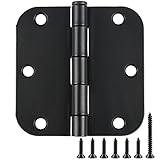
The most common type of door hinge, the one you see on almost every door in your house and car, is the butt hinge. It consists of two flat plates, called leaves, joined by a cylindrical pin that runs through aligned holes. One leaf attaches to the door, and the other attaches to the frame or the car body. When the door opens or closes, the pin acts as the axis of rotation, and the leaves swing around it. It’s a fundamentally different mechanism than rolling.
I’ve spent countless hours wrestling with rusty car door hinges. My old pickup truck’s driver’s side door used to creak and groan like a haunted house. I tried greasing it, oiling it, even hitting it with WD-40, but it still felt like I was dragging an anchor every time I opened it. It was a stark reminder that while hinges help movement, they don’t do it by rolling. They do it by rotating, which, while related to the concept of a central axis like a wheel, is a distinct mechanical principle. The friction isn’t from rolling over a surface; it’s from the metal-on-metal contact within the hinge pin and barrels, and that’s where lubrication and maintenance come in.
The primary job of a hinge is to provide a stable, controlled point of articulation. It’s designed to bear weight and withstand stress while allowing for that specific rotational movement. Unlike a wheel that rolls along a path, a hinge swings on a fixed point. The design prioritizes strength and durability for supporting the weight of the door and the forces applied during opening and closing, not the efficiency of rolling displacement.
How Do They Actually Work? Understanding the Mechanics
The magic, or rather the engineering, behind a door hinge lies in its simplicity and its solid design. Take a standard two-knuckle butt hinge. You’ve got two ‘leaves’ – these are the flat parts that get screwed or riveted to the surfaces being joined. In a car door, one leaf goes onto the door jamb, and the other goes onto the door itself. In your house, it’s the same idea: door to frame.
The ‘knuckles’ are the parts that interlock. They have holes drilled through them. When you align these knuckles, you get a channel. This channel is where the ‘pin’ goes. The pin is basically a metal rod that fits snugly into the aligned holes of the knuckles. This pin acts as the axis of rotation. As you swing the door open or closed, the knuckles of the hinge slide against each other, and the entire hinge assembly rotates around the pin.
It’s all about rotational friction. When a hinge works perfectly, it’s almost silent and smooth. But when things go wrong – dirt gets in, the lubricant dries up, or the metal wears down – that friction becomes a grinding, squeaking, or even binding sensation. That’s when you really feel the mechanical forces at play. My old Honda Civic had a notoriously stiff driver’s door hinge. It wasn’t just creaky; it felt like it was fighting me. I eventually learned that the issue wasn’t wear, but a buildup of gunk and dried grease in the pin channel, creating massive resistance. A good cleaning and some fresh, high-quality lithium grease did wonders, turning a daily annoyance into a smooth swing. (See Also: A Box Without Hinges Key )
The Role of the Pin
The pin is the heart of the hinge’s rotation. It’s usually made of steel and is designed to be strong enough to handle the weight of the door and the forces of opening and closing without bending or breaking. In many hinges, the pin can be removed. This is super handy for maintenance.
You can pull the pin out, clean the knuckles thoroughly, re-lube, and reinsert the pin. This is a common fix for squeaky hinges. On some car doors, the hinges are ‘non-removable pin’ (NRP) or have staked pins, meaning they are designed not to be easily taken apart, often for security reasons.
For those, you’re usually looking at replacing the entire hinge assembly if it gets too bad.
Car Door Hinges vs. House Door Hinges: Key Differences
While the fundamental principle of a hinge remains the same – two leaves, a pin, and rotational movement – car door hinges and house door hinges have some significant differences, largely driven by the demands of the automotive environment. House hinges are generally simpler and less solid. They’re designed to handle the weight of a wooden or hollow-core door and the relatively gentle use it gets indoors.
Car door hinges, on the other hand, are beasts. They have to handle much more weight (think of a heavy metal car door, often with power windows, speakers, and mirrors attached), much more frequent use, and exposure to the elements. They’re built from thicker, stronger steel. They also often incorporate more complex features. Many car door hinges include built-in ‘stops’ or ‘checks’ that prevent the door from swinging open too far and damaging itself or the surrounding bodywork. Some even have multi-stage detents, so the door can be held open at specific angles – think of that ‘half-open’ position you often use when parking in a tight spot. You don’t see that on your bathroom door.
I learned this the hard way with a vintage Jeep Wrangler. The doors were notoriously flimsy and poorly designed, and the hinges were constantly getting stressed. One day, after hitting a pothole, the driver’s door sagged so badly it wouldn’t close properly. The hinge itself wasn’t broken, but the mounting points on the body had warped. Replacing those hinges and reinforcing the body mounting points was a much bigger job than just swapping out a squeaky house hinge. It involved welding and significant structural work, highlighting how much more punishment car hinges endure and how they are integral to the vehicle’s structure.
The Weight Bearing Aspect
One of the most important differences is the load-bearing capacity. A house door hinge might need to support 20-50 pounds, spread across three hinges. A car door hinge needs to support a significant portion of a door that can weigh 50-100 pounds or more, often with the use of a long door amplifying the stress on the hinge point, especially when opening it against gravity or a strong wind. This is why automotive hinges are typically much thicker and often have multiple mounting points to distribute the load onto the car’s frame or unibody.
Common Problems and What to Look For
The most common issue with any hinge, whether on a car or a house, is squeaking. This is usually caused by a lack of lubrication or dirt and debris accumulating in the hinge pin and knuckles. A quick spray of lubricant – I prefer a good quality spray grease like lithium or silicone for hinges – and working the door back and forth can often solve this. If that doesn’t work, you might need to remove the hinge pin, clean it and the knuckles thoroughly, and then re-lube before reinserting the pin. I’ve used everything from household oil to specialized automotive grease, and I can tell you that a decent quality, long-lasting grease is worth its weight in gold for car doors.
Another common problem, especially with car doors, is sagging. This happens when the hinge pin wears down, or the knuckles elongate, or, more often, the mounting points on the door or the car body become loose or deformed. This makes the door hang lower than it should, leading to poor alignment with the body, difficulty closing, and increased wear on the latch mechanism. (See Also: Are Integrated Washing Machine Door Hinges Standard )
Fixing a sagging door can range from tightening loose bolts to replacing worn-out hinges or even repairing the bodywork where the hinges mount. I once had a car where the hinge bolts had worked themselves loose over time, causing the door to rub against the fender.
Tightening those bolts took about 15 minutes and solved a problem that had been bugging me for months.
You also see hinges getting stiff or binding. This can be due to rust, corrosion, or severe wear. On a car door, this can make it feel heavy and difficult to operate, and it puts extra strain on the door actuator and latch mechanisms. Sometimes, you can free up a stiff hinge with a good penetrating oil and some forceful manipulation, but often, it’s a sign that the hinge needs replacement. I’ve seen hinges so corroded that the pin literally wouldn’t budge, and the only option was to cut them off and install new ones.
What to Avoid
When looking at hinges, especially for cars, avoid flimsy, cheap aftermarket parts unless you absolutely have to. The original equipment manufacturer (OEM) hinges are designed for a reason, and while they can be expensive, they often offer better fit, finish, and durability. If you’re buying aftermarket, look for reputable brands that specialize in automotive body parts. Also, don’t overtighten mounting bolts. While you want them snug, over-tightening can strip threads or warp the mounting surfaces, creating new problems.
Maintenance and Real-World Use: Keeping Things Smooth
For house doors, maintenance is pretty minimal. Maybe a quick spray of WD-40 once a year if you hear a squeak. But for car doors, it’s a bit more involved. Regularly check your car door hinges for signs of rust, wear, or damage. If you notice any squeaking or stiffness, address it promptly. A bit of maintenance can prevent more expensive repairs down the line.
The best practice for lubricating car door hinges is to clean them first. Use a rag to wipe away any dirt, old grease, and grime. Then, apply a good quality automotive-grade lubricant. Lithium grease is excellent because it’s thick and provides long-lasting lubrication. Spray lubricants with a straw attachment can help you get the product deep into the hinge pin and knuckles. After applying, open and close the door several times to work the lubricant in. You might even want to wipe off any excess that drips out.
I’ve found that a dedicated hinge lubricant is often better than a general-purpose spray. It tends to stick better and last longer. On one of my older SUVs, the rear hatch hinges started to seize up pretty badly. They were exposed to a lot more road salt and grime than the side doors. I ended up taking the hinges apart (thankfully, they were removable pins), cleaning them down to bare metal, and then packing them with a marine-grade grease. It was a messy job, but that hatch moved like new for years afterward. That experience taught me that proactive, thorough maintenance, especially on components exposed to harsh conditions, is key.
How Often Should You Lube?
For house doors, if they aren’t squeaking, leave them alone. For car doors, a good lube every 6-12 months is a sensible interval, depending on your climate. If you live in an area with a lot of salt spray or heavy rain, you might need to do it more often. Listening to your doors is the best indicator; the moment you hear a creak or groan, it’s time for a bit of attention.
Are Door Hinges Wheels? The Verdict (and Why the Question Matters)
So, to definitively answer the question: are door hinges wheels? No, they are not. They are pivot joints designed for rotational movement, not rolling. Wheels are for locomotion, for reducing friction by rolling over a surface. Hinges are for connecting two parts and allowing controlled articulation. (See Also: Are Hinges Wheeels )
However, the reason people might even ask this question, or why it’s a fun thought experiment, is that both hinges and wheels are fundamental to enabling movement in mechanical systems. They both deal with friction and the mechanics of motion. When a hinge is working perfectly, it provides that satisfying, nearly friction-free swing, much like a well-maintained wheel glides effortlessly. The frustration comes when that smooth motion is disrupted, making us question the underlying mechanics.
I’ve spent years working on cars and fixing things around the house, and I’ve seen the consequences of ignoring simple mechanical principles. A worn-out hinge on a car door isn’t just an annoyance; it can misalign the entire door, leading to wind noise, water leaks, and accelerated wear on the latch and striker. For a house door, a faulty hinge can make it difficult to secure your home or even cause the door to sag and scrape the floor. Understanding the difference between a hinge and a wheel, and how each works, is key to proper maintenance and repair.
My takeaway from years of tinkering? Don’t underestimate the importance of the humble hinge. It’s a small part that does a big job, and keeping it in good working order is as important as keeping your car’s tires properly inflated. The principle of smooth, controlled motion applies to both, even if the method is different. And sometimes, a bit of grease and elbow grease can solve problems that seem far more complex.
Why Do My Car Door Hinges Squeak?
Car door hinges typically squeak due to a lack of lubrication, allowing metal-on-metal friction between the pin and the hinge knuckles. Dirt, dust, and old grease can also build up, exacerbating the problem. Addressing this usually involves cleaning the hinge thoroughly and applying a fresh coat of high-quality automotive lubricant, like lithium grease.
Can I Fix a Sagging Car Door Myself?
In some cases, yes. If the hinges themselves are worn or the mounting bolts have loosened, you might be able to adjust or replace them. However, if the car’s body or door frame has warped, it often requires professional bodywork. Start by checking and tightening the hinge mounting bolts; this is a common and fixable issue for many DIYers.
What’s the Difference Between Automotive and House Door Hinges?
Automotive door hinges are significantly more solid, designed to handle heavier doors, more frequent use, and exposure to harsh environmental conditions. They often include features like door checks and detents to control the door’s swing. House door hinges are generally simpler and less heavy-duty.
How Do I Lubricate Door Hinges?
For house doors, a quick spray of WD-40 or a similar lubricant can work for squeaks. For car doors, it’s best to clean away old grime first, then apply a specialized automotive lubricant like lithium grease or silicone spray. Work the door back and forth to distribute the lubricant evenly into the hinge pin and knuckles.
Final Verdict
So, the short and simple answer to ‘are door hinges wheels’ is a firm no. They operate on entirely different principles of motion. Yet, the question itself highlights a common thread: the desire for smooth, effortless movement in our mechanical world. Whether it’s the roll of a wheel or the swing of a hinge, when these components are working right, life just feels a little bit easier.
I’ve learned that ignoring the small mechanical parts, like hinges, is a recipe for bigger headaches later. For your car, a creaky hinge could be a precursor to a door that won’t align or seal properly. For your house, it’s just an annoying noise, but for a car, it’s often tied to structural integrity and weatherproofing.
Next time you open a door, whether it’s your car, your house, or even a shed, take a second to appreciate the engineering. And if it’s squeaking, don’t wait too long to grab that can of grease. A little preventative maintenance goes a long way, and it’s always better than dealing with a door that’s fallen off its metaphorical (or literal) hinges.