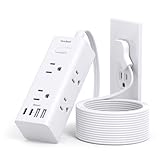
I remember the first time I needed one of those chunky EU to UK plugs. I was in a panic, halfway through setting up a little Christmas market stall in Berlin, and my trusty hair straighteners wouldn’t even get a whisper of power. I grabbed what looked like the right adapter from a nearby electronics shop, plugged everything in, and promptly blew a fuse. Turns out, not all adapters are created equal, and the question of ‘are EU male to female extension cords safe to use’ is a lot more complicated than just plugging one thing into another.
It’s easy to think a simple adapter is just a bridge, but it’s an electrical connection, and if it’s dodgy, you’re looking at fire hazards, damaged equipment, or worse. I’ve wasted enough money and seen enough sparks fly to know you need to be damn sure what you’re buying.
What’s Actually Going on with These Cords?
Look, at its core, an EU to UK extension cord, or more commonly, an adapter that lets you plug a European device into a UK socket (or vice versa, though that’s less common for the devices themselves), is just a piece of plastic and some metal bits designed to bridge two different plug standards. The ‘male’ end would be the pins that go into the socket, and the ‘female’ end is where your appliance’s plug would connect. For the specific question of ‘are EU male to female extension cords safe to use’ when we’re talking about adapting a European device’s plug (with its two round pins) to a UK socket (with its three rectangular pins, including that important earth pin), the ‘male’ part is usually the UK plug that goes into the wall, and the ‘female’ part is the socket that accepts the European device’s plug.
The real danger isn’t in the concept, it’s in the execution. Most EU plugs are Type C (Europlug) or Type F (Schuko). These have two round pins. UK plugs, as you know, have three rectangular pins: live, neutral, and earth.
The earth pin is a must for safety, especially for anything with a metal casing or that’s likely to get wet. A cheap adapter might just bridge the live and neutral, leaving you completely exposed if something goes wrong internally with your appliance. That’s a fast track to a nasty shock or a fire.
The adapter also needs to handle the correct voltage and amperage. While the UK and most of Europe run on a similar voltage (around 230V), the amperage rating on the adapter itself is key. Overloading a low-rated adapter is another common way to melt plastic and start a fire. I once bought a set of fairy lights from a dodgy market abroad, and the adapter they came with felt flimsy.
It got hot to the touch after just an hour. Luckily, I noticed and unplugged it, but that could have gone south fast.
The problem is that a lot of the ones you find online, especially on massive marketplaces where quality control is a bit of a lottery, are made with the absolute cheapest materials. They might look the part, but the internal connections can be loose, the plastic isn’t fire-retardant, and they might not have proper fusing. For the record, on a practical level, I’ve found that the adapters designed to take a European Type F (Schuko) plug and put it into a UK socket are generally more solid than the ones for smaller Type C plugs, simply because the Schuko plug itself has a higher power rating and includes earth contacts on the socket side. However, the adapter still needs to correctly pass through that earth connection. It’s not just about fitting the pins; it’s about the whole electrical integrity.
The most common type of adapter you’ll encounter for European devices in the UK is a Type E/F to Type G adapter. The ‘male’ part is the UK Type G plug that goes into the wall, and the ‘female’ part is the socket that accepts the European plug. The key safety features here are that it correctly bridges live and neutral, and importantly, incorporates the earth connection from the UK socket to the appliance’s plug if the appliance requires it. Many European appliances are earthed, and you absolutely must maintain that earth connection. Failing to do so, or using an adapter that doesn’t properly transfer that earth connection, is incredibly dangerous.
What to Actually Look for (before It Melts)
So, you’ve established you need one of these things, and you’re wondering, ‘are EU male to female extension cords safe to use?’ The answer is: only if you buy the right kind and inspect it properly.
Forget the colourful, novelty ones you see in souvenir shops. You want something that looks and feels serious. First off, look for the CE marking. This is supposed to indicate conformity with health, safety, and environmental protection standards for products sold within the European Economic Area (EEA).
Now, I’m not saying it’s a foolproof guarantee, as these can be faked, but it’s a starting point. A more reliable indicator is the UKCA mark (which replaced CE for goods sold in Great Britain) or BS 1363 approval for the UK plug part.
If it’s a reputable brand, that’s a huge plus.
I once bought an adapter in France for a British hairdryer. It was a ‘Schuko to UK’ adapter. It looked okay, but when I got it home and plugged it in, the hairdryer made a weird buzzing noise and smelled faintly of burnt plastic. I unplugged it immediately and examined the adapter.
The internal metal contacts looked flimsy, and the plastic casing didn’t feel particularly sturdy. I tossed it and ordered a proper, fused adapter online from a known brand that specifically stated it met British safety standards. It cost me about £12, compared to the £3 I paid for the dodgy one, but it felt solid as a rock and worked perfectly.
That £9 difference was the cheapest insurance I’ve ever bought.
When you get it in your hands, give it a good once-over. Does the plastic feel cheap and brittle, or solid and substantial?
Are the pins on the UK plug straight and securely attached? Does the socket part feel loose or wobbly? For adapters that take European plugs into UK sockets, check if it has a fuse. Many quality adapters for European appliances in the UK do include a fuse, often a 5A or 13A fuse, just like a UK plug. (See Also: Can Extension Cords Be Thriwn Away )
This is a massive safety feature because it will blow if the appliance draws too much current, protecting both the adapter and your home’s wiring. If the adapter you’re looking at doesn’t have a fuse, and your appliance has a significant power draw, I’d steer clear. It’s like driving a car without seatbelts – why take the chance?
Another thing to consider is the type of European plug your device uses. If it’s a standard Europlug (Type C, two thin pins), it’s generally for lower-power devices. If it’s a Schuko plug (Type F, two round pins plus earth contacts on the sides), it’s for higher-power devices. The adapter needs to be rated for the maximum power (wattage or amperage) of your appliance. Most European appliances will have a label stating their power consumption. You need an adapter that can safely handle at least that much, with a bit of headroom. A good quality adapter will often be rated for 10A or 13A, which covers most household appliances.
If you’re buying an adapter to plug a UK device into a European socket, the situation is a bit different. You’re basically trying to plug a Type G plug into a Type C or Type F socket. These adapters often require you to push the plug in firmly, and sometimes there’s a mechanism to push the pins in. The key here is that the adapter must not allow the UK appliance to draw more current than the European socket and wiring can safely handle. Most modern adapters will have some form of current limiting, but again, quality varies wildly. For this reason, I’ve always preferred buying devices in the region I’ll be using them to avoid these adapter headaches altogether.
| Feature | What to Look For | Verdict |
|---|---|---|
| CE/UKCA Mark | Present and appears legitimate | Good sign, but not definitive |
| BS 1363 Approval | Present on the UK plug component | Strong indicator of UK safety compliance |
| Build Quality | Solid, non-brittle plastic; securely attached pins | Important for preventing breaks and shorts |
| Fuse | Integrated fuse (e.g., 5A, 13A) for European to UK adapters | Highly recommended for safety |
| Amperage/Wattage Rating | Clearly stated and higher than appliance needs | Key to prevent overheating |
| Brand Reputation | Known electronics or travel accessory brands | Generally more reliable than unbranded options |
The Common Mistakes That Lead to Disaster
The biggest mistake people make is assuming all adapters are the same. You see a cheap pack of five for £3.99 on some online mega-mart, and you think, ‘Great, I’ll grab a couple for my trip.’ That’s precisely the kind of purchase that makes me break out in a cold sweat.
These bargain-basement adapters are often made with minimal safety features, substandard materials, and shoddy manufacturing. They might fit, but they certainly don’t guarantee safe operation.
I’ve seen more than one instance where a cheap adapter melted or, worse, caught fire. It usually happens when a higher-power appliance is plugged in, or when the adapter is used for extended periods, causing the internal connections to overheat due to poor conductivity or loose fittings.
Another massive blunder is ignoring the earth pin. If your appliance has a three-pin plug (meaning it’s earthed), you must use an adapter that properly transfers that earth connection. An adapter that only bridges live and neutral is incredibly dangerous for earthed appliances. It’s like putting a band-aid on a gaping wound.
The earth wire is there to provide a safe path for electricity to flow to the ground if there’s a fault, preventing the metal casing from becoming live. Without it, a fault could electrocute anyone who touches the appliance.
I learned this the hard way when I was trying to use a vintage metal-cased fan from the UK in a continental hotel room. I had a simple two-pin to three-pin adapter, thinking it would ‘just work’.
The fan hummed, but then I noticed a slight tingle when I touched its metal grille. I yanked the plug out, realised my error, and thankfully, nothing bad happened. But that tingle was a serious warning sign.
Using adapters for appliances that draw too much power is also a classic mistake. For example, trying to run a high-wattage UK kettle or a powerful hair dryer through a simple, unrated adapter designed for low-power electronics like phone chargers.
These adapters often have very thin internal wiring or are not designed to handle the current surge. The result?
Overheating, melting, and a potential fire. I remember a mate trying to use his UK hair dryer in Spain with one of those small, cheap plug-in adapters.
Within about 30 seconds, the adapter started smoking. He was lucky it didn’t set his hotel curtains alight. Always, always check the wattage or amperage rating of both your appliance and the adapter. If in doubt, err on the side of caution and get a better-quality, higher-rated adapter, or better yet, a voltage converter if the voltage is significantly different (though UK and EU voltages are close enough that this is usually less of an issue than the plug type itself).
Finally, people often fail to inspect their adapters regularly. Cables get frayed, plastic can crack, and internal connections can loosen over time, especially with repeated use or rough handling. If you’re using an adapter long-term, or if it’s been rattling around in a travel bag, give it a visual inspection before plugging it in. Look for any signs of damage, discoloration, or unusual smells. If anything seems off, get rid of it and buy a new one. It’s not worth the risk. The common advice you’ll find is ‘just get an adapter’, but the reality is, you need to be far more discerning than that.
Can I Use a Simple Plug Adapter for My UK Hairdryer in the EU?
It depends on the hairdryer and the adapter. Many UK hairdryers are high-wattage appliances (often 1800-2200W). While UK and EU voltages are similar (around 230V), a simple plug adapter does NOT change the voltage. Critically, the adapter must be rated to handle the high amperage draw of the hairdryer. A cheap, unrated adapter will likely overheat and melt, potentially causing a fire. You need a solid adapter specifically designed for high-power appliances and properly rated for the European socket type. If you’re unsure, it’s safer to buy a travel hairdryer designed for the region or a dedicated voltage converter with an adapter, though converters can sometimes damage sensitive electronics.
Real-World Scenarios: When Do You Actually Need One?
Let’s be honest, most of us only think about these adapters when we’re packing for a trip or when an unexpected appliance needs plugging in. The most common scenario is travelling. (See Also: Can Extension Cords Short Out )
You’re heading to mainland Europe from the UK, and your phone charger, laptop, or electric toothbrush needs to plug into a wall socket. The European sockets are typically Type C (Europlug) or Type F (Schuko). So you need a UK to European adapter.
The question of ‘are EU male to female extension cords safe to use’ becomes relevant here if you’re using a European device in the UK, and need to adapt its plug to a UK socket. For instance, if you’ve bought a European-spec coffee maker, or a lamp with a European plug, you’ll need an adapter that accepts the European plug (the ‘female’ end) and has a UK plug (the ‘male’ end) to go into your wall socket.
Another scenario is when you’re living abroad temporarily or permanently. Perhaps you’ve moved to a country that uses European plugs and you’ve brought a bunch of your existing UK appliances.
In this case, you might be tempted to use extension cords that have multiple European sockets on one end and a single UK plug on the other, or vice versa. This is where things get really dicey. A multi-socket adapter or extension cord is basically a power strip.
If it’s poorly made, it’s a significant fire risk. The connections between sockets, and from the main plug to the internal wiring, can be weak points. I had a friend who bought a cheap multi-socket adapter for his office setup in his London flat. He plugged in his monitor, laptop, and a desk lamp.
A few weeks later, he noticed a burning smell and found that the adapter was warped and smoking. He unplugged it just in time.
It was rated for 13A, but the quality was so poor that it couldn’t handle the sustained load. That’s why I generally avoid multi-socket adapters unless they come from a very reputable brand and have clear safety certifications, preferably with individual switches for each socket.
Here’s a situation I experienced firsthand. I was visiting a friend who had just moved into a new flat in Amsterdam.
They had a UK-bought washing machine they’d brought over, and they needed a way to plug it into the European sockets. They’d bought a heavy-duty extension cord.
The plug end was a standard UK 3-pin, and the socket end was a European Type F socket. The washing machine itself had a decent amperage draw. This extension cord looked solid, but it was incredibly stiff and the plug felt loose in the European socket. My friend insisted it was fine.
I was uneasy. About an hour into the first wash cycle, I heard a faint crackling sound. We investigated and found the area where the UK plug met the extension cord was slightly discoloured and felt warm. It was a disaster waiting to happen.
We immediately unplugged it and used a local European appliance instead. The moral of the story? Even if it looks heavy-duty, a poorly made connection point is a huge vulnerability.
One final, more niche, but important scenario is for hobbyists. If you’re into electronics, 3D printing, or anything that requires specific equipment from different regions, you’ll inevitably run into plug compatibility issues. For example, some high-end 3D printers might come with European plugs.
If you’re in the UK, you’ll need an adapter. The key here is that these machines can draw significant power, and the adapter must be able to handle it reliably and safely.
For important equipment, I’d always recommend looking for adapters that are specifically designed for that type of appliance, or consulting the manufacturer’s recommendations. Don’t just grab the cheapest thing that fits. The cost of replacing a damaged printer can far outweigh the savings on a dodgy adapter.
The Contrarian View: Why I’m Wary of Most Adapters
Everyone says, ‘just buy an adapter for your trip.’ And yeah, for a week-long holiday where you’re only charging your phone and laptop, a reputable travel adapter is probably fine. But I disagree that most adapters are safe to use. My contrarian stance is born from seeing too many cheap, poorly made items flooding the market that give a false sense of security. People buy them, plug in their devices, and nothing immediately bad happens, so they assume they’re safe. I’ve seen the aftermath of when they don’t work properly. I’ve seen melted plastic, scorch marks on walls, and heard the panicked stories of near-misses.
The problem is that the primary design goal for many of these cheap adapters seems to be ‘make it fit and make it cheap’, rather than ‘make it safe and reliable’. The internal wiring might be too thin, the plastic might not be fire-retardant, the connections might be loose, and the important earth connection might be absent or poorly implemented. For anything more than a low-power device, or for anything you’re using for extended periods, I’m deeply skeptical of anything that doesn’t feel reassuringly solid and bear clear safety certifications from a trusted authority (like BSI for the UK). My personal rule of thumb is this: if it feels too light, too flimsy, or costs less than a cup of fancy coffee, it’s probably not going to be safe for anything important. (See Also: Can Extension Cords Be Use With Electric Heaters )
I’ve also noticed a trend where people will use these adapters with extension cords that are themselves questionable. So you have a dodgy adapter plugged into a dodgy extension cord. That’s a recipe for disaster. It’s like doubling down on a bad bet. I once saw a whole setup in a student dorm room that was a fire hazard waiting to happen: a European extension cord, plugged into a cheap adapter, plugged into a UK socket, with multiple devices drawing power. The whole thing was warm to the touch. I advised them to unplug it immediately, but I doubt they did.
Furthermore, the ‘male to female’ terminology can be confusing, and that confusion itself leads to mistakes. If you’re talking about adapting a European appliance’s plug to a UK socket, the ‘male’ part is the UK plug that goes into the wall, and the ‘female’ part is the socket on the adapter that accepts the European device’s plug. If the adapter doesn’t correctly pass through the earth connection, or if the appliance’s plug doesn’t fit securely into the adapter’s socket, you’re creating a risk. Most official guidance focuses on plug standards rather than this male/female phrasing, which is probably why people get tripped up.
My advice? For any device that is key, high-power, or has a metal casing (requiring an earth connection), I’d strongly consider buying an appliance that is designed for the region you’re in. It’s often more expensive initially, but it eliminates the risk associated with adapters entirely. If you absolutely must use an adapter, invest in the best, most reputable one you can find that is specifically rated for your appliance’s power draw and has all the necessary safety certifications. Don’t skimp. Seriously. The cost of a good adapter is minuscule compared to the cost of a fire or an electrical injury.
Do EU to UK Adapters Come with Fuses?
Some high-quality EU to UK adapters do come with fuses, and this is a significant safety feature. These adapters are designed to accept a European plug (the ‘female’ part) and have a UK plug (the ‘male’ part) to go into the wall socket. A fused adapter will typically have a small, replaceable fuse inside, similar to what you’d find in a UK plug. This fuse is rated to protect against overcurrents, meaning if your appliance draws too much power, the fuse will blow, breaking the circuit and preventing damage to the adapter, your appliance, or your home wiring. It’s always best to look for an adapter that explicitly states it is fused, especially if you plan to use it with higher-power appliances.
Practical Tips for Staying Safe
When you’re in a bind and need to use an adapter, here are some practical things I do to stay safe. First, always buy from reputable retailers. If you’re travelling, buy your adapter at the airport or a well-known electronics store. If you’re buying online, stick to major brands and avoid unbranded or suspiciously cheap options. Look for the CE, UKCA, or BS 1363 marks, and understand that these are indicators, not guarantees. For my trips to the continent, I’ve found that brands like Schuko, Hama, and many travel-specific accessory brands offer decent quality. For EU to UK adapters, brands like Masterplug or reputable electrical wholesalers are usually a safer bet than generic sellers.
Second, visually inspect the adapter before every use. Check for cracks in the plastic, bent or loose pins, and any signs of discoloration or melting. If it looks, smells, or feels off, do not use it. I have a small travel bag for all my adapters and chargers, and I keep them organized. This prevents them from getting damaged while rattling around in my main luggage. It’s a small thing, but it means when I pull one out, I know it’s likely in good condition.
Third, know your appliance’s power draw. Look for the label on the device itself.
It will usually state the wattage (W) or amperage (A). If the adapter doesn’t have a clear rating, or if its rating is lower than your appliance’s requirement, do not use it. A common rule of thumb is that 1 Amp is roughly equivalent to 240 Watts at 240V. So, if your appliance draws 10 Amps, you need an adapter rated for at least 10 Amps, and preferably a bit higher for safety margin.
For high-power items like kettles, hair dryers, or irons, it’s often better to buy a local version than to rely on an adapter, especially a European to UK adapter, as the quality of the socket and the adapter’s internal wiring become most important.
Fourth, never daisy-chain adapters or extension cords. That is, don’t plug an adapter into another adapter, or an adapter into an extension cord that is then plugged into another extension cord. This creates multiple points of failure and can overload circuits very easily. Each connection point is a potential weak spot. Stick to a single adapter directly plugged into the wall socket, or a quality extension cord with a single adapter plugged into it. I’ve seen people try to power entire entertainment systems or multiple kitchen appliances using a chain of adapters and extension cords, and it’s a miracle more fires don’t break out.
Finally, if you’re using a European appliance in the UK and it has a Type C (Europlug) or Type F (Schuko) plug, and the adapter accepts this and has a UK Type G plug, make sure the adapter is fused. As mentioned, many good ones are. If it’s not fused, and the appliance has any significant power draw (anything beyond a small lamp or a phone charger), consider buying a different adapter or appliance.
The fuse is your safety net. I once bought a set of European-style LED string lights for my garden that came with a Europlug. I needed to plug them into an outdoor UK socket.
I found a specific outdoor-rated adapter for this, and thankfully, it had a fuse. It felt solid, was from a known brand, and has worked without issue for two seasons.
What If My European Appliance Has a Type C Plug?
Type C plugs, also known as Europlugs, are un-earthed and are designed for lower-power devices. They have two round pins and are used in many European countries.
If you have a device with a Type C plug that you want to use in the UK, you will need an adapter that accepts the Type C plug (the ‘female’ part) and has a UK Type G plug (the ‘male’ part) to go into the wall socket. These adapters are generally less complex than those for earthed appliances. However, the same principles of quality still apply.
Look for adapters from reputable manufacturers, make sure the plastic feels solid, and that the plug fits securely. While Type C plugs are not earthed, the adapter must still be able to handle the device’s power draw safely and have good internal connections to prevent overheating.
Final Thoughts
So, to cut to the chase: are EU male to female extension cords safe to use? My honest answer is: some are, most aren’t, and you absolutely have to be vigilant. It’s not a simple yes or no. The risk comes from the cheap, poorly made adapters that are everywhere, especially online. They might look identical to the safe ones, but internally, they’re a different story, and that’s where the danger lies.
My advice is to treat these adapters with suspicion. If you’re buying one, spend a bit more. Buy from a reputable brand, check for safety marks, and inspect it like it’s a piece of important equipment. For high-power devices or anything with a metal casing that needs an earth connection, I’d seriously consider getting an appliance designed for the region you’re in. It’s the only way to be truly sure you’re not playing with fire, literally.
Before your next trip or when you need to adapt a plug, take a moment. Think about the appliance, its power draw, and the adapter. Is it worth the risk of a cheap adapter? For me, the answer is almost always no. It’s about small precautions that prevent big problems.