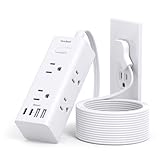
I remember my first trip overseas with a suitcase full of electronics, convinced I was prepared for anything. Then I plugged in my trusty hairdryer, and… nothing. Just a sad little puff of smoke and a dead appliance. It turns out, not all extension cords are created equal, and the question of whether are extension cords dual voltage is more important than most people realize. It’s not as simple as just plugging it in and hoping for the best.
We often take for granted the power we have at our fingertips, but when you’re dealing with different electrical systems, a little knowledge goes a long way. Trust me, I’ve learned this the hard way, blowing fuses and frying gadgets across multiple continents.
So, What’s the Deal with Voltage and Extension Cords?
Alright, let’s cut to the chase. When people ask if extension cords are dual voltage, they’re usually thinking about taking their electronics from, say, the US (120V) to Europe (220-240V), or vice-versa. The honest answer? Most standard household extension cords are NOT dual voltage. They are designed to work with the voltage of the country they are sold in.
Think of an extension cord as a simple conduit for electricity. It’s a wire, some insulation, and plugs.
It doesn’t have any fancy electronics inside to step down or boost voltage. Its job is to carry the power from the wall socket to your device.
If your device is designed for 120V and you plug it into a 240V outlet using a standard extension cord, you’re basically sending it twice the voltage it can handle. That’s a recipe for disaster, usually involving a burnt-out cord, a fried appliance, or even a tripped circuit breaker. I once tried to use a US-bought toaster in the UK with just a plug adapter, and let’s just say the smoke alarm got a good workout. The cord itself didn’t do anything fancy, it just let the full 240V surge through to a device expecting half that.
Lesson learned.
The confusion often comes from the fact that many modern electronics, like laptop chargers and phone chargers, are dual voltage. You’ll see a little label on the power brick that says ‘INPUT: 100-240V’. This means the power brick (the adapter part) can handle different voltages. However, this doesn’t magically make the extension cord it’s plugged into dual voltage. The extension cord still needs to be compatible with the wall outlet’s voltage.
So, when you’re traveling, it’s not just about the plug shape; it’s about the voltage. A simple extension cord from your local hardware store is almost certainly single voltage, designed for your home country’s power grid. You can’t just assume it will work safely anywhere else. It’s a common oversight, and one that can cost you dearly in damaged equipment. Always check the labels on your devices and consider the voltage of the destination.
When to Worry (and When Not To)
The real question isn’t so much about the extension cord itself being dual voltage, but rather about the appliance you’re plugging into it. If your appliance is single voltage (e.g., a high-wattage item like a hair dryer, curling iron, or a simple lamp designed for 120V), and you plug it into a 240V outlet via a standard extension cord, you’re asking for trouble. The extension cord will happily carry the 240V, and your 120V appliance will likely fry.
However, if you have a dual-voltage appliance (like most modern phone chargers, laptop power bricks, or universal travel adapters), the appliance can handle the different voltages. In this scenario, your main concern with the extension cord becomes the plug type and the physical durability to handle the power. For example, if you’re in Europe and have a dual-voltage laptop charger, you’ll need a European-style plug on your extension cord or an adapter. The extension cord itself doesn’t need to “convert” the voltage. It just needs to be able to safely connect to the wall and then connect to your dual-voltage adapter.
Here’s where it gets tricky: sometimes, you can use a higher-gauge extension cord (thicker wire) from your home country if the appliance itself is dual voltage and you are using a step-down voltage converter. But this is getting complicated and is usually not the most practical solution for everyday travel. My advice? For travel, buy a travel adapter kit that includes multiple plug types and, if you’re bringing high-wattage appliances that aren’t dual voltage, a voltage converter. For home use, if you’re just extending a cord within the same country, any appropriately rated extension cord will do.
The common advice you’ll find online is often: “If your device is dual voltage, you’re fine.” This is only partially true. It’s fine for the device, but the extension cord still needs to be compatible with the outlet’s physical plug and rated for the amperage. You wouldn’t plug a heavy-duty shop vac into a flimsy, thin indoor extension cord, dual voltage or not. The same principle applies across different countries, with voltage being the added layer of complexity. (See Also: Can Extension Cords Short Out )
How to Check Your Appliance’s Voltage Compatibility
Look for a label on the power adapter or the appliance itself. It will typically state something like ‘INPUT: 100-240V ~ 50/60Hz’. If you see this range, your device is dual voltage and can safely handle the power from different countries. If it only lists a single voltage (e.g., ‘120V’ or ‘230V’), then it’s single voltage and you’ll need a voltage converter if you’re traveling to a region with a different voltage.
The Case for Travel-Specific Cords
When I’m talking about whether are extension cords dual voltage, for travel purposes, the answer is generally no, you shouldn’t rely on a standard one. That’s why travel-specific extension cords or power strips exist. These are designed with multiple plug types built-in, or they come with interchangeable adapters. They are still usually single voltage, meaning they are designed for the voltage of the region you’re in, but they solve the plug compatibility issue. You’d buy a European-style travel extension cord for use in Europe.
The real “dual voltage” aspect in travel power often comes from the adapter or the converter, not the cord itself. A plug adapter simply changes the physical shape of the plug. A voltage converter actually changes the voltage. For most modern electronics like phones and laptops, you only need a plug adapter because their power bricks are already dual voltage. For older or simpler appliances like hair dryers or stereos that are not dual voltage, you must use a voltage converter along with a plug adapter. Trying to use a non-dual voltage appliance with just a plug adapter on a standard extension cord from your home country is asking for a very expensive smoke signal.
I learned this the hard way with a fancy curling iron. It was supposed to be my saving grace for looking polished on a trip to Japan. I bought a cheap adapter, plugged it into my standard US extension cord, and then into the Japanese outlet. Zap.
Fried. The curling iron was single voltage (120V), and the Japanese outlets are 100V.
While the voltage difference wasn’t extreme, the combination of the appliance not being able to handle even that slight difference and the extension cord just passing through the power meant disaster. If it had been a universal adapter and a voltage converter, I might have been okay, but I skipped that step.
Always remember, the extension cord is just a path; the device and any converters are doing the actual work of handling the power.
Common Travel Power Mistakes
- Assuming a plug adapter magically makes your device dual voltage.
- Using a standard household extension cord in a country with a different voltage without a voltage converter.
- Trying to power high-wattage, single-voltage appliances with a small voltage converter not rated for the load.
- Forgetting to check the voltage of your destination and your devices.
What to Look for: The Nitty-Gritty
When you’re buying an extension cord, whether for home or travel, there are a few key things to check. For standard home use extension cords, you’re mainly concerned with the gauge of the wire (lower gauge means thicker wire, better for higher amperage and longer runs), the length, and whether it’s rated for indoor or outdoor use. The voltage is usually implied by the country it’s sold in.
For travel, the game changes slightly. You’ll want cords that are:
- Compatible Plug Types: Either integrated plugs for the region or a system with interchangeable adapters.
- Appropriate Length: Not too long to be cumbersome, but long enough to be useful.
- Durable Construction: Often, travel cords are designed to be more rugged.
- Amperage Rating: Make sure it can handle the devices you plan to plug in. A hairdryer will need more than a phone charger.
The term ‘dual voltage’ is more often applied to the power adapter or the appliance itself than the extension cord. An extension cord is fundamentally passive. It doesn’t convert voltage.
So, when you see an extension cord marketed as “dual voltage,” it’s usually a bit of marketing fluff. What they might mean is that the cord is designed to accept plugs for different voltage systems (e.g., a universal adapter built into the socket end) or that it’s built to a standard that is common across regions that use different voltages (though this is rare and usually misleading).
Always verify the specifications. A cord is a cord; it carries the current. (See Also: Can Extension Cords Be Use With Electric Heaters )
It’s the device at either end that matters for voltage conversion.
I once bought a “universal” travel extension cord that looked fancy. It had slots for all these different plug types. Sounded great, right? It worked fine for my dual-voltage laptop charger. Then I tried plugging my single-voltage travel iron into it, thinking the cord would somehow handle it. Nope. Fried the iron. The cord itself was still just passing 120V from the converter I had correctly plugged into the wall. It didn’t have any special voltage-handling capabilities of its own. The label was misleading, and I paid about $40 for a lesson I should have already known. Always be skeptical of terms like “dual voltage” when applied solely to the extension cord itself.
Voltage Converters vs. Adapters: Knowing the Difference
This is where most people get tripped up, and it’s absolutely key to understanding if and how extension cords play a role in different voltage situations. First, let’s be crystal clear: a plug adapter does not change the voltage. It only changes the physical shape of the plug so it fits into a foreign outlet. Think of it like putting a different key in a lock – the key shape changes, but the lock mechanism (the electrical system) remains the same.
A voltage converter, on the other hand, does change the voltage. It takes the incoming voltage (e.g., 240V from a European wall socket) and converts it to a lower output voltage (e.g., 120V that your US appliance needs). These are bulkier and more expensive than plug adapters, and they are key for any single-voltage appliance you bring to a country with a different voltage. You’d plug the voltage converter into the wall outlet (using a plug adapter if needed), and then plug your appliance (via an extension cord if necessary) into the converter.
So, when you’re asking if are extension cords dual voltage, the extension cord’s role is to extend the reach from the wall outlet or from the voltage converter. It’s a passive participant. If your appliance is dual voltage, you only need a plug adapter to match the outlet. If your appliance is single voltage, you need a voltage converter (and potentially a plug adapter for the converter), and then you can use an extension cord to reach from the converter to your appliance.
My own screw-up involved this exact confusion. I had a travel alarm clock that was 120V only. I was in Australia (230V). I bought a travel adapter, thinking I was good to go.
Plugged the clock into the adapter, into the wall. Poof.
Dead clock. The adapter did nothing to change the 230V. If I’d bought a voltage converter, plugged the converter into the wall (with an Australian plug adapter), and then plugged my clock into the converter, it would have worked.
The extension cord would have been entirely optional, just to get the clock closer to the bedside table. It’s a simple concept, but the consequences of getting it wrong are very real.
I’ve seen people burn out expensive travel irons because they didn’t understand this basic difference.
Travel Power Needs: A Quick Cheat Sheet
| Appliance Type | Voltage Requirement | What You Need | Role of Extension Cord |
|---|---|---|---|
| Dual Voltage Electronics (Laptops, Phones) | 100-240V | Plug Adapter (for outlet type) | Optional, to reach device from adapter/outlet |
| Single Voltage Appliances (e.g., some hair dryers, irons) | 120V (US) / 240V (Europe) | Voltage Converter + Plug Adapter | Optional, to reach device from converter |
| High Wattage Single Voltage Appliances | Specific Voltage (e.g., 120V) | High-Wattage Voltage Converter + Plug Adapter | Optional, to reach device from converter |
Verdict: Generally, extension cords are not the “dual voltage” component. The appliance or converter is. The cord just provides reach.
Can You Use a Home Extension Cord Abroad?
The short answer is: usually not safely, if your appliance is single voltage. If you’re in a country that uses the same voltage as your home (e.g., traveling from the US to Canada, or parts of Asia that also use 100-120V), then yes, your standard extension cord will work fine, provided the plug fits the outlet. However, most international travel involves moving between voltage systems. (See Also: Are Outdoor Extension Cords 10 Or 12 Gauge )
If you’re taking a single-voltage appliance from a 120V country (like the US or Canada) to a 220-240V country (like most of Europe, Asia, Africa, Australia), your standard 120V extension cord will simply pass the 240V to your appliance. It won’t do anything to protect it. This will almost certainly fry your appliance. The same applies in reverse – bringing a 220-240V appliance to a 120V country and plugging it into a standard 120V extension cord means it won’t get enough power to function correctly, if at all. It won’t damage it, but it won’t work.
Now, if your appliance is dual voltage (100-240V), then you only need to worry about the plug shape. In this case, you can use your home extension cord, but you’ll need a plug adapter to connect the cord’s plug to the foreign wall outlet. This is the scenario where you might find yourself using a US-style extension cord in Japan, for instance, but only because your laptop charger is dual voltage and you’ve used a plug adapter to connect the cord to the wall. The extension cord itself hasn’t changed its voltage capability.
However, I strongly advise against relying on this. Travel cords are often more compact, durable, and designed with international travel in mind.
They might have integrated surge protection or be made of materials that are more resilient to temperature changes. Plus, they often come as part of a kit with multiple plug heads. For about $20-$40, you can get a dedicated travel power strip or extension cord set that will save you a lot of headaches and potential damage.
It’s a small investment for peace of mind. I used to just grab a standard cord and a bag of adapters, but after one too many close calls (and one actual fried phone charger), I bought a proper travel power strip, and it’s been a lifesaver. It’s not that the standard extension cords are inherently bad, but they aren’t designed for the rigors and the voltage differences of international travel.
People Also Ask
Are Extension Cords Universal?
No, extension cords are not universal. They are designed for the specific voltage and plug configurations of the region they are sold in. While some travel extension cords may come with interchangeable plug heads to fit different outlets, the cord itself is typically designed for the voltage of the region it’s used in, unless it’s paired with a voltage converter.
Can I Plug a Us Extension Cord Into a European Outlet?
You can physically plug a US extension cord into a European outlet only if you use a plug adapter that fits the US plug into the European socket. However, this is only safe if the appliance you’re powering is dual voltage (100-240V) and the extension cord is also rated for the European voltage (220-240V). If the appliance is single voltage (e.g., 120V only), plugging it into a 240V outlet via an extension cord will likely damage or destroy it.
What Happens If I Plug a 120v Appliance Into 240v?
Plugging a 120V appliance into a 240V outlet will send twice the intended voltage to the appliance. This will likely cause immediate damage, leading to the appliance overheating, burning out, or even catching fire. It can also trip circuit breakers or blow fuses.
Do I Need a Voltage Converter for Extension Cords?
You do not need a voltage converter for the extension cord itself. Extension cords are passive conduits. You need a voltage converter for your appliance if it is single-voltage and you are traveling to a country with a different voltage. The extension cord would then be used to connect your appliance to the voltage converter.
Verdict
So, to finally put this to bed: are extension cords dual voltage? For the vast majority of standard household extension cords you buy at your local store, the answer is a resounding no. They are designed for the voltage of the country they are sold in. The confusion arises because many modern electronics are dual voltage, meaning they can handle different voltages. However, this doesn’t make the extension cord itself dual voltage.
If you’re traveling, the safest bet is to invest in travel-specific power adapters, voltage converters (if needed for single-voltage appliances), and potentially a travel power strip or extension cord. These are designed for international use and will save you a lot of potential headaches and expensive mistakes. Don’t just assume your home extension cord will magically work everywhere; it’s a gamble you don’t want to take with your electronics.
The simple truth is, extension cords are generally not dual voltage. They are built for the power grid they’re intended for. Your laptop charger might be, and that’s why you can get away with using a plug adapter. But the cord itself is just carrying power.
When it comes to powering your gadgets abroad, ignorance is definitely not bliss. It’s worth spending a few extra bucks on the right travel adapters and converters. Trust me, frying your expensive phone or hairdryer on vacation is a memory you don’t want.
Before your next trip, take a minute to check the voltage ratings on your devices and understand the power situation where you’re going. It’s a small step that makes a huge difference.