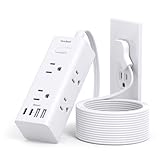
I remember the Christmas I decided to go all out with the outdoor lights. My neighbor, bless his heart, had enough illumination to rival a small airfield. I, on the other hand, was wrestling with a tangled mess of cords, praying I had enough length to reach the outdoor outlet without creating a fire hazard. That’s when the question really hit me: are extension cords safe to leave plugged in? It feels like one of those things we all just assume is okay, but nobody really stops to think about the actual risks. I’ve learned a lot the hard way over the years about what to trust and what’s just snake oil, especially when it comes to powering my gadgets.
We all have those cords that just seem to live in the wall socket, powering a TV, a lamp, or a charging station. It’s convenient, sure. But is convenience worth a potential problem? Let’s break down what you actually need to know.
When Is It Okay to Leave That Extension Cord Plugged in?
Okay, let’s get this out of the way: the short answer to ‘are extension cords safe to leave plugged in’ is a cautious ‘sometimes, under specific conditions.’ It’s not a simple yes or no, and anyone who tells you it is probably hasn’t spent much time wrestling with cheap cords or seen the aftermath of a melted outlet.
For me, the biggest factor is the type of extension cord and what it’s powering. If you’re talking about a short, heavy-duty cord plugged into a dedicated outlet powering a single, low-draw appliance that’s permanently situated, like a refrigerator or a dehumidifier that’s been in the same spot for years, then yeah, probably okay.
The key here is ‘heavy-duty.’ These are built to handle continuous load and dissipate heat better.
I’ve got one that’s been powering my old chest freezer in the garage for about five years straight. It’s a thick, industrial-looking beast, and it never gets more than lukewarm, even after a full day of the freezer cycling. That’s the kind of scenario where ‘leave it plugged in’ doesn’t scream ‘imminent disaster.’ It’s designed for that kind of continuous duty.
It’s not ideal for those flimsy, lightweight indoor cords that come with cheap lamps or electronics. Those are meant for temporary use, and leaving them plugged in 24/7 is asking for trouble. Think of it like leaving a garden hose connected to the spigot year-round in freezing weather versus a sturdy, winter-rated outdoor faucet.
One is built for the job, the other is not.
The real danger lies in cords that are undersized for the load, damaged, or used in a way they weren’t intended. Overloading is the silent killer here. You plug a space heater, a hair dryer, and a laptop charger into a single, thin extension cord.
That cord wasn’t designed to handle that much juice flowing through it constantly. It heats up. Insulation degrades.
And then, boom. I once saw a friend’s basement get scorched because he had a bunch of Christmas decorations plugged into a cheap, thin cord that was running behind some curtains. The heat built up, the plastic melted, and it smoldered for who knows how long before someone smelled it.
Luckily, it was just the curtains and a bit of drywall, but it was a stark reminder that these things aren’t toys. The ‘temporary use’ cords are just that – temporary. Using them as a permanent wiring solution is asking for a bad outcome. Proper grounding, gauge, and insulation are your best friends when considering continuous use.
What to Look for: The Devil’s in the Details
So, you’re looking at your extension cord collection and wondering which ones are the ‘maybe okay’ and which ones are the ‘definitely not.’ It comes down to a few key things, and honestly, most people skip over them.
First off, the gauge of the wire. This is the thickness of the conductor inside the plastic. Thicker wire (lower gauge number) means it can handle more current without overheating.
For anything you might consider leaving plugged in for extended periods, you want to be looking at 14-gauge or even 12-gauge cords, especially if they’re longer than 25 feet. The cheap, lightweight cords you see everywhere are often 16-gauge, and those are strictly for light-duty, temporary jobs. I bought a 50-foot 16-gauge cord for my leaf blower once, thinking it would be fine. It got noticeably warm during use, and I immediately regretted it.
Ditched it for a 12-gauge and the difference was night and day. No warmth, just power.
Next, the insulation. Is it brittle? Cracked?
Does it look like it’s been chewed on by a rodent (even if it hasn’t)? Any damage to the outer jacket means the protective layer is compromised.
That exposed wire is a huge safety risk. I had one cord that got run over by my car tire – not intentionally, mind you, but it happened. (See Also: Can Extension Cords Short Out )
The insulation was cracked in a few spots. I tossed it immediately.
It’s not worth the risk of a shock or a fire. Also, check the plugs and connectors. Are they snug? Do they feel loose or wobbly?
A poor connection can cause resistance, which generates heat. I’ve had to replace the plug end on a couple of older cords that got damaged over the years, just to make them safe again. It’s a bit of DIY, but cheaper than a new cord and safer than a faulty connection.
The UL listing is another big one. Look for the UL mark (Underwriters Laboratories) on the cord and its packaging. This means it’s been tested and meets safety standards. It’s not a guarantee against all problems, but it’s a pretty solid indicator that the manufacturer didn’t cut corners on basic safety. Honestly, I only buy UL-listed cords. It’s a a must for me, especially since I’ve seen some truly shoddy products out there that wouldn’t pass muster anywhere. So, gauge, insulation integrity, plug condition, and that little UL mark. That’s your checklist for determining if a cord is even in the running for ‘leave it plugged in’ potential.
Extension Cord Safety Checklist
| Feature | What to Look For (Good) | What to Avoid (Bad) | My Verdict |
|---|---|---|---|
| Wire Gauge | 14-gauge or 12-gauge for continuous/heavy use | 16-gauge or lighter for continuous/heavy use | 12-gauge is king for peace of mind. |
| Insulation | Smooth, flexible, no cracks or tears | Brittle, cracked, discolored, chewed | Even a small crack is a deal-breaker. |
| Plugs/Connectors | Snug, secure fit, no damage | Loose, wobbly, bent prongs, melted plastic | A loose plug is a heat hazard. |
| Markings | UL Listed or equivalent safety certification | No markings, unknown certifications | Always go for the UL mark. |
| Length | Appropriate for the task, avoiding excessive coiled length | Excessively long for the task, tightly coiled for long periods | Coiled cords can trap heat. |
Common Mistakes That Lead to Trouble
Here’s where I see people really mess up. The most common mistake? Using the wrong cord for the job.
It’s like trying to tow a boat with a bicycle chain. That lightweight, three-pronged cord you got with your TV? It’s fine for plugging in the TV when you need it.
It is NOT fine for running your workshop power tools, your outdoor Christmas light display for three months straight, or powering a space heater. These cords have a low amperage rating, and pushing more current through them than they’re designed for is a recipe for overheating. I’ve seen friends do it, thinking ‘it’s just a little extra power.’
No, it’s a fire waiting to happen. My first real ‘lesson learned’ moment was with a cheap extension cord I used to power a portable air conditioner during a heatwave. It was a standard indoor cord, maybe 15 feet long. Within an hour, it was hot to the touch, and the plug end started to look… melty.
I yanked it out, heart pounding, and replaced it with a proper heavy-duty outdoor cord. Never again.
Another HUGE mistake is running cords under rugs or furniture. Everyone does it because it looks cleaner, right? Wrong. This traps heat.
If the cord does overheat for any reason – and even a good cord can get warm under heavy load – that heat has nowhere to go. It builds up, melts the insulation, and you’ve got a direct fire starter. Plus, the cord can get damaged by pressure from people walking on it or by furniture legs.
I once found a cord that had been worn almost completely through by a desk chair rolling over it repeatedly. The insulation was gone in a few spots, exposing the wires. If that had been live, it would have been bad news.
So, keep cords visible and away from high-traffic areas. Think of it like plumbing; you don’t want hidden leaks, and you don’t want hidden electrical hazards either.
Keep it out in the open where you can see it, inspect it, and make sure it’s not getting pinched or stressed.
People also tend to ignore damage. You see a nick in the cord, a bent prong, or a worn spot, and you think, ‘eh, it still works.’
That’s the attitude that leads to trouble. That damage is a weakness. It’s a point where the protective barrier is gone or weakened, increasing the risk of shorts, shocks, and fires.
It’s like driving a car with a cracked windshield – it might still get you from A to B, but it’s inherently less safe. My rule of thumb is: if in doubt, throw it out. Replacement cords are relatively inexpensive compared to the potential damage a faulty one can cause. Don’t be that person who says, ‘I knew it was a bad cord, but I didn’t want to replace it.’
That’s a terrible gamble to take. Finally, coiling up cords tightly for long-term storage or even while in use. While often done for neatness, tightly coiled cords, especially those under load, can trap heat. This is less of an issue with properly gauged cords and lighter loads, but it’s a factor, particularly with longer or heavier-duty cords that might be used for extended periods. (See Also: Can Extension Cords Be Use With Electric Heaters )
Uncoil them as much as possible to allow for better heat dissipation.
Real-World Use Cases: When They Actually Live in the Wall
Let’s talk about where extension cords do often live plugged in, and why it’s generally acceptable, or at least less risky, in these scenarios. Think about appliances that are designed to be plugged in permanently and draw a consistent, manageable amount of power.
My old chest freezer in the garage is a prime example. It’s a dedicated appliance, it pulls a steady load, and the cord is a thick, heavy-duty outdoor type, well within its amperage rating.
It’s not something I unplug and replug every day. It just stays there, powering the freezer. The cord is visible, not damaged, and rated for the load. Same goes for some large entertainment centers where a heavy-duty extension cord might be used to consolidate multiple plugs behind a TV stand, provided the cord is rated for the total draw and is not damaged.
I’ve seen people use a single, high-quality power strip that acts like a heavy-duty extension cord for their media setup. As long as the power strip itself is well-made and the total draw of all connected devices stays within its limits, it’s a reasonable approach.
This is different from daisy-chaining multiple cheap power strips together, which is a definite no-no.
Another common ‘plugged in’ scenario is outdoor holiday lighting. While I advocate for temporary use here, I’ve seen people set up elaborate, permanent-style outdoor lighting systems that use heavy-duty, weather-resistant extension cords that are basically integrated into the decor. If these cords are rated for outdoor use, are a proper gauge for the total number of lights, and are inspected regularly for damage (especially from weather, animals, or lawn equipment), they can be left plugged in for the season. The key is that they are designed for outdoor exposure and the load is usually spread across many small bulbs, not a single high-draw appliance.
However, I still pull mine out and store them safely once the holidays are over. It’s just an extra layer of caution. The absolute worst example of leaving cords plugged in is when people use them as permanent wiring solutions for things like sheds or outbuildings when proper hardwiring is available or feasible. This is incredibly dangerous.
Extension cords are not designed to be buried, run through walls like permanent wiring, or subjected to the elements without proper protection. The insulation will degrade much faster, leading to exposed wires and a high risk of fire or electrocution. If you need power in an outbuilding, get it wired properly by an electrician. It’s not an area to cut corners on.
Practical Tips for Safer Extension Cord Use
Alright, let’s move from the theory to what you can actually do to keep yourself and your stuff safe. First, buy the right cord for the job.
Seriously. Don’t skimp. If you need a heavy-duty cord for power tools, buy a heavy-duty cord.
If you need an outdoor-rated cord for your patio lights, buy an outdoor-rated cord. Look at the wattage or amperage rating on the cord (usually printed on the plug or the jacket) and compare it to the requirements of the appliance.
It’s much better to buy a cord that’s a little more solid than you think you need than one that’s barely adequate. For example, when I’m setting up my Christmas lights, I always opt for 14-gauge cords, even though the lights themselves don’t draw a ton of power. It gives me peace of mind, especially running them across the lawn where they might get stepped on or bumped.
Regular inspection is your best friend. Before you plug anything in, give the cord a quick once-over. Look for kinks, cuts, abrasions, or any signs of melting or burning around the plugs.
Check that the prongs are straight and intact. If you find any damage, do not use it. As I said, throw it out.
It’s that simple. Consider a cord management system. This doesn’t mean hiding them under rugs.
It means using zip ties, cord wraps, or even simple hooks to keep cords neatly organized when not in use, preventing tangles and damage. For cords that are used semi-permanently, like powering a computer or a TV, a cord cover or raceway can protect them from damage and make the area look neater without the fire risk of running them under a rug. I use these flexible cord protectors that run along the baseboard for the cords connecting my desk setup to the wall. It keeps them from being accidentally kicked or tripped over.
Another tip: avoid overloading circuits. Extension cords have limits, but so do the outlets and circuit breakers in your home. (See Also: Are Outdoor Extension Cords 10 Or 12 Gauge )
If you plug too many high-draw appliances into a single circuit, even with the right extension cord, you can trip the breaker or, worse, overload the wiring in your walls. This is where a surge protector, especially one with a circuit breaker built-in, can be a lifesaver.
It provides an extra layer of protection. Finally, if you are using an extension cord for a temporary outdoor application, make sure it’s rated for outdoor use. These cords have thicker, more durable insulation designed to withstand moisture and temperature changes. Never use an indoor cord outdoors; it’s an invitation for disaster.
Think of your extension cords like any other tool – use them correctly, maintain them, and replace them when they’re worn out, and they’ll serve you well. Ignore these simple steps, and you’re playing with fire, literally.
The ‘people Also Ask’ Deep Dive
You might be wondering, ‘Okay, but what about those fancy retractable extension cords?’ or ‘Can I use one for my sump pump?’
Let’s tackle those. Retractable extension cords can be great for tidiness, but the mechanism itself can sometimes put stress on the cord, and the casing can trap heat if the cord is left partially or fully wound while under load. It’s important to use a heavy-duty, retractable cord designed for continuous use if that’s your plan, and always make sure it’s fully unwound for high-draw appliances. For a sump pump, which is a important safety device, I strongly advise against relying on a standard extension cord, even a heavy-duty one, for permanent use.
Sump pumps are usually in damp areas, and the continuous draw is significant. The best practice is to have a dedicated, properly installed electrical circuit run to the sump pump location by a qualified electrician. This makes sure reliability and safety, as a failed extension cord could mean a flooded basement.
Relying on an extension cord for such a vital piece of equipment is a gamble I wouldn’t take.
And the question ‘Can I plug a refrigerator into an extension cord?’ is a common one. The short answer is: if you absolutely must, use a heavy-duty, 12-gauge extension cord specifically rated for continuous use, and make sure it’s the shortest possible length to minimize voltage drop. However, refrigerators draw a consistent load and are expensive to replace if damaged by power issues.
They are best plugged directly into a wall outlet on their own circuit. If an extension cord is the only option for a temporary situation (like moving the fridge), it should be a temporary fix only.
I’ve heard horror stories of extension cords overheating and damaging refrigerators, leading to spoiled food and costly replacements. It’s just not worth the risk for an appliance that runs 24/7.
Always prioritize a direct connection for such important, continuous-draw appliances. The goal is always to have the appliance connected as directly and safely as possible to the power source.
Faq on Extension Cord Safety
Can I Run an Extension Cord Under a Rug?
Absolutely not. Running extension cords under rugs or carpets is a major fire hazard. It traps heat, preventing proper dissipation, and the cord can be damaged by foot traffic or furniture, leading to exposed wires and potential shorts or shocks. Always keep extension cords visible and away from high-traffic areas.
What Is the Difference Between 14-Gauge and 16-Gauge Extension Cords?
The gauge number refers to the thickness of the wire inside the cord; a lower number means a thicker wire. A 14-gauge cord can safely carry more electrical current (amperage) than a 16-gauge cord without overheating. This makes 14-gauge cords suitable for heavier loads and longer distances compared to 16-gauge cords, which are generally for light-duty, temporary use.
How Long Can an Extension Cord Be?
The longer an extension cord is, the more electrical resistance it has, which can lead to voltage drop and overheating, especially with higher-draw appliances. While there’s no strict limit, longer cords (over 50-100 feet) are more prone to issues and should be of a heavier gauge (like 12-gauge) to compensate. For very long runs, it’s often better to have permanent wiring installed.
Is It Safe to Use Outdoor Extension Cords Indoors?
It’s generally not recommended to use outdoor extension cords indoors. Outdoor cords are built with insulation to withstand weather elements, which can sometimes be more solid or have different properties than indoor cords. While not as dangerous as using indoor cords outdoors, it’s best to use cords designed for the specific environment to make sure optimal safety and performance.
Final Thoughts
So, are extension cords safe to leave plugged in? The takeaway is that while some heavy-duty, properly rated cords can be left plugged in for specific, low-risk applications, it’s rarely the ideal solution. For most of us, and for most of the cords we have lying around, they are intended for temporary use. Think of them as a bridge, not a permanent highway, for electricity. Always prioritize direct connections to wall outlets whenever possible. Inspect your cords regularly, use the right gauge for the job, and never compromise on safety by ignoring damage or using them in ways they weren’t designed for.
My experience has taught me that a few extra bucks for a quality, appropriately rated cord, or the cost of hiring an electrician for proper wiring, is a small price to pay for peace of mind. Don’t be tempted by the convenience of leaving a questionable cord plugged in indefinitely. Keep an eye on your cords, and if you ever have doubts, err on the side of caution and replace it. It’s the simplest way to make sure your home stays safe and your electronics stay powered without incident.
Before you leave that cord plugged in, take a minute. Is it the right type? Is it damaged? Is it under constant load? If the answer to any of those is shaky, unplug it. It’s a small action that can prevent big problems.