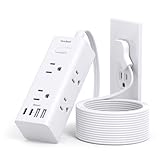
I used to think any old power strip with a long cord was good enough for my entertainment center. Plug everything in, hide the mess, done. Then came the day the modem flickered, the router rebooted, and my painstakingly built digital library vanished. All thanks to a cheap, un-surge-protected power strip that decided to give up the ghost during a minor thunderstorm. It was a harsh lesson: not all cords are created equal, and the question of ‘are extension cords surge protectors’ is a lot more important than most people realize. You can’t just grab any old cord and expect it to shield your precious electronics.
The Big Lie: All Cords Are Not Created Equal
Let’s get one thing straight right off the bat: most extension cords are NOT surge protectors. They are simply pathways for electricity. Think of a regular extension cord like a garden hose. It carries water from the spigot to your sprinkler. That’s it. It doesn’t filter the water, it doesn’t boost the pressure, and it certainly doesn’t protect your plants from a sudden burst of pressure. A standard extension cord does the same for electricity – it just delivers it. This is where a lot of people get tripped up. They buy a long, black cord with multiple outlets and assume it’s got some kind of built-in protection against power surges.
I learned this the hard way with my first big home theater setup. I bought a massive, 15-foot, 8-outlet power strip and felt pretty smug about how organized everything looked. Then, a lightning strike about half a mile away sent a jolt through the neighborhood. My brand new, expensive TV? Fried. My gaming console? Dead. My router? Toast. All plugged into that one big, multi-outlet extension cord that offered zero protection. It cost me nearly $1,000 to replace the TV and console. That’s when I really started paying attention to the fine print. The packaging on that strip said ‘heavy-duty,’ not ‘surge protection.’ Big difference.
The confusion is understandable. Many devices that look like extension cords are, in fact, surge protectors. They often have the same long cords and multiple outlets.
But the key difference lies in the internal components. A surge protector has what’s called a Metal Oxide Varistor (MOV).
This is a small electronic component that acts like a gatekeeper for electricity. When the voltage is normal, the MOV does nothing. But when there’s a sudden spike in voltage – a surge – the MOV quickly redirects that excess electricity away from your connected devices and safely to the ground wire. Without this, the surge goes straight to your electronics, and that’s what fries them.
So, if it doesn’t have MOVs (or similar surge-suppressing technology), it’s just an extension cord.
This distinction is important for anyone trying to protect their electronics, from a simple lamp to a complex home office setup. You wouldn’t just hook up a valuable piece of machinery to an unprotected water line, would you? The same logic applies here. Relying on a standard extension cord for sensitive equipment is like playing Russian roulette with your gadgets. You might get away with it for a while, but eventually, something will happen, and you’ll regret not taking the extra precaution. The initial cost of a true surge protector is a fraction of what it can save you in damaged equipment and lost data.
What Actually Makes a Surge Protector Work (and What to Look For)
So, if it’s not just the cord length or the number of outlets, what does make a surge protector a surge protector? It all boils down to those little wizards called Metal Oxide Varistors (MOVs) I mentioned. These are the heart and soul of surge protection. When a voltage spike hits, the MOV’s resistance drops dramatically, creating a low-resistance path for the excess current to flow to the ground. This shunts the surge away from your sensitive electronics. Think of it like a safety valve on a steam engine; it opens up to release dangerous pressure.
Beyond MOVs, there are other technical specs you’ll see on surge protector packaging. One of the most important is the ‘Joule rating.’ This tells you how much energy the surge protector can absorb before it’s overwhelmed and needs to be replaced. A higher Joule rating generally means better protection and a longer lifespan for the surge protector itself. For most home use, something in the 1000-2000 Joule range is a good starting point. If you’re protecting high-end audio-visual equipment or a whole home office with multiple computers and monitors, you’ll want to look for ratings of 2000 Joules or higher. Some high-end units can go up to 3000+ Joules.
Another spec is the ‘clamping voltage.’ This is the voltage level at which the surge protector starts to divert excess energy. A lower clamping voltage is better, as it means the surge protector intervenes sooner to protect your devices. Look for a clamping voltage of 400V or less. You’ll also see ratings for ‘Maximum Transient Voltage Suppressor (MTVS)’ and ‘Surge Current Rating.’ While important, for the average consumer, the Joule rating and clamping voltage are the easiest and most effective metrics to understand and compare. (See Also: Can Extension Cords Short Out )
Here’s something that caught me off guard years ago: surge protectors wear out. Those MOVs take a beating every time they divert a surge. Eventually, they degrade and can no longer protect your equipment. Many surge protectors have an indicator light that tells you if the protection circuitry is still active. If that light goes out, your surge protector is just a fancy power strip and needs to be replaced. I once had a surge protector fail silently, and when it did, my computer took the brunt of a surge. I learned to check that little light religiously after that. Most units will have a ‘protected’ or ‘grounded’ indicator. If it’s off, get a new one.
| Feature | Why It Matters | My Opinion/Verdict |
|---|---|---|
| Joule Rating | Higher is better; indicates how much energy it can absorb before failing. | Aim for 1000+ Joules for basic needs, 2000+ for sensitive electronics. Don’t skimp here. |
| Clamping Voltage | Lower is better; the voltage at which protection kicks in. | Look for 400V or less. It’s a good indicator of how quickly it reacts. |
| Indicator Lights | Shows if surge protection is still active. | Absolutely key. If it’s off, you’re not protected. Replace it! |
| EMI/RFI Filtering | Reduces electrical noise that can affect audio/video quality. | Nice to have, especially for A/V gear, but not the primary surge protection function. |
| Outlet Spacing | Accommodates larger power bricks. | Practical consideration. If you have a lot of adapters, get one with spaced-out outlets. |
Common Mistakes People Make with Surge Protection
The biggest mistake, as we’ve established, is thinking a regular extension cord is a surge protector. It’s like bringing a butter knife to a sword fight – it just doesn’t do the job.
But there are other pitfalls. One common error is buying a surge protector with a low Joule rating. You might see one for $10 that has ‘surge protection’ printed on it. Chances are, it’s barely going to handle a minor blip, let alone a significant lightning-induced surge.
You end up with a false sense of security. I made this mistake early on, thinking any surge protector was better than none. That cheap one died after a few minor surges, and then a bigger one hit, and poof, my printer was gone.
Another mistake is overloading a surge protector. Even a good surge protector has a limit. Most are rated for a specific amperage (usually 15A). Plugging in too many high-draw appliances – like a microwave, a space heater, and a hair dryer all on the same surge protector – can exceed its capacity. While it might not fry the surge protector itself, it can overload the circuit it’s plugged into, potentially causing a fire hazard or damaging the surge protector’s internal components, rendering it useless for surge protection even if it still provides power. Always check the amperage rating and spread out your high-draw devices.
People also forget that surge protectors have a finite lifespan. Those MOVs degrade over time and with each surge they absorb. Most manufacturers recommend replacing surge protectors every 5-10 years, or sooner if an indicator light goes out. I’ve seen people use the same surge protector for 15-20 years, completely unaware that it’s no longer offering any protection. It’s just a glorified power strip at that point. It’s a low-cost item, and the peace of mind and potential savings are well worth replacing them periodically. Think of it as preventative maintenance for your electronics.
Finally, there’s the misconception that surge protectors protect against everything. They are designed to handle voltage spikes. They are not designed to protect against brownouts (low voltage), power outages, or physical damage. If your power goes out, your surge protector won’t keep your devices running. For that, you need an Uninterruptible Power Supply (UPS), which has a battery backup. A UPS often includes surge protection as well, but its primary function is to provide temporary power during an outage, giving you time to save your work and shut down properly. So, if you’re worried about losing power during storms, a UPS is what you need, not just a surge protector.
Real-World Use: When and Where You Actually Need Them
So, where should you be using surge protectors? Anywhere you have electronics that you’d be heartbroken (or financially ruined) to lose. This includes your home office: computers, monitors, printers, modems, routers, external hard drives. If your work involves important data, a surge protector is a must. I had a client once who lost months of research because his workstation wasn’t on a surge protector during a storm. The cost of his time and lost work far outweighed the cost of a good surge protector.
Your entertainment center is another prime spot. TVs, gaming consoles, soundbars, streaming devices – these are often expensive and sensitive to power fluctuations. Think about the cost of replacing a high-definition TV or the latest gaming console. A good surge protector, costing maybe $30-$50, is a tiny investment compared to that. I’ve got my main TV and my PS5 plugged into a beefy surge protector. It feels good knowing that a rogue surge won’t wipe out my gaming setup.
Kitchen appliances that have digital controls or sensitive electronics also benefit. Refrigerators with digital displays, microwaves with circuit boards, coffee makers with programming features – these are all candidates for surge protection. While a basic toaster probably doesn’t need it, anything with a small computer chip inside can be vulnerable. My fancy multi-function toaster oven has a digital interface that I absolutely protect with a surge strip. It’s probably overkill, but the peace of mind is worth the extra few bucks. (See Also: Can Extension Cords Be Use With Electric Heaters )
Even simple items like lamps, especially those with LED bulbs or smart features, can be protected. While they might not represent a huge financial loss, it’s the principle of the thing. If it plugs into the wall and you don’t want it to be damaged by a power surge, it should be on a surge protector. It’s about building good habits and protecting your investments, no matter how small they seem.
The general rule of thumb is: if it has a plug and it has a circuit board or digital display, it’s a candidate for surge protection. Extension cords, on the other hand, are best suited for simple, non-electronic loads like basic power tools or outdoor lighting where the risk of damage is minimal and replacement is cheap.
Contrarian Opinion: Are Some Surge Protectors Just Marketing Hype?
Okay, here’s my contrarian take. Everyone shouts about Joule ratings and clamping voltages, which are important, yes. But I’ve seen too many fancy, high-Joule-rated surge protectors that look like they belong in a server room, costing $100 or more, that fail just as spectacularly as a $30 one. The truth is, for most people, the extreme high-end surge protectors are overkill. You’re paying for features you’ll never use, like network filtering that barely makes a difference for your home setup, or a ridiculous number of outlets you’ll never fill. The marketing hype around these super-premium units can make you think anything less is useless, and that’s just not true.
My personal experience is that a solid, mid-range surge protector from a reputable brand, with a decent Joule rating (say, 1500-2500) and a visible protection indicator light, is perfectly adequate for 90% of home applications. I’ve had good luck with brands like Belkin, APC, and Tripp Lite. Paying $80 for a surge protector that promises to withstand a direct lightning strike is, in my opinion, often a waste of money.
A lightning strike is an extreme event that can fry anything. The real value of a surge protector is in handling the more common, everyday surges and spikes from utility grid fluctuations, nearby appliance cycling, or smaller electrical events. These smaller, more frequent surges are what degrade electronics over time, and a good mid-range unit handles them just fine.
Furthermore, the lifespan of any surge protector is limited by its MOVs. Even the most expensive one will eventually wear out. So, while investing in a higher-quality unit might give you a bit more peace of mind or a slightly longer lifespan before degradation, it’s not a magical shield that lasts forever. The real ‘big deal’ is consistently checking your indicator lights and replacing units when they fail or reach their recommended age. I’d rather have three good, mid-range surge protectors protecting different areas of my house than one ultra-expensive one that I forget to check.
The common advice is to buy the most expensive, highest-rated surge protector you can find for your most prized possessions. I disagree. I think it’s more practical to buy a few good, reasonably priced units that offer solid protection for the most common types of surges. Invest in what you need, understand that they wear out, and check them regularly. Don’t get caught up in the marketing jargon or the fear of the absolute worst-case scenario, which frankly, no consumer-grade surge protector is designed to fully mitigate anyway.
Faqs on Extension Cords and Surge Protection
Are All Power Strips Surge Protectors?
No, absolutely not. Many power strips are just basic extension cords with multiple outlets. They look similar, but they lack the internal surge-suppressing components like Metal Oxide Varistors (MOVs) that are necessary to protect your electronics from voltage spikes. Always check the packaging and specifications for a Joule rating and explicit mention of surge protection.
How Do I Know If My Extension Cord Is a Surge Protector?
Look for specific labeling on the product or its packaging that indicates ‘surge protection,’ a ‘Joule rating,’ and often mentions features like EMI/RFI filtering. A standard extension cord will simply be labeled as such and won’t have these protective specifications. Many surge protectors also have indicator lights that show the protection is active.
How Often Should I Replace My Surge Protector?
Surge protectors have a limited lifespan because their protective components (MOVs) degrade with each surge they absorb. Most manufacturers recommend replacing them every 5 to 10 years. More importantly, if the ‘protected’ indicator light on the surge protector goes out, it’s no longer providing surge protection and should be replaced immediately. (See Also: Are Outdoor Extension Cords 10 Or 12 Gauge )
Can I Plug a Surge Protector Into Another Surge Protector?
It is generally not recommended to plug a surge protector into another surge protector (a practice called “daisy-chaining”). This can reduce the effectiveness of both devices, overload the primary surge protector, and potentially create a fire hazard. Always plug surge protectors directly into a wall outlet.
What’s the Difference Between a Surge Protector and a Ups?
A surge protector protects your electronics from sudden voltage spikes. An Uninterruptible Power Supply (UPS) also provides surge protection but, more importantly, has a built-in battery that provides temporary power during an outage, allowing you to save your work and shut down your devices gracefully. A UPS is for power continuity, while a surge protector is for voltage protection.
Practical Tips for Using Extension Cords and Surge Protectors
When you’re dealing with both extension cords and surge protectors, a few practical tips can go a long way. First, always use the right gauge extension cord for the job.
A cord that’s too thin for a high-draw appliance can overheat and become a fire hazard. Check the appliance’s power requirements and the extension cord’s rating. For sensitive electronics that need surge protection, make sure you’re plugging the surge protector directly into a wall outlet. Never plug a surge protector into another surge protector or into an extension cord, as this can negate its protective capabilities and create a safety risk.
I learned this the hard way when I tried to power a whole home office from a single wall outlet using a chain of cords and strips; it looked neat but was a fire waiting to happen.
Keep your surge protectors in good condition. Regularly check the indicator lights to make sure they are still active. If a light is out, replace the unit. Also, be mindful of where you place them. Avoid areas where they might get wet or excessively dusty. Outdoors, always use surge protectors specifically rated for outdoor use, and make sure they are plugged into GFCI-protected outlets. For indoor use, consider the outlet spacing on your surge protector. If you have many large power bricks, you’ll need a unit with widely spaced outlets to avoid blocking adjacent sockets. It’s a small detail, but it makes a huge difference in usability.
Finally, understand what you’re protecting. If you have a simple lamp or a fan, a regular extension cord is perfectly fine. But for your computer, your TV, your gaming console, or any other expensive electronic device, a quality surge protector is an absolute must. Don’t let the confusion about ‘are extension cords surge protectors’ lead you to make a costly mistake. Invest in peace of mind. It’s a small price to pay for keeping your valuable electronics safe from the unpredictable nature of electricity.
Verdict
So, to finally put the question of ‘are extension cords surge protectors’ to rest: no, most of them are not. A standard extension cord is just a wire, plain and simple. You need a specific device with surge-suppressing components to protect your electronics. This distinction is important for saving your gear from costly damage, especially from those sudden power surges that can happen anytime.
Don’t fall for the trap of assuming a multi-outlet strip offers protection. Always check for the Joule rating, the indicator lights, and the explicit mention of surge protection on the packaging. And remember, surge protectors wear out, so keep an eye on those indicator lights and be prepared to replace them periodically. It’s an investment that pays for itself by saving you from expensive repairs or replacements.
Next time you’re at the store, take that extra minute to make sure you’re buying true surge protection, not just a long cord. Your electronics will thank you for it.