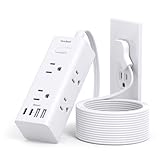
I remember staring at a pile of outdoor holiday lights, completely useless because the nearest outdoor outlet was a good 50 feet away. It was a classic ‘so close, yet so far’ moment. I grabbed what I thought was a heavy-duty extension cord from the big box store, all set to conquer the decorating battle. Little did I know, the real battle wasn’t with tangled lights, but with understanding whether or not that purchase was subject to Florida sales tax. The question of ‘are extension cords tax exempt in florida now?’ isn’t as simple as a yes or no, and frankly, it’s a bit of a headache.
Most people just grab what they need and pay at the register, assuming it’s all part of the price. But when you’re buying a bunch of stuff for a project, or just trying to be a savvy shopper, every dollar counts. This whole tax thing can really add up, and nobody likes being overcharged, especially on something as basic as a cord.
The Florida Sales Tax Tango: What’s Taxable, Anyway?
Alright, let’s cut to the chase. The short, annoying answer to ‘are extension cords tax exempt in florida now?’ is generally: no, they’re not.
Most tangible personal property sold in Florida is subject to sales tax unless there’s a specific exemption. And extension cords? They fall squarely into that ‘tangible personal property’ bucket. Think of it this way: you’re buying a physical thing.
The state wants its cut. I’ve spent way too much time trying to find loopholes, only to end up paying the tax anyway. I once bought three different kinds of heavy-duty cords for a workshop setup, thinking maybe the ‘industrial’ angle would somehow dodge the tax. Nope.
The cashier scanned them, the register beeped its tax-demand, and out came my hard-earned cash for the privilege.
Now, before you throw your hands up in despair, there are some very specific circumstances where things get complicated. For instance, if you’re a contractor buying materials for a job that will eventually be affixed to real property (like wiring that’s permanently installed as part of a building), there are different rules. But for the average Joe or Jane just trying to power a leaf blower, run some lights, or charge their tools, you’re paying sales tax. It’s not like buying groceries or prescription drugs, which have their own set of exemptions. An extension cord is just… an extension cord. The Florida Department of Revenue doesn’t have a special line item for ‘convenience of power delivery’ that exempts it.
The tax rate itself varies slightly by county, so what you pay in Miami might be a hair different than what you pay in Pensacola. It’s usually around 6% state sales tax plus local discretionary sales surtaxes, often bringing the total to 7% or more.
So, that $30 cord could easily cost you $32.10 or more depending on where you are. It’s not a massive amount on a single cord, but if you’re equipping a whole garage or outdoor area, it adds up faster than you think. I’ve learned to just factor it into the budget from the start.
Saves on the surprise at the checkout counter, which is always a win in my book. The common advice to always check for exemptions is good, but for extension cords, the exemption list is pretty much empty for everyday use.
The ‘materials’ Maze: When Contractors Get a Pass
This is where things get dicey and where the confusion often stems from. If you’re a contractor, or if you’re buying extension cords as part of a larger project that qualifies for tax exemption, then you might be in luck.
This isn’t about the extension cord itself being inherently tax-free. It’s about its role in a larger tax-exempt transaction. For example, if you’re a construction company building a new hospital wing, and the extension cords are being used as part of the permanent electrical installation, they could potentially be considered a component of the real property and thus part of a tax-exempt project. However, this is a complex area of tax law, and it’s not a simple ‘my word is my bond’ situation.
You’re usually dealing with a resale certificate or direct pay permit, and it’s all documented meticulously.
I’ve seen DIYers try to pull the ‘contractor’ card at the hardware store, and it never ends well. The cashier isn’t equipped to make those judgment calls, and rightly so. They’re just selling you a product. If you’re a contractor and you’re making a purchase for a job that you know is tax-exempt, you’ll typically present your valid Florida Sales and Use Tax Certificate of Exemption or a Resale Certificate at the time of purchase. This tells the retailer that you are not the end consumer and that the sale is either for resale or part of an exempt project. Without that official documentation, you’re just another shopper buying an extension cord.
The key distinction is whether the cord is a consumable item for your personal use or a component of a larger, specifically exempted service or real property improvement. If you’re buying it to power your personal lawnmower, it’s taxable. If you’re buying it as part of the rough-in electrical for a new commercial building you’re constructing for a client who has a valid exemption, it might not be. (See Also: Can Extension Cords Short Out )
This is why people sometimes hear conflicting information – they’re hearing about specific business-to-business or construction scenarios, not their personal shopping needs. I’ve had to explain this to friends before; it’s not about the cord itself, it’s about the transaction it’s part of.
For 99% of us, the answer to ‘are extension cords tax exempt in florida now?’ is a firm ‘no’.
What to Look for: Specs That Matter (beyond Tax)
Since we’ve established that extension cords themselves aren’t usually tax-exempt, let’s talk about what actually matters when you buy one. Because honestly, I’ve wasted money on cheap, flimsy cords that fried after one season.
That’s a bigger sin than paying a couple of extra bucks in tax. First up: gauge.
This is probably the most important spec and the one most people ignore. It’s often represented by AWG (American Wire Gauge). The lower the AWG number, the thicker the wire, and the more amperage it can handle safely.
For general household use, like powering a lamp or a fan, 16-gauge might be okay. But if you’re running power tools, a lawnmower, or anything with a motor that draws a lot of juice, you want 14-gauge or even 12-gauge for heavy-duty applications. Using a cord that’s too thin is a fire hazard, plain and simple. I learned this the hard way when a cheap 16-gauge cord got ridiculously hot powering my old circular saw.
Smelled like burning plastic. Never again.
Next, consider the length. Measure your needs! Don’t just grab the longest one available if you only need 10 feet. Excess cord can be a tripping hazard, and longer cords naturally have more resistance, meaning a slight voltage drop. For outdoor use, you need cords rated for that specific purpose. They’re built to withstand weather, moisture, and UV exposure. Look for ‘outdoor rated’ or ‘heavy duty outdoor’ on the packaging. Indoor cords are not designed for the elements and can degrade quickly, posing a safety risk. Also, check the plug and socket. Are they polarized (one prong wider than the other)? Do they have three prongs (grounded)? Grounding is key for safety, especially with power tools.
Finally, think about the environment. Are you running it across a driveway where it might get run over? Get a cord that’s designed for that kind of abuse. Are you plugging in sensitive electronics? Maybe a surge-protected extension cord is a good idea, though that’s a different category of product. The number of outlets on the cord is also a factor. Do you need a single outlet, or a power strip style with multiple? Here’s a quick comparison of what I consider when I’m buying:
| Feature | My Verdict (for general use) | Why |
|---|---|---|
| Gauge (AWG) | 14-gauge or 12-gauge for anything substantial | Safety first. Avoids overheating and voltage drop with power-hungry tools. |
| Length | As short as practically possible | Reduces tripping hazards and voltage loss. Measure twice, buy once. |
| Rating | Outdoor rated for outdoor use, indoor for indoor | Durability and safety. Don’t risk a fire or damage by using the wrong type. |
| Grounding | Always 3-prong if the device has a 3-prong plug | Key safety feature to prevent electrical shock. |
| Durability | Thick, solid construction, good strain relief at ends | Lasts longer, less prone to damage from flexing or minor impacts. |
So, while you’re pondering ‘are extension cords tax exempt in florida now?’, remember that the quality and safety of the cord itself are far more important than any potential tax savings, which, for us, are basically non-existent.
Common Extension Cord Mistakes (and How I Made Them)
I’ve made my fair share of extension cord blunders, and I’m happy to share them so you don’t have to. The biggest mistake, hands down, is using the wrong gauge for the job.
Like I mentioned, I used a 16-gauge cord for my power tools for years. It worked, technically, but it got warm, and I probably wasn’t getting peak performance from my tools. One day, I was using a heavier-duty saw, and the cord started to smell funny. I unplugged it immediately, heart pounding.
Turns out, that cord was rated for 10 amps, and my saw was drawing closer to 12-13 amps. That’s a recipe for disaster. The insulation started to degrade.
I learned that day that ‘it works’ is not the same as ‘it’s safe’. Since then, I’ve started stocking 12-gauge cords for my workshop and anything that draws significant power. (See Also: Can Extension Cords Be Use With Electric Heaters )
Another common mistake is overloading the cord. Extension cords have a maximum wattage or amperage rating. Exceeding this rating is like asking for trouble. It can cause the cord to overheat, melt, and even start a fire. People often daisy-chain extension cords, plugging one into another. While sometimes unavoidable for extreme distances, it’s generally a bad idea. Each connection point adds resistance and potential for failure. Plus, you’re often exceeding the total wattage rating for the first cord in the chain. When in doubt, it’s better to buy a longer, appropriately rated single cord.
People also frequently use indoor extension cords outdoors. These cords aren’t built to withstand moisture, extreme temperatures, or UV rays. They can become brittle, crack, and expose the wires, creating a serious shock or fire hazard.
I saw a neighbor’s entire display of Halloween inflatables short out because they used regular indoor cords that had been left out for a week. The rain just did them in. Always, always use cords specifically rated for outdoor use when they’re going to be exposed to the elements.
And for goodness sake, don’t run cords under carpets or rugs. They can be damaged by foot traffic, and the heat buildup has no ventilation, which is a major fire risk. I learned this one indirectly; a friend’s house had a small fire started by a cord running under a rug. Scary stuff.
The “extension Cord Under a Rug” Fire Risk
This is a genuinely terrifying mistake. Running an extension cord under a carpet or rug might seem like a neat way to hide it, but it creates a hidden fire hazard. The cord can be damaged by foot traffic, and more importantly, it’s unable to dissipate heat properly. The insulation can melt, leading to a short circuit and fire. Always keep extension cords visible and away from high-traffic areas.
Real-World Use: Powering Projects and Problems
Let’s talk about actual use cases. For me, extension cords are the unsung heroes of any decent-sized home improvement project. Need to run a sander in the middle of the living room? Extension cord. Powering up the electric mower in the back corner of the yard? Extension cord. Setting up outdoor lights for holidays? You guessed it – extension cord. The question ‘are extension cords tax exempt in florida now?’ becomes secondary to having the right tool for the job when you’re elbow-deep in sawdust or battling stubborn weeds.
I recently tackled building a large deck. This involved multiple power tools: circular saw, miter saw, orbital sander, and even a nail gun (though that usually has its own compressor). Each tool needed reliable power.
I ended up with a collection of 12-gauge, 50-foot cords. I tried to be smart about it.
I measured where the major work zones would be and laid out the cords to minimize extension between them. I used heavy-duty outdoor-rated cords because part of the deck construction spilled out into the yard, and the weather can be unpredictable even when it’s sunny.
My mistake? I initially tried to use one of those cheaper, lighter-duty cords for my miter saw, which is a real power hog.
Within 15 minutes of continuous use, the cord was noticeably warm. I swapped it for a proper 12-gauge one, and the saw seemed to run a little more smoothly, with less of that ‘laboring’ sound.
Another scenario: powering up holiday decorations. My house has a couple of outdoor outlets, but they’re not exactly strategically placed for a full-blown light show. I needed cords that could handle the load of multiple strings of lights, some of which are LED and some older incandescent types. For outdoor lights, I learned to look for cords with multiple, spaced-out outlets so I wasn’t plugging 10 strings into one overloaded socket on the cord.
And again, they had to be outdoor rated. I’ve seen too many sad, melted, or sparky cords that were clearly not designed for the Florida sun and occasional downpour. The question ‘are extension cords tax exempt in florida now?’ is really a distraction when the core issue is getting safe, reliable power to where you need it.
The biggest takeaway from practical use is this: don’t skimp. A good quality, appropriately rated extension cord is a safety device as much as it is a power delivery tool. Investing a few extra dollars in the right gauge and type will save you headaches, prevent potential fires, and make sure your tools and decorations work as they should. I’d rather pay a few cents more in tax on a safe, durable cord than risk a cheap one that could cost me much, much more. (See Also: Are Outdoor Extension Cords 10 Or 12 Gauge )
Contrarian View: Why I Skip Surge Protectors on Most Cords
Now, here’s a bit of a contrarian take. Everyone and their dog tells you to get a surge protector, especially for electronics. And sure, for your fancy TV or your computer setup, a good surge protector is a smart move. But for a basic outdoor extension cord powering a string of lights, or an indoor one running a shop vac? I often skip it. Why? Because most standard extension cords aren’t designed to handle massive surges anyway, and adding a surge protector module to the end adds cost, bulk, and another point of potential failure. Plus, the quality of surge protection varies wildly. A cheap surge protector isn’t much better than a basic cord.
My reasoning is this: the primary purpose of a basic extension cord is to deliver power. If you need surge protection, get a surge-protected power strip and plug your devices into that.
Then, run a regular, appropriately rated extension cord from the wall outlet to the surge-protected power strip. This way, the surge protector is where it’s most effective – close to the sensitive electronics.
For tools, you’re more concerned about consistent power and avoiding voltage drop than protecting them from a lightning strike. A heavy-duty cord will handle the amperage and deliver consistent power.
If there’s a power surge severe enough to damage a tool plugged directly into an extension cord, it’s likely to cause damage elsewhere in your house anyway, and your main breaker panel should offer some level of protection.
I’ve seen too many surge protectors fail, either by wearing out their protective components over time (most have indicator lights that go out, but who checks those religiously?) or by simply not being solid enough for a significant surge. For everyday items like holiday lights or a garden pump, I prioritize a durable, weather-resistant, and correctly gauged extension cord. If I’m using it for something truly valuable or sensitive, like my camera equipment when I’m setting up an outdoor shoot, then yes, I’ll use a proper surge-protected power strip connected via a heavy-duty extension cord.
But for the majority of uses, adding a surge protector to the extension cord itself feels like unnecessary complication and cost. It’s about matching the protection level to the risk and the value of the item being powered. The question ‘are extension cords tax exempt in florida now?’ is far less interesting than understanding the actual protective features (or lack thereof) in the cords and accessories you buy.
Faq: Extension Cords and Florida Sales Tax
Are All Extension Cords Taxable in Florida?
Yes, generally speaking, all extension cords sold for personal use or general purposes in Florida are subject to the state’s sales tax. They are considered tangible personal property, and there are no broad exemptions specific to extension cords for typical consumers.
When Might an Extension Cord Purchase Not Be Taxed in Florida?
An extension cord purchase might not be taxed if it’s part of a larger construction or improvement project that is itself tax-exempt, and you are purchasing it as a contractor with the proper exemption documentation. It could also be a component of machinery or equipment that has a specific exemption. However, for individual consumer purchases, this is rarely applicable.
What Tax Rate Applies to Extension Cords in Florida?
The tax rate is the standard Florida state sales tax rate (currently 6%) plus any local discretionary sales surtaxes that apply in the specific county where the purchase is made. This means the total rate can range from 6% to over 8.5% depending on the location.
Can I Get a Refund If I Paid Tax on an Extension Cord and It Was Tax-Exempt?
If you believe you paid sales tax in error on an extension cord that should have been exempt based on specific commercial or contractor rules, you would typically need to seek a refund from the retailer or file a claim with the Florida Department of Revenue. However, for standard consumer purchases, this scenario is unlikely to apply.
Where Can I Find the Official Florida Sales Tax Rules on Extension Cords?
For the most authoritative information, you should consult the Florida Department of Revenue’s official website. Look for publications regarding sales and use tax on tangible personal property and specific industry or contractor exemptions. This will provide the definitive legal interpretations.
Final Thoughts
So, to circle back to the burning question: are extension cords tax exempt in florida now? For the vast majority of us, the answer is a resounding no. The state sees them as just another piece of tangible property they can put a tax on. Don’t waste your time searching for some magic loophole for your everyday needs; focus instead on getting a cord that’s the right gauge, the right length, and rated for its intended use. That’s where your real money and safety are saved.
I’ve learned that cutting corners on extension cords is a fool’s errand. A good cord is a safety investment, plain and simple. Pay the tax, get a decent cord, and avoid the potential headaches of overheating, damage, or worse. It’s not worth the risk.
Next time you’re at the store, before you even think about the sales tax, check that AWG rating. It matters more than you might think.