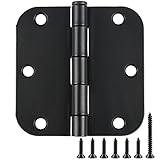
I swear, the first time my garage door started making that god-awful screeching, I thought the whole mechanism was about to give up the ghost. My dad, bless his heart, immediately grabbed a can of WD-40 and a prayer, but it was the hinges. Louder and louder they got, until I finally caved and decided to replace them. That’s when the rabbit hole started: are garage door hinges universal? The internet sure made it seem like a simple part swap, but my experience told a different story.
It’s frustrating when you’re staring at a broken part, needing a replacement now, and the information out there is a tangled mess. You just want to know if the darn thing will fit so you can get your car out of the driveway. Let’s cut through the noise.
So, Are Garage Door Hinges Universal? Not Exactly.
If you’re asking if you can just grab any old hinge off the shelf at the hardware store and expect it to work on your garage door, the answer is a resounding no. While they might look similar, there’s a surprising amount of variation, and slapping the wrong hinge on can cause more problems than it solves.
I learned this the hard way. I’d bought a cheap pack of ‘universal’ hinges online, thinking I was being clever. They looked okay, but the metal was flimsier, and the screw holes didn’t quite line up with the old ones. It took me an extra hour of wrestling with it, drilling new pilot holes, and praying the thinner metal wouldn’t tear.
It held, but it always felt a little… off. A few months later, under heavy use, one of the bottom hinges actually cracked. Lesson learned: ‘universal’ often means ‘barely fits most things, perfectly fits none.’
The main issue is that garage door hinges aren’t just about holding two pieces of metal together. They’re engineered to handle significant weight and constant movement. The thickness of the steel, the gauge of the metal, the shape of the curve, and the exact placement and size of the screw holes all matter.
Different door manufacturers use different designs, and even within the same manufacturer, there can be variations over the years. You’ve got heavy, insulated doors that need beefier hinges, and lighter, hollow-core doors that might get away with something a bit less substantial. Trying to force an incompatible hinge can put undue stress on the door panels, the tracks, and even the opener mechanism itself.
It’s not just about the hinge; it’s about the entire system working in harmony. Think of it like trying to put a car tire on a bicycle – it might technically be a circle, but it’s not going to work.
What Actually Makes Hinges Different (and Why It Matters)
The devil is truly in the details when it comes to garage door hinges. You’ve got your standard center hinges, which connect the sections of the door panel, and then you have your end hinges, which attach the door to the vertical tracks. The most common mistake folks make is not realizing these are different and often not interchangeable.
Center hinges are usually flatter and wider, designed to allow the door to articulate smoothly. End hinges, especially the bottom ones, often have a bracket that extends out to bolt directly to the track system.
Getting these mixed up is a recipe for disaster. I’ve seen neighbors try to use a center hinge where an end hinge should be, and the door just wouldn’t seal properly, leaving a nasty gap at the bottom. It also put a weird bind on the rollers.
Then there’s the material and gauge. Most standard residential doors use 14-gauge steel hinges. Anything lighter, like 16 or 18-gauge, is usually found on lighter-duty doors or as replacements for older, thinner hinges.
If you have a heavy, insulated door – the kind that feels like it weighs a ton – you absolutely need to stick with heavy-duty hinges, often 11 or 12-gauge. These are built to withstand more torque and stress.
I once accidentally bought hinges that felt suspiciously light. Turns out, they were 16-gauge, and my heavy door made them flex noticeably when it was fully open. (See Also: A Box Without Hinges Key )
I immediately swapped them out for proper 14-gauge ones. Another thing: the roller slot. The part where the roller sits needs to be the correct width and depth for your specific rollers.
If it’s too tight, the roller binds. Too loose, and the roller can pop out. It sounds like a small thing, but it directly impacts how smoothly and safely your door operates. Trust me, the difference between a properly fitted hinge and one that’s a bit off is like night and day in terms of operation.
How to Figure Out What You Actually Need
Okay, so you’ve accepted that a universal hinge is probably not your friend. How do you actually identify the right one?
This is where you need to channel your inner detective. First, and most importantly, look at the hinge that’s currently on your door.
Take a good, hard look at its shape, its size, and how it’s mounted. You’ll usually see numbers stamped directly onto the hinge itself. These often indicate the gauge of the steel (e.g., ’14’ for 14-gauge). Sometimes, they’ll have a model number or a series indicator.
If the numbers are worn off or illegible, you’ll need to measure. Measure the length of the hinge, the width of the main body, and importantly, the distance between the screw holes. You’ll also need to measure the diameter of the hole that the roller sits in. This might seem tedious, but it’s way better than buying the wrong part.
Your next best bet is to identify your garage door manufacturer. Most garage doors have a sticker or plate somewhere on the inside, often near the top or along the edge of a panel, that lists the manufacturer’s name and sometimes even the model number. Once you have that, you can usually go to the manufacturer’s website or call their customer support. They often have parts diagrams or can tell you exactly which hinge part number you need.
If you’re really stuck, taking clear photos of your existing hinges from multiple angles, along with your measurements, to a local garage door supply shop is your best bet. These guys know their stuff and can often identify obscure parts just by looking.
I’ve found that while online retailers offer convenience, a good local specialist can save you a ton of headaches and wasted money. They might charge a bit more upfront, but the guarantee of getting the exact right part is worth its weight in gold.
Remember, the bottom hinges are important for safety, so don’t skimp or guess on those.
| Hinge Type | Common Material Gauge | Key Features | Verdict on ‘Universality’ |
|---|---|---|---|
| Center Hinges | 14-gauge (standard) | Connects door sections, generally flatter shape, multiple screw holes for panel attachment. | Generally NOT universal. Specific hole patterns and widths vary by manufacturer. |
| End Hinges (Bottom) | 14-gauge or heavier (11/12-gauge for heavy doors) | Attach door to track, often have an extended bracket for track mounting, important for door stability. | Almost NEVER universal. Specific bracket shape and hole placement are highly specific to track systems. |
| End Hinges (Top) | 14-gauge | Attach door to track at the top, usually a simpler bracket than bottom hinges. | Slightly more universal than bottom hinges, but still can vary in hole patterns and bracket size. Best to match existing. |
| Heavy-Duty Hinges | 11-gauge, 12-gauge | Thicker steel, designed for insulated or heavier doors. | Not universal. Required for specific door weights and applications. |
Common Mistakes and Why They Blow Up in Your Face
Alright, let’s talk about the classic screw-ups that people make when replacing garage door hinges. The most common one, which I’ve already hammered home, is assuming ‘universal’ means ‘will fit my door.’ It’s a trap! You buy them, they look close enough, but the screw holes are slightly off.
You force it, maybe drill new holes, and think you’re a genius. But here’s the kicker: those slightly misaligned holes mean the hinge isn’t sitting flush.
This puts uneven stress on the hinge itself and the door panel. Over time, this can lead to the hinge bending, cracking, or even tearing out of the door material. I’ve seen this happen, and it’s not a pretty sight. The door can sag, the rollers can bind, and in the worst case, a hinge can fail completely, potentially causing the door to fall partially or fully. (See Also: Are Integrated Washing Machine Door Hinges Standard )
That’s a serious safety hazard.
Another big mistake is using the wrong gauge of steel. If you have a heavy, insulated garage door and you put on flimsy 16-gauge hinges, they’re going to flex.
You might not notice it at first, but every time the door moves, those hinges are under more strain than they can handle. It’s like using a toothpick to hold up a brick wall. They’ll eventually bend, and then they’ll break.
Conversely, putting excessively heavy-duty hinges on a very light door isn’t ideal either; they might be overkill and potentially create stress points where they attach. The third major blunder is mixing hinge types. Using a center hinge as an end hinge, or vice-versa, screws up the geometry of the door’s movement. End hinges are designed to connect the door to the track, providing lateral support.
Center hinges are for connecting the door panels and allowing them to fold. If you get this wrong, your door might not track correctly, it could bind up, or it might not seal properly against the ground or the sides of the garage.
I’ve had to go back and fix my own early attempts, and believe me, doing it right the first time saves you a ton of sweat and frustration. It’s always worth double-checking the old part before you order a new one.
Real-World Scenarios: When Hinges Fail and What to Do
So, what actually causes garage door hinges to fail in the first place? Age and wear are the big ones, naturally. Metal fatigues over time, especially with constant exposure to the elements – rain, snow, salt on the roads in winter, you name it. Rust is a silent killer; it weakens the steel until it can’t take the load anymore.
I had a set of hinges on my old garage door that looked okay on the surface, but they were completely corroded underneath. One morning, when the door was about halfway up, I heard a sickening snap, and the whole section sagged precariously. Turns out, the hinge had rusted through and just given up. That was a rude awakening and a hasty trip to the hardware store.
Beyond just age, improper installation is a huge culprit. As we’ve discussed, using the wrong screws, not screwing them in tightly enough, or forcing misaligned hinges puts immense stress on the metal.
This can lead to cracks, especially around the screw holes, or complete failure. I once had a roller come off the track because the end hinge it was attached to had been installed slightly crooked. The roller wasn’t sitting right in the groove, and with enough movement, it popped out.
This also put a weird side-load on the hinge, which I’m sure shortened its life. Impact damage is another reason. Ever accidentally back into your garage door (asking for a friend)? A direct hit can bend or break hinges instantly.
Even smaller impacts, like a stray baseball or a falling branch, can do damage over time. If you notice your door is making new noises, is harder to open manually, or has visible gaps when closed, it’s time to inspect those hinges closely. Don’t wait for a catastrophic failure. A quick visual inspection every few months, especially after heavy weather or a minor mishap, can save you a lot of trouble and potential injury.
If you see any rust, bending, or cracking, it’s time to replace them. And remember to replace them in pairs – if one is worn out, its mate on the other side of the door is likely not far behind. (See Also: Are Hinges Wheeels )
The Myth of the ‘one Size Fits All’ Hinge
Let’s be brutally honest: the idea that garage door hinges are universal is mostly a marketing myth designed to make a quick sale. Sure, you might find some very basic, low-stress hinges that might fit a wider variety of doors, but for a standard, functioning, and safe garage door, ‘universal’ is a dangerous word.
The engineering behind a garage door is more precise than most people realize. Each component plays a vital role, and they’re designed to work together within specific tolerances. Hinges are no exception.
They need to match the weight of the door, the thickness of the door panels, and the specific dimensions of the tracks and rollers. A hinge that’s too thin, too short, or has incorrectly spaced screw holes isn’t just an inconvenience; it’s a potential failure point.
I’ve seen folks try to ‘make do’ with generic hinges, only to end up with a door that squeaks incessantly, doesn’t close properly, or worse, starts to sag. The real cost isn’t just the price of the wrong part; it’s the wasted time, the extra trips to the store, the potential damage to the door panels, and the nagging worry that the whole thing might fail. When you buy specific parts designed for your door model or a recognized standard gauge and hole pattern, you’re investing in reliability and safety. It’s like buying the right size bolt for a important piece of machinery.
It might cost a dollar or two more, but it’s the only one that will do the job correctly and safely. So, next time you’re faced with a squeaky hinge or a broken one, resist the urge to grab the ‘universal’ pack.
Take the time to identify exactly what you need. Your garage door, and your peace of mind, will thank you for it.
Frequently Asked Questions About Garage Door Hinges
Can I Use a Regular Metal Hinge for a Garage Door?
No, you absolutely cannot use a standard door hinge meant for an interior door or a cabinet. Garage door hinges are specifically designed to be much thicker, stronger, and to withstand the significant weight and constant motion of a large, heavy garage door. They have specific shapes and hole patterns to mount securely to the door panels and the tracks.
How Do I Know If My Garage Door Hinges Need Replacing?
You’ll typically know your hinges need replacing if you hear loud squeaking or grinding noises when the door operates, especially from the hinges themselves. Visible signs include rust, bending, cracking, or tearing of the metal, particularly around screw holes. If the door seems to sag on one side or doesn’t close evenly, damaged hinges are a likely culprit.
What Is the Difference Between Center and End Hinges?
Center hinges are used to connect the individual panels of the garage door together, allowing them to fold. End hinges, especially bottom end hinges, are used to attach the outer edge of the door panels directly to the vertical tracks of the garage door system, providing stability and guiding the door’s movement. They have different mounting brackets and shapes to serve these distinct functions.
How Many Hinges Does a Garage Door Have?
A typical residential garage door has between 4 and 6 sections, and each section usually has a pair of hinges connecting it to the next section. Additionally, there are end hinges at the top and bottom of the outer edges of the door that connect it to the tracks. So, a standard two-section door might have 4 center hinges (2 pairs) and 4 end hinges (2 top, 2 bottom), totaling 8 hinges, but this can vary based on the door’s size and number of panels.
Final Verdict
So, to put it plainly: are garage door hinges universal? Not in the way most people hope. While there are standards for gauge and general shapes, the exact hole patterns, bracket designs, and material thickness are often specific to the door manufacturer and model. Trying to force a ‘universal’ hinge can lead to a host of problems, from poor operation to outright failure and safety hazards. It’s always best to identify your specific door or existing hinge to get the exact replacement part.
Don’t waste your money and time on guesswork. Take a few minutes to inspect your current hinges, check for manufacturer information on your door, or consult with a local garage door specialist. Getting the right hinge means your door will operate smoothly and safely for years to come. It’s a small part, but it’s absolutely vital for the function of your entire garage door system.