I once spent a solid three hours at the hardware store staring at a wall of hinges, utterly convinced I was missing something. It was a simple cabinet door, the kind that’s been banging open for months, and I just needed a new hinge. But “new hinge” turned out to be a rabbit hole of sizes, screw patterns, and corner types. It made me wonder, are hinges a universal size? Spoiler alert: the answer is a resounding, infuriating ‘no.’
It’s enough to make you want to just nail the damn door shut. But thankfully, after a lot of fumbling and a few spectacularly wrong purchases, I figured out the basic intel you actually need. This isn’t about becoming a hinge expert; it’s about avoiding a trip back to the store because you bought the wrong darn thing.
Why the “universal” Idea Is a Myth
Let’s get this out of the way: hinges are NOT a universal size. Anyone who tells you otherwise has probably never actually tried to replace one in the wild. When you’re standing there with a broken hinge in your hand, that’s when the reality hits you. It’s like trying to find a matching sock after a laundry disaster – frustratingly specific.
The common advice you’ll find online often starts with measuring. And yeah, measuring is important, but it’s only part of the puzzle. You’ve got to consider the thickness of the door, the frame it’s attaching to, the weight of the door, and even the style you’re going for. A tiny cabinet door needs something completely different from a heavy garden gate. I learned this the hard way when I tried to use some beefy gate hinges on a lightweight pantry door. It looked ridiculous and the door sagged like it was drunk. My mistake cost me about $60 and a whole Saturday afternoon of fiddling.
Think about it: the sheer variety of doors and applications out there is staggering. We have interior doors, exterior doors, cabinet doors, closet doors, shed doors, gates, even refrigerator doors. Each one has different requirements for support, movement, and aesthetics. A hinge designed for a solid oak interior door would be overkill and probably visually clunky for a thin particleboard closet door. Conversely, a flimsy, small hinge on a heavy gate would fail almost immediately. The forces involved, the materials used, and the desired swing all dictate the type and size of the hinge needed. So, while the basic mechanism of two plates connected by a pin might seem simple, the execution is anything but universal.
Decoding the Hinge Jargon: What to Look For
Alright, so we know they aren’t universal. What do you need to know when you’re actually out there trying to buy a replacement? First off, the most obvious measurement: the hinge’s overall size when it’s fully open. Lay it flat and measure the length from the tip of one leaf to the tip of the other. This is usually the most prominent dimension. But that’s just the start. Then you’ve got the width of each leaf, which tells you how much surface area it has for mounting. Wider leaves generally mean more stability, especially for heavier doors.
Next, the pin. This is the central rod that the hinge pivots on. Its thickness and how it’s seated matter. Some pins are removable (useful for maintenance or specific installations), while others are fixed.
The material of the hinge itself is also a huge factor. Steel is common for strength, brass offers corrosion resistance and a classic look, and stainless steel is great for outdoor or high-moisture environments. I’ve found that for interior doors, a simple steel hinge is usually fine, but for anything exposed to the elements, you’re asking for rust and early failure if you cheap out.
I once put some cheap zinc-plated hinges on an outdoor shed, and within a year they were flaking and seizing up. Had to replace them with galvanized steel, which probably added another $40 to the project. (See Also: A Box Without Hinges Key )
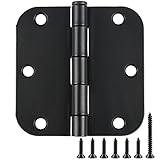
You also need to pay attention to the corner radius. Hinges come with either a square corner or a rounded corner (often 1/4-inch or 5/8-inch radius). The corner shape needs to match the cutout in your door and frame. If you have a square mortise (the cutout for the hinge) on your door and frame, you need a square-corner hinge. If the cutouts are rounded, you need a rounded-corner hinge with a matching radius. This is a common point of confusion and can lead to a hinge that doesn’t sit flush, looks terrible, and doesn’t function properly.
| Feature | What it Means | Why it Matters | My Verdict |
|---|---|---|---|
| Overall Length | Total length when open | Basic sizing, needs to fit door height | Start here, but don’t stop. |
| Leaf Width | Width of each mounting plate | Surface area for attachment; affects strength | Wider is usually sturdier for heavier doors. |
| Pin Diameter/Type | Thickness and removability of the pin | Durability, ease of maintenance | Look for a solid, non-wobbly pin. Removable is a plus for some jobs. |
| Material | Steel, brass, stainless steel, etc. | Corrosion resistance, strength, appearance | Steel for interiors, galvanized or stainless for outdoors. Brass for looks. |
| Corner Radius | Square or rounded corners (1/4″, 5/8″) | Must match mortise in door/frame | IMPORTANT. Get this wrong and it won’t fit flush. |
| Screw Hole Pattern | Number and spacing of screw holes | Makes sure proper grip and alignment | Often standard for a given size, but check! |
The Screw Hole Situation: More Important Than You Think
This is where things get really annoying. Even if you get the dimensions and the corner radius right, the screw hole pattern can be a deal-breaker. Hinges come with different numbers of screw holes, and the spacing can vary. Most standard interior door hinges are 3-knuckle (meaning they have three barrels where the pin goes) and have 3 or 4 screw holes per leaf. But what if your old hinge had 4 holes and the new one you grabbed only has 3? Or the spacing is just slightly off?
You might end up with a hinge that feels wobbly because it’s not properly anchored. In the worst-case scenario, you’ll have to fill the old holes and drill new ones, which is extra work and can look messy if not done perfectly. I once had a stubborn old cabinet door where the original hinge had a weird, narrow screw pattern. I bought a generic replacement, and it took three trips to the store and some creative wood filler and doweling to get it to sit tight. That project ended up taking me four times longer than it should have, all because I didn’t check the screw hole alignment closely enough.
For heavier doors, you’ll often see hinges with more screw holes, or longer screws, to provide better support. This is particularly true for exterior doors or gates that need to withstand more stress and weather. The idea is to distribute the load across more points of contact with the wood. Always try to match the screw hole pattern if you can.
If it’s not an exact match, look for a hinge that has at least the same number of holes in roughly the same positions. If you’re drilling new holes, make sure they’re in solid wood and consider using longer screws if the original ones were short. Using the wrong screws, or not enough of them, is a fast track to a sagging door that won’t close properly.
Contrarian View: Why ‘universal’ Hinges Sometimes Work (but Don’t Rely on It)
Now, here’s where I go against the grain a bit. You can sometimes get away with a “standard” hinge for very basic applications. For instance, if you’re putting up a brand new, lightweight interior door in a new frame, and you haven’t cut any mortises yet, you have the freedom to choose almost any standard-sized hinge. You can buy a common 3.5-inch, 5/8-inch radius, three-knuckle hinge, and cut the mortises to match it. In this scenario, you’re creating the ‘universal’ fit yourself.
The problem arises when you’re replacing an existing hinge. That’s when the existing mortises, the screw holes, and the overall door and frame dimensions are already set in stone. Trying to force a non-matching hinge into an existing setup is where most DIYers (myself included, early on) run into trouble. People often see a hinge that looks about the right size and just grab it, assuming it will work. They don’t account for the corner radius, the screw pattern, or the thickness of the hinge leaf itself (which affects how the door sits in the frame).
My contrarian take is this: while there are common hinge sizes that are more prevalent, especially for standard interior doors, the idea of a single universal hinge for all applications is a myth perpetuated by people who don’t actually do the physical work. The real world of home repair is full of variations, oddball installations, and aging hardware that doesn’t conform to neat standards. So, while you might find a common hinge that fits your specific need because your door happens to be a standard size, don’t bet on it being a universal solution. Always measure and check the details specific to your situation. (See Also: Are Integrated Washing Machine Door Hinges Standard )
Real-World Applications and Common Mistakes
I’ve encountered hinges in so many weird places. The most common mistake I see people make is not bringing the old hinge with them to the store. Seriously, just pull the old one off (if you can!) and take it with you. Hold it up next to potential replacements. It’s the easiest way to make sure you’re getting the right dimensions and corner radius. If you absolutely can’t remove the old one, take clear pictures from multiple angles, especially of the corner and the screw hole placement, and measure everything you can with a ruler or tape measure.
Another mistake is not considering the weight of the door. A hollow-core interior door is light. A solid wood door, or a metal storm door, is heavy. You need hinges that can handle that weight. For heavier doors, you’ll want thicker leaves, more screw holes, and potentially a sturdier pin. Using too few hinges, or hinges that are too small for the job, will inevitably lead to sagging and premature wear. I’ve seen people try to get away with two small hinges on a large, heavy gate, and within a few months, the gate was dragging on the ground.
And don’t forget about the environment. If the hinge is going on an exterior door, a shed, or a bathroom door, you need something that can resist rust. A plain steel hinge will corrode quickly in humid or wet conditions. Galvanized steel or stainless steel are your best bets. I once tried to save a few bucks on gate hinges for my backyard fence, opting for cheap painted steel. Big mistake. The paint chipped, rust bloomed, and the hinges seized up within a single rainy season. I ended up replacing them with proper galvanized ones for twice the price, but they’ve held up for years now. It’s a classic case of ‘buy cheap, buy twice’.
What Are the Standard Sizes for Door Hinges?
While there’s no single universal size, the most common sizes for interior residential doors are 3.5 inches tall by 3.5 inches wide (for a standard 1 3/8-inch thick door) and 4 inches tall by 4 inches wide (for a 1 3/4-inch thick door). These are often three-knuckle hinges. Exterior doors and heavier applications will often use larger or thicker hinges. Always measure your existing hinge and door/frame dimensions to be sure.
How Do I Know What Kind of Hinge I Need?
You need to identify a few key features: the overall size (length and width), the corner radius (square or rounded), the material (steel, brass, stainless), and the screw hole pattern. The best way is to examine the old hinge you’re replacing. If you can’t remove it, take detailed measurements and photos of the existing installation. Consider the weight of the door and the environment (indoor/outdoor).
Can I Use a Different Size Hinge If I Have to Drill New Holes?
Yes, you can often use a different size hinge if you are willing to drill new screw holes and potentially cut new mortises. However, it’s generally best to match the original dimensions and screw hole placement as closely as possible to avoid structural issues or a door that doesn’t sit right. If you do go with a different size, make sure the new hinge can adequately support the door’s weight and that the screw holes will anchor securely into solid wood.
What Does the Corner Radius on a Hinge Mean?
The corner radius refers to the shape of the corners on the hinge leaves. Hinges come with either square corners (sharp 90-degree angles) or rounded corners. Rounded corners are typically specified by a radius, such as 1/4-inch or 5/8-inch. You need to match the hinge’s corner radius to the shape of the cutout (mortise) in your door and door frame. A mismatch will prevent the hinge from sitting flush and can cause problems with door alignment and operation.
Practical Tips for Hinge Replacement
When you’re tackling a hinge replacement, a few things can make your life a lot easier. First, if you can, remove the door entirely before you start. This gives you much better access to both the door and frame mortises. It also makes it easier to handle the door and align the new hinge perfectly. I learned this the hard way trying to swap hinges while the door was still hanging. It was awkward, the door kept shifting, and I ended up scratching the frame trying to position it just right. Taking the door off is a little extra effort upfront, but it saves a ton of hassle and potential damage. (See Also: Are Hinges Wheeels )
Second, get the right screws. Sometimes new hinges come with screws, but they might be too short for your application, or the pilot holes in your frame might be stripped. Always use screws that are long enough to get a good grip in the solid wood behind the frame. If the original screw holes are enlarged or stripped, you can fill them with wood glue and toothpicks or dowels, let it dry completely, and then drill new pilot holes. This creates a solid anchor point. For heavier doors, consider using longer, thicker screws, especially in the top hinge, which bears the most load.
Finally, when installing the new hinges, start with the top hinge first. Get it perfectly aligned and screwed in. Then, hang the door (if you removed it) and install the middle hinge, followed by the bottom hinge. This layering approach helps make sure everything is square and plumb. If the door is still sticking or not closing properly after installing the new hinges, you might need to slightly adjust the mortise depth on the door or frame, or try shimming the hinge leaves with thin cardboard or paper. It’s often a process of small adjustments to get it just right.
When Should I Replace All the Hinges on a Door?
It’s usually best to replace all the hinges on a door at once, especially if they’re old or showing signs of wear. If one hinge is failing, the others are likely not far behind. Replacing them all at once makes sure consistent operation, even wear, and a uniform appearance. It also saves you from having to do the job again in the near future if another hinge fails shortly after the first replacement.
Are There Any Special Tools Needed for Hinge Replacement?
Basic tools are usually sufficient. You’ll definitely need a screwdriver (phillips head is most common, but check your screws) and possibly a utility knife or chisel to clean out old paint or wood from the mortises. A tape measure or ruler is key for checking dimensions. For more involved jobs, a drill with bits for pilot holes and possibly a small hammer can be helpful. If you’re cutting new mortises, you’ll need a sharp chisel and possibly a marking knife.
Final Verdict
So, to answer the burning question: are hinges a universal size? Nope. Not even close. It’s a bit of a wild west out there with all the different sizes, shapes, and screw patterns. The good news is that with a little bit of attention to detail and a willingness to actually measure what you have, you can absolutely find the right hinge.
Don’t just grab the first thing that looks similar. Take a moment, check the measurements, the corner radius, and the screw holes. If you’re replacing an old one, bring it with you or take good photos. It’s the difference between a quick fix and a weekend-long headache.
Next time you’re faced with a sticky door or a sagging cabinet, remember this. A few minutes of careful observation will save you time, money, and a whole lot of frustration. You’ve got this.